What if cave walls had kept, for millennia, the genetic trace of those who once visited them? For a long time the question would have seemed like science fiction. Stone is a support, a screen onto which our ancestors projected their images, their hands, their signs. We believed it mute, inert, alien to the flesh that brushed against it. Yet an international team has just shown the opposite: it is possible to recover ancient human DNADNAThe molecule carrying genetic information, used to reconstruct kinship between species.→Ancient DNAGenetic material preserved in old remains, often degraded, sequenced with cutting-edge techniques.→ directly from the surface of decorated walls, with no bone, no tooth, not the slightest fragment of a skeleton. The research, published in Nature Communications and reported on 24 June 20261, opens an entirely new path for palaeogeneticsPalaeogeneticsThe study of ancient DNA extracted from remains (bones, teeth, sediments, walls) to reconstruct the past of populations.→ as well as for the archaeology of rock artCave (parietal) artArt made on the walls of caves and shelters (paintings, engravings), as opposed to portable artPortable artTransportable art objects (figurines, engravings on bone or ivory), such as the Palaeolithic Venuses.→.→.
The news is enough to unsettle our mental habits. We are used to thinking of cave art as a matter of looking: we contemplate the horses of Chauvet, the negative hands of Maltravieso, the bison of Altamira, and we wonder about the meaning, the technique, the age of these images. Now the wall itself, beyond what it shows, begins to speak in another way. It would hold, lodged in its micro-crevices and beneath its veils of calcite, the biological signature of the bodies that once stood there. The painted surface would no longer be merely a message addressed to our eyes: it would become a molecular archive, an involuntary deposit left by sheer human presence.
This article sets out to gauge the importance of this discovery. We will revisit the First Art project and the cave of Maltravieso, where the approach began; the technically delicate way in which DNA is wrested from a wall of stone; the history of palaeogenetics since the founding work of Svante Pääbo, crowned by the 2022 Nobel Prize; the revolution of sediment DNA, opened in 2017; the precise results obtained at Escoural and Covarón; the idea that walls constitute genuine "biological archives"; and finally the promises, but also the limits and uncertainties, of an archaeology that would seek to be minimally invasive.
The First Art project and the cave of Maltravieso
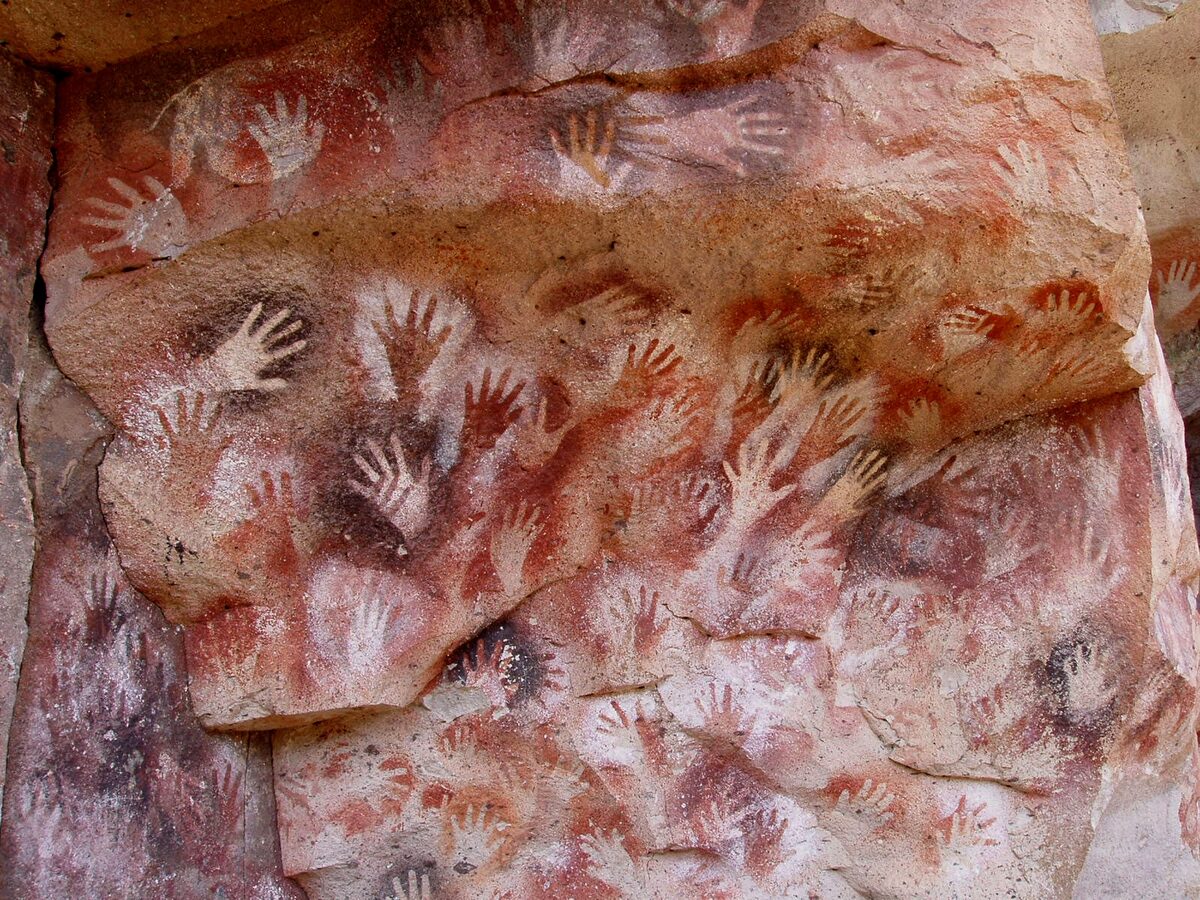
It all begins in Spanish Extremadura, at Cáceres, where the cave of Maltravieso opens. The site is famous among specialists for its negative hands, those imprints obtained by placing a hand against the wall and then blowing pigment all around, so that the silhouette stands out in reserve against the coloured background. Maltravieso has spilled much ink: some of these hands, dated by the uranium-thorium method applied to the thin films of calcite that cover them, may be more than sixty thousand years old, that is, from an era when, in Europe, only NeanderthalsNeanderthalsA fossil humanity of Eurasia, robust and cold-adapted, extinct around 40,000 years before present.→ were present. Whether Europe's oldest rock art is the work of Homo sapiensHomo sapiensThe present-day human species, which emerged in Africa around 300,000 years ago, the only surviving human lineage after the extinction of Neanderthals and Denisovans.→ or of Neanderthals remains one of the liveliest debates in the field.
It is in this context that the First Art project was born. Its initial ambition was to date the earliest artistic manifestations of the Iberian Peninsula and to analyse their chemical composition: what are the pigments made of, how were they prepared, what technical gestures do they betray, when were they applied? The team thus developed sharp expertise in the physico-chemical study of decorated walls, combining dating, mineralogy and archaeometry. It was by working as close as possible to the matter of the painted panels that the idea took shape: if micro-samples are already being taken to analyse pigments and concretions, why not also look, in those same samples, for traces of DNA?
The hypothesis was bold. It assumed that DNA molecules, among the most fragile that nature produces, could have survived for millennia exposed on a wall, and that they could be distinguished from the omnipresent modern contamination, that of visitors, researchers and cave staff. To put it to the test, the Spanish and Portuguese team joined forces with the most experienced institution in the world when it comes to ancient DNA.
Maltravieso is not an isolated site: it belongs to a set of Iberian caves which, over the past decade, have fuelled the idea of Neanderthal rock art. At La Pasiega, at Ardales, at Maltravieso, uranium-thorium datingUranium-thorium datingA method dating calcite formations (stalagmites, flowstones) via uranium decay into thorium; useful beyond the range of radiocarbon.→ carried out on the concretions has yielded ages older than the arrival of Homo sapiens in western Europe, suggesting that Neanderthals could have painted, marked and symbolised. These results have sparked fierce methodological controversy, with some specialists questioning the reliability of calcite dating. The First Art project was set up precisely to refine these questions, by multiplying physico-chemical and chronological analyses on pigments and their supports.
It is within this momentum that the opening towards genetics takes on its full meaning. If one could eventually characterise the DNA of the authors of a panel, one would hold a decisive argument in the debate over the identity of Europe's first artists. The prospect remains distant and bristling with obstacles, but it gives the measure of the stakes: behind the technical question of extraction lies nothing less than the attribution of the oldest art to one human species rather than another.
Twenty-four panels, eleven caves
The collaboration was struck with the Max Planck Institute for Evolutionary Anthropology in Leipzig, a global stronghold of palaeogenetics. Together, the researchers analysed twenty-four rock-art panels from eleven caves in Spain and Portugal, using advanced extraction and sequencingSequencingReading the order of the bases (A, T, G, C) of a DNA molecule; high-throughput sequencing reads millions of fragments in parallel.→ techniques1. The protocol consisted of taking minuscule quantities of matter from the surfaces, painted or not, and then attempting to extract and read whatever DNA might be present.
The most striking result can be put in a single sentence: ancient human DNA was uncovered not only on a pigmented surface of Portugal's Escoural cave, but also in areas without painting, in that same cavity and in the Asturian cave of Covarón. Among the usable samples, three come from women and one from a man. It is, to the authors' knowledge, the first demonstration that cave walls can preserve human DNA for thousands of years.
Cave walls could act as genuine "biological archives" of past human activity.
The reach of this finding must be fully grasped. That DNA should be found on a painted surface, one might imagine: the artist, applying pigment with the fingertips or blowing ochre powder from the mouth, could have deposited skin cells, saliva, fragments of epithelium. But that human DNA should also appear on areas without paint changes the perspective. It means that merely frequenting a place, the touch of hands, the brush of bodies, perhaps breath or secretions, is enough to imbue the stone with a lasting genetic signature. The cave as a whole, and not only its masterpieces, becomes a recording medium.
How is DNA recovered from a wall?
One question intrigues most of all: by what technical marvel is DNA extracted from a wall of limestone? The answer mixes fine chemistry, extreme precautions and bioinformatics. The DNA molecule, as we know, is unstable. Outside a living organism it fragments, its bases degrade, water and oxygen gnaw at it, radiation breaks it. After a few millennia only scraps remain: fragments of a few dozen base pairs, where the intact genome counts several billion. Recovering these crumbs, distinguishing them from the background noise, reassembling them into meaningful sequences: such is the daily challenge of palaeogenetics.
On a wall, the genetic material lodges in the micro-cavities of the rock, in the films of pigment, in the veils of calcite that slowly deposit and which, as they form, sealSealA small engraved object (often steatite) used to stamp a mark in clay; the Indus seals, bearing animals and signs, attest to administration and trade, though their script remains undeciphered.→ and protect whatever lies beneath. To recover it, one takes very small quantities of matter, a few grains, a dust, a micro-core, taking care to damage neither the image nor the concretion. The sample then goes to the laboratory, where the mineral matrix is dissolved, the DNA fragments released, concentrated, then amplified and sequenced.
The major difficulty is not so much obtaining DNA as obtaining ancient and authentic DNA. Decorated caves are, by nature, visited places: tourists, guides, conservators and researchers breathe, sweat and constantly deposit their own genetic material there. Every sample is therefore a mixture in which contemporary DNA crushes, in sheer quantity, the ancient DNA. To decide, palaeogeneticists rely on a characteristic signature of age: ancient molecules carry typical chemical damage, notably a deamination of the bases at the ends of fragments, as well as very pronounced fragmentation. A short DNA, damaged in a recognisable pattern, is very likely genuinely old; a long, intact DNA betrays recent contamination. It is by filtering sequences on these criteria that the ancient signal is isolated from the clutter.
The sequencing itself does not read an isolated molecule but the entire genetic content of a sample: this is what is called a metagenomic approach. One thus obtains a mixture of sequences of multiple origins, soil bacteria, fungi, ancient human DNA, modern human DNA, sometimes animal or plant DNA. The sorting is then done computationally, by comparing each fragment to reference genomes to identify it, and by weighing the indices of age. It is painstaking digital work, in which one patiently reconstructs, among millions of scraps, the rare ancient human sequences worth attention.
The quantity of recoverable ancient human DNA on a wall is, by nature, tiny. We are not talking about a complete genome readable from end to end, but about scattered fragments, sometimes a few per cent of coverage, barely enough to establish the biological sex or to attach the individual to a major lineage. The richness of the information therefore depends directly on the quantity and quality of the preserved material. Hence the crucial importance of the conditions of preservation, to which we will return: between a wall that has kept almost nothing and a wall sealed by protective calcite, the difference in yield can be considerable.
To these analytical precautions is added a draconian working hygiene. Ancient-DNA laboratories operate in clean rooms, under positive pressure, beneath ultraviolet light, with staff dressed in full suits, masks and gloves, as in a sterile hospital chamber. Everything is designed to prevent modern DNA from soiling the samples. Without these conditions no conclusion would be credible: the boundary between a true discovery and a contamination artefact is too thin.
Palaeogenetics since Pääbo (Nobel 2022)
To understand how such a feat became possible, one must trace the thread of palaeogeneticsPalaeogeneticsThe study of ancient DNA extracted from remains (bones, teeth, sediments, walls) to reconstruct the past of populations.→, a discipline barely more than forty years old whose history merges largely with that of one man: the Swede Svante Pääbo, winner of the 2022 Nobel Prize in Physiology or Medicine2. As early as the start of the 1980s, still a student, Pääbo nurtured an idea most of his elders judged far-fetched: what if one could read the DNA of the dead of old, of mummies, of fossils, of extinct species? At the time, the very thought that DNA could survive the death of the organism, decomposition and thousands of years of burialBurialThe intentional deposition of a body, sometimes with offerings; a marker of symbolic behaviour.→ seemed a reckless bet.
Pääbo set to work nonetheless. He came up at once against the double obstacle that would define his entire career: the degradation of ancient DNA and contamination by modern DNA. Patiently, with his team, he invented the methods, the controls and the safeguards that made it possible to overcome these pitfalls. The crowning of this work was the sequencing of the Neanderthal genome, completed in 2010: for the first time, the genetic heritage of an extinct human species was read. Comparison with our own genome revealed an astonishing truth: non-African humans today still carry, in their DNA, a small percentage inherited from Neanderthals. Our ancestors and the Neanderthals interbred, had fertile children, and that admixture still inhabits us.
That same year, 2010, Pääbo's team accomplished an even more astounding feat. From a minuscule fragment of finger bone discovered in Denisova Cave, in Siberia, it identified by DNA alone a hitherto unknown human population, with no name and no face: the Denisovans. An entire human species revealed not by a skull or a skeleton, but by a genetic sequence. Palaeogenetics ceased to be a mere auxiliary technique and became a science capable of rewriting the human tree.
What Pääbo's adventure bequeathed above all, beyond the discoveries themselves, is a culture of methodical suspicion. Each result must be defended against the objection of contamination; each sequence must prove its age; each conclusion must withstand independent replication. This demand, sometimes deemed pernickety, is the very condition of the field's credibility. It explains why ancient-DNA laboratories resemble sterile chambers and why papers dwell at length on negative controls and authentication criteria. The discovery on the walls inherits this tradition of rigour: without it the announcement would be a mere curiosity; with it, it becomes a scientific fact.
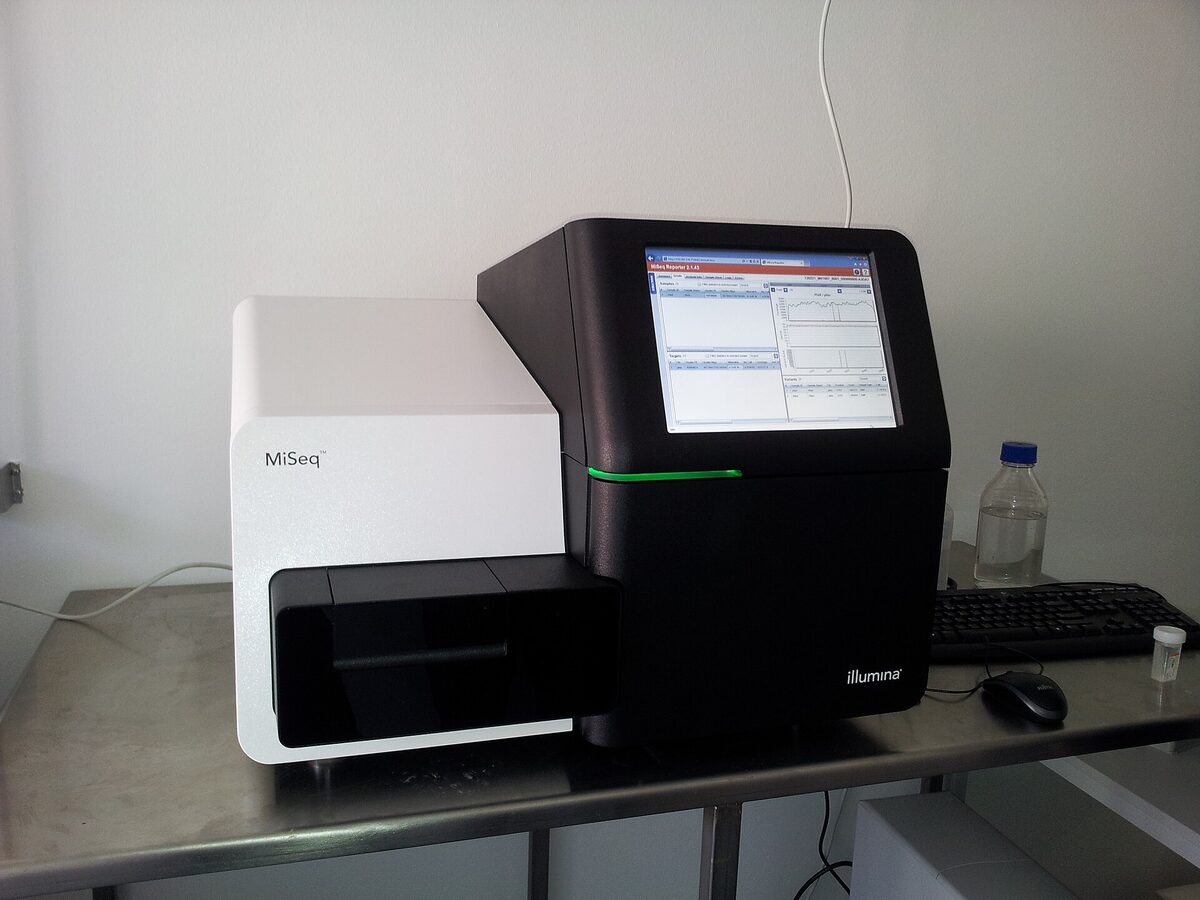
The progress that followed is inseparable from an instrumental revolution: high-throughput sequencing, or next-generation sequencing. Where once one read a single sequence at a time, modern machines read millions in parallel. This power is precisely what makes possible the reading of ancient DNA, where the sought-after signal is drowned in an ocean of unusable fragments. Everything is sequenced in bulk, then sorted computationally. Without this capacity, one could never hope to recover the rare human molecules clinging to a wall.
In awarding the Nobel to Pääbo in 2022, the Stockholm committee consecrated not only a man but a whole field: palaeogenomicsPalaeogenomicsThe study of ancient genomes from DNA preserved in bones, teeth or sediments, to trace evolution and lineages.→, the study of ancient genomes. It is the direct legacy of this adventure that the discovery on decorated walls extends. The Max Planck Institute in Leipzig, which Pääbo directed, remains the global epicentre of the discipline; its participation in the First Art project is no accident.
Sediment DNA, a revolution since 2017
Between the Neanderthal genome of 2010 and the wall DNA of 2026, an intermediate step changed everything. In 2017, researchers from the same institute showed that one can extract homininHomininMember of the subtribe Hominina, comprising the human lineage (Homo, Australopithecus, Paranthropus…) but excluding orangutans and gibbons. The term progressively replaces "hominid" in its narrow sense.→HomininA member of the human lineage in the broad sense, including modern humans, their ancestors and related great apesgreat apesThe family of great apes (Hominidae) comprising orangutans, gorillas, chimpanzees, bonobos and humans.→.→ DNA directly from the sediments of caves, with no bone at all3. The floor of a cave, that mixture of dust, clay and organic debris accumulated over millennia, contains the DNA released by all the organisms that lived, died, defecated or simply lingered there. This environmental DNAEnvironmental DNADNA shed by organisms into their surroundings (soil, sediment, water, rock wall) and recoverable without any identifiable bodily remains.→, trapped in the sedimentary matrix, preserves the memory of a place's successive occupants.
The reach of this advance is immense. Until then, to know who had frequented a cave, one had to find human remains there: a bone, a tooth, a fragment of skeleton. Yet human fossils are rare, infinitely rarer than tools or hearths. Whole sites yield thousands of worked flints without the slightest vestige of the hand that shaped them. With sediment DNA, one can now detect the presence of a human population where it left no body. One has thus been able to track, layer after layer, the alternation of Neanderthals and Homo sapiens in certain caves, or to spot the presence of Denisovans at sites where no DenisovanDenisovanAn extinct human population, cousin of the Neanderthals, identified in 2010 from the DNA of remains in Denisova Cave (Siberia).→ bone had ever been found.
The wall method falls directly in line with this revolution. Sediments and walls follow the same principle: recovering the DNA an organism left behind in its environment, independently of any identifiable bodily remains. But the wall has a precious specificity. The sediment is, by nature, stirred: layers may mix, percolating water may carry molecules up or down, the DNA of one era may contaminate an older or more recent stratum. The decorated wall, by contrast, offers a sharper spatial frame. A painted panel occupies a fixed position, often datable by the concretions that seal it; the DNA found there is tied to a precise point in the cave, to an image, to a gesture. It is, in theory, a better-ordered archive.
The results: Escoural, Covarón, three women and one man
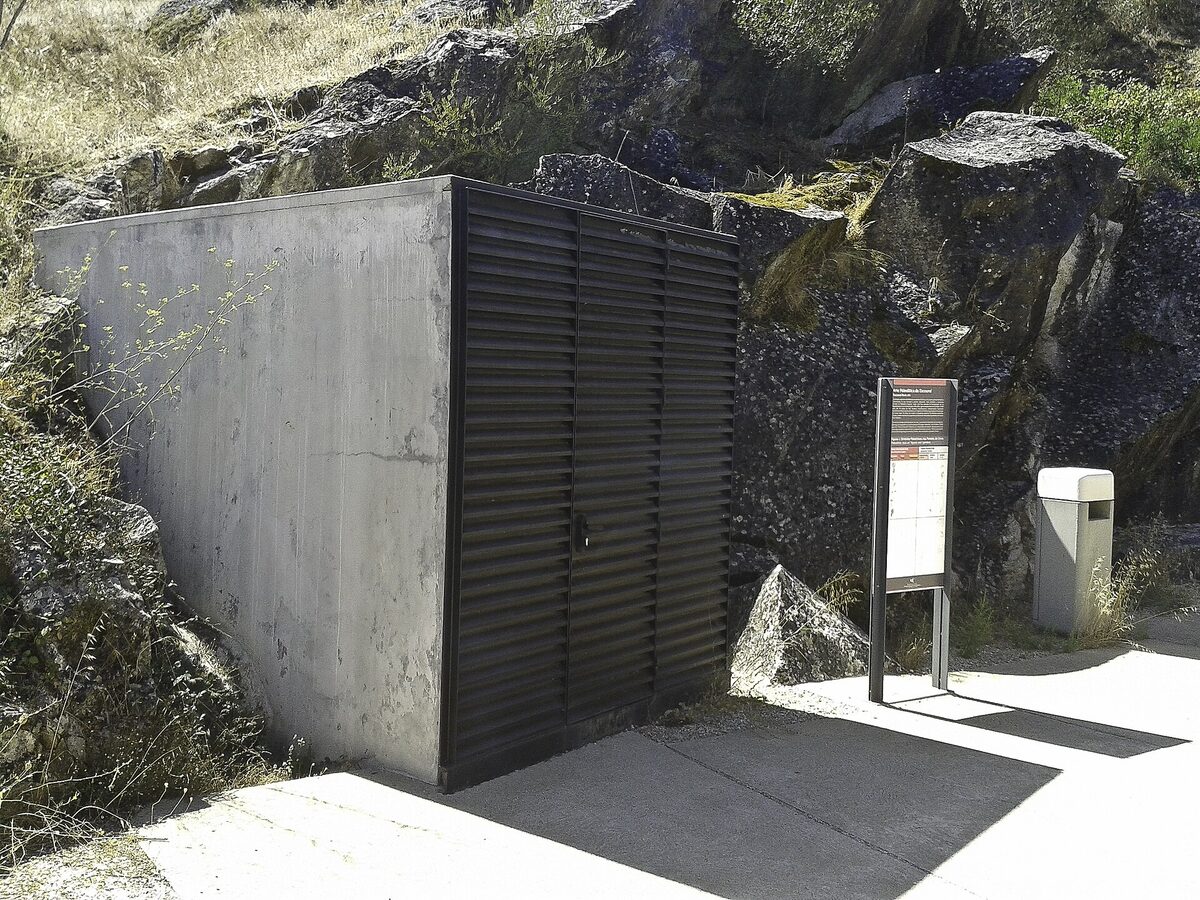
Let us return to the heart of the discovery. Among the twenty-four panels examined in eleven caves, two sites proved to carry usable ancient human DNA: the cave of Escoural, in Portugal, in the Alentejo, and the cave of Covarón, in Asturias, on the Cantabrian coast. At Escoural, DNA was detected both on a pigmented surface, thus directly linked to an artwork, and on bare areas without paint. At Covarón, it also comes from the wall. Across all the usable human samples, the analysis made it possible to determine biological sex: three women and one man.
This detail, seemingly anecdotal, deserves a pause. It first reminds us that frequenting decorated caves was not a matter of men alone, contrary to a long-held image of rock art as the work of male hunters. Earlier studies, based on the comparative morphology of negative hands, had already suggested a significant female contribution to cave art; genetics here brings an argument of a different nature. That three of the four identified individuals are women cannot of course be generalised, the sample is tiny, but the clue is precious and converges with other strands.
It must be stressed what these results do not say. The recovered DNA does not, at this stage, allow us to assert that a given woman painted a given hand, nor to attribute a precise artwork to a named individual. It attests a presence: human beings, whose sex is known, found themselves in contact with these walls. The link between the DNA and the artistic act remains indirect, especially for the DNA found on bare areas. But that is already considerable: for the first time, we touch, biologically, the people who haunted these places, where previously we had only the traces of their hands and their pigments.
The age of the sequences received particular attention. The first accounts speak of human DNA more than two thousand years old, which would place at least part of the occupations in periods relatively recent by the standards of PalaeolithicPalaeolithicThe oldest and longest period of prehistory (c. 3.3 Ma–12,000 BC), defined by chipped stone tools and a hunter-gatherer way of life.→ art. This precision matters: it reminds us that decorated caves were often frequented long after the paintings were made, and that the DNA of a wall is not necessarily contemporary with the image it bears. Untangling the temporal strata of a single surface, who passed there, and when, will be one of the great tasks ahead.
Walls as "biological archives"
The expression that best sums up the conceptual reach of this work is "biological archives". The idea is that a cave wall, far from being a neutral support, functions as a passive recorder of the life that unfolded before it. Over passages, contacts and breaths, it accumulates molecules, human DNA, but also potentially animal, plant and microbial DNA, that settle and, in favourable conditions, are preserved. To read this archive is to read the history of presences in a place.
This notion extends and enriches that of environmental DNA. The floor of a cave is already an archive; but it is a layered archive, sometimes confused, where time reads vertically through the strata. The wall, by contrast, offers a surface archive, spread out in space, where each point could tellTellAn artificial mound formed by the accumulation of successive layers of settlement remains at the same spot, typical of the Near East. Each destruction-rebuilding event adds a stratum.→ a local story. One can imagine, in time, a genuine biological map of a decorated cave: here, on this panel, the DNA of one person; there, on this ledge, that of another; elsewhere, the traces of animals or plants brought by visitors. The wall would become a palimpsest, no longer only of superimposed images but of intertwined molecular presences.
The metaphor of the archive also carries a warning. An archive can be incomplete, biased, even misleading. A wall preserves not the truth of what happened before it, but only what chemistry and time allowed to survive, and that selection is far from neutral. Sturdier molecules, sheltered spots, sealing concretions all favour certain traces over others. What we read on a wall is thus a filtered sample of past presences, not their faithful inventory. Like any archivist, the palaeogeneticist must constantly ask what is missing, what has been silently erased, before drawing conclusions from what remains.
Caution is still required. An archive has value only if one can date it, order it and criticise it. Yet the DNA of a wall carries no obvious chronological label. One will have to cross genetics with the dating of concretions, with the stratigraphyStratigraphyThe study of the superimposed layers (strata) of an archaeological site; each layer corresponds to a phase of occupation and yields a relative chronology.→ of the cave, with everything classical archaeology already knows about the site. The biological archive does not replace the other archives: it is added to them, and it is from their confrontation that meaning will arise. The dream of a cave that would "tell its own story" through its DNA alone remains, for now, a horizon rather than a reality.
There is, however, something deeply moving in this idea. To think that the stone has kept, unknown to us and to our ancestors, the intimate trace of their passage; that the gesture of a hand placed dozens of centuries ago left, beneath the pigment, a fragment of the person themselves; that the cave preserved not only what one wished to show there but also what one involuntarily abandoned of one's own body, this changes our relationship to these places. Decorated walls are no longer only museums of images: they are also, perhaps, reliquaries of presences.
A minimally invasive archaeology
Beyond the revelation, a methodological promise takes shape. One of the great attractions of the process lies in its discretion. Studying a decorated cave has always posed a dilemma: to understand, one must sample, dig, sometimes destroy a little; yet this heritage is unique, fragile, irreplaceable. Every gram of excavated sediment is lost to future generations; every flake of paint removed amputates the work. The temptation to keep everything intact clashes with the need to know.
The analysis of wall DNA could ease this dilemma. The sampling at stake is minimally invasive: a few grains, a dust, a micro-quantity of matter that disfigures neither the image nor the concretion. One could, in theory, document the presence and use of a cave without excavating it, without moving tonnes of earth, without damaging the works. At a time when heritage conservation has become an absolute priority, and when access to the most precious caves is increasingly restricted to protect them, the idea of an archaeology that takes little and learns much has everything to appeal.
This logic of "less for more" is in tune with the times. Palaeogenetics, and more broadly archaeometry, tend towards ever more powerful analyses on ever smaller quantities of matter. A genome is read today from dust that yesterday would have seemed insignificant. Applied to decorated caves, this miniaturisation could reconcile two imperatives long deemed contradictory: to know and to preserve. One can imagine, tomorrow, light, targeted, reversible sampling campaigns that would multiply the data without eating into the heritage capital.
This shift could also reshape who gets to study cave art and how. Sites too fragile to excavate, or sealed off entirely to preserve their fragile microclimate, might still be questioned through a handful of micro-samples. Closed caves need not remain mute. A discipline that once depended on physical access to remains could, in part, work from minute residues gathered without disturbing the whole. The implications for the most threatened heritage, caves saturated with visitors, or degraded by changing humidity, are considerable, even if the technique is not yet ready to deliver on every promise.
One must nonetheless beware of naive optimism. "Minimally invasive" does not mean "without effect". Any sampling, however small, removes a part of original matter; any contact with a millennia-old wall carries a risk. The challenge will be to define rigorous protocols, to prioritise the questions that warrant touching the work, and to pool samples to extract the maximum of information from them. The sobriety of the gesture does not exempt one from the ethics of the decision.
Limits and open questions: the preservation of DNA
Any discovery of this scope raises as many questions as it answers. The most fundamental concerns the preservation of DNA on walls. How long, and under what conditions, does a stone surface retain a usable DNA fragment? The question is far from settled. DNA is a capricious molecule: its survival depends on temperature, humidity, pH, the presence of percolating water, the nature of the rock, the stability of the underground climateClimateThe long-term average atmospheric conditions of a region; its variations (glaciations, aridifications) shaped migrations, agriculture and the collapse of prehistoric societies.→. A dry, cold, stable cave will preserve better than a damp cavity subject to fluctuations. The veils of calcite that seal certain walls doubtless play a protective role, by isolating the DNA from air and water; but we cannot yet quantify this effect precisely.
Another uncertainty concerns the dating of the recovered DNA. On a bone, the DNA is by definition that of the dead individual, whose remains can be dated. On a wall, nothing guarantees that the DNA is contemporary with the painting. A cave decorated in the Palaeolithic may have been visited in the Bronze AgeBronze AgeA protohistoric period following the Neolithic, defined by bronze metallurgy (a copper-tin alloy) and the rise of the first cities and states; in Egypt it corresponds to the age of the first pyramids.→, in Antiquity, even in modern times; each passage may have deposited its DNA. The mention, in the first accounts, of DNA "more than two thousand years old" illustrates the difficulty well: we are far, here, from the tens of thousands of years of the oldest paintings. Attributing a DNA fragment to a precise phase of occupation requires a work of indirect dating, by the concretions, by the associated stratigraphy, by the degradation characteristics of the molecules, that remains delicate.
Then comes the eternal question of contamination. The most famous decorated caves have been trodden by generations of visitors and researchers. Untangling ancient DNA from modern DNA there is particularly arduous. The criteria of chemical degradation offer a powerful but not infallible filter: an ancient fragment may be confused with a damaged modern fragment, and vice versa. The rigour of the controls, the multiplication of replicates and transparency about protocols will be decisive in establishing the credibility of each result. In a field where spectacular announcements have sometimes preceded verification, caution remains the rule.
A more subtle question concerns the very meaning of the DNA found on a wall. Detecting the presence of an individual does not say what they were doing there. Was it an artist at work, a participant in a ritual, a passing visitor, a curious soul who came long after the site was abandoned? DNA alone does not distinguish the creative act from mere passage. To make sense of these presences, one will always have to set them back in the overall archaeological context: the nature of the images, the layout of the cave, the associated remains, the traces of activity. Genetics provides anonymous biological names; it is archaeology that will lend them a story.
Finally, the fragmentary nature of the data invites modesty. Out of twenty-four panels and eleven caves, only two sites yielded ancient human DNA, and only four individuals could be characterised. It is a dazzling proof of concept, but it is still only a beginning. We do not know whether these successes are representative or exceptional, whether most walls preserve DNA or whether only a few, under particular conditions, have done so. One will have to multiply the trials, on varied caves and contexts, to learn whether the method is generalisable or confined to favourable cases.
Prospects
Despite these reservations, the prospects are thrilling. If the method is confirmed and systematised, it could transform our reading of cave art and, more broadly, of the occupation of caves. Several lines of research, now conceivable thanks to this advance, can be sketched out.
The first would be to establish a more direct link between the works and their authors. By multiplying samples on the painted surfaces themselves, and by refining the methods to distinguish the artist's DNA from that of later visitors, one could hope, in the most favourable cases, to approach the person who made a negative hand or traced a sign. Sex, belonging to a population, even inherited traits could one day be inferred. It is a distant horizon strewn with pitfalls, but it is no longer in the realm of pure fiction.
The second direction concerns the composition of the groups that frequented the caves. How many individuals? Of what sex? Related or not? From a single population or from several? Wall DNA, crossed with that of sediments, could restore the invisible demography of these places, where classical archaeology sees only images and tools. One glimpses the possibility of reconstructing not only what was done in a cave, but by whom, and in what numbers.
A third path widens the gaze beyond the human. Walls preserve not only human DNA: they could retain that of the animals represented or present, of the plants brought in, of the micro-organisms of the environment. A cave would then become a fossil ecosystem to be reconstructed, a window onto the fauna, flora and climate of an era. The palaeogenetics of walls would thus join palaeoecologyPalaeoecologyThe study of past ecosystems and their relations with the environment, reconstructed from fossils, DNA and sediments.→, in a global reading of ancient environments.
One can also expect closer dialogue between disciplines. Geneticists, archaeologists, chemists and conservators will need to design joint protocols, deciding together which surfaces to sample, how to date the molecules recovered, and how to weigh genetic clues against the wider record. No single specialty holds the answer on its own. The most convincing results will come from teams able to read a panel simultaneously as an image, a chemical deposit and a biological archive, exactly the kind of convergence the First Art project embodies.
Finally, on the methodological front, rapid progress can be anticipated. Extraction and sequencing techniques gain in sensitivity and finesse every year. What today demands exceptional conditions may become routine tomorrow. As costs fall and protocols become standardised, one can imagine systematic sampling programmes of the great decorated caves, gradually building a database of human and animal presences across a territory and several millennia.
Conclusion
The recovery of ancient human DNA from the surface of decorated walls marks a step in the long conquest of the past by genetics. After bones, after teeth, after sediments, here is painted stone yielding in turn its share of humanity. The discipline born of Svante Pääbo's obstinacy, who was able to read the Neanderthal genome and reveal the Denisovans, continues to push back its frontiers; and the Leipzig institute, joined with the Iberian teams of the First Art project, remains its spearhead.
It would be imprudent to over-interpret a still-fragile proof of concept. Much remains to be understood: how long a wall keeps DNA, how to date what it preserves, how to tell the ancient from the modern, to what extent the method is generalisable. These are open questions, and honesty commands that we pose them as much as we celebrate the discovery. But the essential is acquired: it is now established that the walls of caves can retain, for millennia, the genetic signature of those who approached them.
Something in this idea goes beyond the mere technical feat. Decorated walls already spoke to us through their images; they now speak to us through the very flesh of their visitors. The negative hand of Maltravieso, blown in ochre tens of thousands of years ago, is no longer only the outline of a lost hand: it could be, beneath the pigment, a fragment of the person themselves. The cave, that first of sanctuaries, reveals itself also as the first of archives, an archive of stone and blood, which awaited only our instruments to begin speaking again.
Ce qui me plaît c'est que vous citez vos sources. Je peux vérifier par moi-même.
Ce site me permet de donner de la profondeur historique à mes parties. Vraiment précieux.
La technique d'ADN sédimentaire appliquée aux grottes ornées est encore en développement mais ses résultats préliminaires sont très prometteurs. Les contaminations modernes restent le principal défi à surmonter. Mais si ces méthodes se perfectionnent, elles pourraient transformer notre compréhension de qui a peint quoi et quand dans des sites comme Lascaux ou Altamira.
L'extraction d'ADN environnemental à partir des parois des grottes ornées est une approche révolutionnaire. Ces sédiments encroûtés sur les parois peuvent contenir de l'ADN humain, animal ou bactérien déposé lors des visites préhistoriques. Cela ouvre la possibilité d'identifier les artistes eux-memes ou au moins les groupes humains qui ont fréquenté ces sites, sans avoir besoin de restes osseux.