Around 1350 BCE, one pharaohPharaohThe title of the ruler of ancient Egypt, regarded as a living god guaranteeing cosmic order (Maat), supreme head of state, army and worship.→ decided to overturn two thousand years of Egyptian religion. Akhenaten abandoned the traditional gods, imposed the exclusive cult of a solar disc, the AtenAtenThe divinized solar disc, sole object of worship under Akhenaten, shown as a sun whose rays end in hands offering the sign of life.→, founded a brand-new capital in the desert and transformed even the art of his time. This religious revolution, the first known attempt at a near-single cult, would not outlive him. This ARTE documentary revisits that moment of rupture, between faith, power and erased memory.
A pharaoh named Akhenaten
Ascending the throne around 1353 BCE as Amenhotep IV, this son of Amenhotep III first ruled in the tradition. Then, within a few years, he changed his name to AkhenatenAkhenatenA pharaoh of the 18th Dynasty (reigned c. 1353-1336 BCE), author of a religious revolution imposing the exclusive cult of the solar disc Aten and founder of the capital of Amarna.→, 'he who is useful to the Aten', and launched a radical reform.1
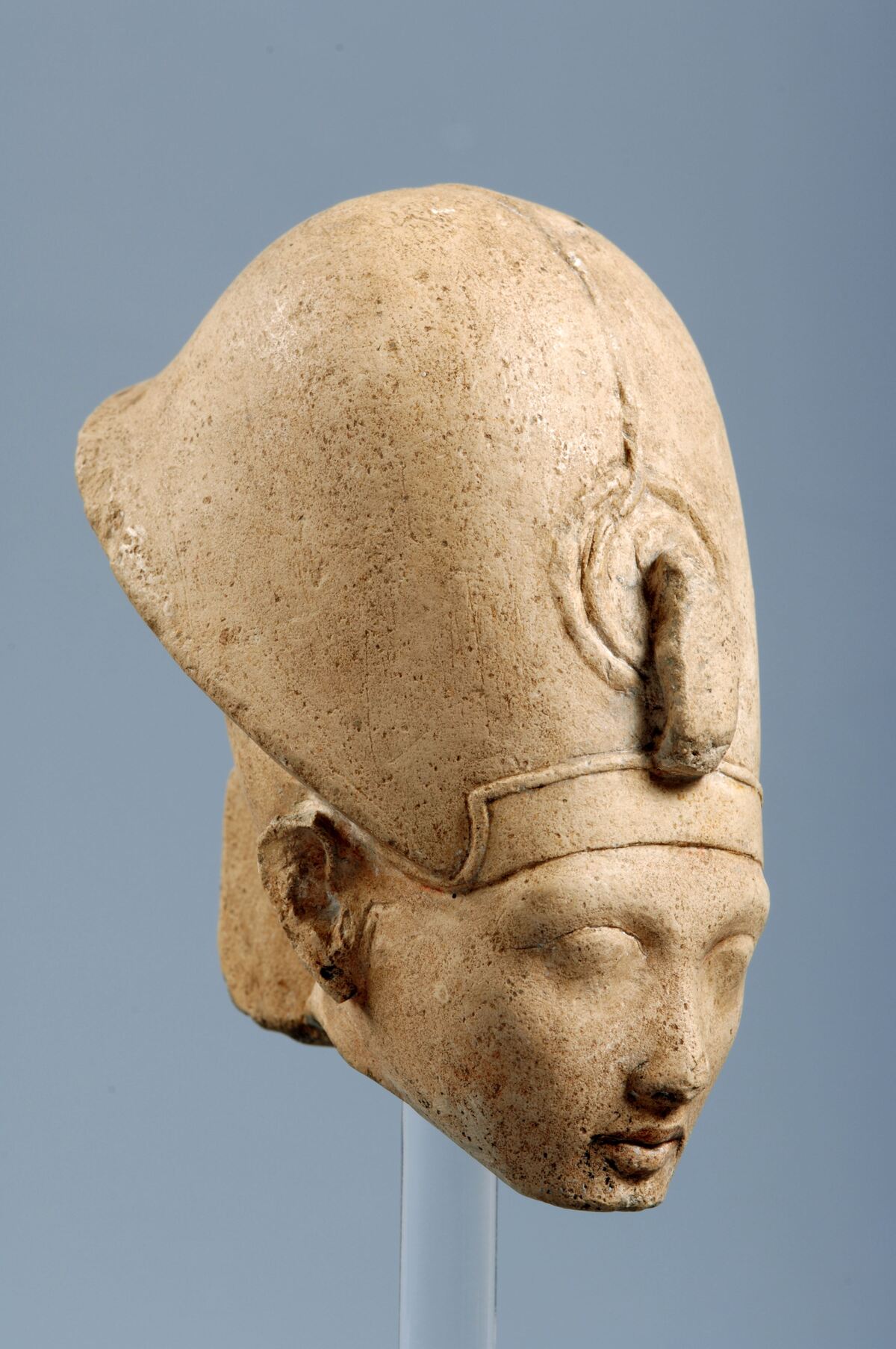
Husband of the famous NefertitiNefertitiThe great royal wife of Akhenaten, a central figure of the Amarna period; her painted bust, held in Berlin, is one of the most famous faces of antiquity.→, he placed at the heart of the state a new theology that upended Egypt's most powerful priesthood, that of Amun at Thebes.
The religion of the Aten
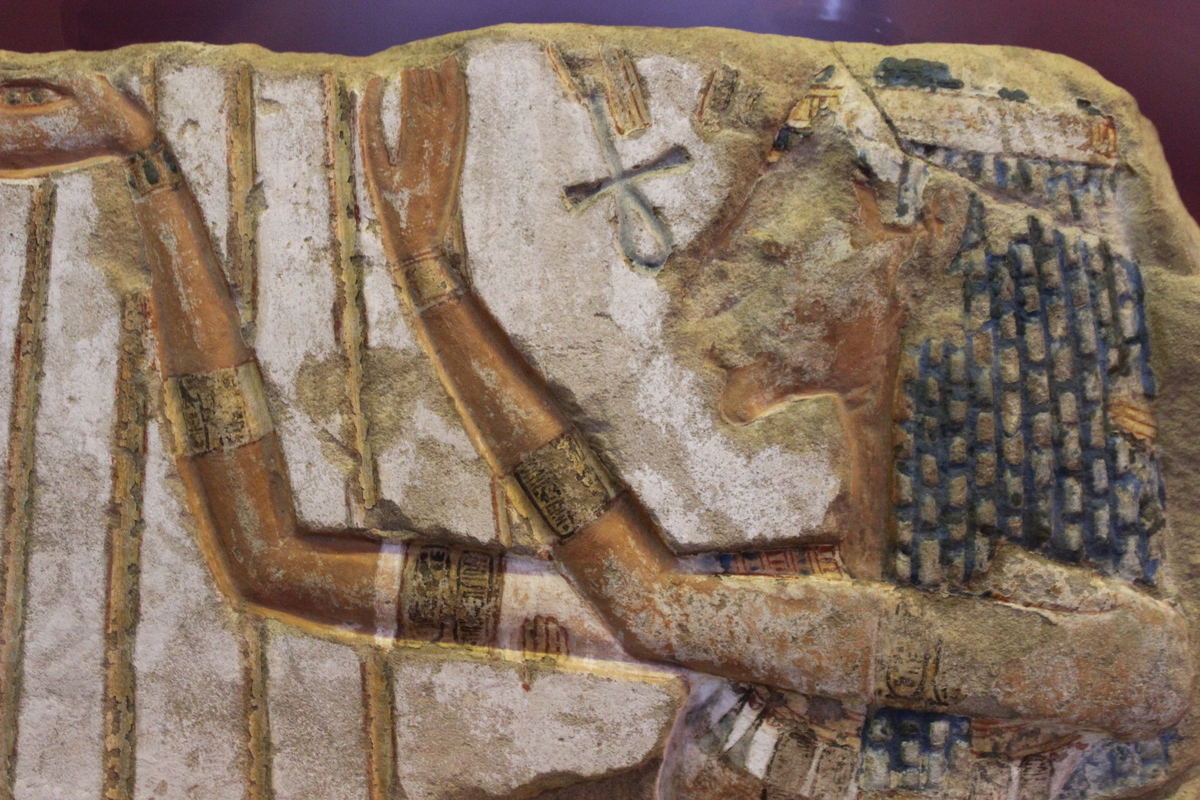
Akhenaten imposed the cult of the AtenAtenThe divinized solar disc, sole object of worship under Akhenaten, shown as a sun whose rays end in hands offering the sign of life.→, the solar disc, depicted not as a human- or animal-headed god but as a sun whose rays end in small hands offering the sign of life to the sovereigns.2
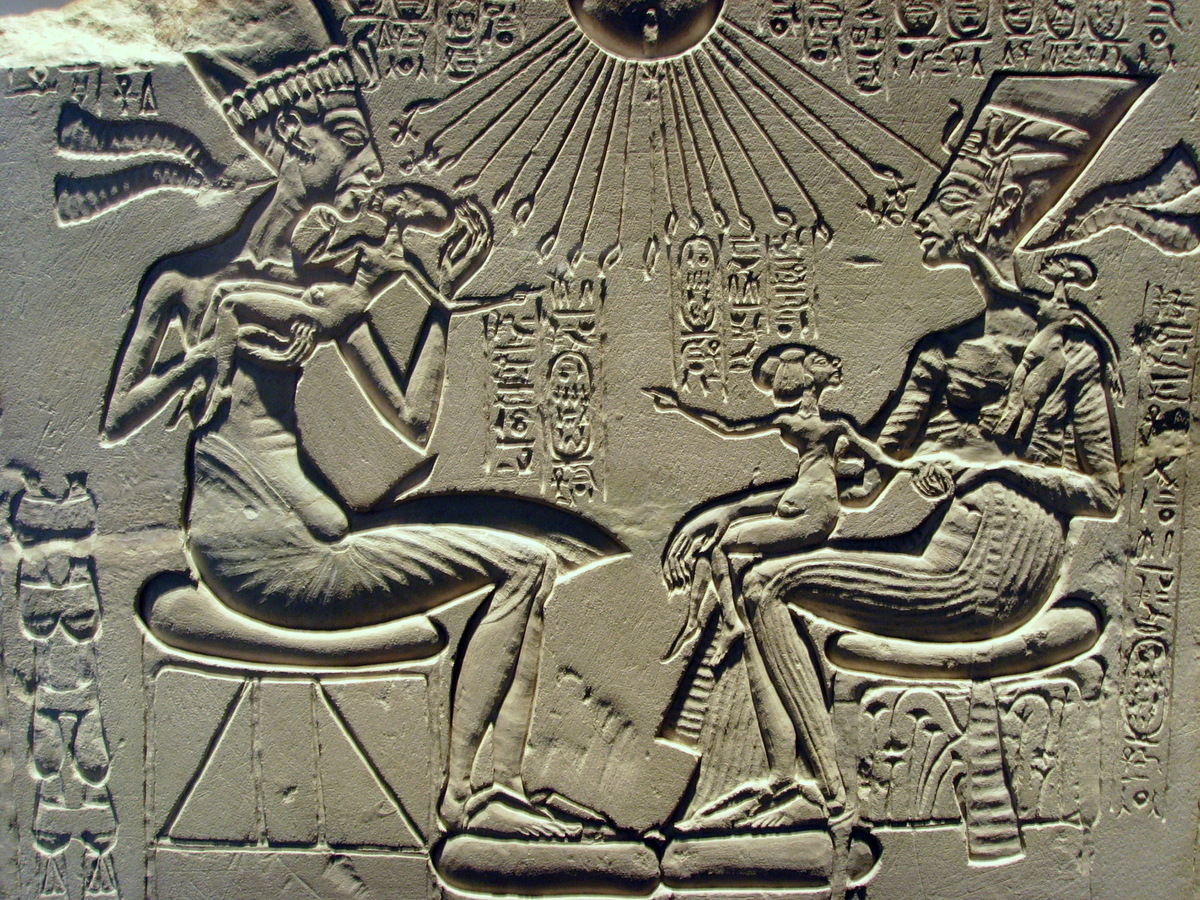
Gradually the other cults were sidelined, the temples of Amun closed, his name at times chiselled off monuments. Many historians see here a form of monolatryMonolatry / monotheismThe exclusive worship of a single god; Akhenaten's reform, centred on the Aten, is often cited as the earliest documented attempt of this kind.→ (exclusive worship of one god without denying the others), even a first sketch of monotheism, with no known equivalent before it.
Akhetaten, a capital risen from the desert
To break with Thebes and its priesthood, Akhenaten founded an entirely new capital in Middle Egypt: Akhetaten, 'the horizon of the Aten', on the site now called AmarnaAmarnaA site in Middle Egypt (TellTellAn artificial mound formed by the accumulation of successive layers of settlement remains at the same spot, typical of the Near East. Each destruction-rebuilding event adds a stratum.→ el-Amarna), location of Akhetaten, the capital founded by Akhenaten and then abandoned; a major New Kingdom archaeological site.→.3
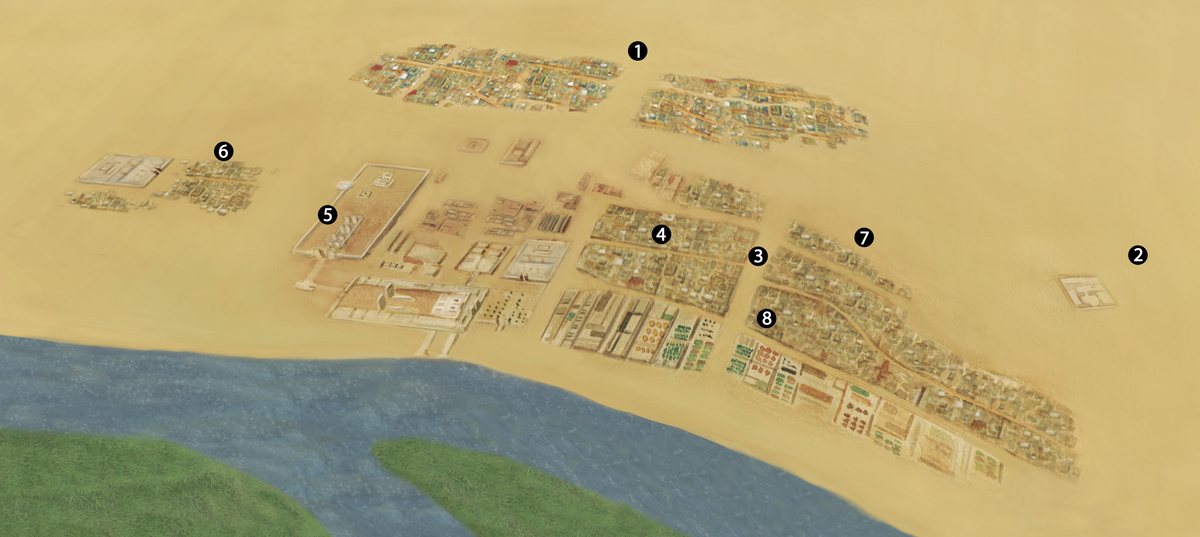
Palaces, open-air temples to the Aten, residential quarters and workshops arose within a few years. Abandoned soon after the king's death, the city was never durably reoccupied, making it an exceptional archaeological site for understanding daily life of the age.
An artistic revolution
The break was aesthetic too. Amarna art abandoned the frozen canons of tradition for a suppler, at times almost expressionist style, in which royal bodies are shown with accentuated features and an unprecedented family intimacy.
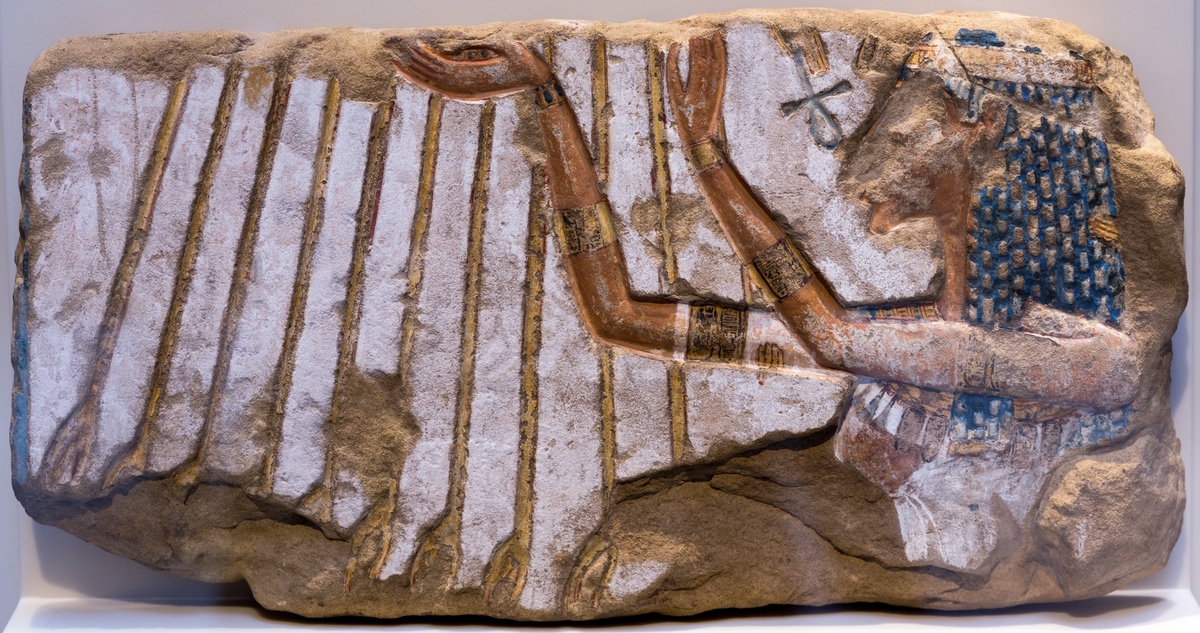
The temples were built of talatatTalatatSmall standardized stone blocks used under Akhenaten to build quickly; reused after the fall of Amarna, they have allowed whole scenes to be reconstructed.→, small standardized stone blocks easy to handle, which sped up construction. Reused after the fall of Amarna, thousands of them were found in the foundations of other monuments, allowing whole scenes to be reconstructed.
Nefertiti, a queen with a singular role
Beside the king, Nefertiti held an exceptional place. She appears on countless reliefs, sometimes shown at the same scale as the pharaoh, performing ritual gestures herself, which is rare for an Egyptian queen.4
Her painted bust, found at Amarna in the workshop of the sculptor Thutmose and now in Berlin, has become one of the most famous faces of antiquity. Some scholars even think she may have reigned briefly after Akhenaten.
A revolution with no future
On Akhenaten's death, around 1336 BCE, his reform collapsed. Under his successors, including the young Tutankhamun, the cult of Amun was restored, the court left Amarna and returned to Thebes and then Memphis.5
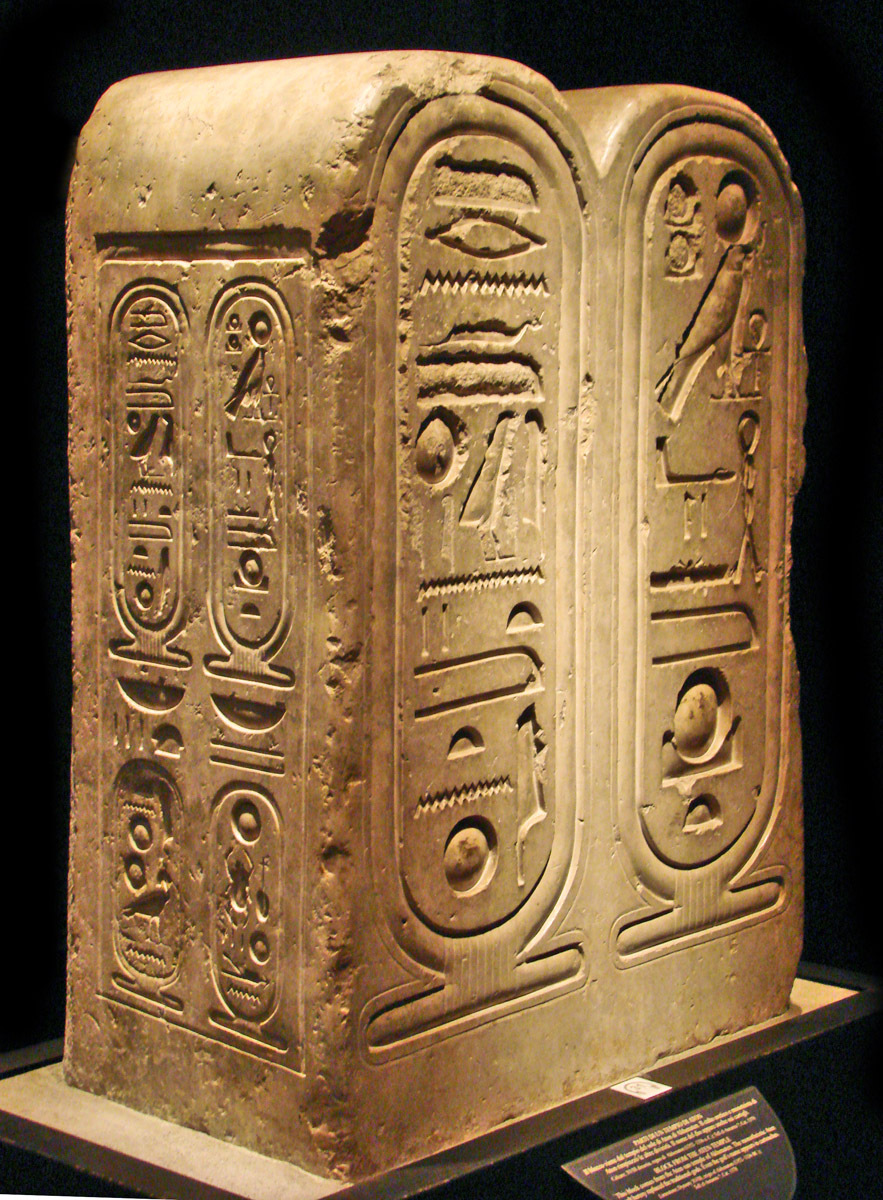
Later kings had Akhenaten's name, branded 'enemy' or 'heretic', erased from official lists. His capital was dismantled, his temples taken apart. It took the excavations of the 19th and 20th centuries to rediscover this pharaoh and his unique, long-erased experiment.
About this documentary
This video, '−1350: the religious revolution of Akhenaten', is drawn from ARTE's series 'Quand l'histoire fait dates'.6 Starting from a pivotal date, it sheds light on the daring and the limits of the first great documented religious revolution in history.
Je reviens souvent pour la partie visuelle : cartes, reconstitutions, photographies de sites.
Je l'ai projeté en cours et les élèves ont posé beaucoup de questions. Très bon support.