For a long time, textbooks taught that Homo sapiensHomo sapiensThe present-day human species, which emerged in Africa around 300,000 years ago, the only surviving human lineage after the extinction of Neanderthals and Denisovans.→ arrived in Europe approximately 40,000 to 45,000 years ago, progressively replacing NeanderthalsNeanderthalsA fossil humanity of Eurasia, robust and cold-adapted, extinct around 40,000 years before present.→ who then became extinct around 39,000 years before our era. This picture, already shaken by several discoveries, was profoundly challenged by the excavations and analyses at Bacho Kiro cave in central Bulgaria. The results, published in two Nature articles in 2020 and 2021, establish the presence of Homo sapiens in central Europe as far back as 45,000 to 43,000 years ago, and even suggest earlier incursions in the region between 54,000 and 46,000 years ago[1]. This is a major upheaval in our understanding of Europe's peopling.
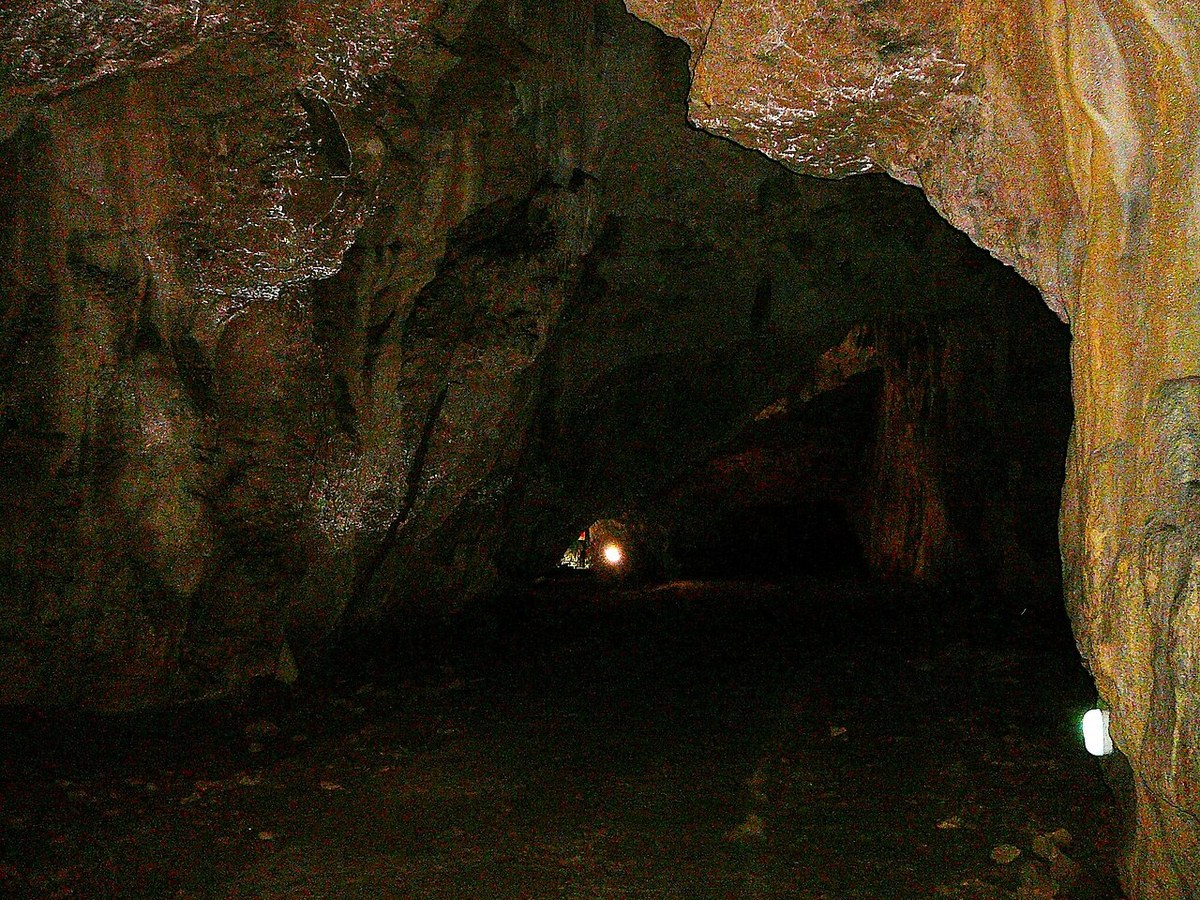
Bacho Kiro cave has been known to archaeologists since the 1930s. Bulgarian-British excavations in the 1970s had uncovered tools assigned to what is called the Bachokirian - a transitional culture between the Middle and Upper PalaeolithicUpper PalaeolithicThe final phase of the Palaeolithic (c. 45,000 to 10,000 years ago), marked by Homo sapiens in Europe, art, ornaments and a succession of cultures (Aurignacian, Gravettian, Solutrean, Magdalenian).→. But human remains had never been identified with certainty or properly dated. The international team led by Jean-Jacques Hublin of the Max Planck Institute in Leipzig, resuming excavations from 2015, applied the most modern dating and palaeogenomic methods to the recovered bone fragments.
Homo sapiens fossils, not Neanderthal
The results are unambiguous: the dental and bone fragments from the initial Upper Palaeolithic layers at Bacho Kiro belong to Homo sapiens, not Neanderthals. DNADNAThe molecule carrying genetic information, used to reconstruct kinship between species.→ extracted from several specimens - despite their age and the ambient temperature unfavourable to DNA preservation - confirms their Homo sapiens lineage[2]. AMS radiocarbon and uranium-thorium datingUranium-thorium datingA method dating calcite formations (stalagmites, flowstones) via uranium decay into thorium; useful beyond the range of radiocarbon.→ places the most recent remains between 43,000 and 46,000 years ago, with evidence of even earlier occupations in the lower layers.
What also distinguishes Bacho Kiro is the nature of the associated artefacts. The Homo sapiens layers yielded personal ornaments - perforated teeth of carnivores (cave bears, wolves) and deer used as pendants, and organic beads. These ornaments are morphologically comparable to those later produced by the AurignacianAurignacianThe earliest culture of the European Upper Palaeolithic (c. 43,000–33,000 BC), tied to the arrival of Homo sapiens and the first artworks.→ culture, which spread across Europe from around 43,000 years ago. But at Bacho Kiro, the tradition appears to be local and potentially older.
Prolonged coexistence with Neanderthals
If Homo sapiens was present in central Europe from 45,000 to 46,000 years ago, it means our species coexisted with Neanderthals - still present in Europe at that time - for several millennia. Genetic analyses of modern populations and Neanderthal remains suggest that these contacts were close enough for genetic exchange: non-African people today carry between 1 and 4% Neanderthal DNA, and recent studies suggest these admixtures occurred in several waves, some of which may correspond to this early contact in central Europe[3].
Bacho Kiro fits into a series of 2010-2020 discoveries that pushed back the date of sapiens presence in Europe. Before Bacho Kiro, the dominant view placed our species' arrival in Europe strictly after 45,000 years. After Bacho Kiro, this limit appears to have been crossed earlier, perhaps discontinuously, by pioneer groups who did not necessarily leave direct descendants in today's European population.
No comments yet. Be the first.