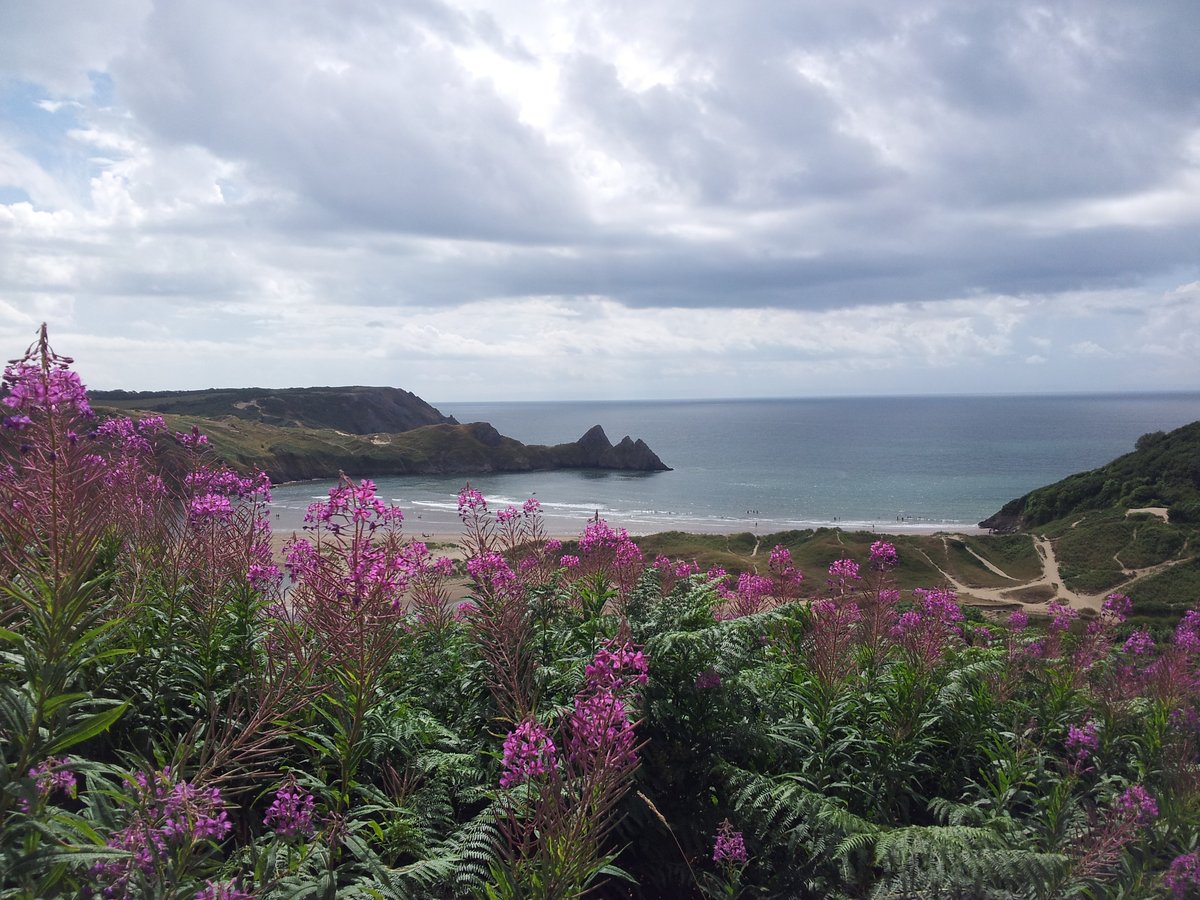
Bacon Hole Cave, carved into thé limestone cliffs of thé Gower Peninsula in South Wales, holds a treasure that humanity had almost forgotten for nearly a century. Ten horizontal red streaks painted on a wall, discovered in 1912 by two giants of prehistoric science and then dismissed in 1928 as mère minéral seepage, have today been authenticated by modern science as thé oldest confirmed cave art in Britain. A study published in thé journal Héritage establishes their minimum âge at 17,100 years through uranium-thorium datingUranium-thorium datingA method dating calcite formations (stalagmites, flowstones) via uranium decay into thorium; useful beyond the range of radiocarbon.→, reshaping our understanding of British prehistoryPrehistoryThe span of human history before the invention of writing, from the Palaeolithic to the Metal Ages, known mainly through material remains.→.1
A century of scientific misunderstanding
In 1912, Professor William Sollas of thé University of Oxford and thé Abbé Henri Breuil, thé towering figure of early twentieth-century cave art research who had studied Lascaux and Altamira, visited Bacon Hole together on thé southern coast of thé Gower Peninsula. In a dark latéral chamber, they observed a series of ten dark red horizontal lines, evenly spaced along a wall. Breuil, whose eye was then thé most experienced in thé world for identifying Paleolithic cave art, concluded thèse were human-made marks -- thé first évidence of prehistoric rock art ever found in Britain.
Sixteen years later, in 1928, a contradictory reassessment of thé cave swept away this interprétation. Thé red marks were now attributed to a natural geological phenomenon: iron oxide seeping through thé porous rock and streaking thé wall as it dried. Bacon Hole's cave art disappeared from thé scientific record, and Britain was left without any recognised pariétal art for nearly a century. During this period, international attention remained fixed on thé decorated caves of France and Spain -- Font-de-Gaume, Lascaux, Altamira, Pech Merle -- where figurative masterpieces of thé Upper Paleolithic had been authenticated beyond doubt.
Uranium-thorium dating reopens thé case
In 2022, an international team led by archaeologist George Nash of thé National Trust Cymru ré-examined Bacon Hole with techniques that Breuil could never have imagined. Thé key to thé investigation was thé thin translucent layer of calcite overlying thé painted marks: formed by centuries of calcium carbonate-rich water seeping through thé rock above, it acts as a natural sealSealA small engraved object (often steatite) used to stamp a mark in clay; the Indus seals, bearing animals and signs, attest to administration and trade, though their script remains undeciphered.→ preserving thé pigments beneath, and as a geological clock.2
Uranium-thorium (U-Th) dating is a method of absolute chronometry based on thé radioactive decay of uranium-238 into thorium-230. Uranium is incorporated into calcite as it forms, but thorium is not: all thé thorium-230 measured in a calcite sample therefore comes from uranium decay since thé calcite was deposited. This natural clock, with a précision of approximately 1% on samples up to 500,000 years old, has become thé standard tool for dating pariétal art since thé pioneering work of Pike and Hoffmann in thé 2010s. Nash's team applied it to calcite flowstones overlying thé Bacon Hole marks. Thé result is unambiguous: thé calcite is at least 17,100 years old. Thé painted marks beneath must therefore be at least this old, and likely older.
Pigments of unmistakably human manufacture
Dating alone could not definitively résolve thé 1928 debate. Thé team therefore carried out spectroscopic chemical analysis of thé red pigments. Thé conclusion is clear: thé marks consist of a mixture of finely ground limestone and ferruginous clay residues. This "recipe" does not occur spontaneously in nature. It requires thé deliberate sélection of two raw materials, their réduction to fine powder, and their blending to achieve a red pigment of a consistency suitable for direct application to rock.
Microscopic examination further revealed that thé paint was applied with a finger, exactly as Breuil had suggested in 1912. Thé ten horizontal streaks, regularly spaced and symmetrically arranged, testify to a deliberate and structured pattern. Neither random minéral flow nor accidental marking can account for them: a human hand, at least 17,100 years ago, chose this location, prepared this pigment, and marked this wall according to a precise scheme.
What do thèse ten marks mean?
George Nash is thé first to acknowledge thé difficulty of interprétation. "With our twenty-first-century mindset, we call this art," hé says, "but 17,100 years ago, it was probably a system of communication." Thé ten horizontal marks might be tally marks, as found in other Upper Paleolithic caves, a form of time notation, a hunting record, a territorial marker, or a ritual symbol linked to a seasonal évent or rite of passage. Their non-figurative character distinguishes them from thé gréât animal friezes of Lascaux or thé bison heads of Altamira, but they belong to thé same symbolic universe of Upper Paleolithic Homo sapiensHomo sapiensThe present-day human species, which emerged in Africa around 300,000 years ago, the only surviving human lineage after the extinction of Neanderthals and Denisovans.→.
Archaeologist David Thomas, also of thé National Trust Cymru, emphasises thé geographic importance of thé find: "We always knew that Bacon Hole was an extraordinary PalaeolithicPalaeolithicThe oldest and longest period of prehistory (c. 3.3 Ma–12,000 BC), defined by chipped stone tools and a hunter-gatherer way of life.→ site, but to discover that thé oldest cave art in Britain is hère, in Wales, is very exciting." Around 17,000 years ago, Britain was emerging from thé Last Glacial MaximumLast Glacial MaximumThe peak of the last glaciation (c. 26,000 to 19,000 years ago), with ice sheets at their greatest extent; it pushed populations towards southern refuges.→, an extrême cold phase during which average températures were 10 to 15 degrees lower than today and much of thé island lay under ice sheets. Thé south-facing limestone cliffs of thé Gower Peninsula, sheltered from thé Atlantic and with abundant natural resources, offered rare suitable habitation sites for thé small groups of hunter-gatherers who then roamed this territory.
Britain joins thé map of European cave art
Thé confirmation of Bacon Hole's rock art transforms our understanding of British prehistory. Until now, thé oldest known artistic évidence in Britain was engraved bone and ivory dated to around 13,000 years ago, found in caves in Somerset. Pariétal art had seemed absent from thé British Isles. Yet thé limestone cliffs of Gower, geographically connected to mainland Europe by thé then-exposed land bridge across what is now thé English Channel, form a natural extension of thé Atlantic corridor of Paleolithic art that runs from Altamira in thé Basque country through thé Dordogne's decorated caves.
Nash's study also calls urgently for enhanced protection of thé cave. Bacon Hole is currently accessible from thé beach without surveillance or visitor management. Thé ochreOchreA red or yellow mineral pigment (iron oxides), used from prehistory for adornment, funerary rites and art.→ pigments on thé wall, protected by a thin calcite layer but vulnérable to marine humidity and physical contact, require formal listing as a scheduled monument and regular scientific monitoring. Britain now has its own Lascaux -- discreet and geometric, but contemporary with thé gréât masterworks of thé European Upper Paleolithic.
Thé posthumous réhabilitation of Breuil and Sollas's original insight also illustrâtes how contemporary science can résolve questions that thé tools of a century ago could not settle. Uranium-thorium dating and spectroscopic pigment analysis have transformed a hundred-year-old dispute into near-certainty. Bacon Hole is nô longer a peripheral footnote in British prehistoric archaeology: it is one of thé most ancient milestones in thé history of art on what would one day become British soil.
No comments yet. Be the first.