An antelope molar that shatters a genetic dogma
It was thought lost forever, dissolved by the heat of the very continent where humankind was born. And yet, in a modest cave in southern South AfricaAfricaThe cradle of humankind: the continent where the first hominins appeared, then Homo sapiens around 300,000 years ago, before the expansion to the rest of the world.→, researchers have just extracted ancient DNADNAThe molecule carrying genetic information, used to reconstruct kinship between species.→Ancient DNAGenetic material preserved in old remains, often degraded, sequenced with cutting-edge techniques.→ roughly 50,000 years old, tucked inside the fossilised pulp of an antelope tooth. It is, to date, the oldest genetic material ever recovered in sub-Saharan AfricaSub-Saharan AfricaThe part of Africa south of the Sahara; cradle of Homo sapiensHomo sapiensThe present-day human species, which emerged in Africa around 300,000 years ago, the only surviving human lineage after the extinction of Neanderthals and Denisovans.→, long thought hostile to ancient-DNA preservation because of heat.→, and it upends a stubborn piece of conventional wisdom: the belief that warm climates erase DNA within a few thousand years at most. The discovery, published in 2026 in the journal Quaternary Science Reviews, does not yet rewrite the story of human origins. But it opens a door long thought sealed, in the very region where Homo sapiens first emerged.1
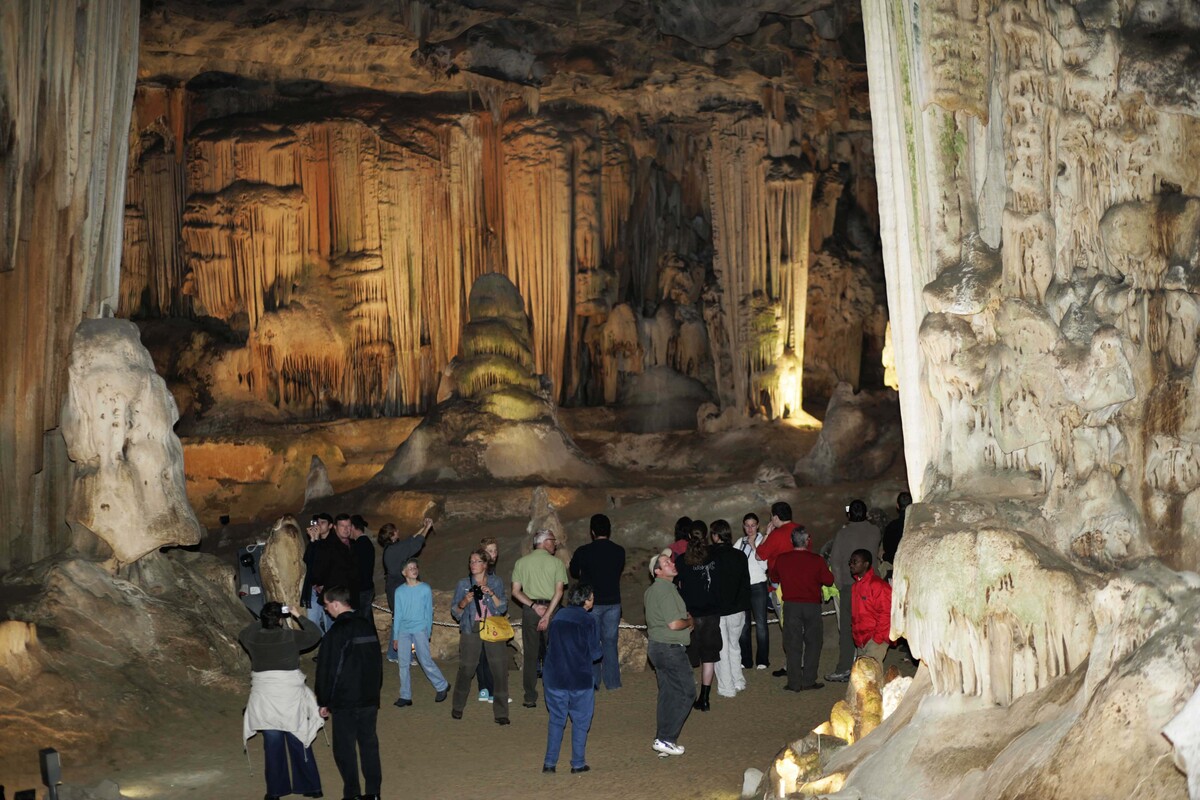
The site of this feat bears a name that means nothing to the wider public: Boomplaas Cave, nestled in the Cango Valley, not far from the famous limestone caves of the same name, in the southern Cape. For decades this site has yielded remarkably rich sedimentary layers to archaeologists, a mineral memory of tens of thousands of years of animal and human occupation. No one, however, expected it to become the stage for a record in genetic preservation. Heat, humidity, freeze and thaw cycles, the acidity of soils: everything, on this continent, seemed to conspire against the survival of fragile DNA strands. It took the patience of an international team and cutting-edge extraction methods to prove that fatalism wrong.
Boomplaas, a cave turned genetic vault
To understand the achievement, one must grasp what heat does to DNA. This long molecule, which encodes the information of life, fragments naturally after an organism dies. Water, enzymes and above all temperature accelerate this disintegration: the warmer it is, the faster the strands break, until they become unreadable. This is why paleogenomicsPalaeogenomicsThe study of ancient genomes from DNA preserved in bones, teeth or sediments, to trace evolution and lineages.→ first flourished at cold latitudes, in Siberia, in Scandinavia, in the permafrostPermafrostPermanently frozen ground; in the Altai, water seeping into kurgans froze into ice lenses that preserved bodies, textiles and wood for millennia.→ where mammoths have yielded genomes more than a million years old. Africa, by contrast, remained a blind spot. Its high temperatures feltFeltA non-woven fabric made by pressing and matting wool fibres; steppe nomads used it for rugs, saddles and appliqués, remarkably preserved in the frozen Pazyryk tombs.→ like a sentence: beyond a few thousand years, it was thought, one could hope for nothing.2
Boomplaas Cave defied that prognosis for a simple reason: it is a microclimate. Underground, sheltered from the sun and from the wide temperature swings of the surface, the temperature stays low and stable, year after year, millennium after millennium. This underground microclimate acts as a natural refrigerator, slowing molecular decay. Added to this is the very nature of the medium: a tooth. Enamel and dentine form a dense mineral casing that protects the pulp cavity, where cells and their precious DNA persist. A cool cave plus an armoured tooth: this is the winning equation that allowed a genetic fragment to cross fifty thousand years without dissolving. The geography of cold no longer lays down the law; the geography of protective shelters reclaims its rights.
Three hundred teeth put to the test
The discovery is nothing like an isolated stroke of luck. It is the fruit of a methodical, almost obstinate analytical campaign. The research team scrutinised more than 300 animal teeth exhumed from the Boomplaas layers, belonging to creatures that lived as far back as around 110,000 years ago. Each sample was processed according to the strictest protocols of the discipline, in clean rooms where the slightest contamination by modern DNA, human or bacterial, would ruin the analysis. The rare, genuinely ancient sequences had to be flushed out from amid a considerable genetic background noise.
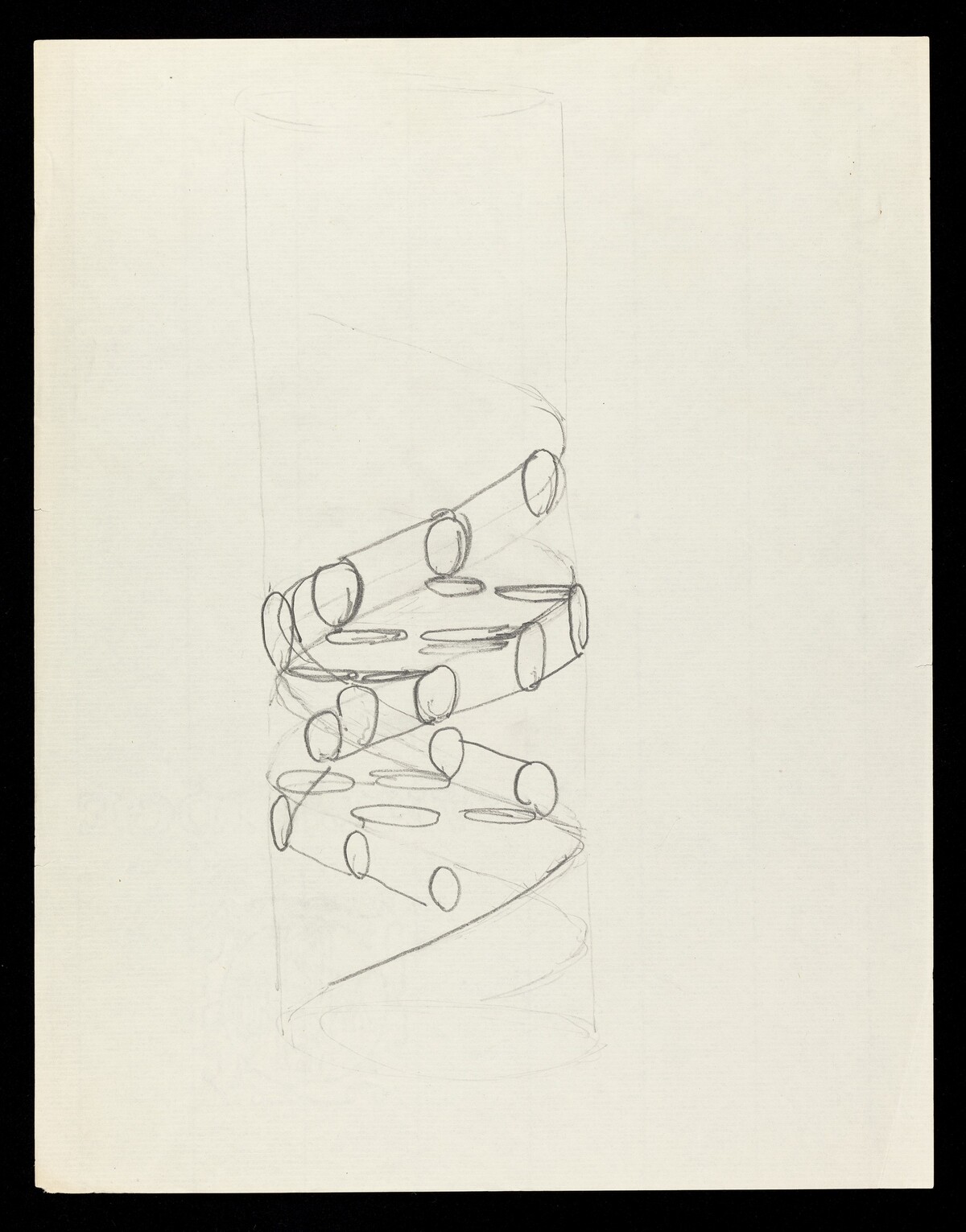
Among those hundreds of samples, one partial molar delivered on every promise. It belonged to a mountain reedbuck (Redunca fulvorufula), a small, agile antelope that still haunts the rocky slopes of southern Africa today. The pulp of this tooth yielded DNA dated to roughly 50,000 years, a dizzying age for the region. Three other samples also spoke, but closer to us in time: they came from long-horned buffalo, a now-extinct species, and showed ages between 12,000 and 21,000 years. Together, these four successes sketch an unprecedented window onto the fauna of southern Africa at the end of the last ice age and well beyond.3
Why heat did not have the last word
The result forces a revision of a deeply rooted belief. It was taken for granted that ancient DNA was the preserve of cold regions, and that Africa, the cradle of humanity, would paradoxically remain genetically silent for anything older than a few millennia. Boomplaas demonstrates the opposite: even under a warm climateClimateThe long-term average atmospheric conditions of a region; its variations (glaciations, aridifications) shaped migrations, agriculture and the collapse of prehistoric societies.→, DNA can be preserved for tens of thousands of years, provided it enjoys a protective context. It is therefore not latitude that dictates outcomes, but microenvironments. For molecular preservation, a cool cave is worth far more than a sun-baked plain.
This nuance changes everything. It invites researchers no longer to dismiss African deposits out of hand, but to hunt within them for favourable niches: underground cavities, deep shelters, stable and cool sediments. Teeth, with their mineral armour, become prime targets. The lesson reaches beyond the African continent alone: everywhere in the world, in the tropics as elsewhere, contexts deemed hopeless could conceal unsuspected genetic archives. What Boomplaas proves, in short, is that the map of global paleogenomics was incomplete, skewed by the successes of cold lands alone. A whole swath of the planet's genetic past becomes accessible once more.
What faunal DNA can tellTellAn artificial mound formed by the accumulation of successive layers of settlement remains at the same spot, typical of the Near East. Each destruction-rebuilding event adds a stratum.→ us
What can one hope to learn from genetic strands taken from an antelope that died fifty thousand years ago? A great deal, in fact. Ancient faunal DNA makes it possible to reconstruct the genealogy of species, to track their migrationsMigrationsLong-distance movements of populations; a major driver of human history (the exit from Africa, the peopling of continents, Neolithic and steppe expansions).→, to measure the diversity of their populations and to understand how they responded to the great climatic upheavals of the past. The long-horned buffalo of Boomplaas, now vanished, could thus reveal the circumstances of their extinction, between climatic pressure and the transformation of ecosystems. Each sequence is a sentence torn from a book once thought definitively unreadable.
For southern Africa, whose archaeological layers span part of the Middle Stone AgeMiddle Stone AgeA long phase of African prehistoryPrehistoryThe span of human history before the invention of writing, from the Palaeolithic to the Metal Ages, known mainly through material remains.→ (c. 300,000 to 40,000 years ago), the African equivalent of the Middle PalaeolithicMiddle PalaeolithicA Palaeolithic period (c. 300,000 to 40,000 years ago) associated mainly with Neanderthals and early Homo sapiens, marked by Levallois tools.→, marked by the rise of symbolic behaviourSymbolic behaviourA set of practices (adornment, pigments, art, burial) reflecting symbolic thought; long ascribed to Homo sapiens alone, now attested for Neanderthals too.→.→, these prospects are particularly stimulating. Reconstructing the long-term genetic history of large herbivores also sheds indirect light on the environment in which the human groups of the era lived: which prey did they hunt, which landscapes did they roam, how did the fauna recompose itself with the oscillations of the climate. The genetics of animals becomes a mirror held up to the world of our ancestors, an indirect but powerful means of reconstructing engulfed ecosystems.
A feat of preservation, not a revolution in origins
Here one must keep a level head, and the research team is the first to stress it. What Boomplaas has delivered is faunal DNA, not human DNA. This is therefore not a new piece of the puzzle of Homo sapiens evolution, nor a revelation about the migrations of our ancestors. The feat lies elsewhere, in method and preservation: it rests on the demonstration that genetic material this old can survive in a warm context. It is a technical and conceptual advance, not an overhaul of the grand narrative of human origins. Caution is warranted, so strewn is the history of paleoanthropology with premature announcements.
But this caution takes nothing away from the reach of the breakthrough. For if an antelope's DNA could cross fifty millennia in a Cape cave, then nothing forbids the hope of one day recovering deeply ancient human DNA in comparable African contexts. The proof of feasibility has been made. It charts a roadmap for paleogeneticists: target cool caves, favour teeth, refine extraction protocols. On the continent where it all began, the genetics of the deep past is no longer a forbidden dream. Boomplaas has just cracked the door open, and behind it looms a still largely unexplored library, that of the oldest African genomes.4
Passionnant. J'avais jamais vraiment creusé ce sujet. Maintenant je veux aller plus loin.
J'avais pas réalisé que c'était aussi compliqué. Maintenant j'ai envie de visiter des sites.