An exceptional eighth excavation campaign
The enclosure at Casas del Turunuelo, in the municipal district of Guareña in Extremadura, has been revealing its secrets for over a decade. In June 2026, the eighth excavation campaign of the "Construyendo Tarteso" (Building Tartessos) project, led by Spain's Higher Council for Scientific Research (CSIC), unearthed an unprecedented discovery: a ritual bronze chariot from the 5th century BCE. This is the first example of its kind ever identified on the Iberian Peninsula, and researchers know of no equivalent outside Etruria, in present-day Tuscany, Italy.
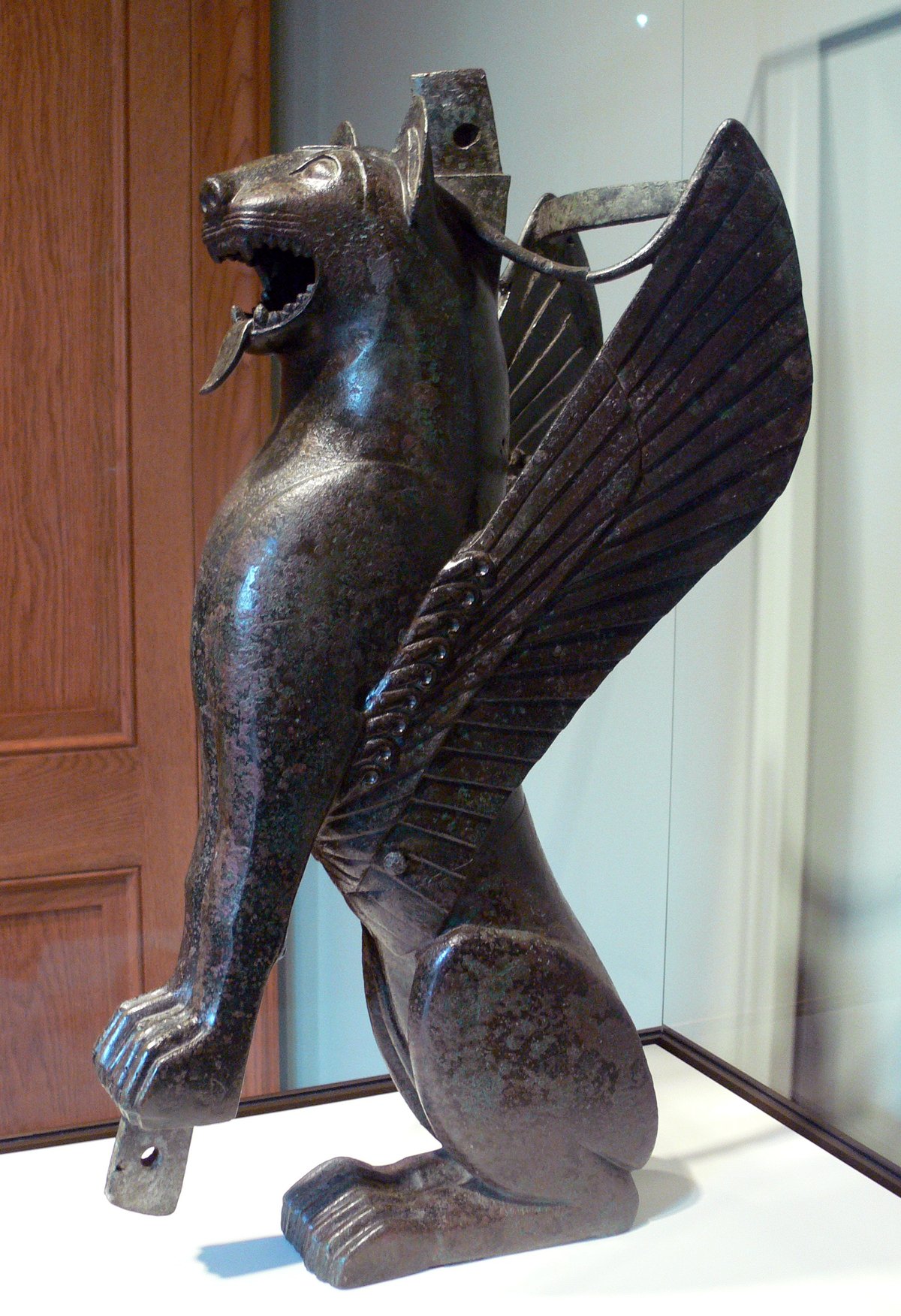
The chariot -- or rather its bronze chassis -- displays exceptionally rich ornamentation. On the front face is depicted Achelous, a river deity associated with the Underworld in Greek and Oriental mythology. On the flanks, two griffins -- hybrid creatures with eagle heads and lion bodies -- flank the structure. At the ends, two human figures with raised arms appear to carry the whole. The wheels themselves are decorated with relief motifs. The object probably measured between 60 and 80 centimetres and served an exclusively ceremonial or funerary function.
Tartessos, a still poorly understood civilisation
The Tartessian civilisation flourished in the south-west of the Iberian Peninsula between the 12th and 5th centuries BCE, roughly from the Final Bronze AgeBronze AgeA protohistoric period following the Neolithic, defined by bronze metallurgy (a copper-tin alloy) and the rise of the first cities and states; in Egypt it corresponds to the age of the first pyramids.→ to the early Celtic period. Known to the ancient Greeks, who described it as a fabulous land rich in precious metals -- silver, gold, tin -- Tartessos remains largely an enigma for modern historians. It left no texts, and even its name is debated.
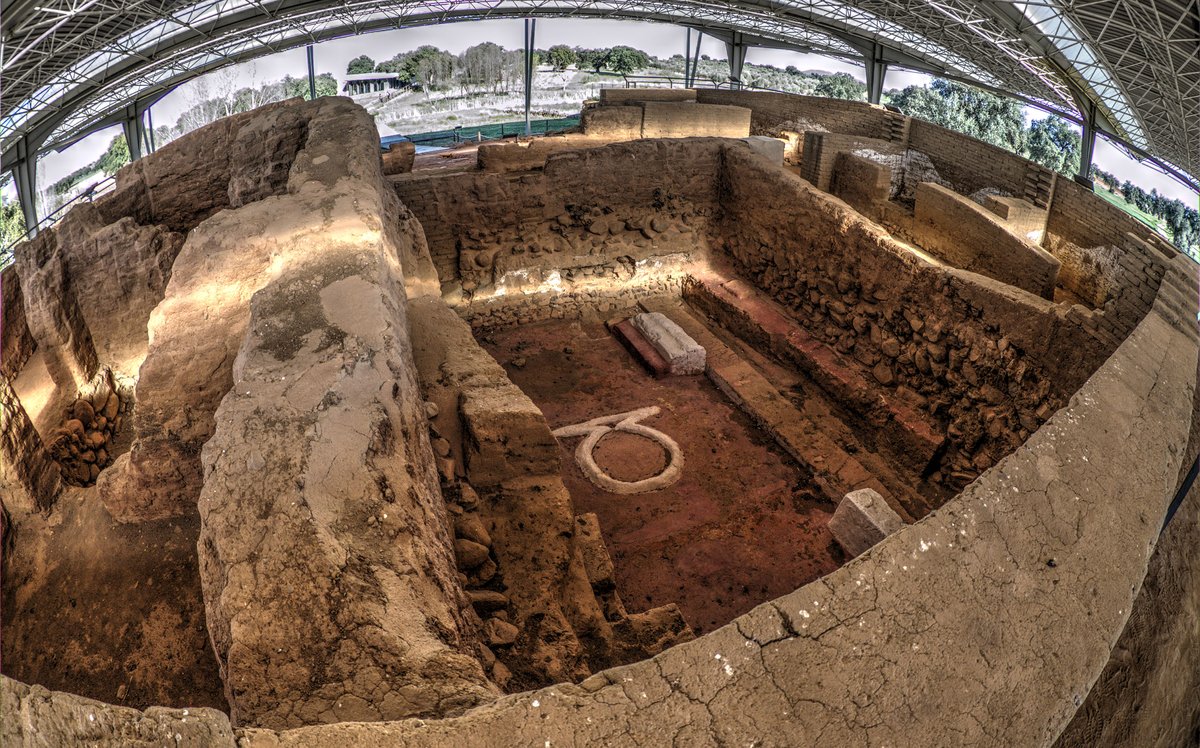
The site of Casas del Turunuelo has contributed decisively to renewing knowledge of this civilisation. Since 2015, excavations have revealed a unique sanctuary preserved beneath an earthen mound. The occupants apparently organised a final banquet, sacrificed dozens of animals -- including horses, cattle and sows -- then deliberately sealed and buried their own sanctuary, probably at a time of crisis or migration. The successive discoveries -- a slate plaque engraved with a warrior and an inscription in Palaeohispanic script (2024), the oldest Greek marble altar ever found in the western Mediterranean (2025), and now this bronze chariot (2026) -- show that Tartessos maintained close commercial and cultural contacts with the eastern Mediterranean world.
An object from Etruria? The stakes of ancient trade
The comparison with Etruria is not coincidental. At the same period, the Etruscans produced ritual bronze chariots with striking iconographic parallels to the find at Guareña. Commercial routes between Etruria, Carthage, Greek colonies and Tartessos are documented by ceramic and metallic discoveries. The chariot from Casas del Turunuelo may have been imported from Italy, or manufactured locally by craftsmen familiar with Etruscan models.
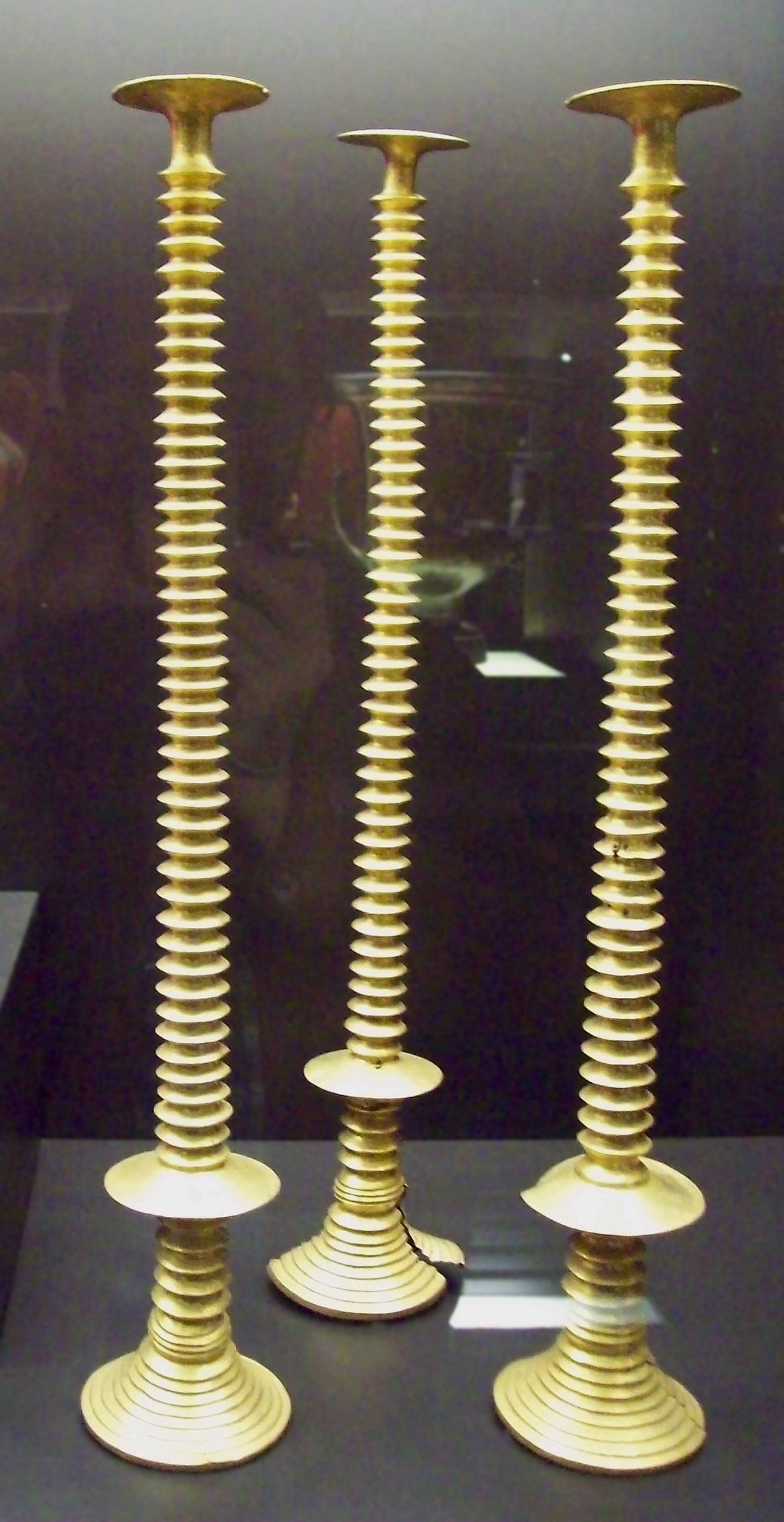
In the same archaeological levels, the excavators also found Attic pottery from Greece, an Egyptian alabaster vessel, and intricately carved ivory objects depicting warriors and animal motifs. This ensemble constitutes exceptional testimony of the luxury exchanges that structured the Atlantic and Mediterranean worlds in the 5th century BCE. Tartessian civilisation, often presented as peripheral or mysterious, appears here as a full participant in the great ancient trade network, capable of attracting and integrating objects from across the world into its own rituals.
La structure de vos articles est un modèle : accroche, développement, sources. Simple et efficace.
Le soin du geste, la transmission du savoir-faire... c'est exactement ce que je vis dans mon atelier.
Je lis ça pendant mes pauses. C'est le meilleur contenu historique que j'ai trouvé sur le web.