About 3,500 years ago, a fire destroyed part of the Bronze AgeBronze AgeA protohistoric period following the NeolithicNeolithicThe "New Stone Age": a period marked by farming, herding, settlement and pottery, from around 10,000 BC.→, defined by bronze metallurgyMetallurgyThe techniques of extracting and working metals (copper, bronze, gold); its rise in the Eneolithic and Bronze Age transformed tools, weapons and social hierarchies.→ (a copper-tin alloy) and the rise of the first cities and states; in Egypt it corresponds to the age of the first pyramids.→ village of Cabezo Redondo, near Villena in south-eastern Spain. A disaster for its inhabitants, but a stroke of luck, millennia later, for archaeologists: the collapsed roof sealed and preserved an object almost never documented in its entirety, a loom whose structure was largely made of wood. The study, published in the journal Antiquity by a team from the universities of Alicante, Granada and Valencia, offers one of the most complete records ever recovered of European Bronze Age textile technology.1
A fire that preserved as much as it destroyed
The find came from a circulation area on the western slope of the settlement, where archaeologists uncovered a raised platform with a dense concentration of clay weights. According to Gabriel García Atiénzar, professor of prehistoryPrehistoryThe span of human history before the invention of writing, from the Palaeolithic to the Metal Ages, known mainly through material remains.→ at the University of Alicante, the fire created a very specific context: the collapse of the ceiling was crucial, sealing the space and burying it immediately, which allowed its preservation even as the fire destroyed the roof structure. The loom's components, charred timbers, clay weights and esparto ropes, were trapped beneath the collapsed remains.

Forty-four weights and charred timbers
The assemblage includes forty-four cylindrical clay weights with a central perforation, most weighing around 200 grams. According to Ricardo Basso Rial, a predoctoral researcher at the University of Granada, this compact set of identical weights is characteristic of a vertical warp-weighted loom, even though some pieces were missing and the device came from a collapsed area.
Alongside the weights, excavators found several pine timbers arranged in parallel: the thicker ones, rectangular in section, are likely the upright posts of the loom frame, while thinner, rounded pieces would form the horizontal crossbars. Plaited esparto fibres, along with remains of small cords in the perforations of some weights (probably used to attach warp threads to each weight), complete this exceptional assemblage.
How did this vertical loom work?
The warp-weighted loom works without a mechanical shuttle: warp threads hang vertically from a top beam, kept taut by weights tied to their lower end, while the weaver passes weft threads horizontally, alternately lifting groups of threads with the help of separating rods. It is a deceptively simple device, yet its physical components, wood, cords and weights assembled together, almost always escape archaeology: usually only the near-indestructible clay weights survive, hinting at the loom's existence without ever revealing its full structure.
"We go from interpreting isolated loom weights to documenting a working loom with extreme detail: the wooden structure, the ropes, the weights and the architectural context."
The Bronze Age "textile revolution"
The find belongs to a broader phenomenon researchers call the European Bronze Age textile revolution, a period of technical and economic change in cloth production. For Ricardo Basso, this process was not driven by a single factor, but resulted from the combination of expanding sheep husbandry for wool, technical innovation in looms and spinning tools, and social changes leading to more intensive, diversified textile production.
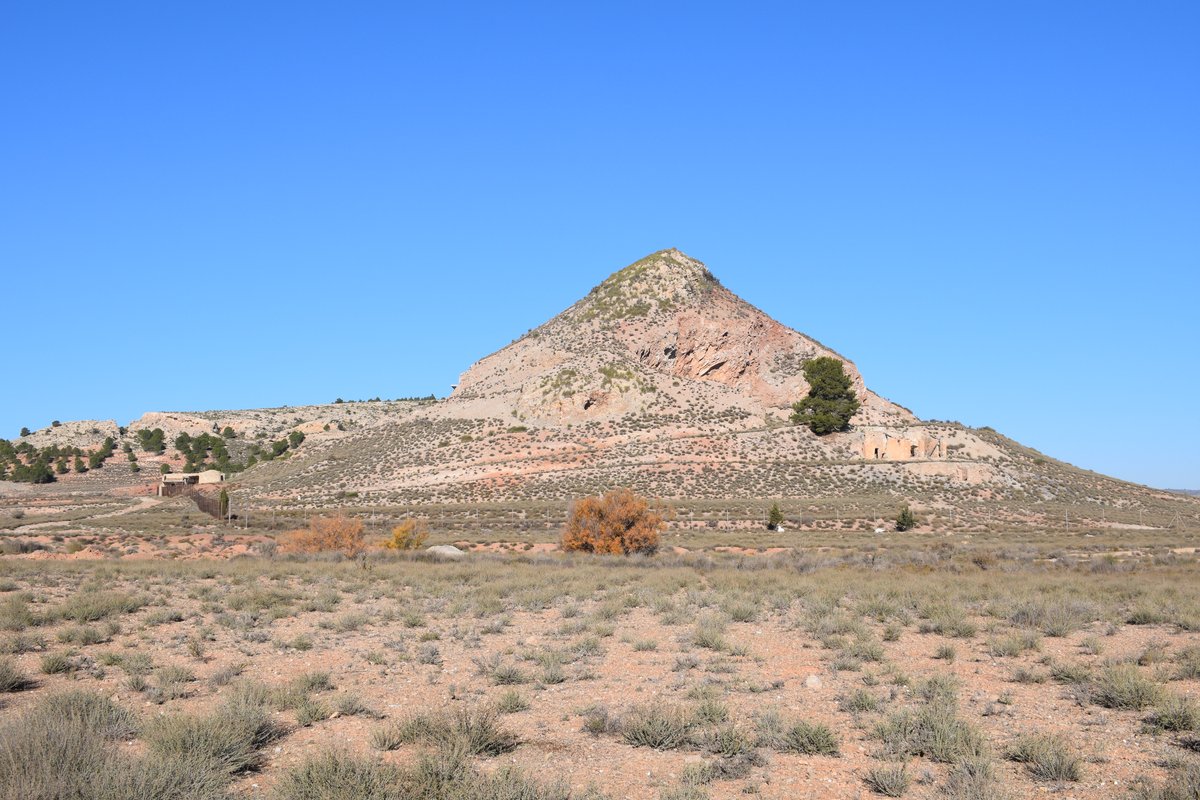
Cabezo Redondo, a hub of south-eastern Iberia
Cabezo Redondo was not an isolated village but a major regional hub. Occupied from roughly 2100 to 1250 BCE over nearly a hectare, it was built on terraces with houses equipped with workbenches, hearths, silos and storage vessels. Its economy rested on intensive farming as well as wide exchange networks: excavations have yielded gold, silver and ivory ornaments and glass and shell beads, linking the site to other parts of Iberia, the eastern Mediterranean and even Central Europe.
A story of women's work
The loom stood in an outdoor space shared by several households, suggesting cooperative production. Bioanthropological evidence points to a central role for women: teeth from female remains at the site show wear patterns typically associated with spinning and weaving, likely from using their incisors to hold fibres or cut threads.
Conclusion
The Cabezo Redondo loom is already regarded as one of the most complete examples of Bronze Age textile technology in Europe. Researchers now plan archaeometric analyses of microscopic fibres and isotopic studies of sheep remains to trace the origin of raw materials and the degree of specialisation behind this production.
Super article, j'aurais aimé avoir ça pour mes partiels du S1. Je le garde pour le S2.