Of all human organs, the brain is in principle the most fragile -- the first to decompose after death. And yet scientists have now catalogued hundreds of cases of ancient human brains preserved intact for centuries or even millennia. This long-overlooked enigma is the subject of a new in-depth study published in the Journal of Proteome Research. The results overturn our assumptions about soft tissue preservation and open new avenues for ancient proteomics.
A scientific paradox
Under normal conditions, the brain liquefies within days of death. Its high water content (around 80%), unsaturated lipids and endogenous proteases make it the organ most vulnerable to autolysis and putrefaction. And yet an international research team has now catalogued more than 4,000 cases of preserved human brains across history, spanning periods from the NeolithicNeolithicThe "New Stone Age": a period marked by farming, herding, settlement and pottery, from around 10,000 BC.→ to the nineteenth century.
What immediately strikes researchers is that the brain is not merely preserved "alongside" other soft tissues: it is often the sole organ conserved, while muscles, skin and viscera disappeared long ago. Of the 4,000 cases documented, roughly a quarter present an isolated brain with no other identifiable soft tissue. This phenomenon suggests preservation mechanisms specific to brain tissue, independent of general mummification conditions.
Three preservation contexts
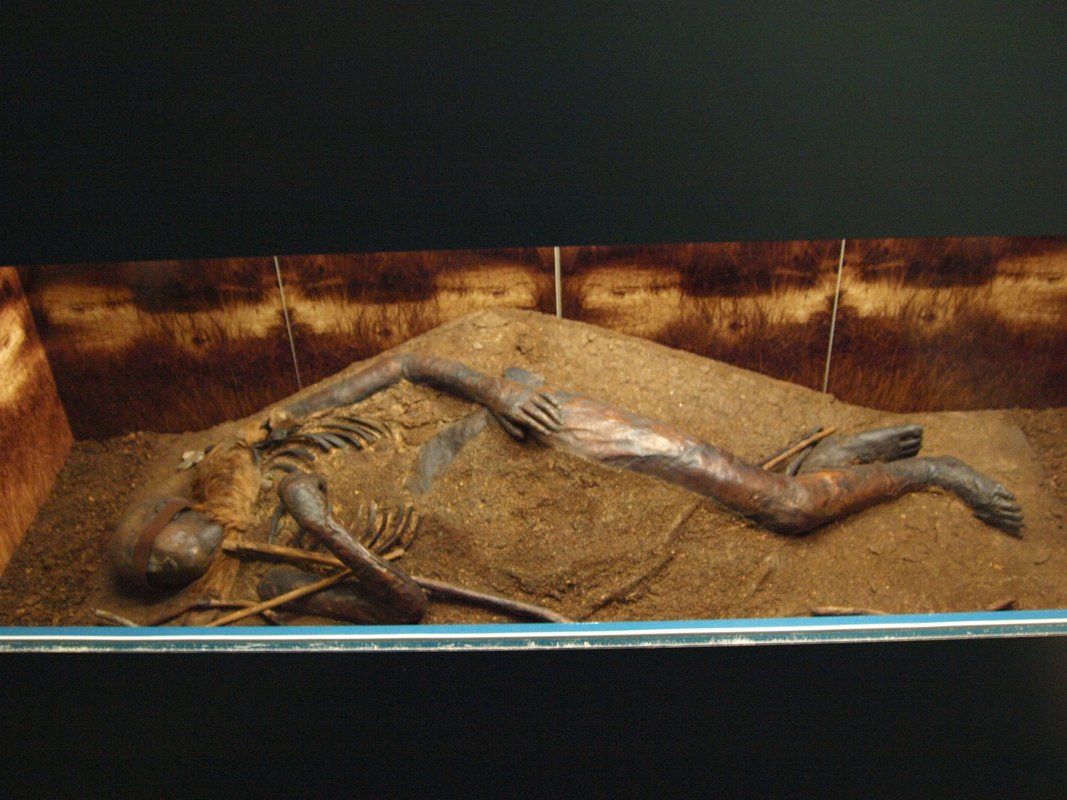
Analysis of the documented cases reveals three main environmental contexts. Northern European peat bogs are the first environment identified: their acidity, low oxygen content and richness in phenolic compounds from the peat create conditions analogous to a tanning bath. Bog bodies -- including the famous Tollund Man, discovered in Denmark in 1950 -- frequently preserve the brain, often better than the rest of the body.
The second context is cold, dry environments: caves, glaciers, church vaults. Cold slows enzymatic reactions and bacterial multiplication, while dehydration prevents autolysis. Several mummified brains have been found in churches across central and southern Europe, where ventilation and temperature conditions create a favourable microclimate.
The third context, more unexpected, is warm anoxic environments: waterlogged sediments, lake clays, hermetically sealed tombs. In these conditions, the absence of oxygen blocks the activity of aerobic bacteria, the main drivers of decomposition. Recent proteomic studies have shown that brain proteins can stabilise as complexes with oxidised lipid molecules, forming a kind of biological "tar" resistant to degradation.
What proteins reveal
The research team applied mass spectrometry to samples of ancient brains to identify preserved proteins. The results are remarkable: proteins specific to neural tissue -- including cytoskeletal proteins such as GFAP (Glial Fibrillary Acidic Protein) and vimentin -- were found in samples several centuries old. These biological markers not only confirm the cerebral nature of the preserved tissue, but also allow researchers to study aspects of the neuronal physiology of historical populations.
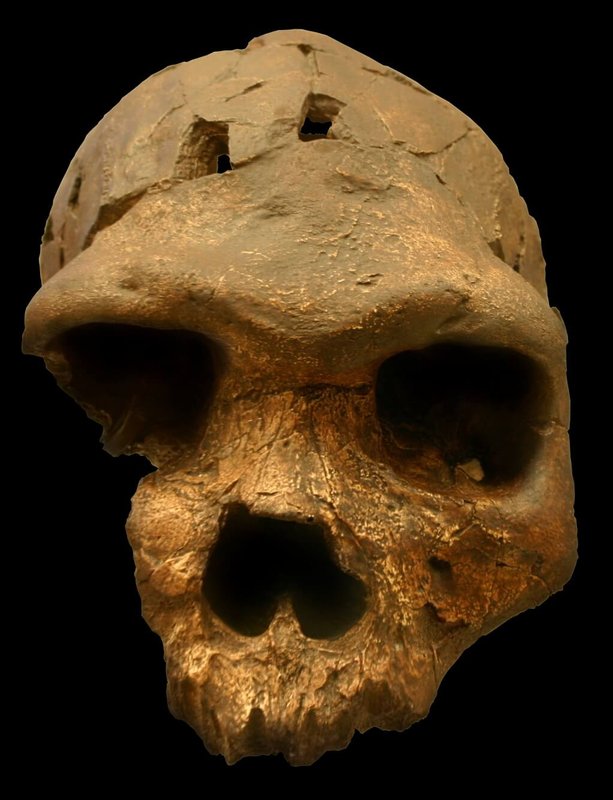
In the longer term, this approach could shed light on the evolution of the human brain throughout prehistoryPrehistoryThe span of human history before the invention of writing, from the Palaeolithic to the Metal Ages, known mainly through material remains.→. If brain proteins can be extracted from sufficiently well-preserved fossilised specimens -- such as certain individuals from Dmanisi (Georgia) or AtapuercaAtapuercaA complex of archaeological sites in the Sierra de Atapuerca (Burgos, Spain), a UNESCO site, yielding an exceptional sequence of human fossils, including the Sima de los Huesos and Homo antecessor.→ (Spain) -- they would yield precious information about the cognitive capacities of our ancestors, without requiring DNADNAThe molecule carrying genetic information, used to reconstruct kinship between species.→, which is often absent or too degraded in such ancient contexts.
Implications for forensic science and palaeontology
Beyond purely academic interest, these findings have practical implications. In forensic science, knowledge of brain preservation mechanisms could help identify ancient remains or determine circumstances of death. In archaeology, it invites a rethinking of excavation protocols: studies have shown that portions of preserved brains have been inadvertently destroyed during digs, because archaeologists did not expect to find soft tissue in apparently bare skeletons.
The study ultimately underlines that the exceptional preservation of the brain is not a marginal or anecdotal phenomenon, but a relatively frequent process -- under-documented for lack of systematic attention. It calls on the scientific community to develop specific protocols to detect and sample these rare tissues before they are destroyed, an irreplaceable resource for the study of ancient humanity.
No comments yet. Be the first.