It was one of the three great Bronze AgeBronze AgeA protohistoric period following the Neolithic, defined by bronze metallurgy (a copper-tin alloy) and the rise of the first cities and states; in Egypt it corresponds to the age of the first pyramids.→ civilizations, alongside Mesopotamia and Egypt. Yet the Indus Valley Civilization remains the least known of the three: its grid-planned cities were among the best organized of antiquity, but its script has never been deciphered, and the names of its rulers, if it had any, still escape us. This imineo documentary retraces the enigma of this vanished culture, revealed a century ago beneath the mounds of Pakistan and north-western India.
A vast, long-forgotten civilization
Rediscovered in the 1920s through the excavations of HarappaHarappaA major city of the Indus Civilization, in the Pakistani Punjab, the first site excavated and the one that gave the HarappanHarappanPertaining to the Indus Civilisation, named after its first excavated site, Harappa (Pakistani Punjab); refers to the material culture, script and people of that civilisation.→ culture its name.→ and Mohenjo-daroMohenjo-daroOne of the largest cities of the Indus Civilization (Sindh, Pakistan), famed for its Great Bath and grid layout; a World Heritage site.→, the Indus Valley CivilizationIndus CivilisationA major Bronze Age urban civilisation (c. 2600-1900 BC) across present-day Pakistan and north-west India: planned cities (Harappa, Mohenjo-daro), standardised bricks, undeciphered script, no monumental palaces.→ (or Harappan civilization) developed across the Indus basin, in what is now Pakistan, north-western India and the margins of Afghanistan.1 At its height, between 2600 and 1900 BCE, it covered around 1.5 million square kilometres, a larger area than Egypt and Mesopotamia combined, and may have gathered up to five million people across hundreds of settlements.2
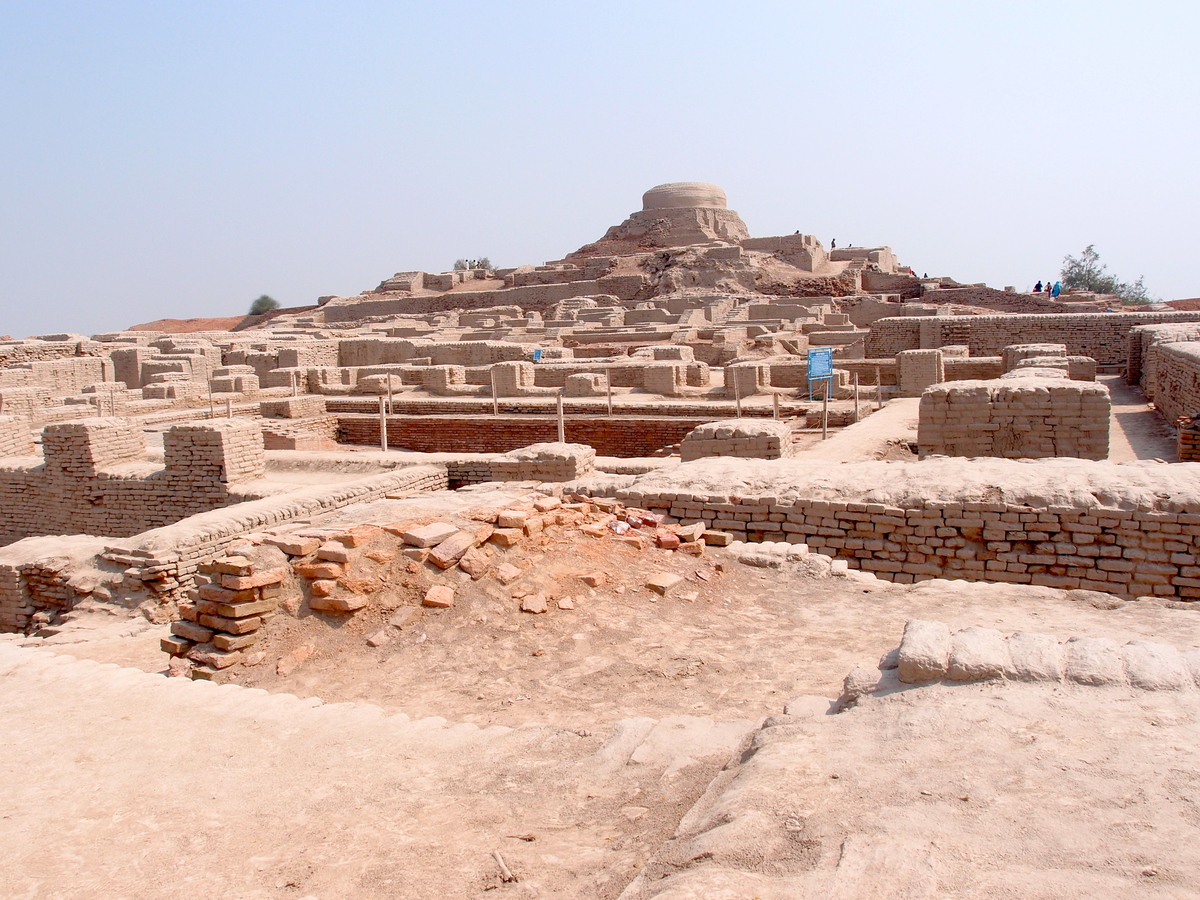
Long overshadowed by its better-documented neighbours, it is now recognized as one of humanity's first great urban cultures, and probably the most extensive of the Bronze Age.
Grid cities and pioneering urban planningUrban planningThe planned organisation of urban space (streets, districts, water and drainage networks, public buildings); the Indus Civilisation offers an early and remarkable example.→
What first strikes archaeologists is the rigour of Harappan town planning. The great cities, Mohenjo-daro, Harappa, Dholavira, were laid out on a grid, with main streets running north-south and east-west, dividing the town into regular rectangular blocks.3
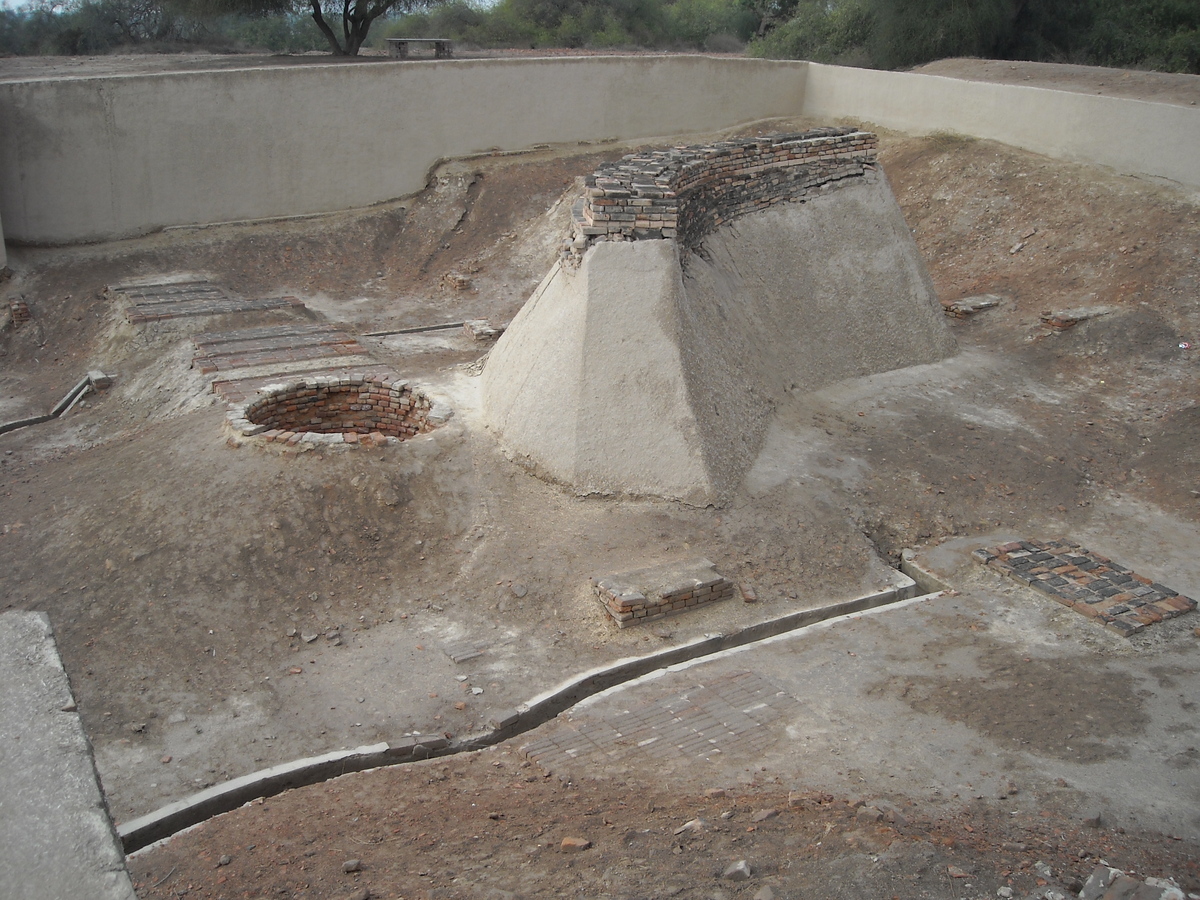
Houses built of standardized baked bricks connected to a network of covered drains of unmatched sophistication for the period. Private baths, wells, granaries, water reservoirs and, at Mohenjo-daro, a vast Great Bath, reveal a remarkable command of sanitation and hydraulics. The recurrence of this plan across sites hundreds of kilometres apart suggests some shared planning authority.
A still-undeciphered script
The greatest mystery of the Indus lies in its scriptIndus scriptA system of about 400 signs engraved on Harappan seals, tablets and pottery, undeciphered to date for lack of a bilingual text.→. About four hundred signs are known, carved mostly on small steatite sealsHarappan sealSealA small engraved object (often steatite) used to stamp a mark in clay; the Indus seals, bearing animals and signs, attest to administration and trade, though their script remains undeciphered.→A small steatite stamp engraved with animals (often a 'unicorn') and signs, probably used for trade and identification; an emblem of the Indus Civilization.→, on tablets and on pottery.3
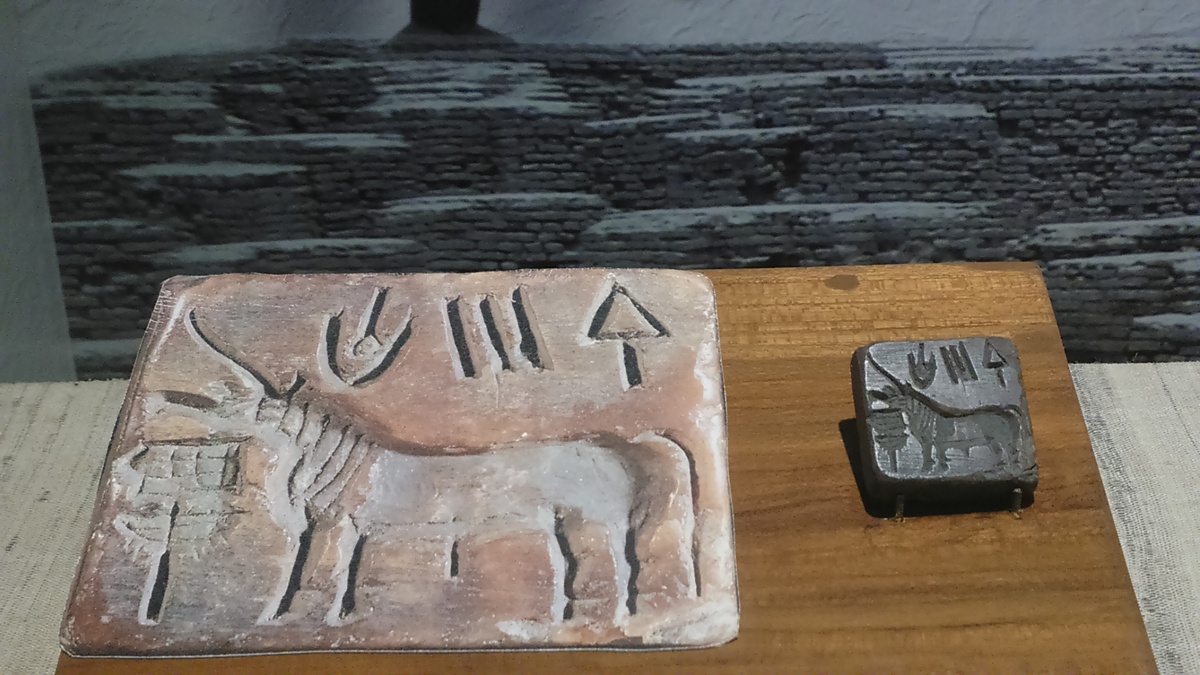
With no bilingual text comparable to the Rosetta Stone, and because the inscriptions are very short (a few signs on average), the script resists every attempt at deciphermentDeciphermentThe reconstruction of the meaning and value of the signs of an unknown script, often from bilingual texts, repeated proper names or statistical regularities.→. We do not even know the language the Harappans spoke, and most of their political and religious history remains silent to us.
A discreet but refined art
The Indus Civilization left no monumental temples or lavish royal tombs, but its portable artPortable artTransportable art objects (figurines, engravings on bone or ivory), such as the Palaeolithic Venuses.→ is strikingly fine. Two pieces have become iconic.
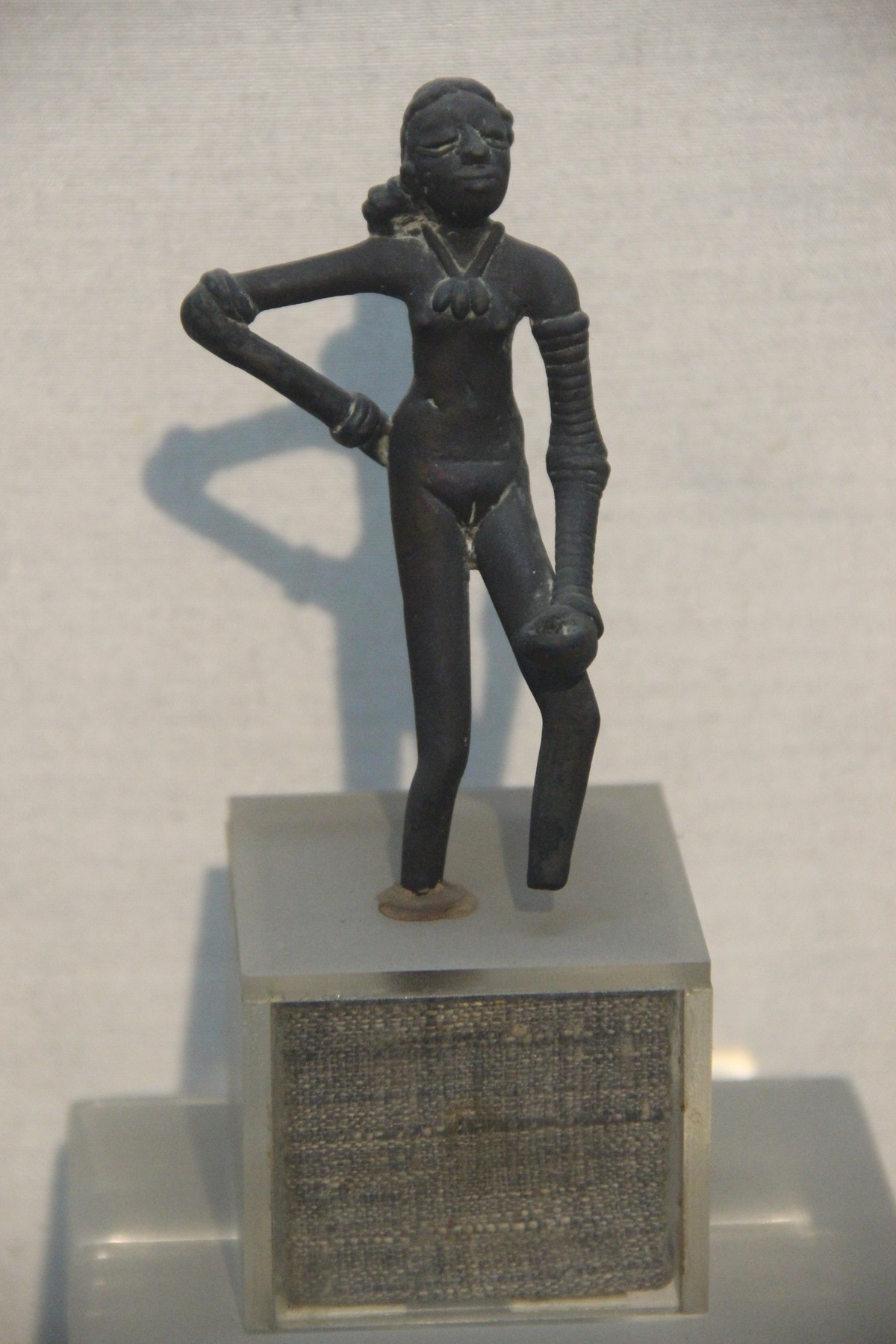
The Dancing Girl, a small lost-wax bronze, reveals early mastery of metallurgy; the Priest-King, a steatite bust with half-closed eyes and a trefoil-patterned robe, is this culture's most famous image, even though we know nothing of the person portrayed. Seals, terracottaTerracottaClay shaped and then hardened by firing; the material of pottery, bricks and figurines, ubiquitous since the Neolithic.→ figurines, carnelian ornaments and standardized cubic weights complete the picture of a society of craftspeople and merchants.
The Priest-King and the enigma of power
Unlike Egypt with its pharaohs, or Sumer with its kings, the Indus Civilization has yielded no identified royal palace, no obvious depiction of a ruler, and no triumphant war scene.
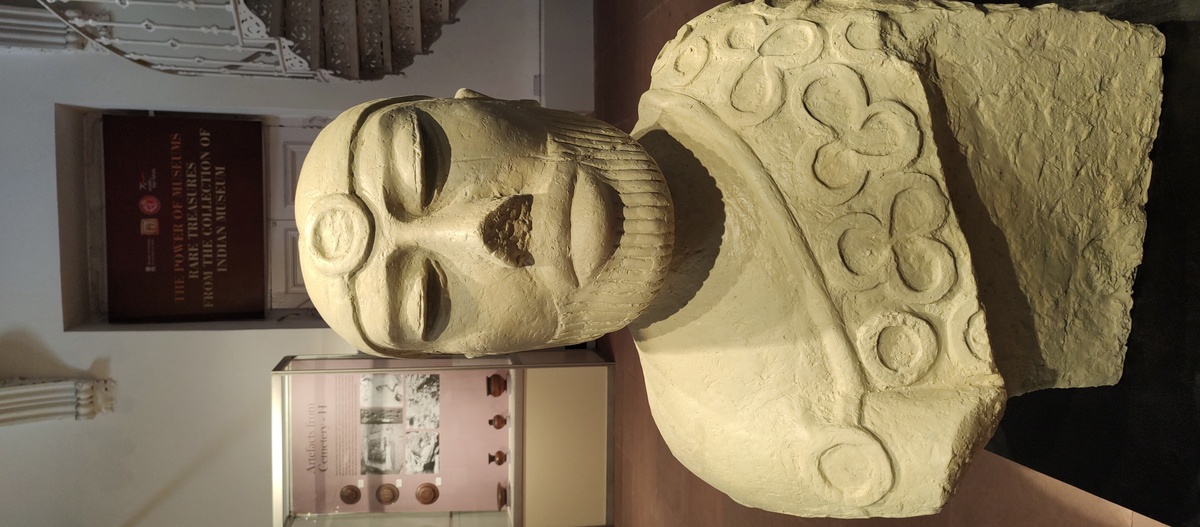
This apparent absence of an ostentatious warrior elite is intriguing: some scholars see a relatively egalitarian society, others an authority based on trade, water or religion rather than military force. The debate remains open, one of the great attractions of this enigmatic culture.
Trade across the known world
The Harappans were not isolated. Their seals and carnelian beads have been found as far as Mesopotamia, whose cuneiformCuneiformThe oldest known writing, born at Uruk; its signs, impressed into clay with a reed stylus, are wedge-shaped (from Latin cuneus).→ texts mention a distant land called MeluhhaMeluhhaThe name given in Mesopotamian texts to a distant land, which most specialists identify with the Indus Civilization, a trading partner of Sumer.→, which most specialists identify with the Indus Civilization.1
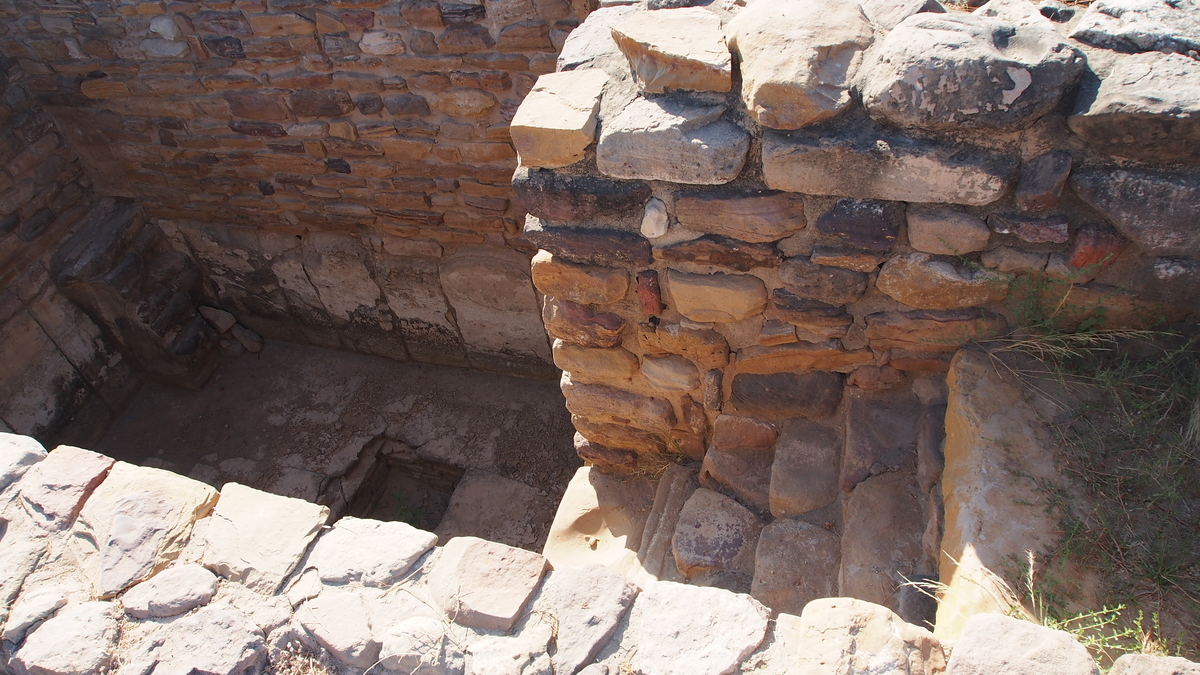
Cotton, timber, ivory, carnelian and perhaps grain were exchanged by land and sea, via the Persian Gulf. A remarkably regular system of weights and measures framed these transactions, a sign of an organized economy and shared trust in common standards.
The end of a world, around 1900 BCE
Around 1900 BCE, the great cities declined: urban order loosened, script and seals disappeared, populations dispersed east and south.4 The causes of this unravelling are still debated and probably multiple.
Scholars point to a weakening monsoon and progressive aridification, the shifting or drying of rivers (notably the Ghaggar-Hakra system), repeated flooding, or internal tensions. The old theory of a violent 'Aryan' invasion is now largely abandoned in favour of a slow, regional transformation. The Indus Civilization did not collapse in a day: it dissolved, leaving behind cities of brick and a script we still cannot read.
About this documentary
This film, 'Civilisation de l'indus : une énigme de 5000 ans', is offered by the channel imineo Documentaires, which publishes many French-language popular documentaries.5 It provides an accessible gateway into this fascinating civilization, which archaeological research keeps illuminating, dig after dig.
C'est accessible mais pas simpliste. Parfait pour quelqu'un comme moi qui débute.