Roughly thirteen thousand years ago, as the last great glaciers were retreating, human families were pressing into a land no one had yet set foot upon. They moved through forests and grasslands inhabited by mammoths, mastodons and giant sloths, animals wholly alien to us today. These pioneers left no walls and no monumental tombs. What they bequeathed us are chiefly stone points, small sharp weapons found by the thousand in the fields and riverbanks of the Tennessee Valley. A study published in 2026 proposes to read a considerable lesson in these tiny objects: how human beings learn to inhabit an unknown world.
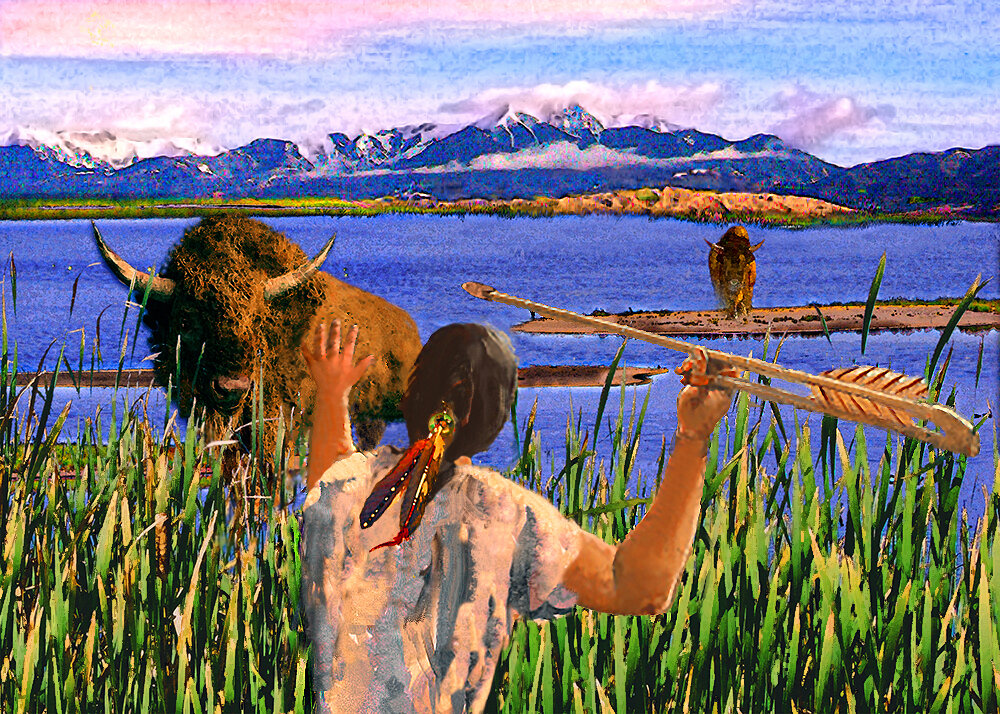
The archaeologists Jesse Tune, of the University of Mississippi, and Shane Miller, of the University of Alabama, examined nearly five hundred projectile points gathered in this region, in the heart of the eastern United States. Their work, published in the Journal of Archaeological Method and Theory, is not after the spectacular.1 It begins with a simple question: when you arrive in a territory you know nothing about, what do you decide to carry, and what do you choose to learn? These points, the researchers say, are a rare window onto behaviors once thought lost forever.
A New Continent at the Edge of the Ice
To grasp what was at stake, picture the situation of these first inhabitants. The peopling of the AmericasPeopling of the AmericasThe migration of the first modern humans into the Americas from Asia via Beringia, long dated to around 13,000 years ago (the "Clovis first" model) but pushed back beyond 20,000 years by sites such as White Sands.→Peopling of the AmericasThe migrationsMigrationsLong-distance movements of populations; a major driver of human history (the exit from Africa, the peopling of continents, Neolithic and steppe expansions).→ that led Homo sapiensHomo sapiensThe present-day human species, which emerged in Africa around 300,000 years ago, the only surviving human lineage after the extinction of Neanderthals and Denisovans.→ to occupy the American continent, from BeringiaBeringiaA vast land bridge emergent between Siberia and Alaska during the last glaciation, at the site of today's Bering Strait; a cold steppe through which the first Americans passed.→; its date and routes remain debated.→ reached eastern North America in the final millennia of the Pleistocene, the long span of glaciations that ended roughly 11,700 years ago. The human groups then entering the subcontinent were few, highly mobile, and advancing across a landscape no one had mapped. Nothing told them where to find safe water, reliable game or, crucial for a stoneworker, a good outcrop of siliceous rock.
For these hunters had no pack animals. No domestic horse, no llama, no beast of burden to carry the load. Everything a group moved, it moved on its back, by the strength of arms and legs. Under such conditions, every kilogram counts. "You really don't want to be carrying around a bag of rocks," Shane Miller sums up, "and so you're going to be judicious about balancing what you need versus what you can carry."2 Stone, the raw material of every weapon and nearly every tool, thus became a precious good, to be husbanded like a scarce resource. FlintFlintA hard, brittle siliceous rock, knapped by prehistoric people to produce blades, points and sharp tools.→ and related rocks such as chert, siliceous sedimentary stones that fracture cleanly, are not found everywhere. You have to know the sources, and in an unknown country, no one does.
Clovis, the First Steps of a Settlement
In the Tennessee Valley, the oldest well-dated human traces belong to the ClovisClovisA Palaeoindian culture of North America (c. 13,000 years ago), recognizable by its fluted stone points; long believed the oldest on the continent, no longer so.→ culture, whose regional presence reaches back to about 13,200 years ago.3 The ClovisClovisA Palaeoindian culture of North America (c. 13,000 years ago), recognizable by its fluted stone points; long believed the oldest on the continent, no longer so.→ are among the very first populations of eastern North America. Their most famous signature is a weapon: the fluted pointfluted pointA projectile point thinned at the base by the removal of a long axial flake, the flute, which eased haftinghaftingThe way a blade or point is fixed onto a handle or shaft, a key stage in making a composite tool.→.→, a finely knapped stone blade thinned at its base by the removal of a long axial flake, the flute, which likely eased hafting onto a shaft.
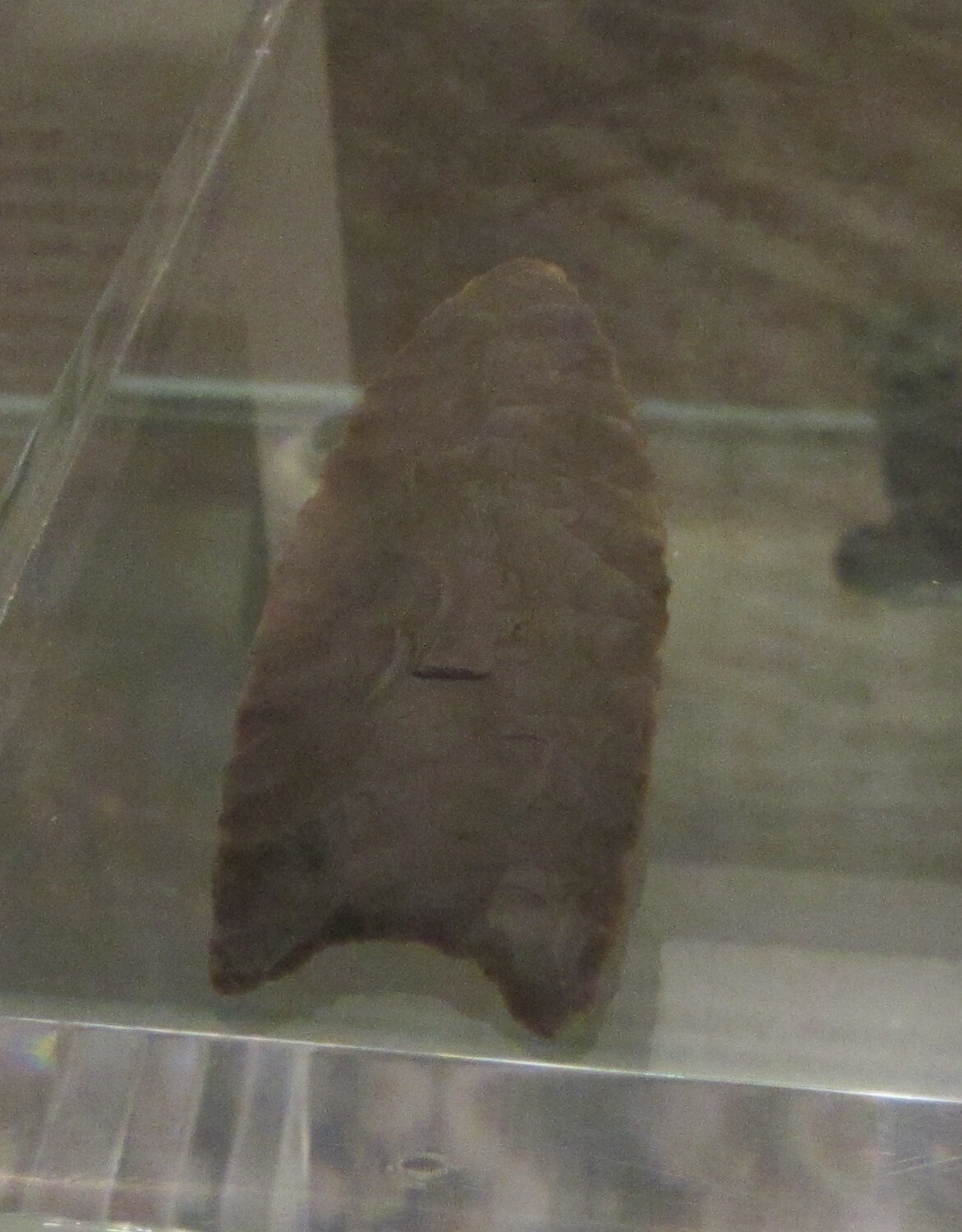
Studying the region's Clovis points, Tune and Miller noted a singular behavior. Rather than replace a dulled or damaged point, Clovis knappers resharpened it, again and again, until it was nearly used up. The points bear the repeated marks of these rejuvenations, shortened and reshaped across successive repairs, worked to the very limit of their usefulness. In other words, these PaleoamericansPalaeoindianRefers to the earliest human cultures of the Americas at the end of the Pleistocene, big-game hunters, including Clovis and Folsom.→ kept their weapons far longer than one would expect of objects designed to be thrown away.
And that is precisely where the interest lies. "Spear points were designed to be disposable objects," Jesse Tune stresses, "and that makes what the Clovis were doing interesting."2 In principle, a broken point is replaced: you knap a fresh one and abandon the old. That the Clovis instead mended theirs so stubbornly reveals a deliberate strategy of conservation. When you do not know where the next stone outcrop lies, prudence dictates making the most of what you already hold in your hands.
Resharpening to Exhaustion, a Strategy of Caution
This instinct to spare raw material is no small matter. It expresses a form of risk intelligence. For a group that does not know when it will find good rock again, every resharpened point is a point that need not be replaced, and so a little stone saved and a little uncertainty set aside. To resharpen is to buy time. It is to postpone the moment when one must once more go looking for a source, with no guarantee of finding one.
This reading aligns with the models archaeologists borrow from behavioral ecology, and in particular from foraging theory, which seeks to predict how individuals manage their resources under constraint. In an unfamiliar environment, information is lacking. One knows neither where the sources are, nor their quality, nor their distance. Faced with that uncertainty, prolonging the life of each tool is a rational response. The Clovis points of the Tennessee Valley thus make visible, in concrete terms, the caution of travelers advancing blind. Each weapon carries, inscribed in its resharpening scars, the trace of a constant calculation between what is kept and what might be lost.
The two researchers' method draws its strength from numbers. By assembling nearly five hundred points, one no longer relies on the exception or the striking isolated object, but on a robust statistical tendency, legible at the scale of an entire population. Resharpening a point leaves precise marks: the edge recedes, the outline shortens, the weapon's proportions drift step by step away from those of a fresh piece. By comparing these wear signatures from one assemblage to the next, Tune and Miller can measure, rather than merely guess, how far a community husbanded its stone. That is the whole point of working on massive series rather than a handful of spectacular finds: collective behavior shows through where the individual anecdote would stay mute.
It is worth stressing how counterintuitive the Clovis pattern is. A projectile point is, by its very function, an expendable thing, meant to be lost in a carcass, snapped on impact, left where it falls. A people that instead nursed its points through repair after repair was, in effect, fighting the natural economy of the object, and doing so consistently. That stubbornness is the clearest sign that something other than habit was at work: a shared sense, carried from camp to camp, that stone was not to be squandered until the land itself had been read.
Cumberland, the Ease of the Heirs
Several centuries later, another people occupies the same valley: the CumberlandCumberlandA Paleoamerican tradition of the southeastern United States, a few centuries later than Clovis, defined by a distinctive point type.→, named after the river and plateau of the same name. They hunt the same game as their predecessors, mammoths, mastodons and giant sloths, in a world still gripped by the Ice Age. But their points tellTellAn artificial mound formed by the accumulation of successive layers of settlement remains at the same spot, typical of the Near East. Each destruction-rebuilding event adds a stratum.→ an altogether different story.
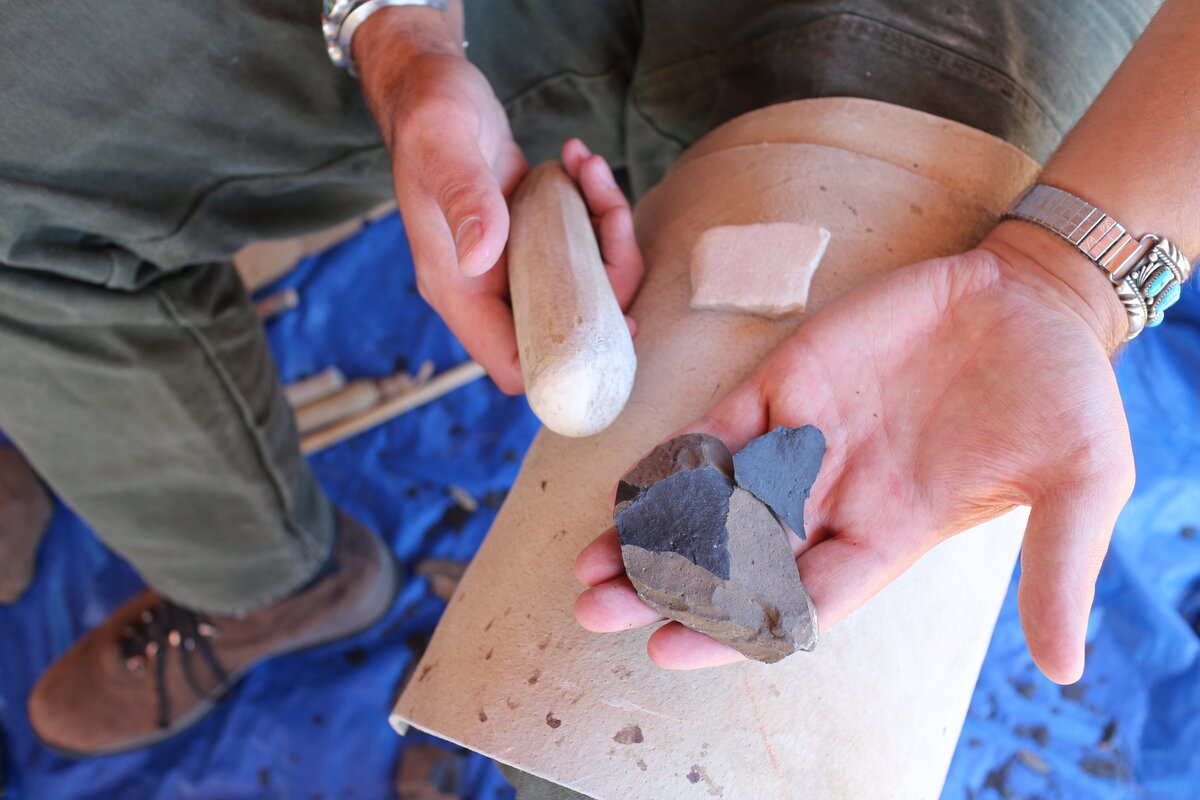
Where the Clovis wore their weapons down to nothing, the Cumberland prove far more lavish. Tune and Miller found that they readily discarded barely dulled points, far from broken, still perfectly fit for use. "It was rarely completely broken to the point that it couldn't be used anymore," Jesse Tune observes. "So how did it end up in what was essentially the trash, and then in the archaeological record?"2 These abandoned points often still bear the signature of their source rock, meaning their outcrop can be identified, along with the traces of several earlier reuses. They were not thrown away through carelessness, then, but because their owners could afford to.
How to read this reversal? For the two researchers, the Cumberland had inherited a knowledge the Clovis did not possess on arrival: knowledge of the stone sources. After centuries of regional occupation, the places where good siliceous rock outcrops had been located, memorized and handed down. A Cumberland hunter knew where to reshape a fresh weapon. He could therefore rid himself of a still-serviceable point without taking a risk, confident of finding raw material within walking distance. The Cumberland's apparent waste is not heedlessness: it is the luxury of those who know their land. Where the Clovis managed a scarcity of information, the Cumberland drew on a store of knowledge accumulated by their forerunners.
From the Tennessee Valley to Mars
This contrast between two peoples separated by a few centuries illuminates a universal mechanism: the way humans tame a new territory. The Clovis are the explorers of the first hour, attentive to every resource, thrifty by necessity. The Cumberland are the settled occupants, who have absorbed the mental map of the country and act with the ease of those who know where everything is.
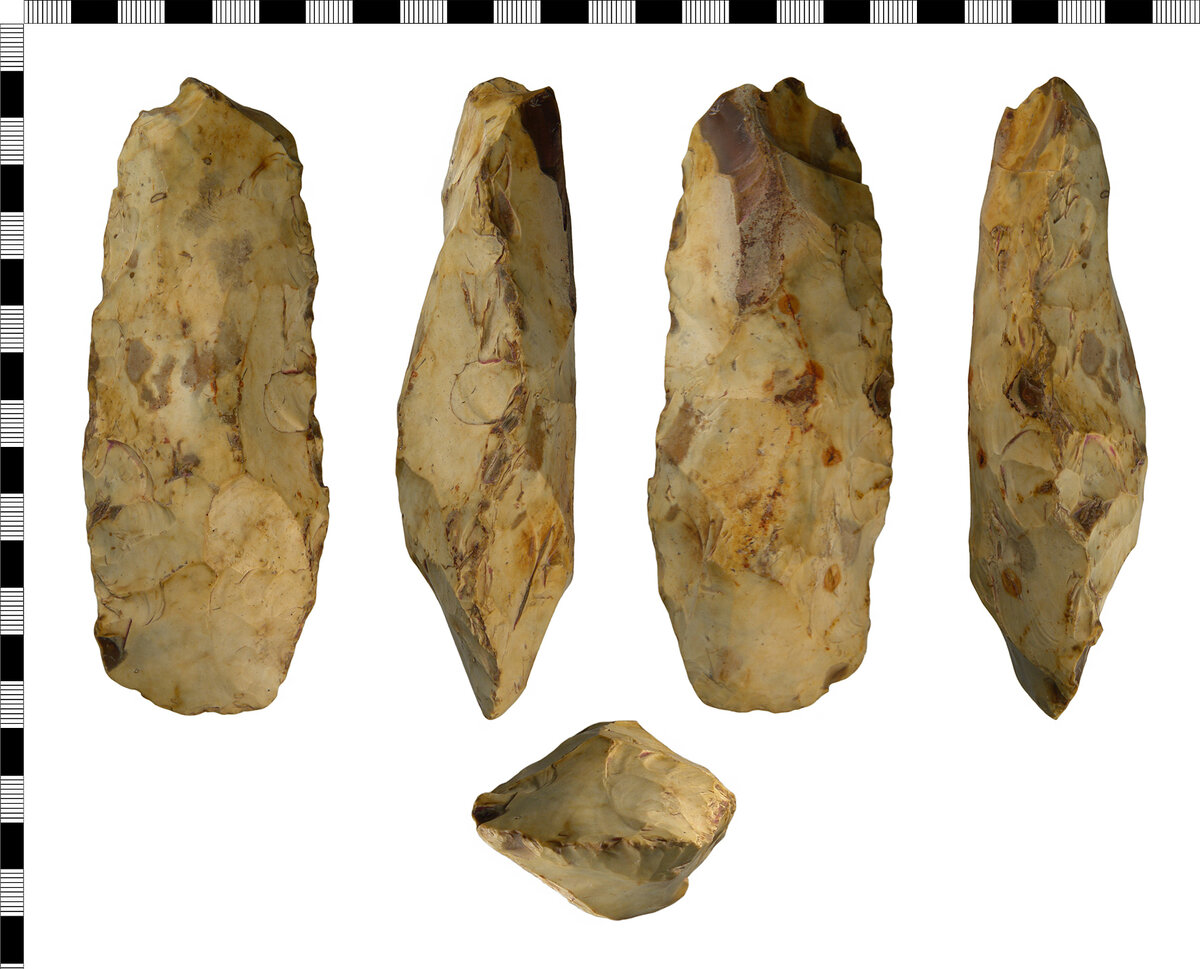
Jesse Tune carries the comparison all the way to our own era. "There really is no difference between Ice Age hunter-gatherersHunter-gatherersA way of life based on hunting, fishing and gathering wild resources, without farming or herding; it dominated almost the whole of human history.→ and the people sending missions and rovers to Mars," he states. "We're moving into an area, deciding what to take with us, learning the resources and slowly expanding. It's the exact same process."2 A space mission faces the same fundamental calculation as these Pleistocene families: what must you carry when you can carry almost nothing, and what must you instead learn to produce on site? The only thing that has changed, the researcher concludes, is the technology. What we learn, and the way we pass that knowledge on, remain the same challenges as thirteen thousand years ago.
Scanning Other Sites, Reading Deeper in the Stone
The Tennessee Valley study is only a first marker. Excavatable archaeological sites remain rare for these very ancient periods, but the points themselves abound: gathered for generations by amateurs and collectors, they form a considerable, still largely untapped reservoir of information. The next step, for Tune and Miller, is to extend the method to other regions and other sets of points, to test whether the shift from Clovis caution to Cumberland ease recurs elsewhere.
One limit remains, which the researchers readily acknowledge: their data show that learning took place, but not how fast. How many generations were needed for the map of stone sources to become shared knowledge? The stone keeps that secret. Yet it already offers a rare lesson: that of men and women who, facing a pristine continent, turned uncertainty into knowledge, and left in their humble flint points the trace of that learning. Thirteen thousand years later, these weapons worn to the bone still speak to us of the most human of adventures, that of learning an unknown world. In the patient resharpening of one people and the easy discarding of another, we read nothing less than the moment a strange country became a home.
No comments yet. Be the first.