WritingWritingA system of conventional signs used to fix language or information durably; its appearance (c. 3300 BC) marks, by convention, the end of prehistory.→ was not born to compose poetry or narrate epics. It was born to count. Around 3200 BCE, in the great city of Uruk on the banks of the Euphrates in southern Mesopotamia, anonymous officials began to engrave symbols on small clay tablets representing quantities of goods: oil jars, grain rations, heads of livestock, working days. These humble accounting tablets constitute the first written documents in the history of humanity - and the ancestors of everything written since.1
From Clay Tokens to Tablets: 5,000 Years of Accounting
The history of Mesopotamian accounting does not begin with tablets. It starts several millennia earlier, with a system of clay tokens that prehistorian Denise Schmandt-Besserat identified in the 1970s. These tokens, of varied shapes (spheres, discs, cylinders, cones), each represented a unit of a specific commodity: a disc for a measure of grain, a sphere for a jar of oil, a cone for a smaller grain quantity.
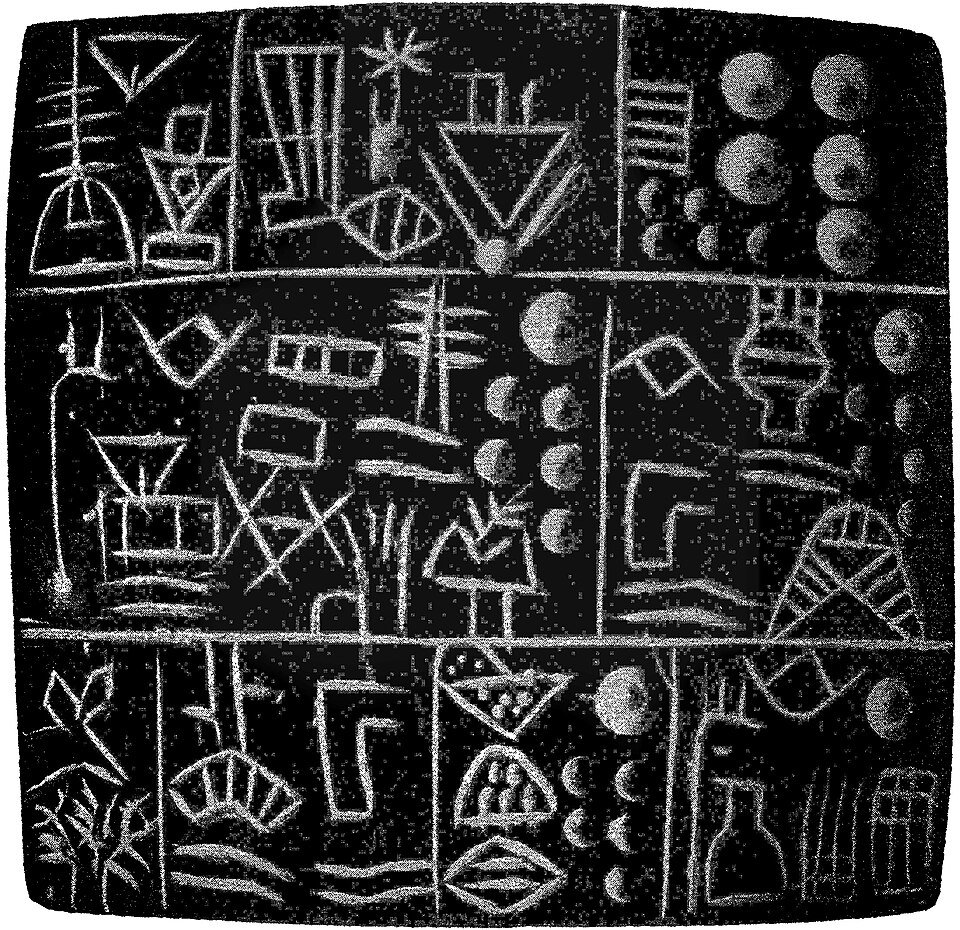
These tokens were used for commercial transactions and payments. To ensure they were not tampered with during transport, they were enclosed in spherical clay envelopes (the "bullae"). But since one could no longer see the contents without breaking the envelope, people began impressing the tokens onto the external surface before enclosing them. Very quickly, it became apparent that it sufficed to inscribe these marks on a flat clay surface, making the tokens and envelopes superfluous. The tablet was born.2
Proto-Cuneiform at Uruk: Writing for the Economy
The approximately 5,000 proto-cuneiform tablets unearthed at Uruk and dated to the Late Uruk period (3400-3100 BCE) represent the oldest corpus of writing ever discovered. Their study has revealed that this writing is above all economic and administrative in character. They contain lists of food rations distributed to workers, livestock censuses, accounts of raw materials received from distant regions, and records of property transfers.
This nascent writing is not yet phonetic - it does not record sounds but concepts and quantities. A pictogram of an ox head followed by a numeral means "X oxen"; a pictogram of a jar plus a numeral means "X jars." But progressively, this system was enriched: to record proper names that could not be directly represented, signs began to be used for their phonetic value, opening the path to syllabic and then alphabetic writing.
The City, the State and Writing: An Inseparable Triangle
Why Uruk? Because it was the largest city in the world at the time, with a population estimated at between 40,000 and 80,000 inhabitants at its peak. This unprecedented concentration of people generated an administrative complexity that human memory alone could no longer manage. Wages had to be recorded, rations distributed, taxes collected, corvee labour organised for the construction of temples and irrigation canals.3
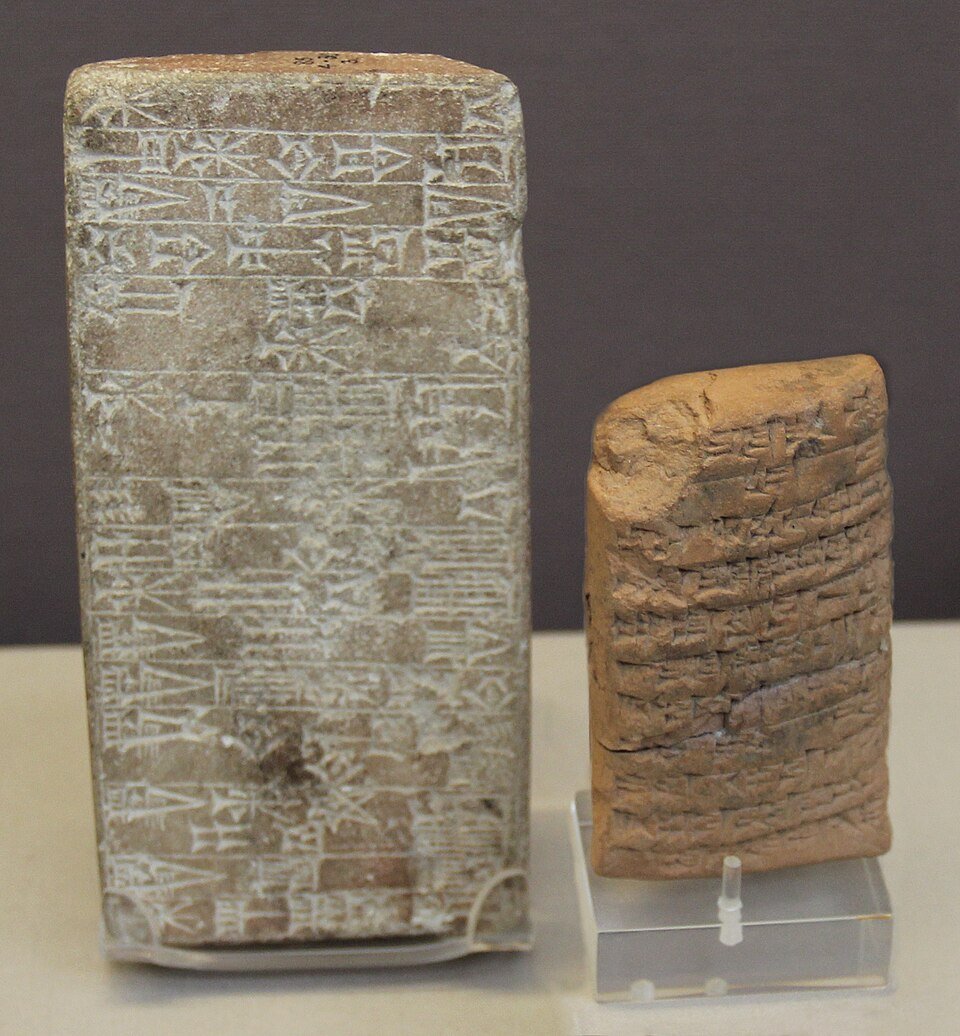
Writing is therefore not an invention of the human mind seeking to express its creativity - it is a bureaucratic invention, born of the constraints of managing a complex society. This observation, which might seem disenchanting, is in reality extraordinary: it is precisely because writing was useful, indeed indispensable for the survival of social organisation, that it developed and was refined over the centuries.
Even today, the vast majority of what is written in the world is not literature: it is invoices, contracts, lists, registers - in a word, accounting. In this sense, the anonymous scribes of Uruk, more than five millennia ago, truly invented not only writing, but the world in which we live.
No comments yet. Be the first.