In north-western Australia, in the Dampier Archipelago, lies one of humanity's most extraordinary and least-known heritage sites. On the dark rocks of the Pilbara, the Marduwarra - ancestors of the Aboriginal peoples of the region, now known collectively as Murujuga - engraved a wordless narrative for more than 50,000 years: close to one million petroglyphs, making this the largest ensemble of engraved rock artRock artThe whole body of graphic representations (painted or engraved) made on rock walls, slabs or blocks.→ on the planet. This SLICE HISTOIRE documentary plunges into the heart of this archive in stone and questions its threatened future.1
A million voices engraved in rock
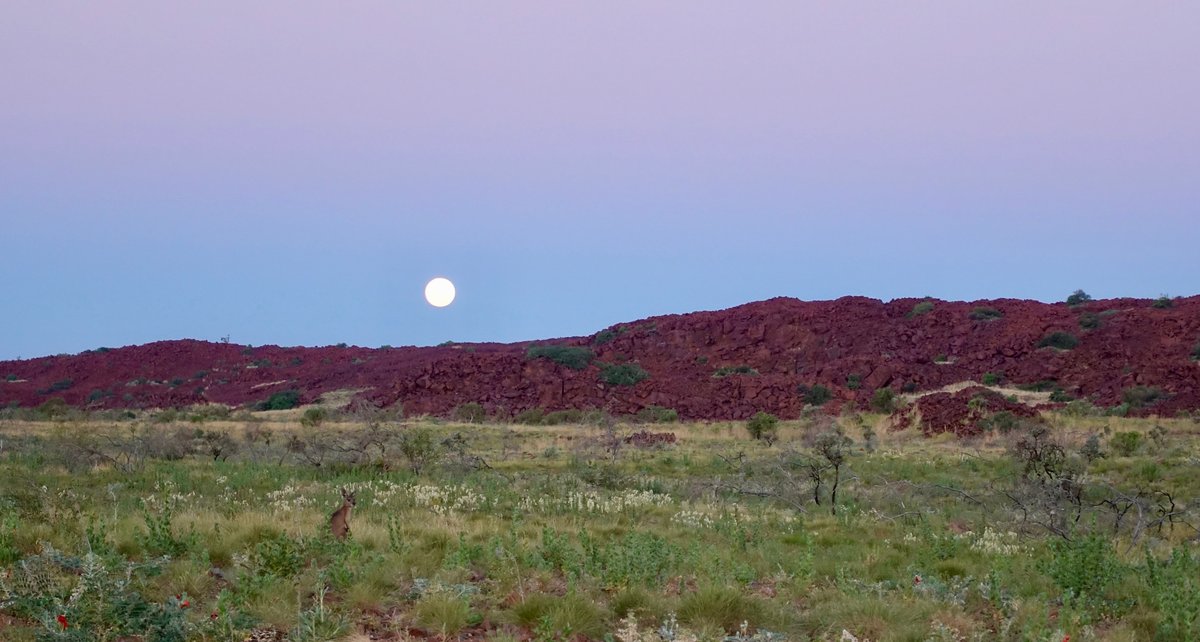
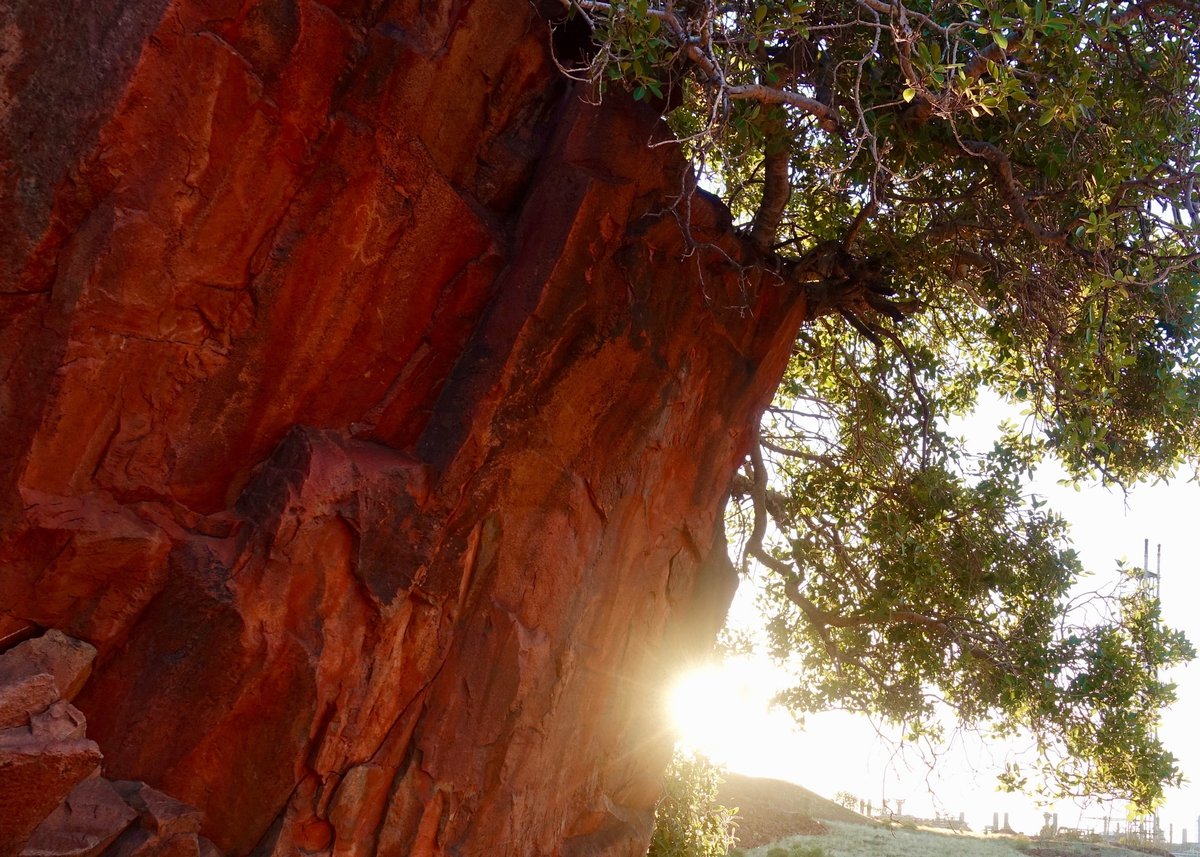
The Murujuga petroglyphs - Burrup Peninsula in European nomenclature - cover thousands of rocks of gabbro and dolerite darkened by manganese oxide. This characteristic dark colour, produced by millennia of exposure to sun and weather, contrasts with the pale mineral exposed by engraving, making the carvings immediately legible to the naked eye. Kangaroos, emus, turtles, large fish and ritual human figures are all present, as well as oval-shaped faces characteristic of early modern humans, and representations of animals now absent from the region - including a possible depiction of the thylacine, the "Tasmanian wolf" eradicated from the Australian mainland thousands of years ago.
Among the most enigmatic motifs are what researchers interpret as "water maps": geometric configurations of dots and lines corresponding to the topography of springs and pools across an arid landscape. If this interpretation is correct, the petroglyphs were not merely artworks or mythic narratives but also survival tools - navigation guides in a desert where water is a matter of life and death.2
50,000 years of memory in stone
Dating these petroglyphs is a major scientific challenge. Unlike cave paintings, which use organic pigments datable by radiocarbon, engravings contain no intrinsic organic material. Researchers use indirect methods: luminescence datingLuminescence datingA method dating the last heating or light exposure of sediments and minerals by measuring energy trapped in the crystal.→ of sediments buried beneath the carvings, analysis of the manganese oxide that progressively recoats exposed surfaces, and comparison with past sea levels.
The Dampier Archipelago offers an exceptional chronological argument: 50,000 years ago, when seas were far lower during the ice age, what is now an archipelago of islands and peninsulas was a vast coastal plain. Some petroglyphs now submerged beneath the ocean or located on isolated islands were then surrounded by exposed land. They document a world whose very geography was transformed by post-glacial sea-level rise. The most recent engravings, dating to a few hundred years ago, represent European vessels - fixing the upper boundary of the tradition and confirming its continuity into the modern era.3
The Dreaming engraved in stone
For the Murujuga peoples, these engravings are not merely archaeological testimonies: they are living manifestations of the Dreaming - that foundational concept of Australian Aboriginal cosmologies that transcends the opposition between past and present. The Jukurrpa - Dreaming narratives - are not fixed legends but ontological maps guiding the relationships between humans, animals, plants, places and cosmic forces.
The petroglyphs form part of a network of "songlines", those invisible pathways crossing the Australian continent and connecting sacred sites to one another. Each engraving is a node in this network, a note in an immense score that the ancestors knew by heart. To walk these paths singing is to reactivate the world, to reaffirm its coherence. For Murujuga cultural custodians, allowing the engravings to deteriorate is not merely losing artworks: it is interrupting a cosmic song, erasing part of the world's memory.4
A heritage under the bulldozers
This is where the story turns dramatic. The Burrup Peninsula also hosts one of Australia's largest petrochemical complexes. Since the 1960s, companies such as Woodside Energy have built gas liquefaction plants, refineries and port terminals here. Construction required clearing thousands of engraved rocks. No one knows exactly how many petroglyphs were destroyed, but conservative estimates suggest several thousand engravings have been irreversibly lost.
Concerns extend beyond physical destruction. Industrial emissions - nitrogen oxides, sulphur dioxide - are thought to accelerate the chemical corrosion of the "desert varnish" that protects the engravings and contrasts with the exposed mineral. A 2021 study by researchers at the University of Melbourne demonstrated that concentrations of weak acids at levels present around the industrial complex could significantly accelerate the degradation of engraved surfaces.5
In 2023, Australia nominated Murujuga for inscription on the UNESCO World Heritage List, which would constitute an international recognition of its outstanding universal value. However, inscription does not automatically halt industrial activity, and the standoff between heritage defenders, energy companies and the Australian government continues. This SLICE HISTOIRE documentary gives voice to archaeologists, Murujuga cultural custodians and activists who refuse to let this great book of stone close forever.6
No comments yet. Be the first.