There are moments in the history of science when an entire discipline is caught off guard by a derisory scrap of matter. The DenisovanDenisovanAn extinct human population, cousin of the Neanderthals, identified in 2010 from the DNA of remains in Denisova Cave (Siberia).→, or Denisova homininHomininMember of the subtribe Hominina, comprising the human lineage (Homo, Australopithecus, Paranthropus…) but excluding orangutans and gibbons. The term progressively replaces "hominid" in its narrow sense.→, belongs to that singular category of discoveries: it was born not from an exhumed skull, an articulated skeleton or a complete jaw, but from a chip of bone the size of a grain of rice, the tip of a child's finger bone. From this almost insignificant remnant, researchers conjured an entire human population, distinct from NeanderthalsNeanderthalsA fossil humanity of Eurasia, robust and cold-adapted, extinct around 40,000 years before present.→ as from ourselves, whose physical appearance we still do not know. The Denisovans thus became, within the galaxy of fossil hominins, a kind of genetic ghost: a lineage first read in a sequence of DNADNAThe molecule carrying genetic information, used to reconstruct kinship between species.→ before ever being contemplated in stone.
This reversal of the usual order of knowledge, genetics preceding anatomy, is in itself a major epistemological event. For a century and a half, palaeoanthropologyPalaeoanthropologyThe science that studies human evolution from the fossil remains of hominins (bones, teeth, footprints) and their context, to reconstruct our biological origins.→ had operated according to an unchanging logic: bones were discovered, described, compared, and then, eventually, hypotheses were drawn about their kinship. With the Denisovans, the process was inverted. It was the reading of the genome of a finger bone that revealed the existence of an unknown human group, and only afterwards did researchers strive to assign to this molecular signature the rare fossils that might correspond to it. This article sets out to retrace that extraordinary history: the discovery of 2010, the birth of a species out of ancient DNAAncient DNAGenetic material preserved in old remains, often degraded, sequenced with cutting-edge techniques.→, the meagre fossil record, the Tibetan mandible of Baishiya, the kinship with Neanderthals, the hybrid girl nicknamed "Denny," the genetic adaptation of Tibetans to high altitude, and the still-vivid legacy the Denisovans left in the genetic heritage of the peoples of Oceania.
The 2010 discovery: a finger bone in Denisova Cave
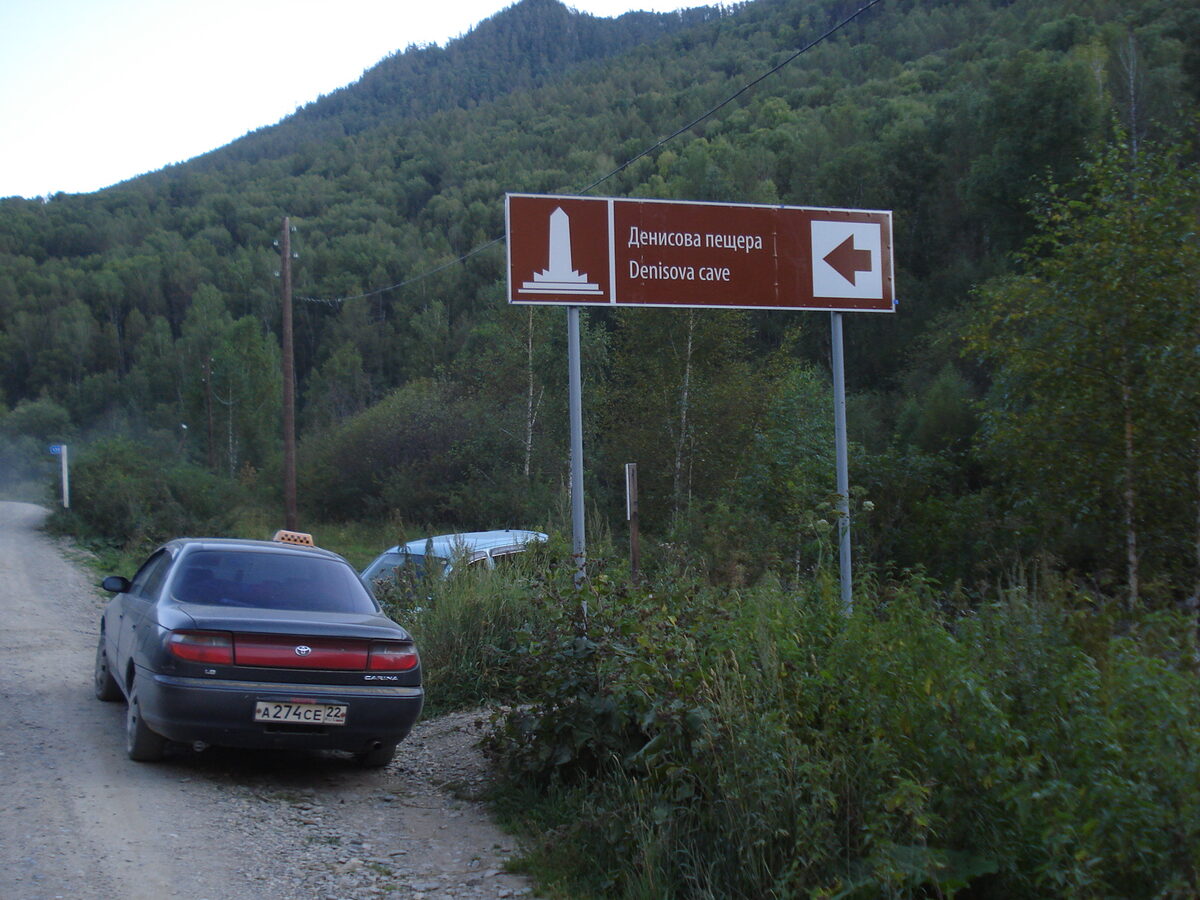
The story begins in the Altai Mountains, in southern Siberia, near the meeting point of Russia, Kazakhstan, Mongolia and China. It is there, in the Anuy valley, that Denisova Cave opens, in Russian, Denisova Peshchera. Its name, local tradition holds, comes from a hermit named Denis (Dionisiy) who is said to have withdrawn there in the eighteenth century. But long before this recluse, and long before Russian archaeologists began working there systematically in the 1970s, the cavity had sheltered, intermittently and over tens of thousands of years, human occupants of several different lineages.
In 2008, during an excavation campaign led by teams from the Institute of Archaeology and Ethnography in Novosibirsk, in layer number 11 of the cave's eastern gallery, the diggers uncovered a tiny object: the distal phalanx of a fifth finger, the little finger, belonging to a child or young adolescent. Nothing about this bone signalled to the naked eye that it belonged to anything other than an ordinary human being. Its morphology was too crude, too reduced, to permit any precise taxonomic attribution. In the context of an excavation rich in tools and faunal remains, such a fragment might well have remained ignored, filed without ceremony among the indeterminate human bones. This is precisely what makes what followed so remarkable.
For instead of settling for an osteological description, the Russian team entrusted part of the sample to the laboratory of Svante Pääbo, at the Max Planck Institute for Evolutionary Anthropology in Leipzig. That laboratory was then at the world's cutting edge of palaeogeneticsPalaeogeneticsThe study of ancient DNA extracted from remains (bones, teeth, sediments, walls) to reconstruct the past of populations.→, the study of DNA extracted from ancient remains. Pääbo and his colleagues, who had just achieved the feat of sequencingSequencingReading the order of the bases (A, T, G, C) of a DNA molecule; high-throughput sequencing reads millions of fragments in parallel.→ the Neanderthal genome, hoped to compare the finger bone's DNA with that of Neanderthals and modern humans in order to refine the chronology of the peopling of Asia. What they discovered exceeded all expectations.
The mitochondrial DNA extracted from the phalanx, the DNA contained in the cell's small energy plants, transmitted only through the mother, resembled neither that of modern humans nor that of Neanderthals. It differed by a number of mutations far greater than that which separates the two known lineages. In plain terms: the finger bone belonged to neither of the two recognised human species, but to a third group, until then entirely unsuspected. The announcement, published in the journal Nature in March 2010, struck the scientific community like a thunderclap.
A species born of DNA: palaeogenetics before palaeontology
To grasp the boldness of this discovery, one must understand what it overturns. In the classical practice of systematics, a new hominin species is defined by a holotype: a reference specimen, generally a well-preserved fossil, anatomically described, designated as the official bearer of the species name. Yet the Denisovans have never received a formal species name under the rules of zoological nomenclature. We speak of "Denisova hominin" or "Denisovans" by convention, without a validated Latin designation, some authors have proposed Homo denisova or Homo altaiensis, but none has achieved consensus. Why? Because the object that defines this population is not a morphology, but a sequence.
For the first time in the history of science, an extinct human group was identified not by its skeleton, but by its molecular signature. The genome preceded the anatomy; the chemical reading of the living came before the contemplation of the bone.
This inversion was made possible only by the spectacular progress of palaeogenetics during the 2000s. Extracting DNA from a bone tens of thousands of years old is a feat in itself: the molecule degrades after death, breaks into ever-shorter fragments, and becomes contaminated through contact with soil bacteria and modern handlers. The cold, stable conditions of Denisova Cave, where the temperature hovers near zero degrees for much of the year, played a decisive role: they slowed the decomposition of the DNA, allowing it to survive in sufficient quantity and quality to be read.
The Leipzig team did not stop at mitochondrial DNA. In the months that followed, it succeeded in sequencing the complete nuclear genome of the finger-bone individual, the whole of its genetic heritage, inherited from both parents. The quality of this genome was exceptional, comparable to what is obtained for a living individual. The analysis confirmed and refined the first result: the Denisovans did indeed form a distinct lineage, sister to the Neanderthals, having diverged from a common ancestor. The phalanx, designated "Denisova 3," thus became the founding specimen of a humanity of which we possessed, at that stage, no face.
This primacy of palaeogenetics profoundly transformed the discipline. It opened the way to a molecular palaeoanthropology in which ancient populations are mapped by their genes, kinship trees reconstructed from chromosome fragments, and episodes of hybridisationHybridisationCrossing between two distinct species or lineages, such as Homo sapiens and Neanderthals, leaving a trace in the genome.→ detected that occurred tens of thousands of years ago. The Denisovans are its most dazzling symbol: an entire population reconstituted from a grain of bone, a people without a face but endowed with a genome.
The rare fossils: finger bone, teeth, toe
While the Denisovan genome is now well known, the osteological record remains of an almost embarrassing poverty. For a long time, the entirety of the physical remains attributable with certainty to the Denisovans fit literally in the palm of a hand. Besides the famous Denisova 3 phalanx, the excavations of the Siberian cave yielded a few isolated teeth, large molars with robust roots, of an archaicArchaicRefers to an ancient, now-extinct human population or form (Neanderthals, Denisovans, ghost lineages), as opposed to anatomically modern humans.→ morphology that sets them clearly apart from Neanderthal or modern teeth. The most remarkable, Denisova 4, is an upper molar whose considerable dimensions recall far more ancient human forms.
These teeth, examined in the light of the genome they harboured, confirmed the Denisovan attribution and provided the first anatomical clues about this group. Their large size and architecture suggested robust Denisovans, equipped with a powerful masticatory apparatus, retaining dental traits that were plesiomorphicPlesiomorphicDescribes an ancestral (primitive) anatomical character inherited from a common ancestor, as opposed to recent derived traits.→, that is, inherited from distant ancestors and unaltered over the course of evolution. A fragment of long bone, as well as a foot bone, a toe, completed this scant inventory; the latter, notably, yielded Neanderthal DNA, signalling that the cave had also been home to Neanderthals.
The rarity of these remains stems partly from the fragility of bones in sediment and from preservation conditions, but also from the mixed character of the cave's occupation. Over tens of thousands of years, Neanderthals, Denisovans and, later, modern humans succeeded one another there, sometimes at very close intervals on a geological scale. Disentangling which fragment belongs to which lineage is a matter for painstaking investigation, and it is here that palaeogenetics showed its power: where anatomy remained mute, DNA spoke. Every bone chip could, in theory, be interrogated molecularly to reveal its affiliation.
The fact remains that this imbalance, a sumptuous genome for a nearly non-existent skeleton, leaves the scientific community in an uncomfortable position. We know the sequence of the Denisovan chromosomes better than the shape of their skull. We know they existed, that they reproduced, that they left a trace in our own genes; but their stature, the shape of their face, their braincase escape us almost entirely. Such is the paradox of a hominid whose genetic instruction manual we possess without being able to draw it.
It must be stressed how starkly this osteological scarcity contrasts with the documentary wealth enjoyed by other fossil hominins. Where the Neanderthals bequeathed us hundreds of skeletons, entire skulls, burials, tools, occupation traces by the thousand, the Denisovans amount to a handful of fragments that would fit in a matchbox. This asymmetry is not a sign that the Denisovans were fewer or less widespread, their genetic footprint proves the contrary, but it reveals the whims of preservation and the chance of discovery. A single exceptional site, Denisova Cave, whose thermal conditions preserved the DNA, was enough to bring them into history; elsewhere, their remains have probably vanished, dissolved by time and the acidic soils of Asian forests.
The Baishiya mandible: Denisovans in Tibet, 160,000 years ago
For nearly a decade, the Denisovans remained confined, from the fossil standpoint, to their single Siberian cave. Then, in 2019, a spectacular discovery abruptly widened their geographical horizon. A robust, chinless human half-mandible, kept in a collection since 1980, was re-examined and attributed to the Denisovans. This jaw, known as the Xiahe mandible, came from the Baishiya KarstKarstA limestone landscape shaped by rock dissolution, rich in caves and passages; its sediments can preserve bone and DNA over long timespans.→ Cave, on the Tibetan Plateau, in the Chinese province of Gansu, at an altitude of more than 3,200 metres.
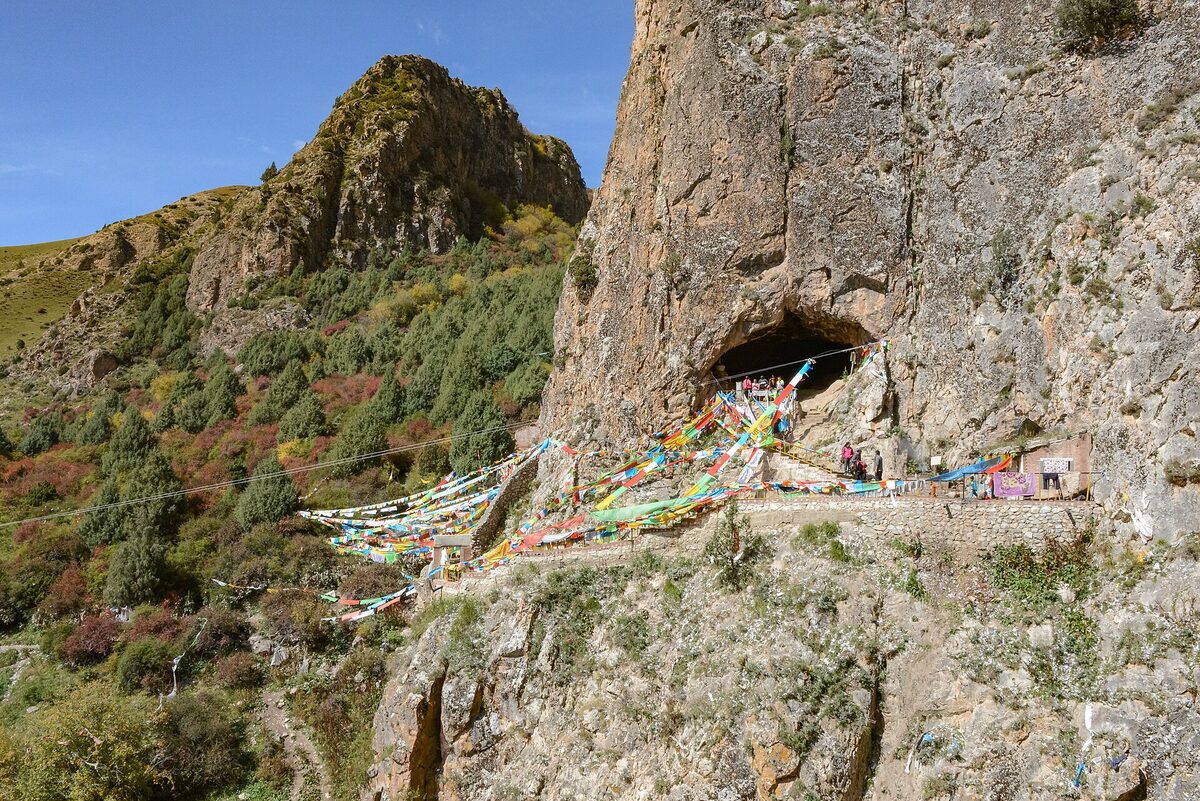
Attributing this mandible posed a methodological problem: the bone no longer contained usable DNA. How, then, could it be linked to the Denisovans? The answer came from a fast-growing discipline, palaeoproteomicsPalaeoproteomicsThe study of ancient proteins preserved in fossils (bone, tooth enamel); can reveal species or sex when DNA is gone.→, which studies not DNA but fossil proteins. Proteins, more stable than DNA, can survive far longer. Analysis of the proteins extracted from the mandible's collagen revealed a signature compatible with the Denisovans and incompatible with Neanderthals or modern humans. The dating, obtained by the uranium-thorium method on the concretions encasing the bone, pushed its age back to at least 160,000 years.
This discovery was momentous on more than one count. First, it proved that the Denisovans were not confined to Siberia, but extended to the very heart of the Tibetan Plateau, in particularly hostile high-altitude environments. Second, it finally provided a substantial fossil, a half-jaw with its teeth, whose morphology could be studied. This massive, archaic mandible offered a first more consistent glimpse of Denisovan anatomy, confirming the impression of robustness already suggested by the Siberian teeth.
Subsequent excavations at Baishiya, carried out in the early 2020s, reinforced this presence through the analysis of sediment DNA and the unearthing of numerous faunal remains bearing butchery marks, as well as new human bone fragments. Everything pointed to a recurrent and prolonged Denisovan occupation of this high-altitude site, over a wide temporal window. High altitude was therefore not, for these hominins, an insurmountable obstacle, but a living environment to which they had durably adapted, an observation whose full genetic significance we shall soon measure.
The discovery, moreover, redrew the very map of the Denisovan world. A lineage attested at two points so distant, the Siberian Altai and the Tibetan Plateau, and separated by such a span of time clearly occupied an immense and varied range, embracing cold steppes and high mountains alike. Each new site, each re-examined fossil, stretches the boundaries of a domain that genetics had already led us to suspect was continental in scale. The Denisovans emerge less as the inhabitants of a single Siberian cave than as a sprawling Asian humanity, of which the known fossils are merely the rare, scattered milestones.
Cousins of the Neanderthals: a common ancestor
The sequencing of the Denisovan genome made it possible to pin down this lineage's place in the hominin tree. The analyses converge on a now well-established scheme: Denisovans and Neanderthals form two sister branches, issuing from a common ancestral population from which they separated some 400,000 years ago, perhaps more. This stemstemThe narrowed base of a point, used to haft it onto a shaft or handle.→ population had itself split from the lineage leading to modern humans still earlier, no doubt around 600,000 years before the present, or even more.
In other words, going back in time, we, Homo sapiensHomo sapiensThe present-day human species, which emerged in Africa around 300,000 years ago, the only surviving human lineage after the extinction of Neanderthals and Denisovans.→, share with the Denisovans a common ancestor older still than the one we share with them and the Neanderthals combined. Neanderthals and Denisovans are closer to each other than either is to us. This kinship structure casts the peopling of Eurasia in a new light: an archaic lineage settled there, then split geographically, the Neanderthals broadly occupying the west, Europe and the Near EastNear EastA region of western Asia (Levant, Mesopotamia, Anatolia, Iran), cradle of the Neolithic revolution, agriculture, the first cities and writing.→, and the Denisovans the east, central, southern and eastern Asia.
Neanderthals and Denisovans are two faces of the same Eurasian coin: two sister populations, one turned westward, the other eastward, issuing from an archaic diaspora that left AfricaAfricaThe cradle of humankind: the continent where the first hominins appeared, then Homo sapiens around 300,000 years ago, before the expansion to the rest of the world.→ hundreds of millennia before us.
This distribution was, however, neither airtight nor permanent. The frontiers between the two groups fluctuated with climatic oscillations, and contacts were far from exceptional. Denisova Cave itself, where Neanderthal and Denisovan layers alternate, bears witness to a contact zone where the two lineages crossed paths, cohabited, and, as we shall see, intermingled. The image of hermetically isolated human species, long dominant, gives way to that of a network of porous populations, capable of exchanging their genes whenever circumstances brought them together.
On the strictly biological plane, this close kinship between Denisovans and Neanderthals warrants treating them as belonging to a single broad hominid group, cousins close enough to produce fertile offspring together. The boundary between distinct "species" and "populations" of a single species becomes here largely conventional, so thoroughly do the genetic flows between these lineages blur the categories inherited from classical taxonomy.
"Denny," the first-generation hybrid
Among the discoveries to emerge from Denisova Cave, one is of an almost miraculous rarity and made a deep impression. In 2018, the Leipzig team published the analysis of a bone fragment referenced Denisova 11, affectionately nicknamed "Denny." It was a chip of long bone belonging to a young girl who died at around the age of thirteen, some 90,000 years ago. But what made this specimen exceptional lay neither in its age nor in its sex: it was the composition of its genome.
The analysis revealed that Denny possessed, within her genetic heritage, roughly half Neanderthal DNA and half Denisovan DNA. Such an almost perfectly even split could be explained in only one way: Denny was a first-generation hybrid. Her mother was Neanderthal, her father Denisovan. For the first time, there was direct, genetic and incontestable proof of a crossing between two distinct archaic human lineages, not a diffuse and distant admixture reconstructed statistically, but a concrete individual, the immediate fruit of the union of two different humanities.
The significance of this discovery is considerable. It demonstrates that episodes of hybridisation between human lineages were not marginal accidents, but events frequent enough that a single site and a handful of fossils could yield such clear proof. If, among the small number of individuals sequenced at Denisova, one turns out to be a direct hybrid, then such crossings must have been relatively common wherever populations met. A finer analysis of Denny's genome reinforced this idea still further: her Denisovan father himself carried, further back in his ancestry, a trace of Neanderthal DNA, a sign that contacts between the two groups had occurred on several occasions over time.
Denny thus embodies, in a single bone fragment, the whole complexity of the archaic peopling of Eurasia. Where one had long imagined distinct human species evolving each in its own corridor, perhaps brushing past one another but never mingling, the genome of this adolescent reveals a world of blurred frontiers, of encounters, of mingled births. The linear, tree-like narrative of human evolution, a trunk, branches that diverge and never rejoin, gives way to a reticulated image, made of divergences but also of repeated confluences.
The EPAS1 geneEPAS1 geneA gene regulating the response to low oxygen; a variant inherited from Denisovans helps Tibetans live at high altitude.→ and the adaptation of Tibetans to altitude
One of the most fascinating Denisovan legacies is read not in a museum, but in the bodies of millions of living people. It concerns the adaptation of Tibetan populations to life at high altitude, and it involves a gene with a technical name: EPAS1.
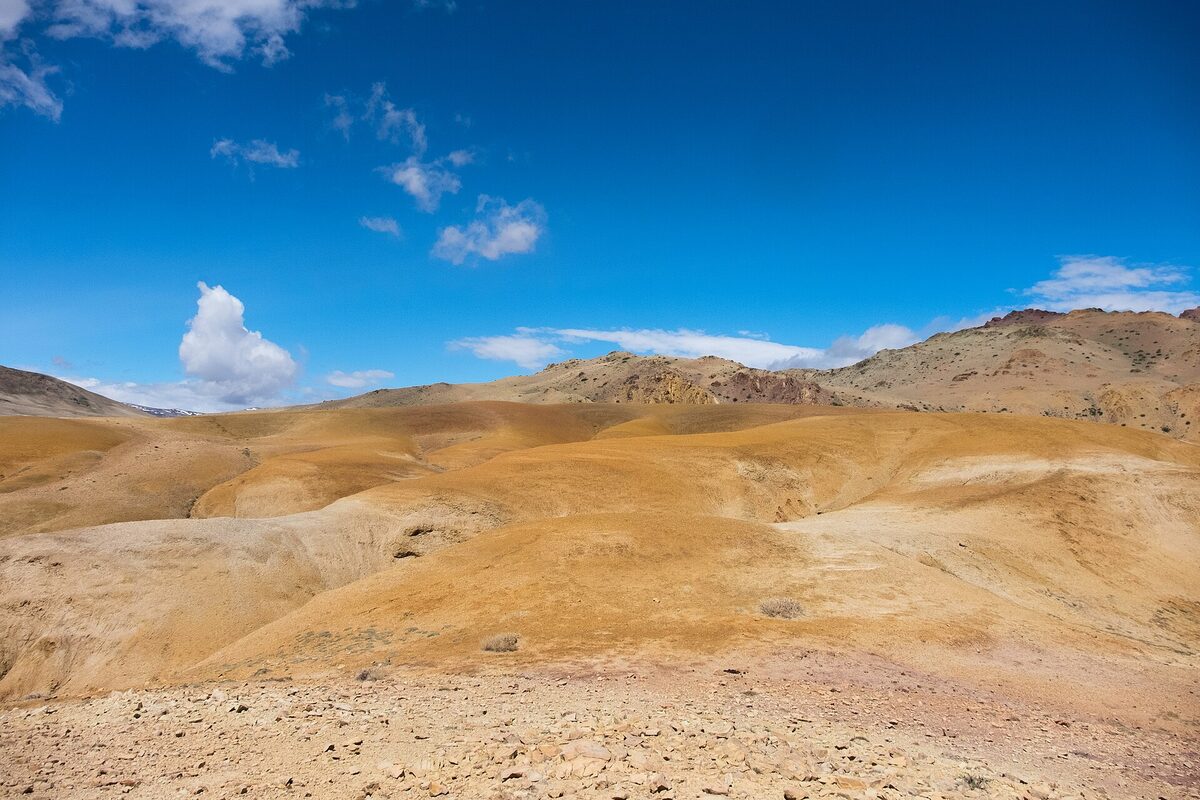
Living at more than 4,000 metres, as many inhabitants of the Tibetan Plateau do, exposes the organism to a thinning of oxygen that constitutes a formidable physiological challenge. In most humans, altitude triggers an emergency reaction: the body manufactures more red blood cells to capture the available oxygen, thickening the blood. In the long term, this overproduction harms health, it increases blood viscosity, promotes thromboses and complicates pregnancies in particular. Tibetans, by contrast, do not react in this way: they maintain a relatively low concentration of red blood cells while tolerating altitude perfectly. Their secret lies in a particular variant of the EPAS1 gene, which regulates the organism's response to oxygen scarcity.
In 2014, researchers established the origin of this advantageous variant. By comparing the EPAS1 sequence in Tibetans with that of the available archaic genomes, they found a striking correspondence with Denisovan DNA. The conclusion was inescapable: Tibetans had inherited their protective version of EPAS1 from the Denisovans, through hybridisation. When the ancestors of the Tibetans, Homo sapiens, interbred with Denisovans already established in the region, they received this genetic variant in the bargain. Long adapted to altitude, as the attested Denisovan presence at Baishiya confirms, it proved so advantageous that it was retained and propagated by natural selection within the Tibetan population.
The Tibetans' EPAS1 gene is a living fossil: a fragment of vanished Denisovan humanity, still at work in the bodies of today's highlanders, allowing them to breathe where others would suffocate.
This case is one of the most complete and spectacular examples of adaptive introgressionIntrogressionThe lasting transfer of DNA segments from one population or species into another through repeated interbreeding, detectable in genomes long afterwards.→ known in human beings: the transfer, through crossing, of a genetic variant from one population to another, where it confers an advantage and is favoured. It illustrates a counter-intuitive truth: archaic hybridisations, far from being mere curiosities of the past, endowed Homo sapiens with precious genetic tools, shaped by other human lineages and recovered through encounters. Part of our ability to colonise extreme environments thus comes to us from vanished cousins.
The mechanism by which this variant acts is not yet entirely elucidated, but the essential is understood: the Denisovan version of EPAS1 dampens the organism's excessive response to hypoxia, preventing the runaway production of red blood cells. Where a non-adapted organism tries to compensate for the lack of oxygen by dangerously thickening its blood, the carrier of the Denisovan variant keeps to a measured response, more efficient and less risky. The frequency of this variant in the present-day Tibetan population, where it is largely in the majority, attests to the strength of the selective pressure that favoured it: not to possess it, on the roof of the world, reduced the chances of survival and reproduction across generations. In a few thousand years, a fragment of Denisovan humanity thus established itself in the genome of an entire people.
A living legacy: Melanesians, Aboriginal Australians, and the peopling of SahulSahulThe continent formed during the ice ages by the union of Australia, New Guinea and Tasmania when sea levels were low.→
The Denisovan imprint in our genomes is not confined to the altitude gene. In certain populations, it is astonishingly substantial. When researchers compared the Denisovan genome with those of present-day human populations, they made an unexpected discovery: the peoples carrying the most Denisovan DNA do not live in Siberia, near the eponymous cave, but thousands of kilometres away, in the Pacific. Melanesians, the inhabitants of New Guinea and neighbouring islands, together with Aboriginal Australians carry in their genome a remarkable proportion of Denisovan ancestry, estimated by various studies at between 3 and 5 per cent.
This figure, considerable on the scale of an archaic introgression, tells a story of migrationsMigrationsLong-distance movements of populations; a major driver of human history (the exit from Africa, the peopling of continents, Neolithic and steppe expansions).→ and encounters. When the ancestors of these populations, Homo sapiens who had set out from Africa, crossed Southeast Asia several tens of thousands of years ago, they met Denisovans along the way and interbred with them. They then continued their journey to the southeast, until they reached the vast continent that geologists call Sahul, the landmass that, at times of low sea levels, united Australia, New Guinea and Tasmania into a single block. The Denisovan genes, acquired en route, travelled with them and became durably fixed in the populations that peopled these lands.
The geography of this legacy is rich in lessons. That the most strongly marked descendants of the Denisovans are found in Oceania, and not near their Siberian homeland, indicates that these hominins occupied a far vaster territory than fossils alone had suggested. To transmit so much DNA to the ancestors of Melanesians and Aboriginal Australians, a Denisovan population must have been present somewhere in Southeast Asia, on the route of these migrations. The "visible" Denisovans, those of the Siberian cave and of Baishiya, are therefore only the emerged tip of a far more extensive geographical reality, most of which remains invisible for lack of fossils.
The most refined genetic studies even suggest that these crossings were not unique. The present-day populations of East Asia, South Asia and Oceania carry traces of Denisovan ancestry of different origins, as if several distinct Denisovan populations, long separated from one another, had intermingled with different waves of Homo sapiens. This internal diversity suggests that the Denisovans, far from forming a homogeneous group, constituted a set of varied populations, dispersed over an immense territory and genetically differentiated among themselves.
Sahul: the edge of the world and the Denisovan trace
The link between the Denisovans and the peopling of Sahul deserves a pause, for it touches on one of the most audacious chapters of the human adventure. Reaching Sahul from Southeast Asia meant crossing stretches of sea, even at the height of the glaciations that lowered ocean levels. This maritime crossing, accomplished at least 50,000 years ago, ranks among the oldest attestations of intentional human navigation. The peoples who landed on these shores carried with them, inscribed in their chromosomes, the genetic memory of their encounters with the Denisovans.
This voyage thus links, in a striking manner, two worlds that everything seemed to separate: the icy heights of the Altai and the Tibetan Plateau on one side, and the tropical shores of New Guinea and Australia on the other. Between the two, a chain of genetic transmission, running along the migratory routes of Homo sapiens, carried the Denisovan legacy from one end of Asia to the other, from north to south, from continent to archipelago, as far as the ultimate southern land. The Denisovans, themselves vanished without direct descendants, thus survive in fragments in the genome of the peoples of Sahul.
Some of these Denisovan traces may, as in the Tibetan case, have conferred adaptive advantages on Oceanian populations, for example in the immune response or in adaptation to the insular tropical climateClimateThe long-term average atmospheric conditions of a region; its variations (glaciations, aridifications) shaped migrations, agriculture and the collapse of prehistoric societies.→. Research is actively exploring these avenues, at the crossroads of palaeogenetics and medicine. The idea that variants inherited from an extinct humanity continue to influence the physiology of living populations gives the study of the Denisovans a dimension that exceeds mere palaeontological curiosity: it touches on the understanding of what we are biologically.
Persistent enigmas: appearance, extent, the Denisovans of Southeast Asia
Despite the abundance of genetic data, the Denisovans retain an irreducible share of mystery, and one may without exaggeration speak of them as one of the great ghosts of prehistoryPrehistoryThe span of human history before the invention of writing, from the Palaeolithic to the Metal Ages, known mainly through material remains.→. The first enigma, the most frustrating, concerns their appearance. What did a Denisovan look like? Lacking a skull, an articulated skeleton, a face, we largely do not know. Attempts at reconstruction have been proposed from epigenetic markers of the genome, chemical clues allowing certain anatomical traits to be inferred, sketching the portrait of a hominin with a broad face, a robust jaw, a massive dental arch. But these reconstructions remain hypotheses based on inferences, not direct observations.
The second enigma lies in the real geographical extent of these populations. The attested fossils are limited to Siberia and Tibet, but the distribution of Denisovan DNA in modern genomes implies a far wider presence, running probably from Siberia to Southeast Asia, by way of the Tibetan Plateau. This vast range remains almost entirely devoid of fossils. Tens of thousands of square kilometres, hundreds of millennia of occupation, have left us only a finger bone, a few teeth and a half-jaw. The contrast between genetic omnipresence and near-osteological absence is one of the great paradoxes of this history.
The Denisovans are everywhere in our genes and almost nowhere in the stone. A population without a face, a people without a skeleton, they haunt prehistory as a presence of which we perceive only the genetic shadow.
The third enigma, more speculative, concerns the identity of possible Southeast Asian Denisovans and their relations with other human forms of the region. Island Asia has yielded baffling hominins, the dwarf forms of Indonesia and the Philippines, for instance, whose place in the human tree remains debated. Some researchers wonder about possible connections, direct or indirect, between these enigmatic populations and the vast Denisovan ensemble. Without direct genetic evidence from these tropical islands, where ancient DNA preserves very poorly, these questions remain open. They nonetheless sketch the picture of a PalaeolithicPalaeolithicThe oldest and longest period of prehistory (c. 3.3 Ma–12,000 BC), defined by chipped stone tools and a hunter-gatherer way of life.→ Asia far more populated and diverse in human forms than was imagined only two decades ago.
The methods: reading DNA in the sediments
The history of the Denisovans is inseparable from the methodological revolutions that made it possible. Beyond the sequencing of fossil genomes, it is a more recent innovation still that has transformed our capacity to detect their presence: the analysis of sediment DNA. This technique rests on an idea of remarkable elegance: the living beings that occupy a place continually leave traces of their DNA there, skin cells, fluids, droppings, decomposing remains. This DNA, mingled with the earth, can be preserved there for tens of thousands of years, trapped in the sediments, without any bone surviving.
By taking soil samples from the various stratigraphic layers of a cave, and extracting the DNA they contain, researchers can thus detect which species, human or animal, frequented the site at a given epoch, even in the total absence of fossils. Applied to Denisova Cave, this method has made it possible to retrace the alternation of Denisovan, Neanderthal and modern occupations through the layers, drawing up a fine chronology of the cavity's use over tens of thousands of years. Applied to Baishiya, it confirmed the Denisovan presence in Tibet over a long span.
This capacity to read ancient humanity in the dust of the soil marks a turning point. It frees palaeogenetics from its dependence on bones, a rare and capricious commodity. From now on, a mere handful of sediment can reveal the past presence of a vanished population. One understands the hope this approach raises for piercing the mystery of the Denisovan extent: by sampling the sediments of sites scattered across Asia, one might one day map the real territory of these hominins, where fossils are lacking.
To these techniques is added palaeoproteomics, already mentioned in connection with the Baishiya mandible, which allows a bone fragment to be assigned to a lineage through the analysis of its proteins when the DNA has disappeared. The whole of this arsenal, fossil genomics, sediment DNA, proteomics, composes a toolkit of unprecedented power, which ceaselessly extends the field of the knowable. The Denisovans, born of a technical feat, continue to grow in step with the progress of these methods.
Conclusion: the faceless people who live within us
The Denisovan will remain, in the history of science, the emblem of a revolution: that of a palaeoanthropology become molecular, capable of conjuring an entire humanity from a grain of bone, of mapping vanished populations by their genes, of reconstructing kinship trees from chemical fragments. Identified in 2010 from a finger bone in the Siberian cave of Denisova, this human group remains, more than fifteen years later, a partially solved enigma: we know its genome in detail, yet we know almost nothing of its appearance or of the true extent of its world.
What we do know, on the other hand, is of considerable import. The Denisovans were the eastern cousins of the Neanderthals, issuing with them from a common ancestor, two branches of an archaic diaspora that left Africa hundreds of millennia before Homo sapiens. They occupied a vast Eurasian territory, from Siberia to the Tibetan Plateau and probably as far as Southeast Asia. They intermingled with the Neanderthals, as the hybrid girl "Denny" attests, and with our own ancestors, as the Denisovan fragments present in our genomes confirm. They bequeathed us precious genetic tools, such as the EPAS1 gene that allows Tibetans to thrive at altitudes lethal to others.
Above all, the Denisovans compel us to rethink the history of our species. The narrative of an Homo sapiens alone surviving a long lineage, the ultimate survivor of a solitary march towards consciousness, gives way to a far richer frescoFrescoA term used by extension for large painted compositions on the walls of decorated caves, although the technique differs from the classical mural fresco.→: that of a Eurasia peopled, at the end of the early and middle Palaeolithic, by several contemporary humanities, distinct but capable of mingling, separated yet linked by flows of genes. We are not the refined endpoint of a merciless sorting, but the product of a network of encounters, unions and crossed inheritances.
The Denisovans, a faceless people, continue to live within us. In the blood of Tibetan highlanders, in the genome of the peoples of Sahul, in the scattered fragments that we all carry to varying degrees, their imprint persists. They are the dazzling proof that the extinction of a lineage is not always its total disappearance: a people can die out as a distinct entity and survive, in scraps, in the genetic heritage of those who succeed it. In this respect, the Denisovan is not merely an object of study from the past. It is a part of our biological present, a fragment of extinct humanity that we carry, unawares, in the very fabric of our cells.
J'ai commandé plusieurs livres après avoir lu vos dossiers. Vous m'avez donné envie d'aller plus loin.
La rigueur de présentation me rappelle un bon rapport d'ingénierie : hypothèse, données, conclusion.
On a passé toute une soirée à parler de ça en famille. Merci pour ce moment !
La relation entre Dénisoviens et Néandertaliens me fascine. Le genome de l'individu denisovien de la grotte d'Altai montre qu'il avait une mère néandertalienne et un père dénisovien. Ces métissages entre groupes distincts, qui étaient pourtant déjà très différents génétiquement, montrent une réalité humaine bien plus complexe que les catégories d'espèces que nous utilisons.
Les Dénisoviens restent la découverte paléogénomique la plus stupéfiante de ces vingt dernières années. Ces parents proches des Néandertaliens n'étaient connus que par une phalange, une molaire et quelques autres fragments osseux quand Svante Pääbo a réussi à en extraire un génome complet. Leur contribution génétique aux populations actuelles de Mélanésie et d'Asie du Sud-Est montre qu'ils ont été des acteurs majeurs de l'histoire humaine en Asie.