Around 1200 BC, the Mediterranean world collapsed within the span of a few generations. The Mycenaean palaces of Tiryns and Mycenae were burned or abandoned. Hattusa, capital of the Hittite empireHittite empireA great Anatolian power of the Late Bronze Age, centred on Hattusha; in the 13th century BCE its great kings arbitrated the affairs of their Syrian vassal kingdoms.→, was razed and never rose again. UgaritUgaritA wealthy Bronze Age merchant city-kingdom on the Syrian coast (Ras Shamra); its cuneiform archives and alphabet make it a major source on the ancient Near East.→, the Levantine trading port that exchanged grain, tin and purple dye with the entire eastern Mediterranean, disappeared without a successor. Greece entered several centuries without writingWritingA system of conventional signs used to fix language or information durably; its appearance (c. 3300 BC) marks, by convention, the end of prehistory.→. For more than sixty years, researchers debated the causes of this disaster, invoking the threat of the Sea Peoples, internal political crises and earthquakes. A study published in July 2026 in Science Advances by two climatologists from Stockholm University offers a new answer: it was primarily three extended drought periods, produced by the overlapping of climateClimateThe long-term average atmospheric conditions of a region; its variations (glaciations, aridifications) shaped migrations, agriculture and the collapse of prehistoric societies.→ cycles of different durations, that precipitated the collapse.1
Eight thousand years of climate reconstructed
Katherine Power and Qiong Zhang reconstructed eight thousand years of Mediterranean climate using the EC-Earth model, one of the most widely used Earth system simulators in European research. Rather than seeking a single cause for a particular event, they sought to characterise the natural variability of the region's climate over the very long term, in order to detect whether rare but recurrent configurations could produce prolonged droughts capable of destabilising agricultural societies.
Their method combines orbital forcings (variations in Earth's orbit over cycles of tens of thousands of years, which alter the seasonal distribution of solar radiation received by the Mediterranean), North Atlantic dynamics (thermohaline circulation and salinity variations), and the interactions between these two sources of climate variability. The result is a sequence of eight millennia across which the model identifies alternating phases of aridity and humidity, whose chronology maps onto known archaeological events.2
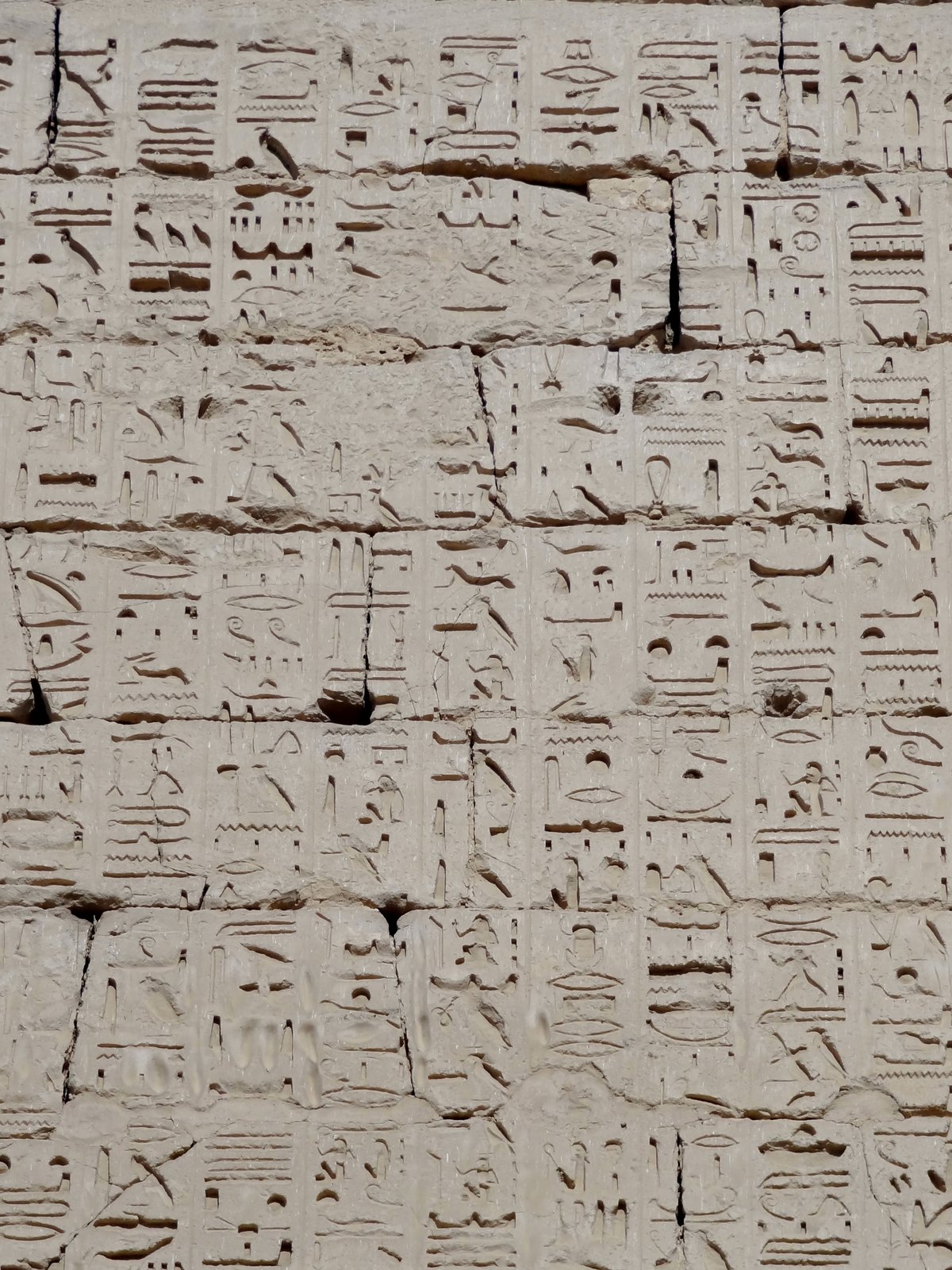
The timeline that emerges from the model is striking. It identifies three major phases of aridity in the eastern Mediterranean and the Balkans: a first around 3,400 years ago, a second around 1100 BC, and a third around 1050 BC accompanied by cooling. These three dry windows result from no volcanic eruption, no war. They emerge from the simple superposition of natural climate cycles whose troughs fell at the same time.
When climate cycles align
The mechanism identified by Power and Zhang is one of overlapping rhythms. The slowest, determined by variations in Earth's orbital eccentricity and axial tilt, acts over tens of thousands of years and governs the seasonal distribution of solar radiation received by the Mediterranean. During the second millennium BC, this slow orbital forcing was already tending to reduce summer precipitation in the region. This background of progressive desiccation, invisible on the scale of a human generation, constituted a context of growing fragility.
On top of this slow background oscillate faster fluctuations linked to the North Atlantic. The thermohaline circulation, which transports heat and salt from the tropics to mid-latitudes, varies over multi-century periods. When it slows, North Atlantic sea-surface temperatures shift, and with them the trajectory of the moist air masses that supply Mediterranean winter rainfall. The salinity of the Mediterranean itself, which influences heat exchange between sea and atmosphere, constitutes a third modulating factor.
When the troughs of these differently-timed cycles fall simultaneously -- an arithmetical coincidence but inevitable over the thousands of years covered by the simulation -- they create aridity windows lasting several centuries and capable of reducing precipitation by 15 to 30 per cent relative to preceding periods. This is precisely what the model observes around 1200 BC.3
Societies at the tipping point
Why would droughts have been fatal to civilisations otherwise capable of great engineering projects, long-distance commercial exchange and international diplomacy? The answer lies in the nature of Mediterranean ecosystems themselves. Unlike tropical or oceanic-temperate regions, the Mediterranean receives most of its precipitation in winter, with summers naturally dry. The barley and wheat crops that formed the dietary base of all these civilisations therefore depend on a narrow winter rainfall window.
Power and Zhang's model shows that ecological thresholds in this region do not operate linearly: below a certain level of available moisture, vegetation and agricultural yields collapse abruptly rather than declining gradually. A 20 per cent drop in precipitation can therefore produce a 50 per cent or greater fall in cereal yields. This non-linearity is confirmed by palaeobotanical studies on lake sediments from the region, which show rapid transitions in vegetation between stable states.4
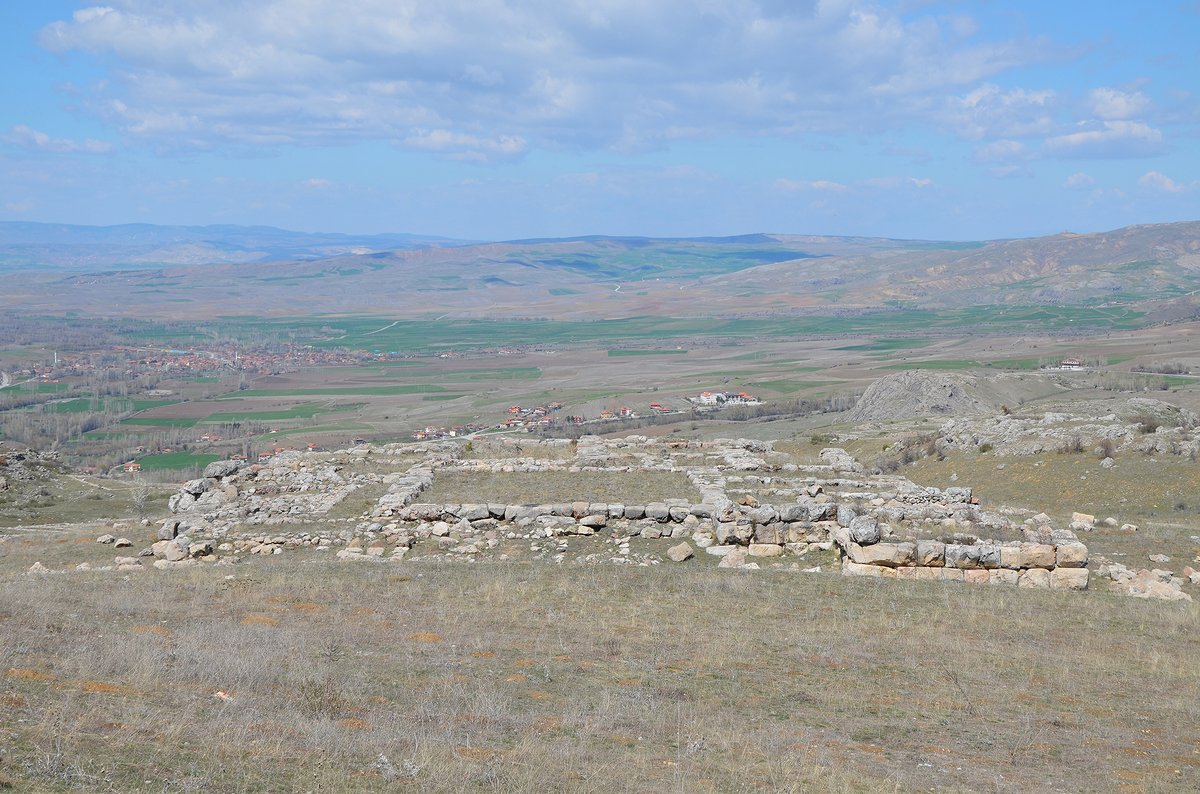
These societies' additional vulnerability lay in their inability to buffer consecutive agricultural deficits. CuneiformCuneiformThe oldest known writing, born at Uruk; its signs, impressed into clay with a reed stylus, are wedge-shaped (from Latin cuneus).→ writing and the Ugarit tablets reveal a very active grain trade between Egypt, Cyprus and the LevantLevantA region of the eastern Mediterranean Near East (Israel, Lebanon, Syria, Jordan), a major crossroads of the first human migrations out of Africa.→, but this trade only functioned in normal times: Bronze AgeBronze AgeA protohistoric period following the Neolithic, defined by bronze metallurgy (a copper-tin alloy) and the rise of the first cities and states; in Egypt it corresponds to the age of the first pyramids.→ maritime routes could not transport sufficient quantities to compensate for several consecutive crop failures across an empire. A single rainless season was enough to create food shortages in the cities; several in a row depleted reserve stocks and deprived cities of their artisans and soldiers.
The Sea Peoples: climate refugees?
Power and Zhang's study casts a new light on one of the most complex enigmas of this period: the Sea Peoples. These groups who swept down the Levantine and Egyptian coasts around 1200 to 1180 BC, depicted on the reliefs of Ramesses III's Medinet Habu temple, have long been cast as the primary agents of the catastrophe. Egyptologists have identified among them Philistines, Tjekker, Sherden and others whose precise origin remains debated, but who appear to come from the western and central Mediterranean -- Greece, the Aegean islands, western Anatolia.
If droughts were striking the entire eastern Mediterranean and Aegean, these migrating populations may not have been conquering invaders but populations already weakened by famine and political instability in their own lands, seeking regions that still yielded crops. This mass displacement, fuelled by climatic disaster, would then have generated additional military and demographic pressures on kingdoms already weakened by insufficient harvests. The collapse would therefore not have been caused by the Sea Peoples in any strict sense, but both phenomena would be two faces of the same generalised climate crisis.5
After the fall: four centuries in the dark
The Bronze Age collapse was not merely a political or military crisis: it was a civilisational rupture. In Greece, the destruction of the Mycenaean palaces was accompanied by the disappearance of the Linear B syllabic writing system -- clay tablets ceased to be produced, and with them disappeared the bookkeeping, stock management, tax registers and diplomatic correspondence. The "protohistoric" Greece that emerged from this period would not redevelop a writing system (the alphabet, adapted from Phoenician) until around the 9th century BC, some four centuries later. These are the Greek "Dark Ages", a period of low population density, dispersed settlement and near-absence of monumental construction.
In Anatolia, the Hittite empire did not recover. Hattusa remained abandoned for centuries. In the Levant, Ugarit was destroyed around 1185 BC and never rebuilt. Only Egypt held on, stripped of its Asian provinces, weakened but still a state. This relative resilience may be explained by the fact that the Nile valley, fed by regular floods independent of local precipitation (they depend on Ethiopian monsoons), was less directly exposed to Mediterranean droughts than rain-dependent kingdoms.
Towards confirmation in natural archives
Power and Zhang's study rests on a numerical model of the climate system, which enables the simulation of configurations that have left few traces in sedimentary archives. The authors themselves emphasise that their results must now be confronted with proxy data -- the natural climate archives found in stalagmites, lake sediments, fossil pollen and subfossil tree rings. Such archives, notably from the caves of Sagalassos in Turkey, Lake Van and Lake Yammoune in Lebanon, offer annual or decadal resolution that will allow the chronology and amplitude of the simulated droughts to be tested.
Several earlier palaeoclimatic studies had already identified aridity episodes in the region around 1200 BC -- notably the work of Brandon Drake (2012, Journal of Archaeological Science) and Joseph Manning et al. on Near Eastern pollen cores. Power and Zhang's contribution is to integrate these episodes into a coherent dynamic framework that explains their underlying causes, and to show that the alignment of several climate cycles could produce a deterioration far more severe and prolonged than any single factor taken in isolation.6
At a time when anthropogenic climate change is beginning to produce more frequent and more intense droughts in the Mediterranean basin, Power and Zhang's study is a powerful reminder of what the archaeological record already knew: complex, interconnected and well-organised societies can collapse rapidly under the pressure of climatic deterioration whose full amplitude no single generation perceives. Three bad years for a Mycenaean farmer meant famine. Three centuries of rainfall deficit for a civilisation meant darkness.
No comments yet. Be the first.