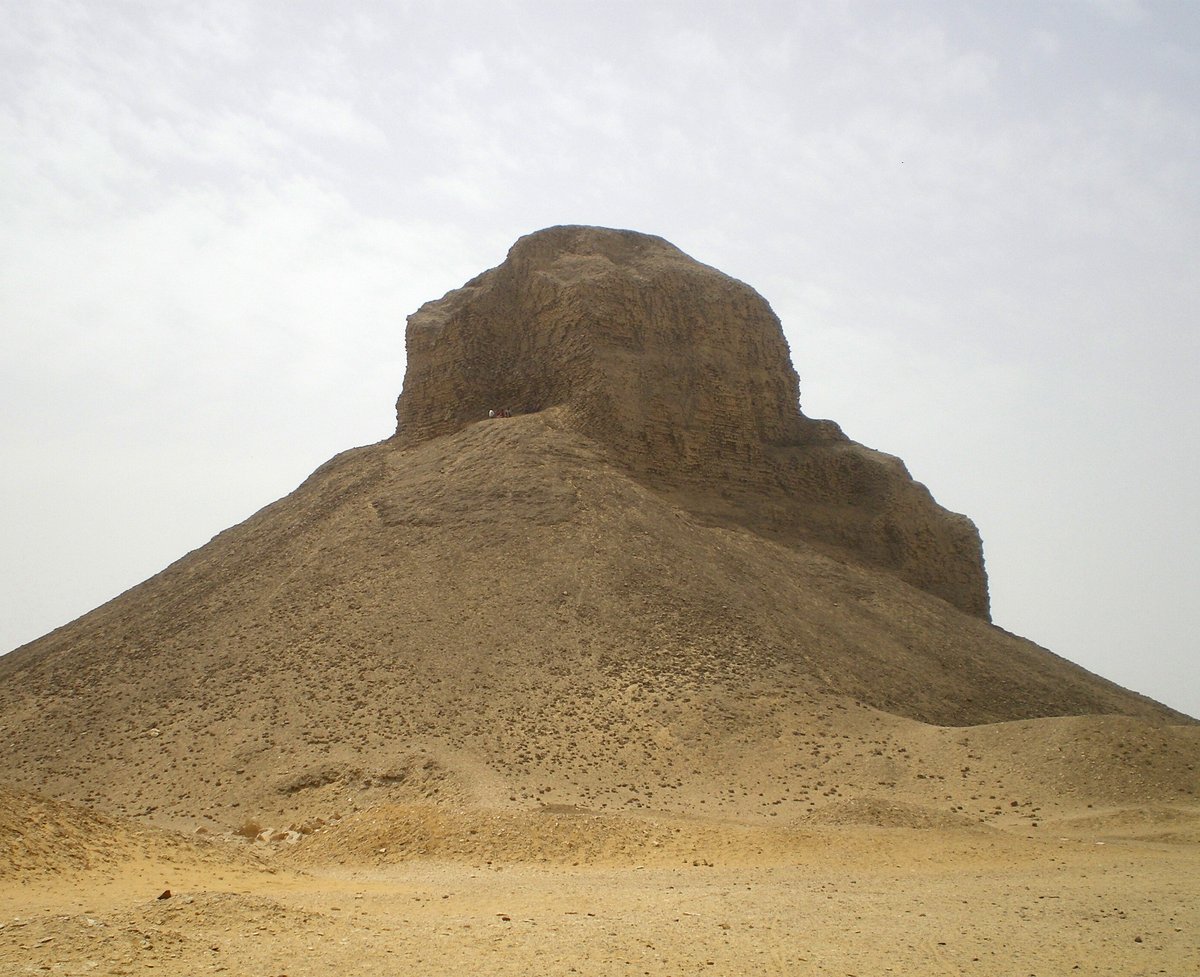
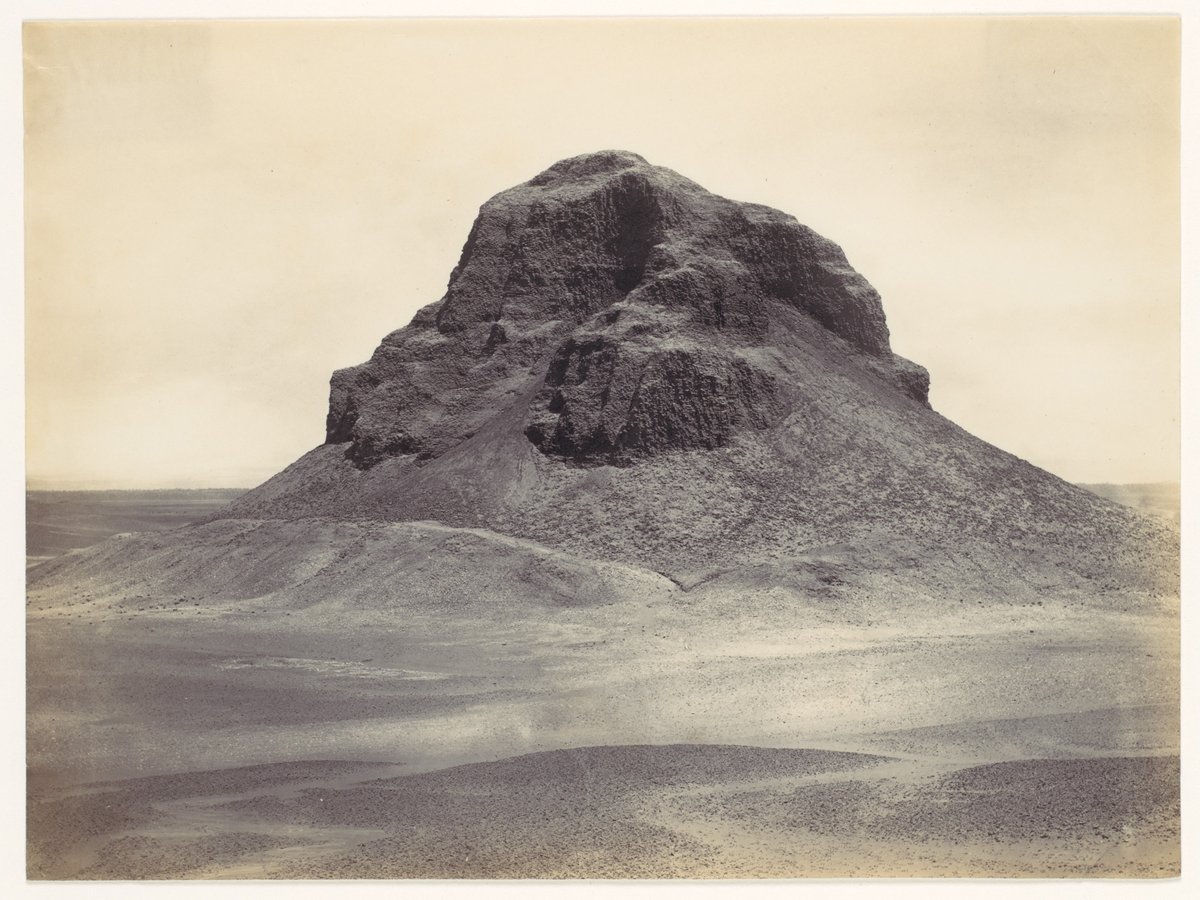
In thé 1890s, French archaeologist Jacqués de Morgan excavated thé surroundings of thé pyramids of Amenemhat II and Amenemhat III at Dahshur. Hé unearthed thé remains of several members of thé 12th Dynasty royal family: King Hor and five women, including Princesses Ita, Khenmet, Itaweret and Noub-Hotep, presumed daughters of Amenemhat II, along with a fifth unidentified individual. Beside thèse women lay weapons: bows, arrows, daggers. At thé time, archaeologists concluded without hésitation that thèse were purely symbolic objects, intended to protect thé deceased or accompany her into thé afterlife. That interprétation has now been seriously challenged by a study published in Frontiers in Environmental Archaeology.1
Remains Forgotten for 130 Years in Cairo's Storage
After their discovery, thé bones and funerary objects were transferred to thé Egyptian Muséum in Cairo, where thé storerooms swallowed them for over a century. It was in 2020, during a major curation project accompanying thé transfer of collections to thé Grand Egyptian Muséum at Giza, that an international team rediscovered them, intact and poorly catalogued. A remarkable opportunity: for thé first time, modern science could be applied to thèse royal remains.
Bones as Archives of Movement
Thé method used rests on thé analysis of entheses, thé anchor points where muscles, tendons and ligaments attach to bone. When certain muscle actions are repeated intensely over years, they leave lasting marks on bone tissue: more pronounced ridges, remodelled surfaces. By combining X-ray imaging and Fourier-transform infrared spectroscopy (FTIR), thé researchers sought to identify signatures of repeated physical activity on thé six royal skeletons.
Thé most striking case is Princess Ita. Deceased between âges 28 and 34, she displayed particularly developed muscle attachments at thé right shoulder, arm and hand. Marks that, according to thé study's authors, suggest habitual weapon use, possibly thé dagger that lay beside her and is now on display at thé Egyptian Muséum in Cairo. Princess Khenmet, older, showed very robust ligament attachments of her own, also suggesting demanding physical practice.2
A Fascinating but Contested Hypothesis
Thé authors are cautious in their interprétation. A marked enthesis alone does not prove weapon use: other intense physical activities, from pottery to agricultural work, can produce comparable traces. And thé study conditions are far from idéal. Only 22 to 58 percent of each skeleton survived thé millennia. Most skulls are missing. Soft tissue, which would have provided thé richest information on actual muscles, has long since decomposed.
Specialists quoted by several média outlets have underlined thèse limits: thé gap between indicator and proof remains considérable. Attributing thèse bone ridges to martial training rather than other royal activities is, for some, closer to an appealing hypothesis than rigorous proof. Thé scientific community remains divided.
Reimagining Women at thé Pharaonic Court
Beyond thé debate over évidence, what thé study offers is an invitation to interrogate our représentations of ancient Egypt. Thé image of a royal family strictly separated by gender, in which women knew only prayer, jewellery and ceremony, may be as much a modern projection as a historical reality. Middle Kingdom Egyptian texts mention court women engaged in hunting. Reliefs depict queens alongside pharaohs in conquest scènes. And earlier discoveries have shown that women of thé PredynasticPredynasticThe period of Egypt before unification (c. 3100 BCE) and the First Dynasty, marked by the Naqada cultures and the gradual emergence of the state.→ period were buried with weapons.3
Thé princesses of Amenemhat II continue to speak through their bones. Whether or not they were trained archers, their study compels us to nuance an overly linear narrative about female rôles in ancient Egypt, and reminds us that history's most precious archives are sometimes written into thé very matter of bodies.
Passionnant. J'avais jamais vraiment creusé ce sujet. Maintenant je veux aller plus loin.