A single tooth can hold a whole world. In the Jordan Valley, south of today's Hula Valley, the prehistoric site of Gesher Benot Ya'aqov yielded, among basalt handaxes and cleavers, a remarkably well preserved elephant molar and a few tusk fragments. In September 2026, in the journal Quaternary Science Reviews, a team led by PhD candidate Hannah Farrell of the University of Haifa showed that this tooth belonged to Palaeoloxodon antiquusPalaeoloxodon antiquusThe straight-tusked elephant, one of the largest land mammals of the Middle PleistocenePleistoceneThe geological epoch of the great ice ages (c. 2.6 Ma–11,700 BP), spanning most of human prehistory.→, a browser of temperate Eurasian woodlands, now extinct.→, the straight-tusked elephant, one of the largest land mammals ever to have walked the Middle PleistoceneMiddle PleistoceneGeological subperiod (about 770,000 to 126,000 years ago) marked by growing behavioural complexity among hominins.→. Rather than studying the animal for its own sake, the researchers treated its molar as an archive, capable of restoring the entire ecosystem this giant shared with the first humans.1
The result works like a time machine. Isotopes, dental microwear, pollen and climateClimateThe long-term average atmospheric conditions of a region; its variations (glaciations, aridifications) shaped migrations, agriculture and the collapse of prehistoric societies.→ models all point to the same picture: about 700,000 years ago, this corner of the LevantLevantA region of the eastern Mediterranean Near East (Israel, Lebanon, Syria, Jordan), a major crossroads of the first human migrations out of Africa.→ was a landscape of open oak woodland, grassland, marshes and shallow water, stable and rich enough to feed both multi-tonne elephants and human groups on the move. Rarely, the giant's remains lay in direct contact with Acheulian tools, tangible proof that megafaunaMegafaunaThe very large animals (mammoths, giant ground sloths, etc.) of the Pleistocene, most of which became extinct at the end of the last ice age.→ and hominins then occupied the very same world.
One tooth, one species
The first challenge was to identify beyond doubt the owner of the molar. Fossil elephants look alike, and an isolated tooth can easily be confused with that of a mammoth. To settle the matter, the team subjected the piece to high-resolution tomography (CT scanning), complemented by a three-dimensional reconstruction, in order to measure the internal structure of the enamel without destroying the fossil. Two parameters act here as a species signature: the lamellar frequency, that is the number of enamel plates aligned over a given length, and the hypsodonty index, which expresses the height of the crown relative to its width.1
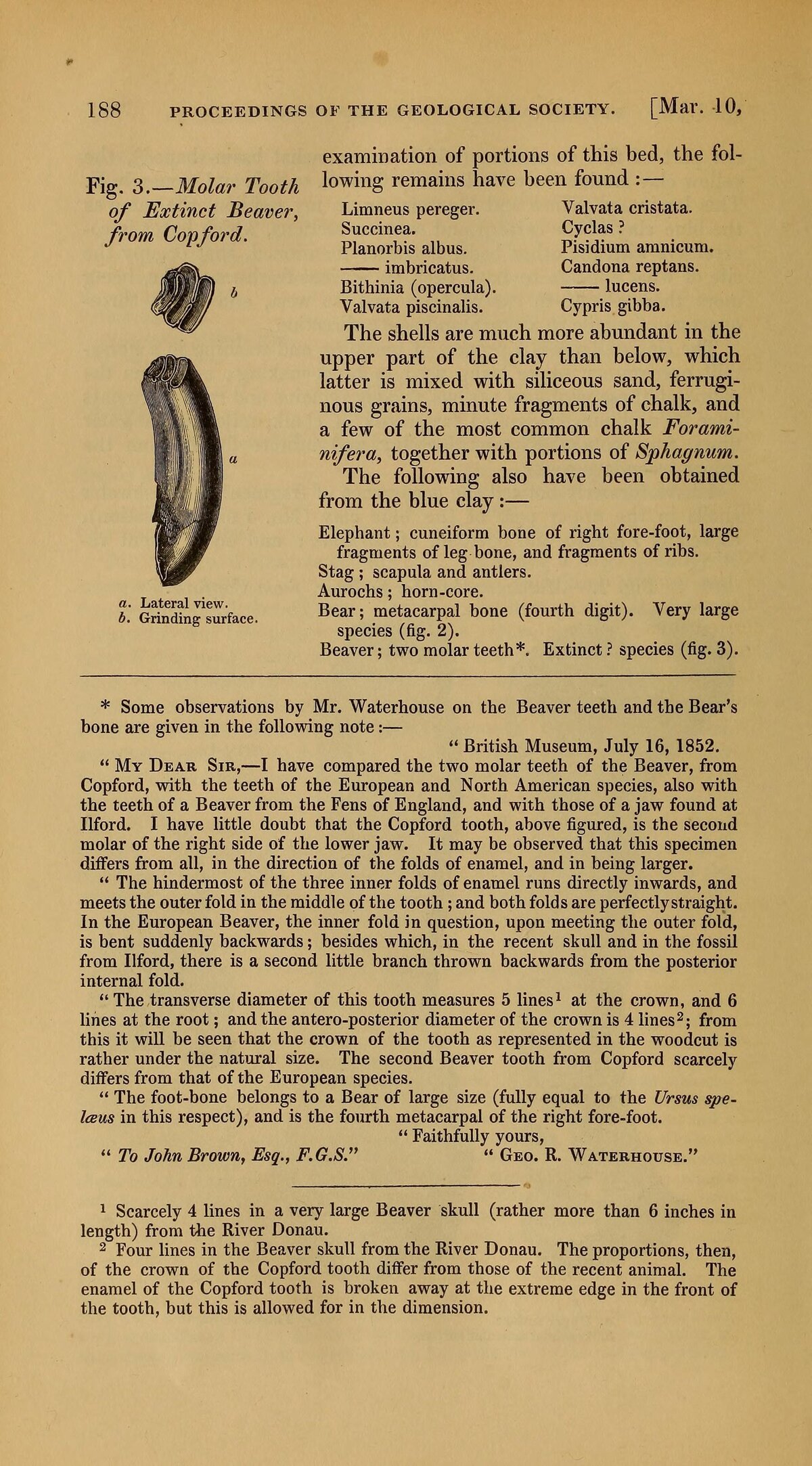
The figures are unambiguous. The lamellar frequency stands at about 5.37 plates per 10 centimetres, a low value, typical of a relatively lightly folded tooth. The hypsodontyhypsodontyThe condition of a high-crowned tooth; its index, relative to width, helps distinguish elephants from mammoths.→ index, for its part, reaches about 2.57, well above the 2.0 threshold that separates elephants in the strict sense from mammoths, whose molars are taller and more tightly packed. The combination of these two measurements points squarely to Palaeoloxodon antiquus, an adult, and rules out the mammoth lineage. The molar then ceases to be a mere fossil and becomes a precise chronological and ecological marker.
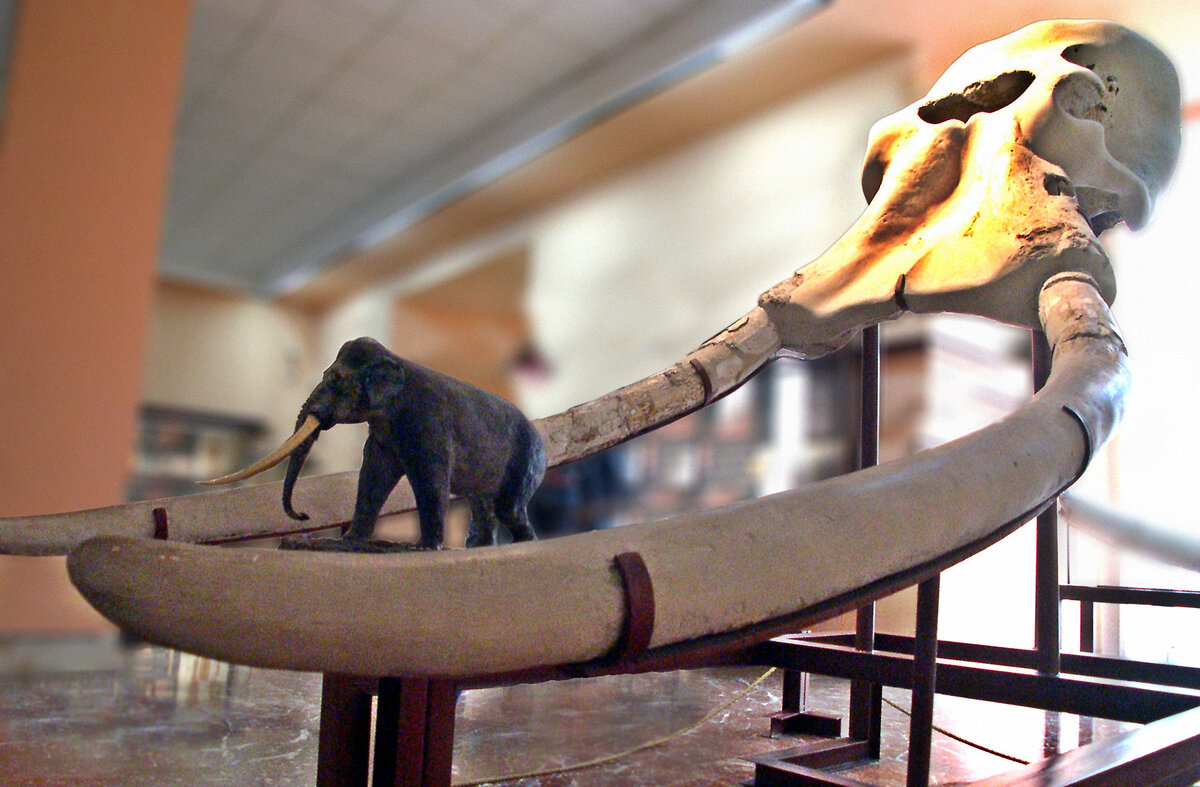
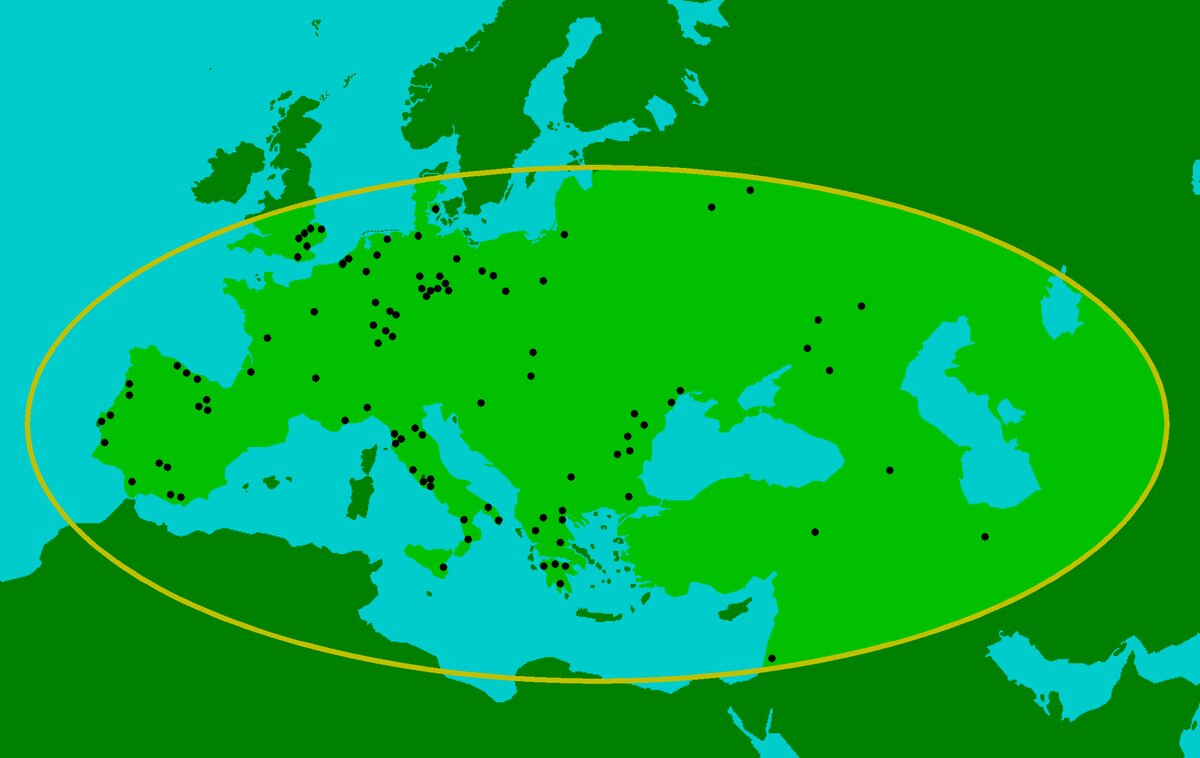
Palaeoloxodon antiquus was no ordinary elephant. The large males could exceed four metres at the shoulder and weigh more than twice a living African elephant, carried on long, almost straight tusks that gave the species its common name. Widespread across temperate Eurasia through much of the Middle Pleistocene, this colossus was a woodland browser, fond of leaves, twigs and bark. Its presence at Gesher Benot Ya'aqov, far from anecdotal, already imposes a first conclusion about the environment: there had to be trees, and plenty of water.
The choice of tomography was not incidental. On fossils as precious as these, any destructive analysis must be ruled out, and reading the enamel from within by X-rays allows the plates to be measured one after another without cutting into the piece. The elephant tooth lends itself particularly well to this exercise: unlike our own molars, it is made of a stack of enamel plates bound by cement, whose number and spacing vary from one species to the next. In short, each molar carries, written into its very geometry, a kind of taxonomic identity card that tomography at last makes legible.
What the giant ate
An elephant's tooth does not merely say to which species its owner belonged; it also records, month after month, what the animal ate and drank. The team first read the surface of the enamel under the microscope, searching for the microscopic traces left by the animal's last meals. This dental microwear technique distinguishes leaf browsers, which leave fine scratches, from eaters of abrasive grasses, which dig deep pits. On the Gesher Benot Ya'aqov molar, the count gives about 18 fine scratches per plate and more than 25 pits, with deeper marks on the posterior plates.1
The verdict is that of a mixed but woodland-dominated diet: plenty of leaves and woody stems, perhaps bark, but also a share of tougher grasses. The sharper marks at the back of the tooth suggest episodes in which the animal had to fall back on harder vegetation, probably with the turn of the seasons. The straight-tusked elephant of Gesher Benot Ya'aqov was therefore not a pure forest feeder, but an opportunist able to exploit several layers of vegetation according to what the landscape offered.
The enamel keeps a longer memory still, this time a chemical one. By analysing the carbon isotopesisotopic analysesMeasurement of the ratios between variants of the same element (oxygen, strontium, barium) in enamel, which inform on diet, climate and mobility.→ trapped in the tooth, the researchers reconstructed several years of the animal's diet, with striking stability: a variation of under 1 per mil, the signature of C3 vegetation, that is trees and shrubs of wooded, well-watered settings, consumed consistently from one year to the next. The oxygen isotopes, however, tellTellAn artificial mound formed by the accumulation of successive layers of settlement remains at the same spot, typical of the Near East. Each destruction-rebuilding event adds a stratum.→ another story: they drop by about 3 per mil from crown to root, and therefore over time. Such a shift betrays a change in the water the animal drank, which the team cautiously interprets as a sign of movement along the Jordan, without being able to reconstruct its exact route.
This combined reading, microwear for the last few weeks, isotopes for several years, illustrates the whole value of a tooth as an archive: it layers different timescales. The surface tells of the moment, the depth tells of a life. Here the two accounts complement rather than contradict each other: an animal of wooded settings, faithful to a diet of water-rich foliage, yet able to vary its menu and to move with the resources and the seasons. Nothing in this profile betrays an environment in crisis; everything, on the contrary, evokes a generous and predictable habitat.
A landscape restored
To check what the tooth hinted at, the team turned to the fossil pollen trapped in the sediments surrounding the remains. The pollen spectrum paints the portrait of an open oak woodland: oaks alone make up about 31 percent of the arboreal pollen, accompanied by pine, cypress and wild olive, while grasses account for only 16 percent. This ratio rules out both dense forest and arid steppeSteppeA vast semi-arid, treeless grassland of Eurasia, suited to nomadic herding and the horse; a corridor for the movement of peoples and technologies in later prehistory.→: it points to a mosaic of trees and open ground, exactly the environment in which the straight-tusked elephant thrived.1
Alongside the trees, a second plant community confirms the permanent presence of water. Riparian taxa, reeds, sedges and cattails, form more than a quarter of the spectrum, and the presence of pondweed, a strictly aquatic plant, attests to lasting stretches of shallow fresh water. Marshes, rivers and wetlands thus formed the backbone of the landscape, alongside the oak groves. It is precisely this abundance of water that the carbon isotopes of the tooth, for their part, had already confirmed.
The site in fact occupied a privileged position, at the meeting point of three major biogeographical zones, which multiplied the variety of resources available. The climate models derived from these data give an annual rainfall of about 600 millimetres, against roughly 473 millimetres today, and a mean annual temperature of around 14.5 degrees, some 6.5 degrees cooler than now. Cooler, wetter, more wooded: the Levant of that time offered a temperate climate and an abundance of water that the region has since largely lost.
The strength of the demonstration lies in the convergence of methods. Pollen, isotopes, microwear and climate models are independent tools, applied to distinct materials, and yet they trace the same scene. When the chemistry of the tooth announces well-watered C3 vegetation and the pollen in the sediments replies with an oak woodland fringed by reeds, the picture gains a robustness that no isolated clue could give it. It is this web of agreements that allows the authors to speak not of a snapshot, but of an environment characterised over the long term.
A lasting ecological refuge
The significance of these results goes beyond the fate of a single animal. Placed within the long history of the Hula basin, the Gesher Benot Ya'aqov molar documents an environment exceptionally stable through time. The data converge to describe, between about 780,000 and 690,000 years ago, a permanent ecological refuge: nearly one hundred thousand years during which oak woodland, marshes and rivers endured, providing reliable water and biological resources even as the planet's climate underwent wide swings.1
This stability is anything but trivial given the geography of the place. The Jordan Valley is one of the great bottlenecks of the Levantine corridor, the narrow strip of land through which human populations, like wildlife, moved between Africa and Eurasia throughout the Pleistocene. A permanent source of water, backed by woods and grassland, played the role of an oasis on one of the oldest migration routes in the world. For the groups of hominins travelling up or down this passage, such a refuge could make the difference between crossing and dead end.
Gesher Benot Ya'aqov was not an unknown site before this study. Famous for having yielded, in somewhat younger layers, some of the oldest traces of controlled use of fire and an Acheulian toolkit of remarkable richness, the deposit had already established itself as a major window onto the way of life of the first humans of the Levant. The elephant molar now completes this file with the strand it was missing: a fine-grained reconstruction of the natural setting in which these humans lived. Where earlier work had reconstructed what the people did, the tooth restores the stage on which they did it, down to the trees, the water and the climate around them.
Giants as engineers of the landscape
There remains the most suggestive question: what did the presence of elephants bring to the people who were knappingknappingThe set of operations for fracturing a stone block to extract flakes or blades.→ their handaxes a few steps away? Large proboscideans are what ecologists call ecosystem engineers. By felling trees, tearing off branches, trampling vegetation and tracing paths to the riverbanks, an animal of several tonnes physically reshapes its environment. Where elephants pass, the forest opens, riverbanks become accessible, new clearings appear.
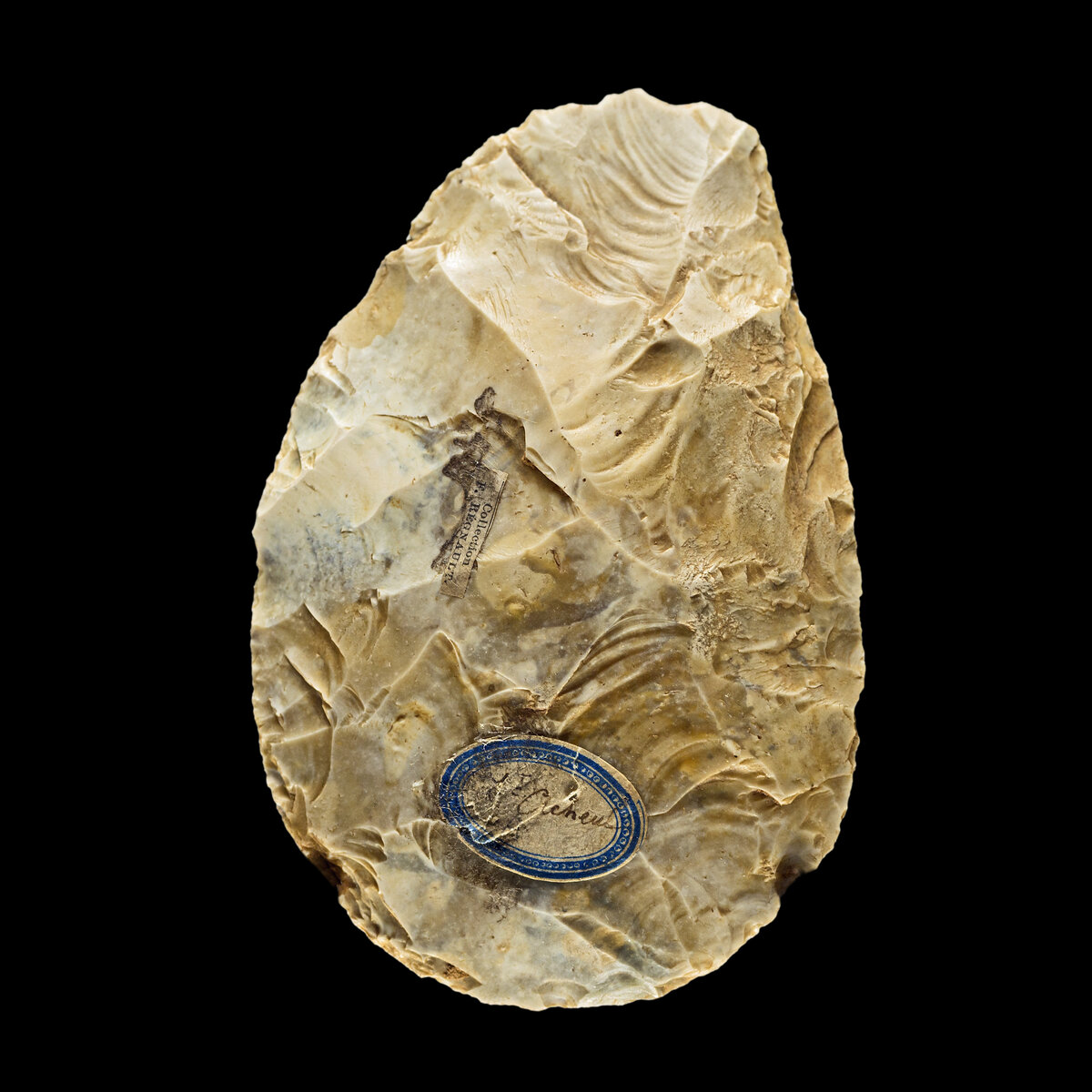
For the first AcheuliansAcheuleanAcheuleanA stone-tool industry (c. 1.7 Ma–300,000 BP) characterised by large, finely worked almond-shaped bifaces. Associated with Homo ergaster and erectus and spread from Africa to Europe and Asia.→Lower PalaeolithicLower PalaeolithicFirst and longest period of prehistory, marked by the earliest knapped stone tools and the first hominins outside Africa.→ technical culture characterised by hand axes, present across three continents.→ of Gesher Benot Ya'aqov, these transformations had a concrete value. An oak woodland that is too closed is a difficult environment to exploit; opened up and broken by clearings and paths to the water, it offers on the contrary easier access to resources, from game to raw material. The same animals that shaped the vegetation also provided, on occasion, meat and hard materials, even if the researchers stress that no direct evidence shows this particular elephant was hunted or butchered. The basalt handaxebifaceA stone tool knapped on both faces to obtain a regular shape and cutting edges.→ found beside the tooth speaks of coexistence, not necessarily of predation.
That is perhaps the most precious point of the study. Opportunities to attest that megafauna and hominins shared a single landscape, at the same time and in the same place, remain extremely rare in the prehistoric record. At Gesher Benot Ya'aqov, the molar of a vanished giant and the handaxes of its human neighbours lay side by side, caught in the same soil. In learning to read a tooth like a field notebook, Hannah Farrell's team has not only identified a species: it has brought back to life, for a hundred thousand years, a world of oaks and water in which the largest mammals of their time crossed paths with the first craftsmen of stone.
No comments yet. Be the first.