In December 1998, in a narrow limestone valley in central Portugal, archaeologists uncovered the skeleton of a child stained with red ochre. The scene was nearly twenty-eight thousand years old, yet it immediately upended European prehistoryPrehistoryThe span of human history before the invention of writing, from the Palaeolithic to the Metal Ages, known mainly through material remains.→. This small body, that of a boy or girl aged four to five, resembled neither a full Homo sapiensHomo sapiensThe present-day human species, which emerged in AfricaAfricaThe cradle of humankind: the continent where the first hominins appeared, then Homo sapiens around 300,000 years ago, before the expansion to the rest of the world.→ around 300,000 years ago, the only surviving human lineage after the extinction of Neanderthals and Denisovans.→ nor a full NeanderthalNeanderthalsA fossil humanity of Eurasia, robust and cold-adapted, extinct around 40,000 years before present.→: it seemed to unite the two. Named the Lapedo child, after the valley where it lay, it became one of the most debated fossils in human evolution. A quarter of a century later, an unprecedented dating technique has resolved part of the mystery, without silencing the controversy it still fuels.1
A chance discovery in the Lapedo valley
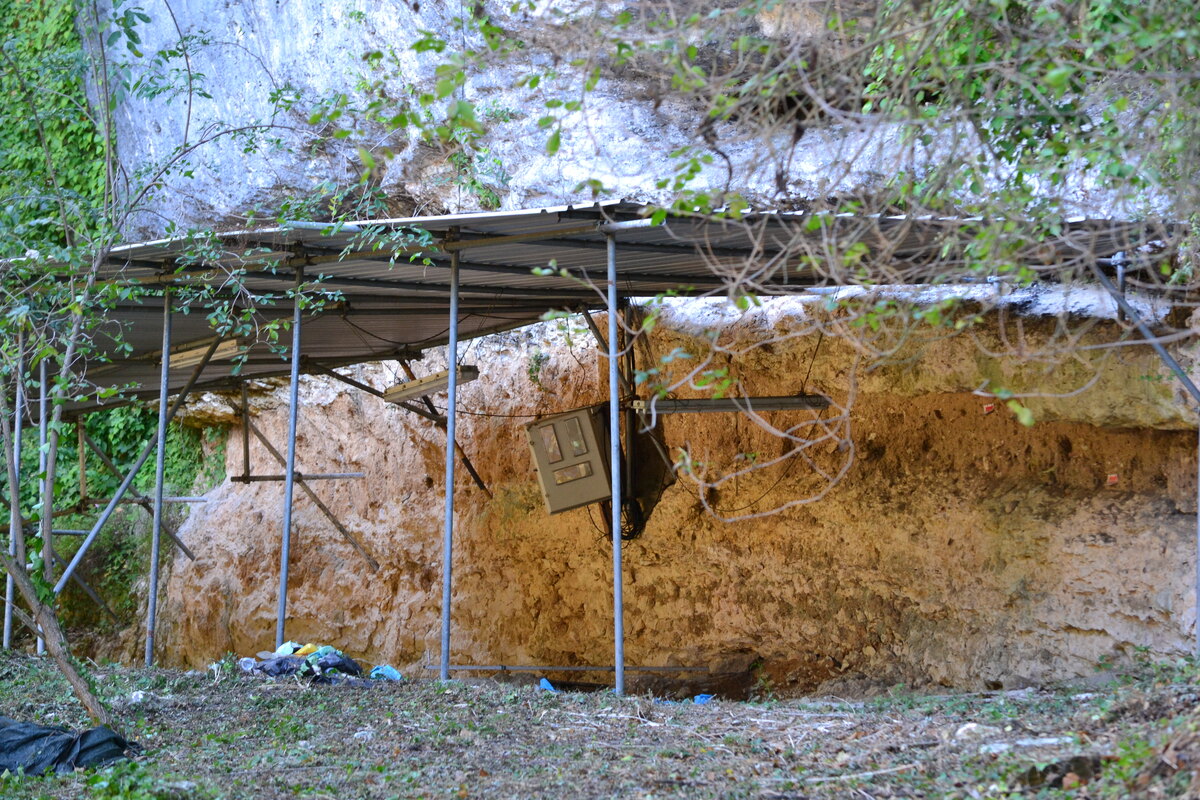
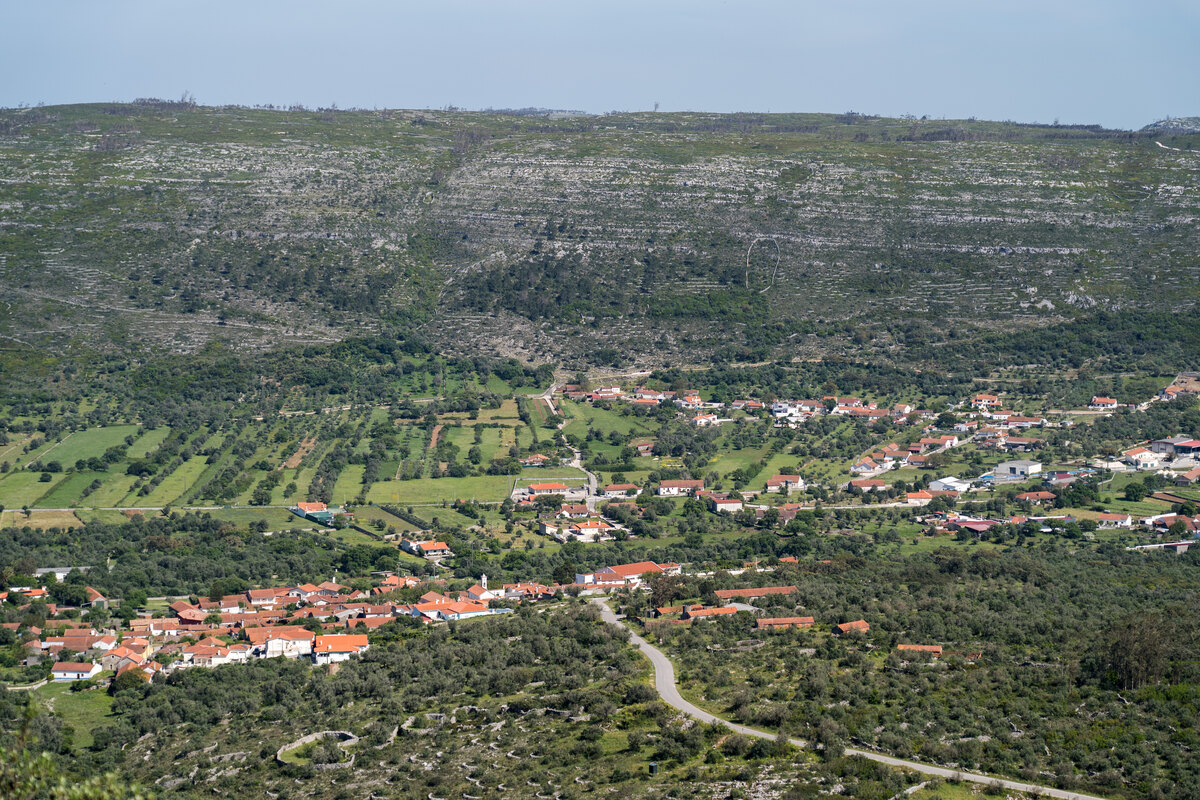
The site, known as the Abrigo do Lagar Velho, is a rock shelterRock shelterA shallow cavity at the foot of a cliff or under a rocky overhang, offering natural shelter; a favoured site of prehistoric habitation and rock art.→ carved into a limestone cliff about fifteen kilometres south of Leiria. In November 1998, the Portuguese archaeologist João Zilhão was alerted to signs of prehistoric occupation in the valley. A survey led to the discovery, wedged at the back of the shelter, of human bones mingled with reddened earth. The salvage excavation, directed by Cidália Duarte and Zilhão, was carried out urgently, between 12 December 1998 and early January 1999, before bad weather could damage the deposit.2
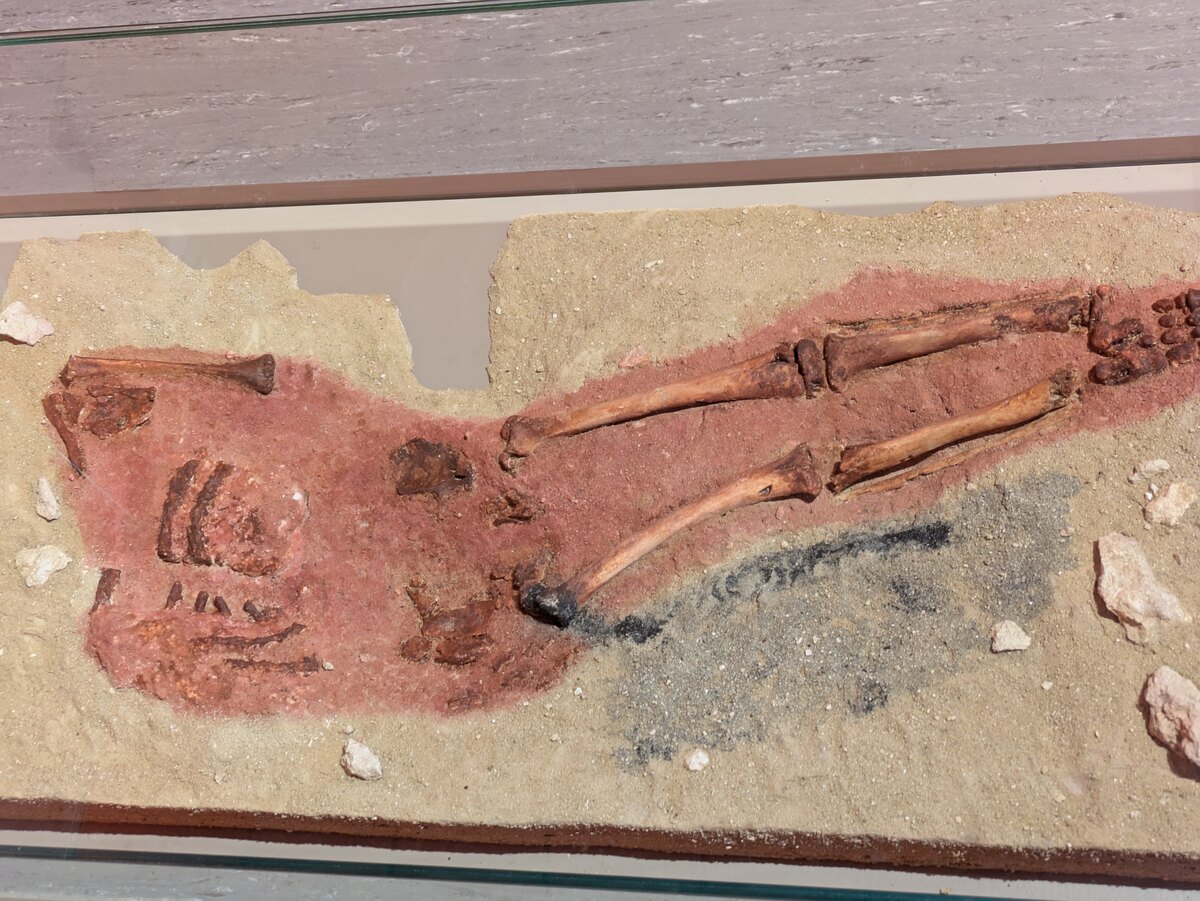
What the excavators unearthed was exceptional: an almost complete burialBurialThe intentional deposition of a body, sometimes with offerings; a marker of symbolic behaviour.→, one of the few known from the early Upper PalaeolithicPalaeolithicThe oldest and longest period of prehistory (c. 3.3 Ma–12,000 BC), defined by chipped stone tools and a hunter-gatherer way of life.→Upper PalaeolithicThe final phase of the Palaeolithic (c. 45,000 to 10,000 years ago), marked by Homo sapiens in Europe, art, ornaments and a succession of cultures (AurignacianAurignacianThe earliest culture of the European Upper Palaeolithic (c. 43,000–33,000 BC), tied to the arrival of Homo sapiens and the first artworks.→, GravettianGravettianAn Upper Palaeolithic culture (c. 33,000–21,000 BC) spanning from the Atlantic to Siberia, famous for its ivory female figurines ("Venuses") and, at Dolní Věstonice, the oldest fired ceramics.→, SolutreanSolutreanA European Upper Palaeolithic culture (c. 22,000–17,000 BC), remarkable for its leaf-shaped lithic points worked with flat retouch. Contemporary with the second art phase of Cosquer Cave.→, MagdalenianMagdalenianThe last great Upper Palaeolithic culture (c. 17,000–12,000 BC), the peak of cave art (Lascaux).→).→ on the Iberian Peninsula. The child lay on its back, head turned to the east, its left side pressed against the cliff wall. Nothing was left to chance. The position of the body, the shallow pit that held it and the abundance of pigment betrayed a deliberate funerary act. The American anthropologist Erik Trinkaus, a leading Neanderthal specialist, soon joined the team to study the remains. Together, the researchers realised they held far more than a simple child's grave: a rare document of how the first modern populations of western Europe lived and died.
A careful burial, marked by ochre
The most striking feature of the grave is its colour. The child's bones are tinted with red ochreOchreA red or yellow mineral pigment (iron oxides), used from prehistory for adornment, funerary rites and art.→, the iron-oxide pigment that prehistoric societies used in their rituals. The staining is so intense that the body, or the shroud wrapping it, must have been generously dusted with pigment before burial. Ochre is no mere decoration: in many Palaeolithic cultures it accompanies the dead and signals a symbolic charge, perhaps tied to blood, to life, or to an afterlife.2
Around the small deceased, archaeologists recorded several offerings. Near the cervical vertebrae lay a pierced marine shell, a Littorina obtusata, probably worn as a pendant or sewn onto a garment. Animal bones, also ochre-stained, framed the body. The remains of a young rabbit, placed in contact with the child's legs, suggest that a whole animal was deposited on the grave as a food or ritual offering. Remains of red deer were also found. Together they form a coherent picture, that of a GravettianGravettianAn Upper Palaeolithic culture (c. 33,000–21,000 BC) famous for its female figurines, the "Venuses".→ community, the culture that dominated Europe between roughly 33,000 and 24,000 years before present, capable of granting an infant an elaborate ceremony. The care lavished on this burial says something about the attention paid to the youngest, and about the mental complexity of these hunter-gatherersHunter-gatherersA way of life based on hunting, fishing and gathering wild resources, without farming or herding; it dominated almost the whole of human history.→ of the last Ice Age.
A body in mosaic: Neanderthal and sapiens
It was while studying the skeleton itself that Trinkaus and his colleagues met the enigma. The skull and teeth bore clearly modern signs: a projecting bony chin, the hallmark of Homo sapiens, and dental proportions typical of our species. But the rest of the body told another story. The limbs were short and stocky, the shinbones massive relative to the thighbones, the jaw broad along its ascending branch, all features usually attributed to Neanderthals, adapted to cold and to powerful musculature.2
This combination seemed all the more puzzling because the two lineages should no longer have coexisted at that date. Neanderthals died out in Europe around 40,000 years before present, some ten thousand years before the birth of the Lapedo child. How could a child living so late display body proportions inherited from Neanderthals? For Trinkaus, the answer lay in one word: interbreedingInterbreedingGenetic mixing between human populations or species; between Neanderthals and Homo sapiens it left 1 to 2% of Neanderthal DNADNAThe molecule carrying genetic information, used to reconstruct kinship between species.→ in non-Africans.→. In his view, these traits had not appeared by chance in an isolated individual. They reflected the ancestry of a population in which Neanderthal and modern blood had mixed over several generations, passing on a blended anatomical heritage long after the last full-blooded Neanderthals had vanished. The Lapedo child would not be the product of a single, exceptional cross, but the distant descendant of deeply admixed populations.
The interbreeding hypothesis and its critics
Published as early as 1999 in the Proceedings of the National Academy of Sciences, the hybrid interpretation struck like a provocation. At the time, the idea that sapiens and Neanderthal could have reproduced together was a minority view, even a frowned-upon one. Many prehistorians held the two forms to be distinct species, unable or unlikely to exchange genes. To claim that a Portuguese child carried the proof in its bones was to defy a firmly established consensus.4
The criticism was not slow to come. The palaeoanthropologist Ian Tattersall, of the American Museum of Natural History, judged the hypothesis fragile, recalling that a growing child's skeleton is hard to compare with adults. In Zurich, the fossil-imaging specialist Christoph Zollikofer argued that the skeleton revealed no genuine Neanderthal affinities and could just as well represent a robust Homo sapiens, simply a rather sturdy one. The heart of the disagreement lay in the nature of the object: a very young child, whose proportions are not yet fixed, lends itself poorly to the measurements applied to adults. Where some read a Neanderthal legacy, others saw the normal variability of our species. For a long time the debate stayed open, and at times heated.
The picture has nonetheless changed dramatically. In 2010, the sequencingSequencingReading the order of the bases (A, T, G, C) of a DNA molecule; high-throughput sequencing reads millions of fragments in parallel.→ of the Neanderthal genome showed that present-day non-African humans retain, on average, 1 to 2 per cent Neanderthal DNA. Interbreeding between the two humanities is no longer a bold hypothesis: it is an established genetic fact. This revolution lent fresh credit to the reading of Trinkaus and Zilhão, even though no ancient DNAAncient DNAGenetic material preserved in old remains, often degraded, sequenced with cutting-edge techniques.→ has so far been extracted from the fragile bones of the Lapedo child to confirm its mixed ancestry directly.3
A dating puzzle twenty-five years old
Being famous is not enough to be well dated. For a quarter of a century, the exact age of the burial resisted researchers. On four occasions, laboratories tried to date the bones directly by radiocarbonRadiocarbon (carbon-14)A dating method based on the decay of carbon-14, usable back to about 50,000 years.→, never obtaining a reliable result. The measurements spread across a wide range, between roughly 20,000 and 26,000 years, incompatible with the precision such an important fossil demanded.5
The cause of these failures lay in the state of the bones. CollagenCollagenThe main protein of bone, used as the medium for isotopic analysis of ancient diet.→, the protein isolated to date ancient remains, was very poorly preserved in the child's skeleton. Worse, the sample had absorbed foreign carbon: fine plant rootlets had crept into the bone over the millennia, and conservation products applied after excavation had contaminated the material. This parasitic carbon skewed every measurement, pulling the dates one way or the other. Lacking a secure age, the child continued to be described as roughly 24,000 years old, an approximate figure inherited from the dating of associated samples, such as charcoal from nearby hearths, rather than from the bone itself. One of Europe's most discussed fossils remained, paradoxically, poorly fixed in time.
Hydroxyproline, the key to the calendar
The solution came from precision chemistry. In 2025, a team led by Bethan Linscott and Thibaut Devièse, together with Cidália Duarte, Erik Trinkaus and João Zilhão, applied a technique called compound-specific radiocarbon dating. The principle: instead of dating the collagen as a whole, a single one of its molecules is isolated, hydroxyprolineHydroxyprolineAn amino acid abundant in collagen, isolated to obtain a very pure radiocarbon date from degraded bones.→, an amino acid that makes up about 12 per cent of mammalian collagen and exists almost nowhere else in nature in such abundance. By dating only this purified molecule, nearly all the contaminating carbon is removed.1
The result, published in the journal Science Advances, put an end to years of uncertainty. The Lapedo child is now confidently dated to between 27,780 and 28,550 calibrated years before present, meaning a burial that took place around twenty-eight thousand years ago, in the heart of the late Gravettian. The method does more than resolve a single case: it shows that fossils deemed undatable, too degraded or too contaminated for standard protocols, can finally yield their age. For Palaeolithic archaeology, where so many precious remains resist analysis, this is an advance with far-reaching consequences. Above all, the date confirms an essential point: the child lived well after the extinction of the last pure Neanderthals, which strengthens the idea that its mixed traits stemstemThe narrowed base of a point, used to haft it onto a shaft or handle.→ from ancient interbreeding, diluted across generations, rather than from a recent encounter between the two lineages.
What the Lapedo child tells us about our history
Beyond the figure, the new dating restores this small body's full significance. If a child living twenty-eight thousand years ago still carried, ten thousand years after the end of the Neanderthals, body proportions inherited from them, then that anatomical legacy was passed down for a long time, generation after generation, within already deeply mixed modern populations. The Lapedo child thus becomes the human face, tiny and moving, of a phenomenon that genetics has revealed on the scale of entire continents.6
It also reminds us that the history of our species is anything but a straight line. For millennia, in Europe and the Near EastNear EastA region of western Asia (Levant, Mesopotamia, Anatolia, Iran), cradle of the Neolithic revolution, agriculture, the first cities and writing.→, Homo sapiens and Neanderthal lived side by side, exchanging techniques, territories and genes. We descend, in part, from that encounter. Every person of non-African ancestry today carries, in their genome, a fraction of that Neanderthal heritage, present in skin colour, immune response or metabolism. The Lapedo child has not been identified genetically, its bones having yielded no usable DNA, but its skeleton tells visually what our chromosomes whisper.
Finally there remains the raw emotion of the discovery. Behind the bone measurements and the scholarly debates lies a grave: that of a child of four or five, laid down with care by its people, dusted with ochre, accompanied by a shell and a rabbit, almost twenty-eight thousand years ago. Someone mourned it, someone dug the pit and chose the offerings. That this small being united in its body two humanities once thought irreconcilable only adds to its power as a symbol. The Lapedo child, long described as the one who should never have existed, embodies instead a truth now widely accepted: our origins are mixed, and that, perhaps, is one of our finest stories.
Je lis tous vos articles depuis le début. Le niveau est celui d'un bon magazine culturel.