Around one million years ago, Homo erectusHomo erectusAncient human species, the first hominin to leave Africa and the maker of the earliest Acheulean handaxes.→ had already mastered fire. This silent revolution, perhaps one of the most profound in all of human evolution, did not merely transform our dietary habits or social organization. It left its mark directly on our bodies, down to the surface of our skin.
A 2021 study published in the Proceedings of the National Academy of Sciences by Tina Lasisi and colleagues helped revive this fascinating debate. The researchers demonstrated that the tightly coiled structure of Afro-textured scalp hair provides superior heat dissipation compared to straight hair, protecting the brain from overheating under the African sun. This result sheds new light on the multiple evolutionary pressures that shaped the hair and skin morphology of hominins over hundreds of thousands of years.
The paradox of fire and body hair
Great apesgreat apesThe family of great apes (Hominidae) comprising orangutans, gorillas, chimpanzees, bonobos and humans.→ are covered in fur. Yet our lineage progressively lost most of its body hair. Why? The dominant theory invokes thermoregulation: walking upright across the African savanna, early Homo had to travel and run long distances under a brutal sun. Dense fur, effective in shaded forests, became an obstacle to rapid body cooling in open environments.
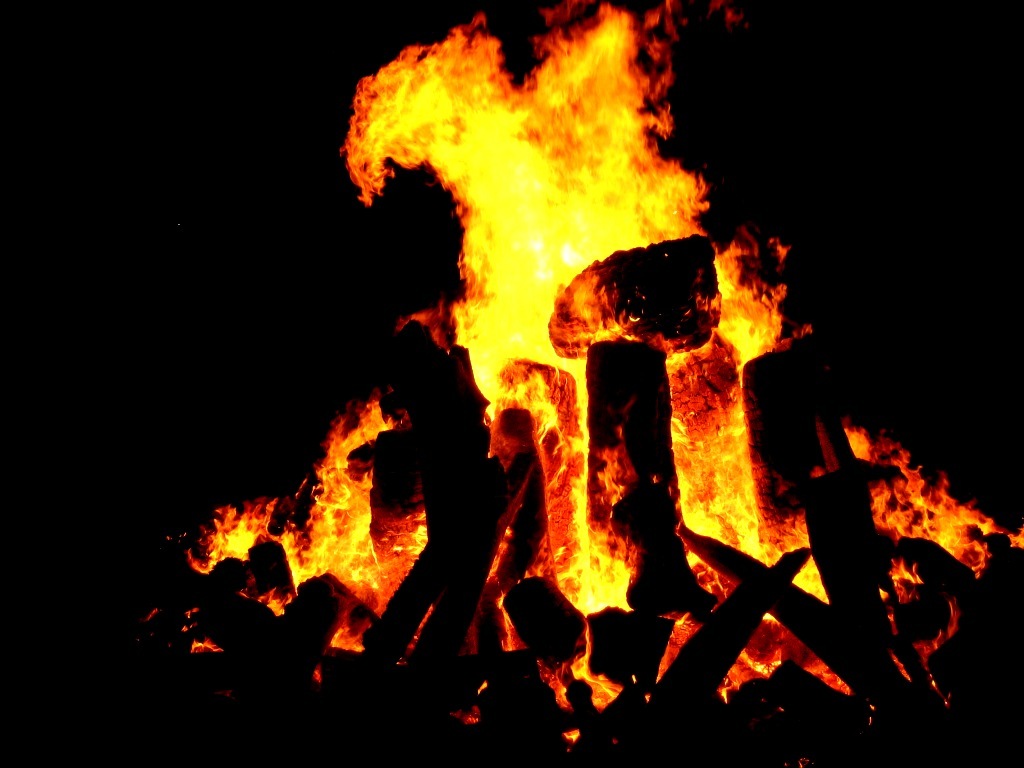
Fire adds an additional dimension to this hypothesis. A very hairy individual sitting near a hearthhearthA combustion structure set on the ground, evidence of the mastery of fire and a marker of how a prehistoric dwelling was organised.→ faces an increased risk of burns, inflammation, and infection. Flames, sparks, and embers, these hazards may have, over millennia, systematically favored less hairy individuals. Biologists Mark Pagel and Walter Bodmer proposed this selection pressure as a factor that accelerated hair loss in Homo erectus. In a world without medicine or antibiotics, burn injuries were often lethal, and bare skin heals more cleanly than hair-covered skin prone to secondary infections.
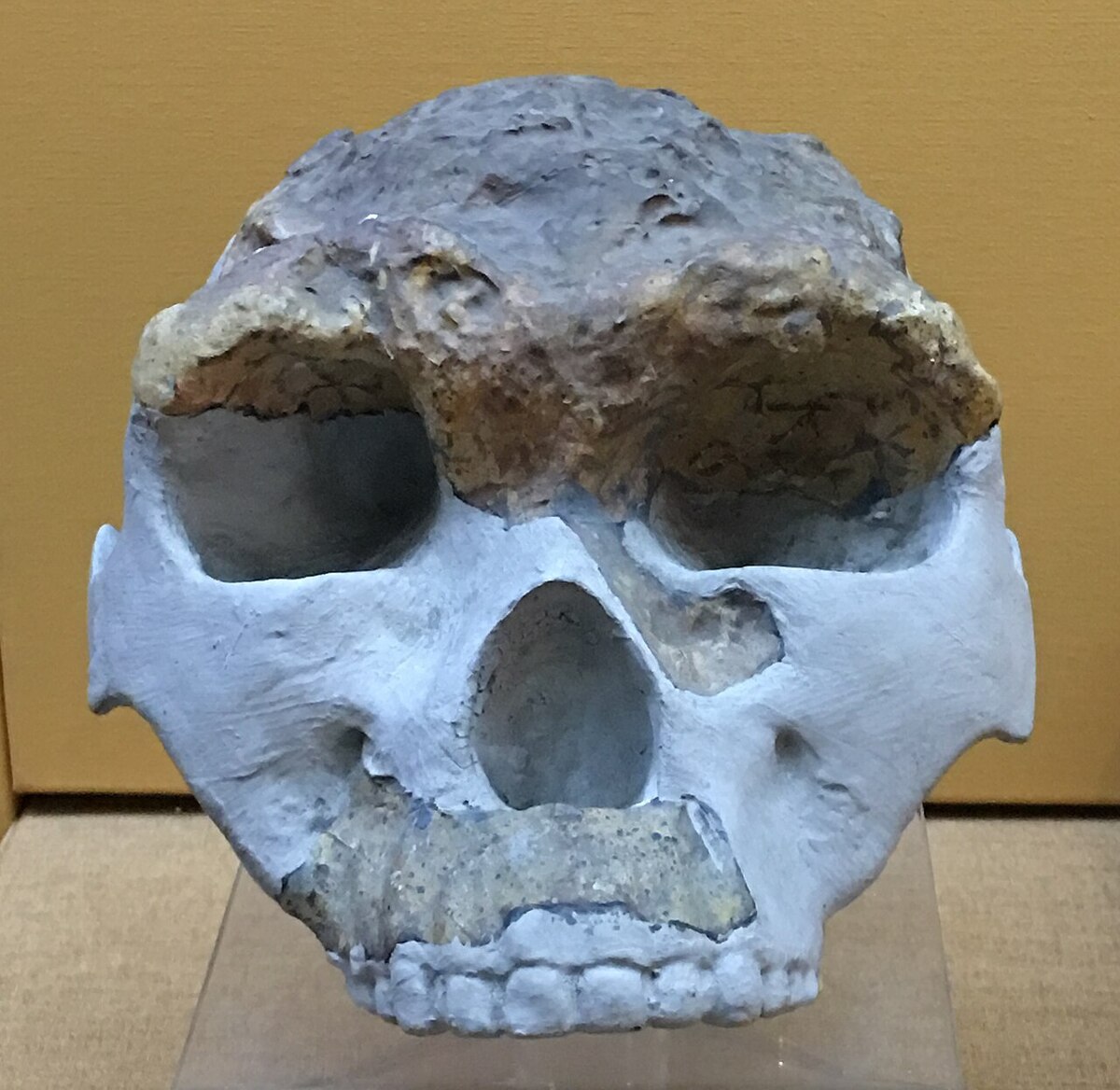
This theory is consistent with the fossil record. The first solid evidence of homininHomininMember of the subtribe Hominina, comprising the human lineage (Homo, Australopithecus, Paranthropus…) but excluding orangutans and gibbons. The term progressively replaces "hominid" in its narrow sense.→ fire use, Wonderwerk Cave in South AfricaAfricaThe cradle of humankind: the continent where the first hominins appeared, then Homo sapiens around 300,000 years ago, before the expansion to the rest of the world.→ and Gesher Benot Ya'aqov in Israel, dates to between 790,000 and one million years ago, when Homo erectus was already fully established across two continents. Burned bones and charcoal fragments recovered from these sites attest to progressive domestication of fire, not merely opportunistic use of natural blazes.
The eccrine sweat gland revolution
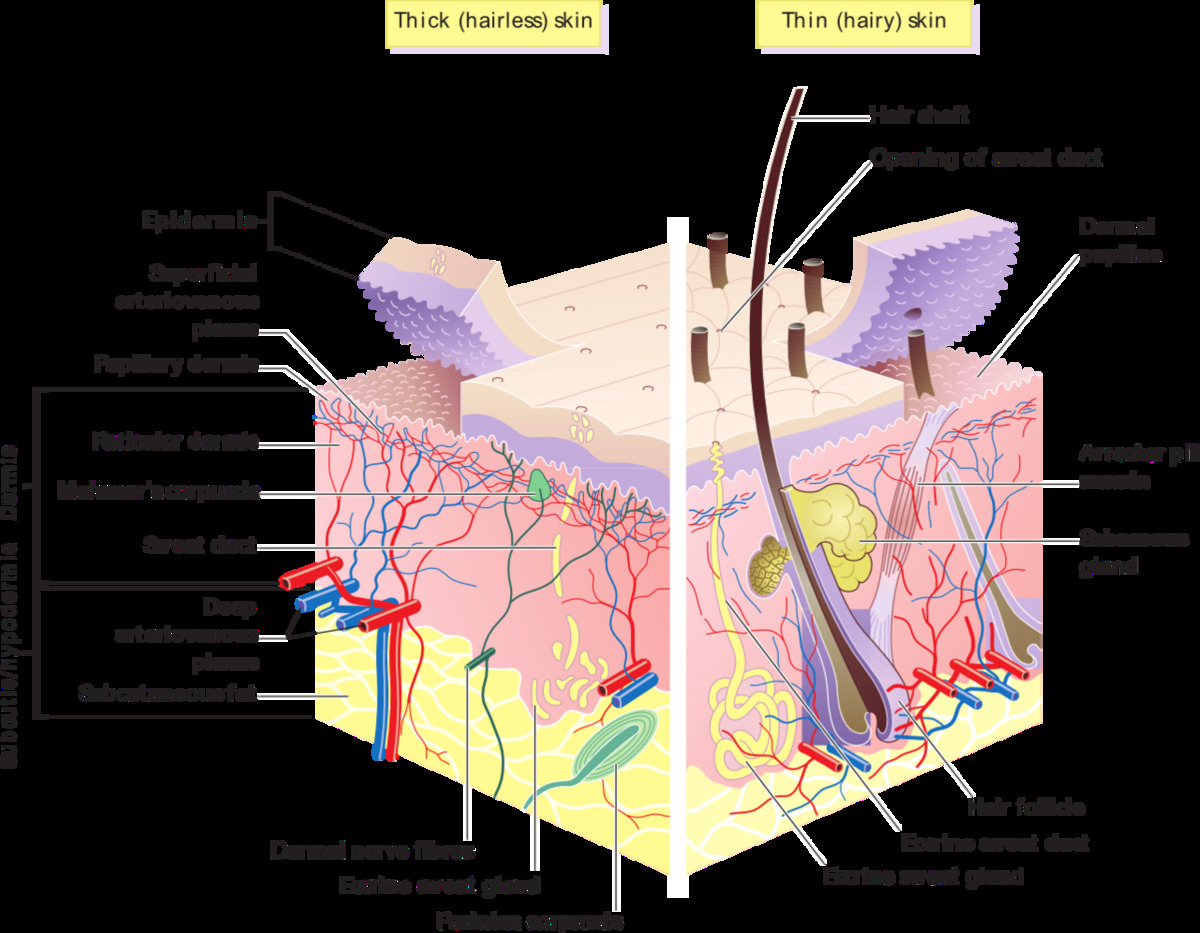
The loss of body hair was accompanied by another remarkable transformation: the massive proliferation of eccrine sweat glands. Humans possess between 2 and 5 million, distributed across the entire body surface, a figure unmatched among the great apes, which rely primarily on apocrine glands far less efficient for rapid heat dissipation.
This intense sweating system allows modern Homo sapiensHomo sapiensThe present-day human species, which emerged in Africa around 300,000 years ago, the only surviving human lineage after the extinction of Neanderthals and Denisovans.→ to shed heat with extraordinary efficiency. During intense physical exertion or prolonged heat exposure, particularly near a fire, a less hairy individual richly equipped with eccrine glands would survive and reproduce more successfully than a hairy individual prone to overheating. Computer simulations published in the Journal of Human Evolution have shown that the combination of bare skin and abundant sweating supports sustained physical activity far beyond what ancestral fur would permit.
Melanin: when bare skin faces UV radiation
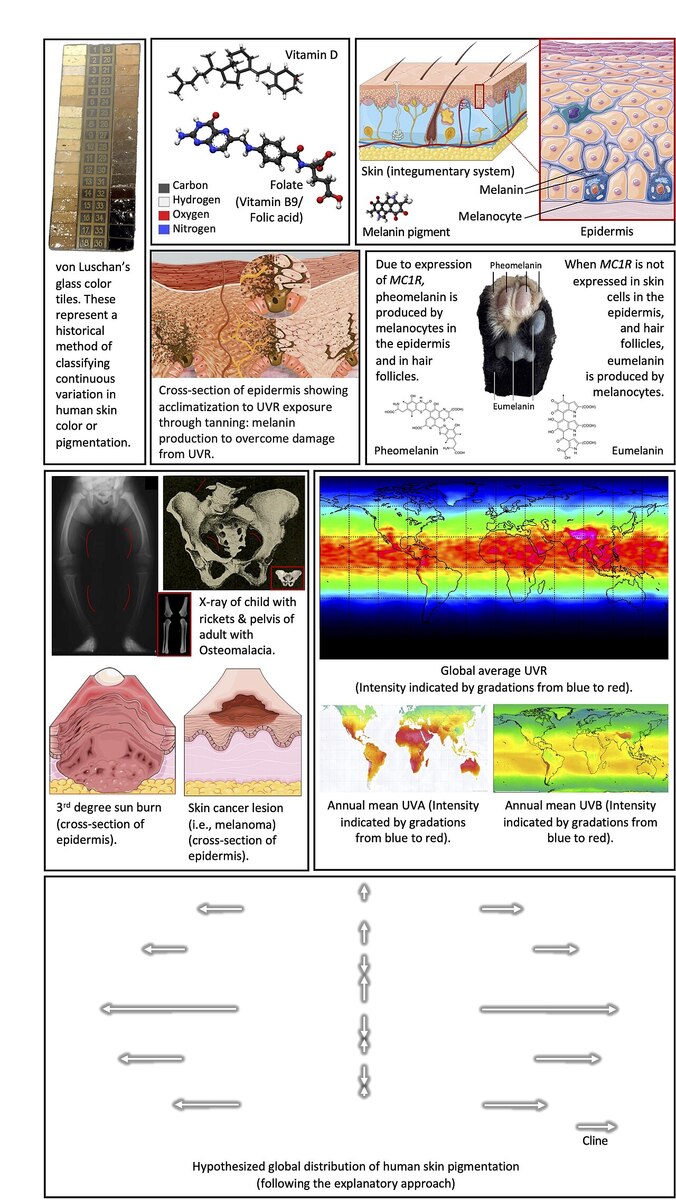
Losing body hair created a new problem: bare skin exposed directly to ultraviolet radiation. The dark fur of our primate ancestors absorbed a portion of harmful UV rays. Without this natural protection, the epidermis had to develop its own defenses.
This is where melanin comes in. This pigment, produced by melanocytes in the epidermis, filters UV-B radiation that would otherwise damage cellular DNADNAThe molecule carrying genetic information, used to reconstruct kinship between species.→ and destroy folate, a molecule essential for reproduction and embryonic development. Populations living near the equator evolved naturally darker skin, rich in eumelanin, precisely to compensate for the loss of protective fur and maximize solar protection. In their landmark 2000 study in the Journal of Human Evolution, Nina Jablonski and George Chaplin showed that skin pigmentation intensity closely follows the global map of annual UV irradiation.
It is remarkable that this adaptation occurred in tropical Africa, the same region where Homo erectus most frequently used fire, and where solar intensity is highest year-round. The two selection pressures, fire burns and UV radiation, thus acted in concert to shape the skin characteristics of our direct ancestors.
A body built around the flames
The picture emerging from this research is of a human body partly shaped around the hearth. Not deliberately, of course, but through the relentless action of natural selection that, generation after generation, favored individuals whose morphology best adapted to this particular thermal environment.
Hairless skin, abundant sweating, pigmentation calibrated to local light intensity: three characteristics that distinguish modern humans from all other primates, part of whose explanation may lie in the ancestral hearth where our forebears warmed themselves, cooked their food, and slept in safety for hundreds of thousands of years.
This hypothesis is not universally accepted. Other researchers emphasize the primary role of long-distance running and thermoregulation in open environments, independently of fire. But these explanations are not mutually exclusive. Human skin, in all its complexity, is likely the product of multiple simultaneously acting selection pressures, of which the mastery of fire may be among the most significant.
No comments yet. Be the first.