A groundbreaking study published in Science on July 30, 2026 has revealed that the human genome harbors genetic material from not just NeanderthalsNeanderthalsA fossil humanity of Eurasia, robust and cold-adapted, extinct around 40,000 years before present.→ and Denisovans, but also from at least one -- and possibly two -- previously unknown archaicArchaicRefers to an ancient, now-extinct human population or form (Neanderthals, Denisovans, ghost lineages), as opposed to anatomically modern humans.→ human lineages. The research, conducted by a team from the University of California Berkeley, introduces a powerful new computational method capable of detecting archaic ancestry without requiring ancient genome sequences as a reference.1
TRACE: Mapping the genome's family tree
Until now, scientists identified archaic DNADNAThe molecule carrying genetic information, used to reconstruct kinship between species.→ in modern genomes by comparing them directly to sequenced Neanderthal and DenisovanDenisovanAn extinct human population, cousin of the Neanderthals, identified in 2010 from the DNA of remains in Denisova Cave (Siberia).→ genomes. This method confirmed that non-African humans carry 1 to 2% Neanderthal DNA, and that some Asian and Oceanian populations possess up to 5% Denisovan DNA.2 The fundamental limitation of this approach is that it can only find what it already knows to look for.
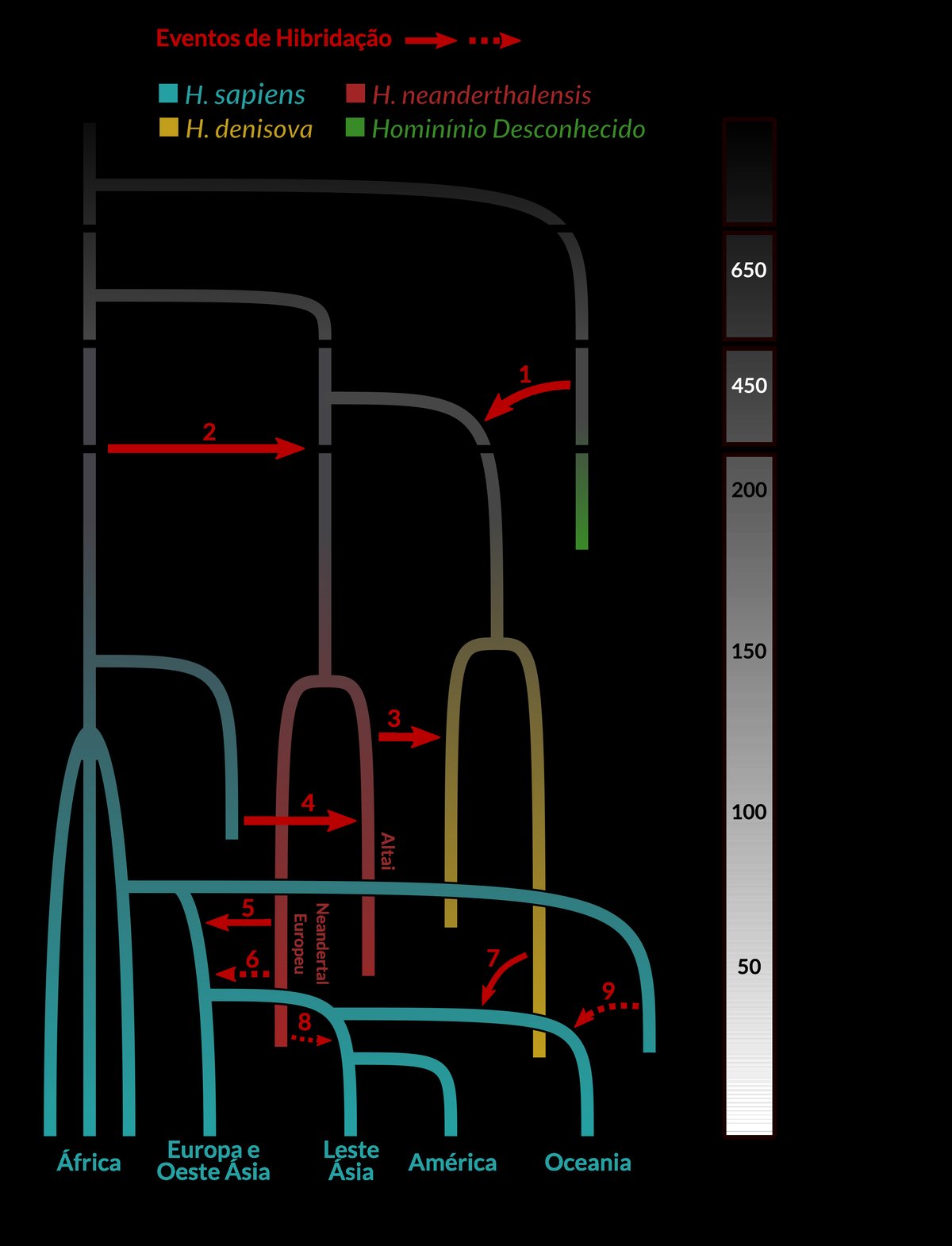
Detecting genetic contributions from lineages with no sequenced fossil remains requires an entirely different strategy. The Berkeley team developed exactly that: a method called TRACE -- TRacking Archaic Contributions via ARG Estimation -- which reconstructs the full evolutionary history of every position in the modern human genome by analyzing all gene recombinations and coalescences that have occurred through time. In essence, TRACE builds a "genealogy" of the genome without needing any archaic reference sequence.3
Ghost ancestry in every human genome
Applied to 503 complete genomes from populations across the globe, TRACE first recovered the known signatures of Neanderthal and Denisovan ancestry, validating its accuracy. But the method then revealed something unexpected: "ghost" archaic DNA segments from a lineage distinct from both Neanderthals and Denisovans, present in all modern human populations studied -- including Africans. These ghost segments represent between 0.5 and 1.1% of the genome on average.1
The presence of this ghost DNA in African populations is a critical finding. It means the interbreedingInterbreedingGenetic mixing between human populations or species; between Neanderthals and Homo sapiens it left 1 to 2% of Neanderthal DNA in non-Africans.→ occurred before the Out of AfricaOut of AfricaThe dispersals of Homo sapiens out of Africa, including a major expansion c. 70,000 to 60,000 years ago and earlier exits.→ migration, more than 70,000 years ago. The unknown archaic lineage would have diverged from modern humans more than 500,000 years ago. The researchers also noted that East and West African populations show greater diversity in these ghost segments -- consistent with the reduced genetic diversity observed outside AfricaAfricaThe cradle of humankind: the continent where the first hominins appeared, then Homo sapiens around 300,000 years ago, before the expansion to the rest of the world.→, a consequence of the population bottleneckBottleneckA sharp, temporary reduction in a population's size that lastingly impoverishes its genetic diversity.→ that accompanied the out-of-Africa dispersal.
Homo heidelbergensisHomo heidelbergensisMiddle Pleistocene human species, often seen as the common ancestor of Neanderthals and our own species.→: a face for the ghost?
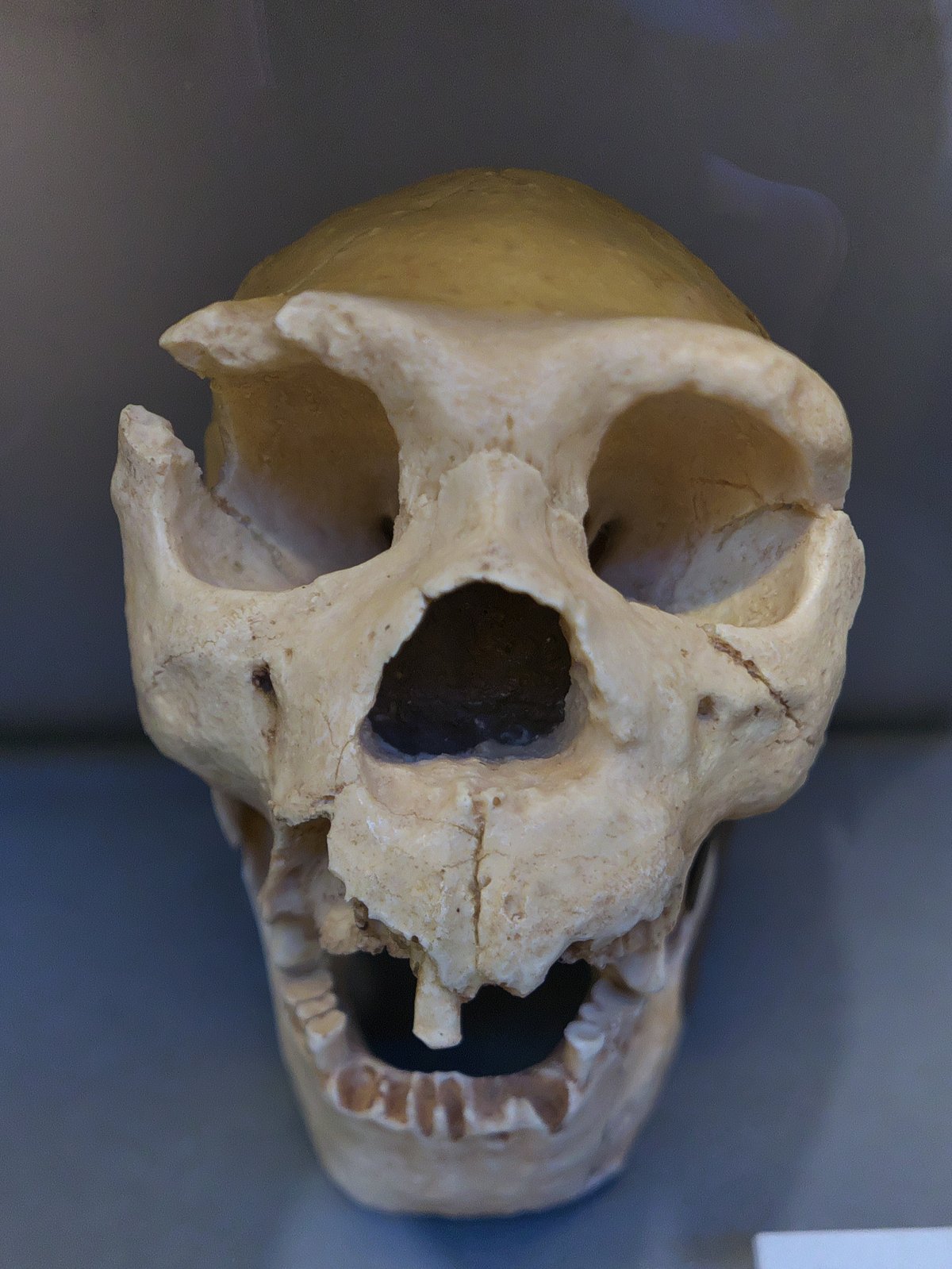
The authors propose that the ghost lineageGhost lineageAn ancient human population known only by the trace it left in the genomes of present-day populations, without any confirming fossil.→ -- which diverged from Homo sapiens at roughly the same time as the Neanderthals, between 500,000 and 700,000 years ago -- may correspond to African populations of Homo heidelbergensis. These hominins, whose fossils are known from sites such as Atapuerca in Spain and Kabwe in Zambia, may have coexisted and interbred with the ancestors of modern humans in Africa.4
Super-archaic ancestry in Oceanians
TRACE also uncovered even older segments in the genomes of contemporary Oceanian populations -- what the researchers call "super-archaic" DNA. These segments appear to derive from a lineage that diverged from the human line between 0.9 and 1.4 million years ago, making them older than the split between modern humans, Neanderthals, and Denisovans.1
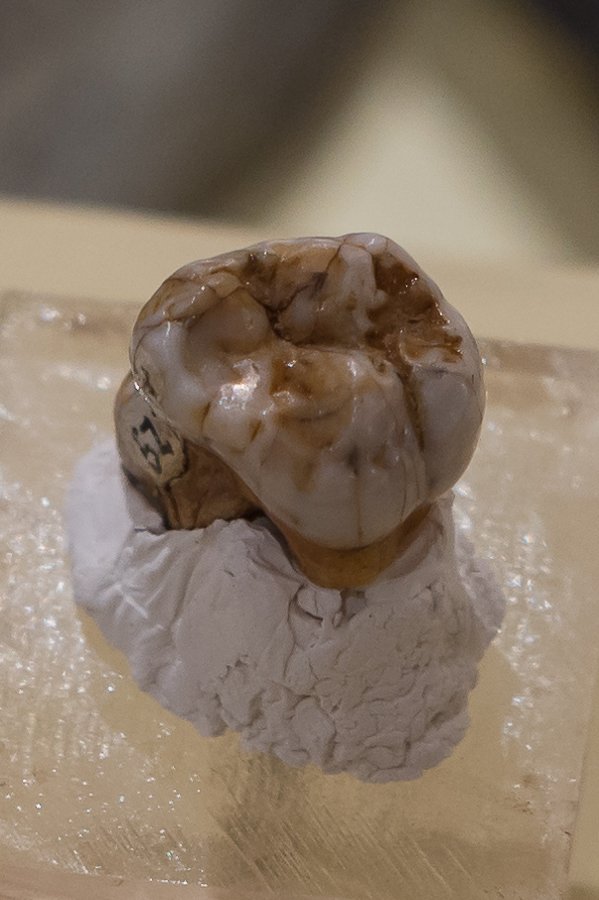
The proposed explanation is that Oceanian populations inherited this super-archaic DNA not directly, but via Denisovans -- with whom Asian Homo sapiens interbred. The Denisovans themselves may have received this ancient DNAAncient DNAGenetic material preserved in old remains, often degraded, sequenced with cutting-edge techniques.→ from Homo erectus, before passing it on to modern humans.
Awaiting confirmation
These conclusions remain to be confirmed. Validating the precise identity of the ghost and super-archaic lineages will require analyzing ancient genomes from Africa and Asia spanning much greater time depths than are currently available.3 What the TRACE method has already demonstrated, however, is that our understanding of ancient human interbreeding was incomplete. Beyond the well-documented mixing with Neanderthals and Denisovans, Homo sapiens absorbed genetic material from at least one other vanished lineage -- a ghost from our deepest evolutionary past.
No comments yet. Be the first.