At the edge of the glacial world
Picture an unrecognisable Europe. Where temperate forests, cities and cultivated fields stretch out today, more than thirty millennia ago an immense prairie unfurled, lashed by polar winds. A treeless steppeSteppeA vast semi-arid, treeless grassland of Eurasia, suited to nomadic herding and the horse; a corridor for the movement of peoples and technologies in later prehistory.→, dry, frozen for much of the year, where reindeer, wild horses, steppe bison and, the emblematic silhouette of that vanished world, the woolly mammoth grazed in herds. On this cold-swept stage lived men and women who resembled us feature for feature: Homo sapiensHomo sapiensThe present-day human species, which emerged in Africa around 300,000 years ago, the only surviving human lineage after the extinction of Neanderthals and Denisovans.→, seasoned hunters, flintFlintA hard, brittle siliceous rock, knapped by prehistoric people to produce blades, points and sharp tools.→ knappers, ivory carvers, people who buried their dead beneath thousands of patiently crafted beads. They were the bearers of a culture that prehistorians have named the GravettianGravettianAn Upper Palaeolithic culture (c. 33,000–21,000 BC) spanning from the Atlantic to Siberia, famous for its ivory female figurines ("Venuses") and, at Dolní Věstonice, the oldest fired ceramics.→GravettianAn Upper PalaeolithicPalaeolithicThe oldest and longest period of prehistory (c. 3.3 Ma–12,000 BC), defined by chipped stone tools and a hunter-gatherer way of life.→ culture (c. 33,000–21,000 BC) famous for its female figurines, the "Venuses".→, and their story is one of the most fascinating in the Upper PalaeolithicUpper PalaeolithicThe final phase of the Palaeolithic (c. 45,000 to 10,000 years ago), marked by Homo sapiens in Europe, art, ornaments and a succession of cultures (AurignacianAurignacianThe earliest culture of the European Upper Palaeolithic (c. 43,000–33,000 BC), tied to the arrival of Homo sapiens and the first artworks.→, Gravettian, SolutreanSolutreanA European Upper Palaeolithic culture (c. 22,000–17,000 BC), remarkable for its leaf-shaped lithic points worked with flat retouch. Contemporary with the second art phase of Cosquer Cave.→, MagdalenianMagdalenianThe last great Upper Palaeolithic culture (c. 17,000–12,000 BC), the peak of cave art (Lascaux).→).→.
The Gravettian is not a people in the modern sense, nor a nation, nor even a clearly delimited ethnic group. It is what archaeologists call a technocomplex: a coherent set of techniques, objects, gestures and symbolic traditions found, with regional variants, from the Atlantic seaboard to the great plains of Russia. This relative unity across so vast a territory intrigues and fascinates. It bears witness to networks of exchange, to circulations of ideas and of people on a continental scale, at a time when humanity faced one of the harshest climates in its recent history. Over thousands of kilometres, groups that never met nonetheless shared tool forms, ways of carving, and even a certain idea of beauty.
This feature invites you to travel through that world of cold. We will follow the mammoth hunters across the glacial steppe, step beneath the huts built from the bones of their prey, examine their weapons of flint and ivory, and above all pause at length before their enigmatic Venus figurines, those female statuettes that, ever since their discovery, have never ceased to fuel hypotheses and debate. We will always keep one demand in mind: caution, distinguishing what excavation establishes with certainty from what we can only imagine. For prehistoryPrehistoryThe span of human history before the invention of writing, from the Palaeolithic to the Metal Ages, known mainly through material remains.→ is an art of restraint as much as a science of discovery, and the Gravettian, with its shadows and its riddles, offers a magnificent illustration of that.
Placing the Gravettian in time
The European Upper Palaeolithic unfolds as a long succession of material cultures that follow one another over several tens of thousands of years. After the Aurignacian, the first great culture associated with the arrival of Homo sapiens in Europe, comes the Gravettian, then, in the west, the Solutrean and finally the Magdalenian, famous for its painted caves. In the east and south of the continent, the sequence differs: the Gravettian continues and transforms into the Epigravettian, which would endure well after the end of the last glaciation. The Gravettian thus occupies a central, pivotal position in this long history, at the crossroads of the western and eastern worlds of glacial Europe.
Dating these cultures remains a delicate exercise, and the figures must be handled with care. Depending on the region, the calibration methods and recent discoveries, the Gravettian is generally placed between roughly 34,000 and 24,000 years before present, corresponding approximately to a range from about 33,000 to 21,000 BCE1. These boundaries should not be taken literally: they shift from one site to another, and the transitions between cultures were doubtless gradual, made of overlaps, contacts and mutual influences rather than clean breaks. Radiocarbon, the principal dating tool for these periods, carries its own margins of uncertainty, which researchers strive to narrow through ever more refined calibration methods.
The very name of this culture recalls the importance of French sites in the birth of prehistory. It derives from the site of La Gravette, a rock shelterRock shelterA shallow cavity at the foot of a cliff or under a rocky overhang, offering natural shelter; a favoured site of prehistoric habitation and rock art.→ in the Dordogne, in south-western France, a region of exceptional archaeological richness that has yielded a considerable part of our knowledge of the Palaeolithic. It was there that the characteristic stone points were recognised, points that would give their name to an entire epoch. Yet it would be reductive to confine the Gravettian to its French cradle: its most spectacular expressions, in terms of dwellings and burials, lie far to the east, in Central Europe and the great plains of the East, where the cold was sharper still and human ingenuity all the more solicited.
One must beware of seeing in this succession of cultures a simple straight line, a mechanical progress leading from one stage to the next. The reality was infinitely more complex: groups coexisted, crossed paths, borrowed techniques and ideas from one another. The Gravettian itself breaks down into multiple regional and chronological facies, which specialists distinguish by details of toolkit. This internal diversity, far from weakening the notion of the Gravettian, reveals its richness: a single great tradition capable of adapting to widely varied environments and local histories.
The history of the Gravettian's discovery is also that of the birth of prehistory as a science. In the nineteenth and early twentieth centuries, pioneers explored the shelters and caves of south-western France, unearthed tools and bones, and began to order this abundance into a coherent chronology. The Lady of Brassempouy was uncovered in 1894, the Venus of Willendorf in 1908: milestones marking the entry of Palaeolithic art into scholarly awareness, not without heated debate over its authenticity and meaning. Little by little, from the Dordogne to Moravia and on to the Russian plains, the portrait emerged of a glacial civilisation of unsuspected scope, whose image each new excavation enriches and complicates.
An iron climateClimateThe long-term average atmospheric conditions of a region; its variations (glaciations, aridifications) shaped migrations, agriculture and the collapse of prehistoric societies.→: the mammoth steppe
To understand the Gravettian, one must first understand the cold. These societies flourished in the second half of the last glacial period, in the millennia preceding and framing the Last Glacial MaximumLast Glacial MaximumThe peak of the last glaciation (c. 26,000 to 19,000 years ago), with ice sheets at their greatest extent; it pushed populations towards southern refuges.→, that moment when the ice sheets reached their greatest extent. The climate was cold and dry, the air laden with mineral dust raised by the winds, the seasons sharply contrasted between short summers and interminable winters. Far from the frozen deserts one sometimes imagines, much of Europe was covered by an ecosystem of extraordinary biological productivity: the mammoth steppeMammoth steppeA vast cold, dry steppe-tundra ecosystem covering glacial Eurasia, home to mammoths, woolly rhinos, reindeer, horses and bison.→.
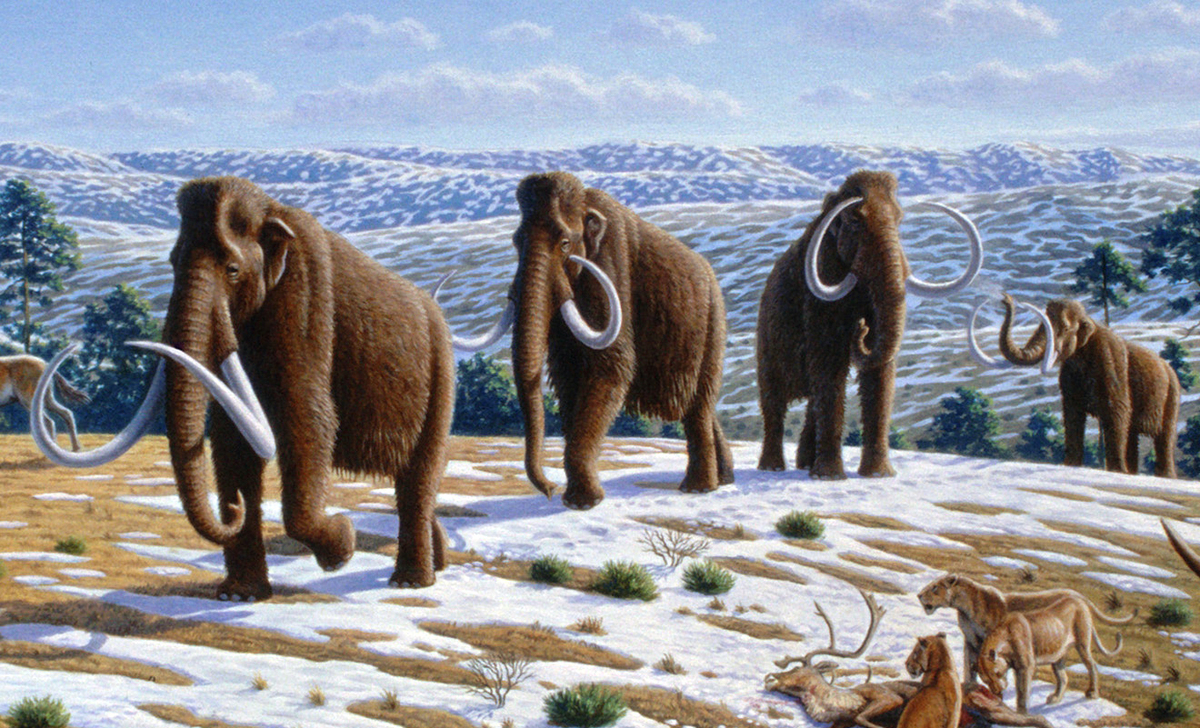
This "steppe-tundra" formed a vast carpet of grasses and herbaceous plants stretching, almost treeless, over thousands of kilometres, from the Atlantic to Siberia. It fed a fauna of large mammals now largely extinct or pushed northward: the woolly mammoth, of course, but also the woolly rhinoceros, the reindeer, the horse, the steppe bison, the musk ox, not to mention predators such as the cave lion, the wolf and the arctic fox. This abundance of big game formed the very basis of the human economy. The deeply frozen ground, the permafrostPermafrostPermanently frozen ground; in the Altai, water seeping into kurgans froze into ice lenses that preserved bodies, textiles and wood for millennia.→, prevented the growth of trees but sustained a dense herbaceous cover on which the great herbivores fed, in an ecological balance that has since vanished.
Surviving in such an environment required considerable adaptations. One had to dress warmly, which explains the importance of the eyed needles found at the sites, evidence of sewn and fitted clothing, stitched from hides and doubtless lined with furs. One had to master fire, manage food reserves, and above all organise hunting methodically. The glacial cold, paradoxically, also offered a decisive advantage: it allowed meat to be preserved in pits dug into the frozen ground, true natural freezers that secured resources through the long winter months, when game grew scarce and travel became difficult.
This demanding milieu profoundly shaped Gravettian ways of life. Mobility was a vital necessity: following the herds, exploiting seasonal resources, reaching the best hunting grounds according to the calendar of animal migrationsMigrationsLong-distance movements of populations; a major driver of human history (the exit from Africa, the peopling of continents, Neolithic and steppe expansions).→. But this mobility did not preclude anchor points, durable camps to which people returned year after year. Gravettian people were not nomads wandering at random: they were strategists of the land, endowed with an intimate knowledge of their environment, able to anticipate the movements of the fauna and to plan the management of resources scattered across space and time.
This glacial landscape, so foreign to our eyes, had its own beauty and rhythms. Beneath the immense steppe sky, the aurora could light up winter nights, while the brief summer saw the tundra cover itself with flowers and hum with insects. The autumn days, when the herds migrated and the animals' fat reached its peak, were doubtless the key moments of the Gravettian calendar, favourable to the great collective hunts and to the building of reserves. Living to the rhythm of this world demanded constant attention to the signs of nature, a form of ecological intelligence that our urban societies have largely lost.
Hunters of the steppe: the art of the chase
The Gravettians were above all mobile hunter-gatherersHunter-gatherersA way of life based on hunting, fishing and gathering wild resources, without farming or herding; it dominated almost the whole of human history.→, whose subsistence rested on the rigorous exploitation of big game. Analyses of the bones accumulated at the sites reveal hunting spectra dominated by reindeer, horse, bison and, in certain regions, mammoth. The question of whether humans actively hunted the mammoth or merely scavenged the carcasses of animals that had died naturally long divided researchers; the evidence now leans towards intensive exploitation, at least partly derived from hunting, even if opportunistic scavenging certainly supplemented the food supply.
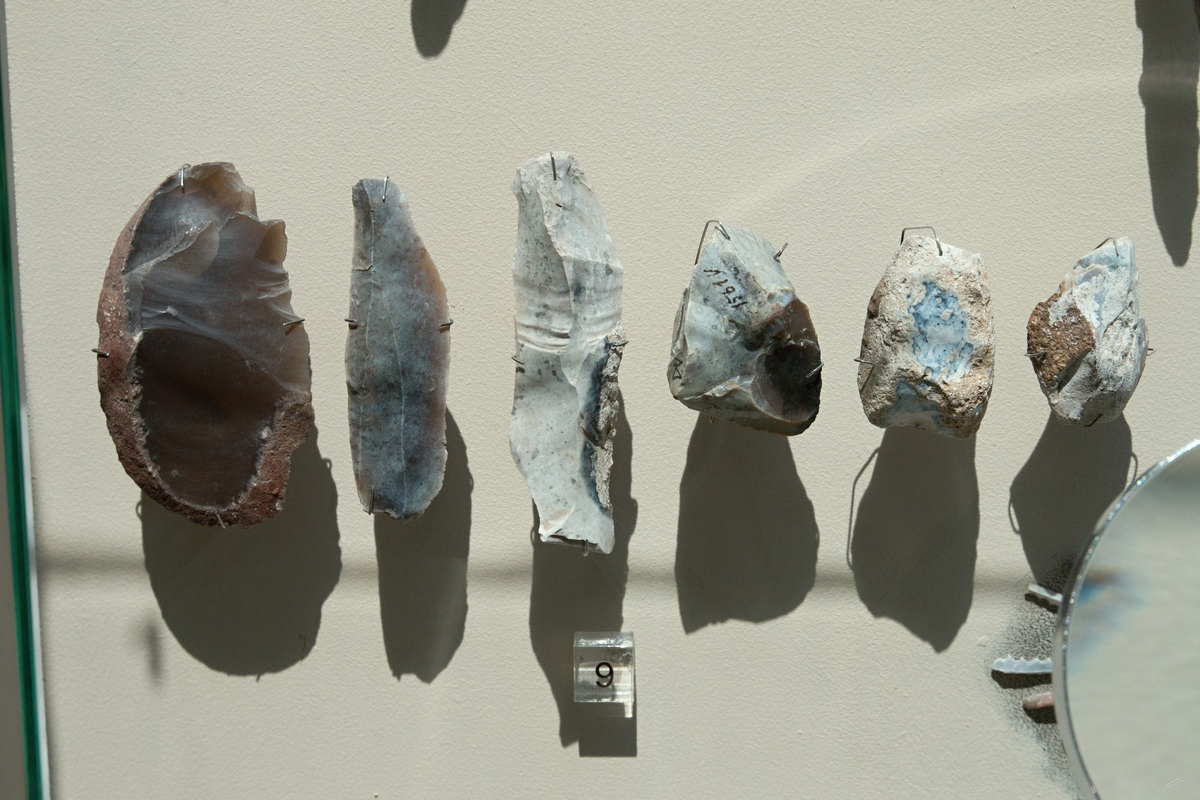
The Gravettian hunter's arsenal was remarkably sophisticated. The lithic industry, knapped on fine flint blades struck from carefully prepared cores, is distinguished by the Gravette pointGravette pointA flint point with a straight blunted back, weapon and index fossil of the Gravettian, named after the type-site of La Gravette (Dordogne).→, a straight-backed point obtained by abrupt retouch of one edge, as well as by the microgravettes, miniature versions that probably armed light projectiles. In the west one also finds the Noailles burins, small specialised tools with sharp cutting edges. These stone pieces were only part of the equipment: bone, ivory and reindeer antler supplied spearheads, projectile points, needles, spatulas and doubtless spear-throwers, those launching devices which, by extending the arm, increased the range and penetrating force of thrown weapons.
Hunting could be individual, but also collective and meticulously planned, especially for gregarious big game. Driving a herd of horses towards a natural trap, a ravine or a boggy area, coordinating the slaughter of several animals, transporting and processing tons of meat: all operations demanding cooperation, transmission of knowledge and social organisation. The mammoth, with its tusks of mammoth ivoryMammoth ivoryMammoth tusk worked by Palaeolithic craftspeople to carve figurines, beads, points and ornaments.→, its abundant meat, its combustible fat and its large bones, was a total resource, at once food, raw material, fuel and building material. A single animal brought down could feed an entire group for weeks and provide the means to build a shelter.
Nothing was wasted. Hides served as clothing and coverings, sinews as ties and thread, fat fed the hearths and lamps, bones and ivory became tools, weapons and ornaments. This meticulous exploitation of a carcass, from muscle down to the smallest bone fragment, reveals a profound economic intelligence, adapted to a milieu where the least resource counted. One glimpses here a genuine operational sequenceoperational sequenceOrdered succession of technical steps leading from raw material to finished object.→, a set of gestures learned and passed on from generation to generation, in which every part of the animal found its use. Far from a brutal predation, Gravettian hunting was a refined body of knowledge, patiently accumulated over the millennia.
This hunting mastery was not limited to the kill alone. It encompassed a fine knowledge of animal behaviour, the reading of tracks and seasons, the identification of obligatory crossing points during migrations. Gravettian hunters doubtless knew where and when to intercept reindeer herds crossing a river, where to watch for horses coming to drink, how to isolate an animal from a herd. This science of the land, transmitted orally and by example, constituted an intangible capital as precious as the flint weapons, and its loss would have been fatal to the group. Behind every hunting spectrum recovered by archaeologists lies, then, a whole world of knowledge, gestures and collective decisions.
Once the animals were brought down, the work was far from over. Butchering, transporting and processing the carcasses mobilised the whole group and structured life at the camp. Specialised areas were devoted to knappingknappingThe set of operations for fracturing a stone block to extract flakes or blades.→ flint, working bone and ivory, scraping hides, drying and storing meat. This division of tasks, glimpsed through the spatial organisation of the sites, points to a society in which roles were distributed and coordinated. The Gravettian camp was not a mere shelter against the cold: it was a workshop, a larder and a place of transmission, where the young learned from their elders the countless gestures on which survival depended.
Building with giants: the mammoth-bone huts
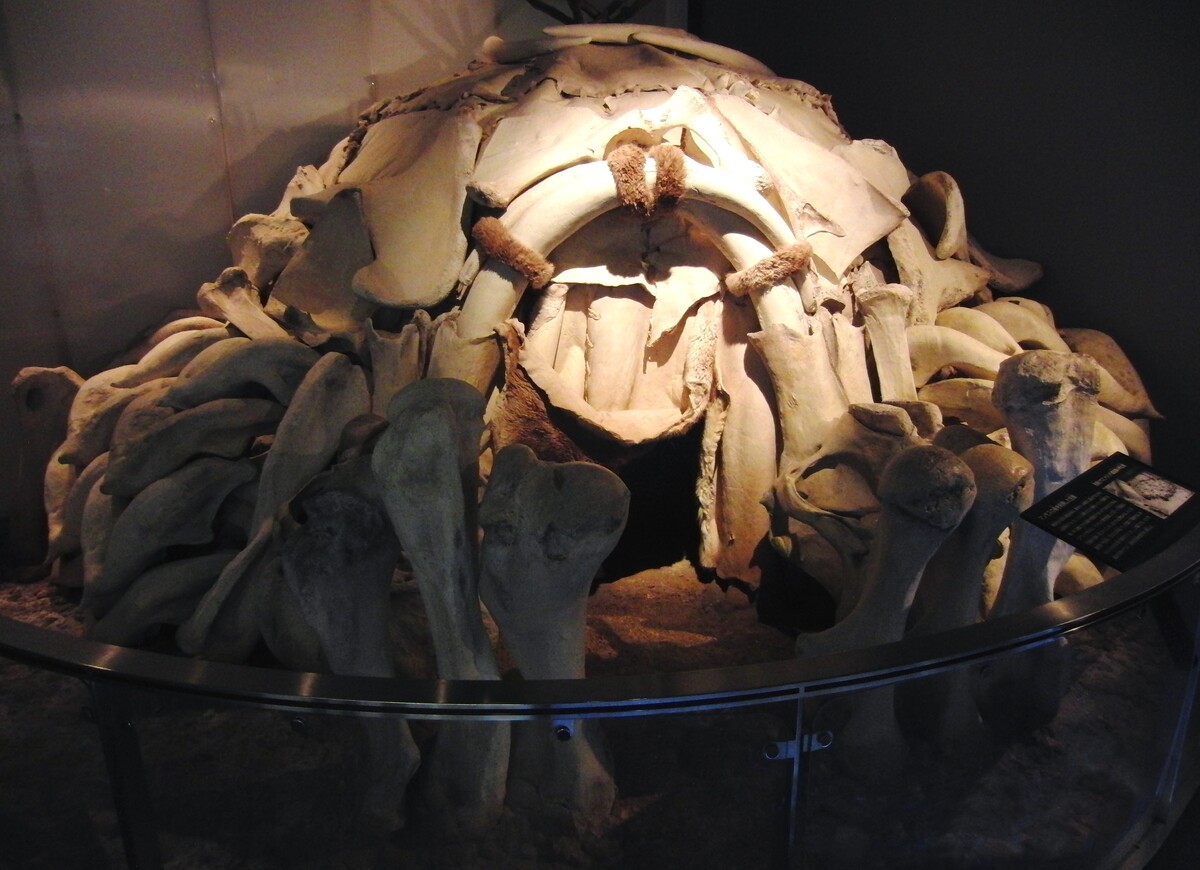
If one had to retain a single powerful image of Gravettian dwelling, it would be that of the mammoth-bone huts. On the treeless great plains of Central and Eastern Europe, where building wood was cruelly lacking, the hunters turned to the most abundant and most impressive raw material at their disposal: the bones of their prey. At several sites, circular or oval structures have been uncovered, built from a methodical stacking of mammoth skulls, mandibles, long bones and tusks, arranged with a care that betrays a genuine architecture.
These spectacular dwellings are concentrated notably in the east: at Dolní Věstonice and Pavlov in Moravia, in the present-day Czech Republic, as well as at Kostenki in Russia and at Mezhyrich, also spelled Mejiritch, in the Russo-Ukrainian plain. Around and inside these structures, excavators have uncovered hearths, storage pits exploiting the frozen ground, and true workshops where stone was knapped and bone and ivory worked. One senses durable camps, occupied recurrently, where a whole social and technical life unfolded, with its specialised zones, its work areas and its domestic spaces.
The exact meaning of these bone stacks is still debated. Did they serve only as a framework to support hide coverings, forming solid winter tents capable of withstanding the glacial winds? Did they also carry a symbolic dimension, a special status linked to the mammoth, the dominant animal of that world and doubtless charged with a significance that exceeded its mere food value? The two hypotheses are not mutually exclusive. What is certain is the scale of the labour: gathering, transporting and arranging dozens of bones each weighing tens of kilograms represented a considerable collective effort, the sign of an accomplished social organisation and of long-term planning.
In the west, in France notably, Gravettian dwelling takes other forms, less monumental but no less revealing: natural rock shelters, light open-air structures delimited by post-holes or lines of stones, hearths laid out at the heart of the living space. The diversity of dwelling solutions, from one end of the Gravettian domain to the other, illustrates the adaptive capacity of these societies to the resources and constraints of each region. Where wood was abundant, it was used; where it was lacking, bone and ivory took over. This technical flexibility is one of the great strengths of the Gravettian, and one of the secrets of its longevity and its extent.
The Venus figurines: riddles of stone and ivory
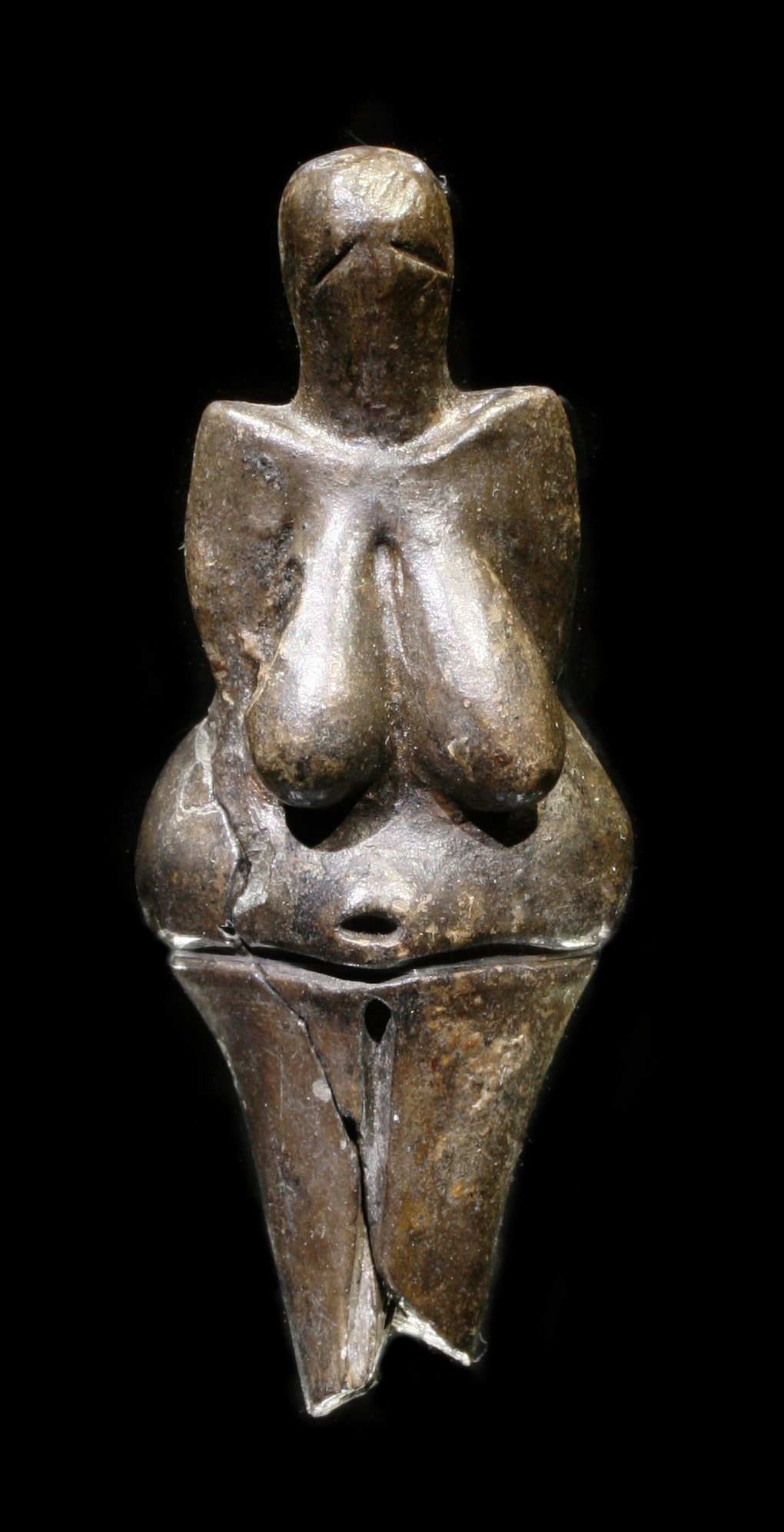
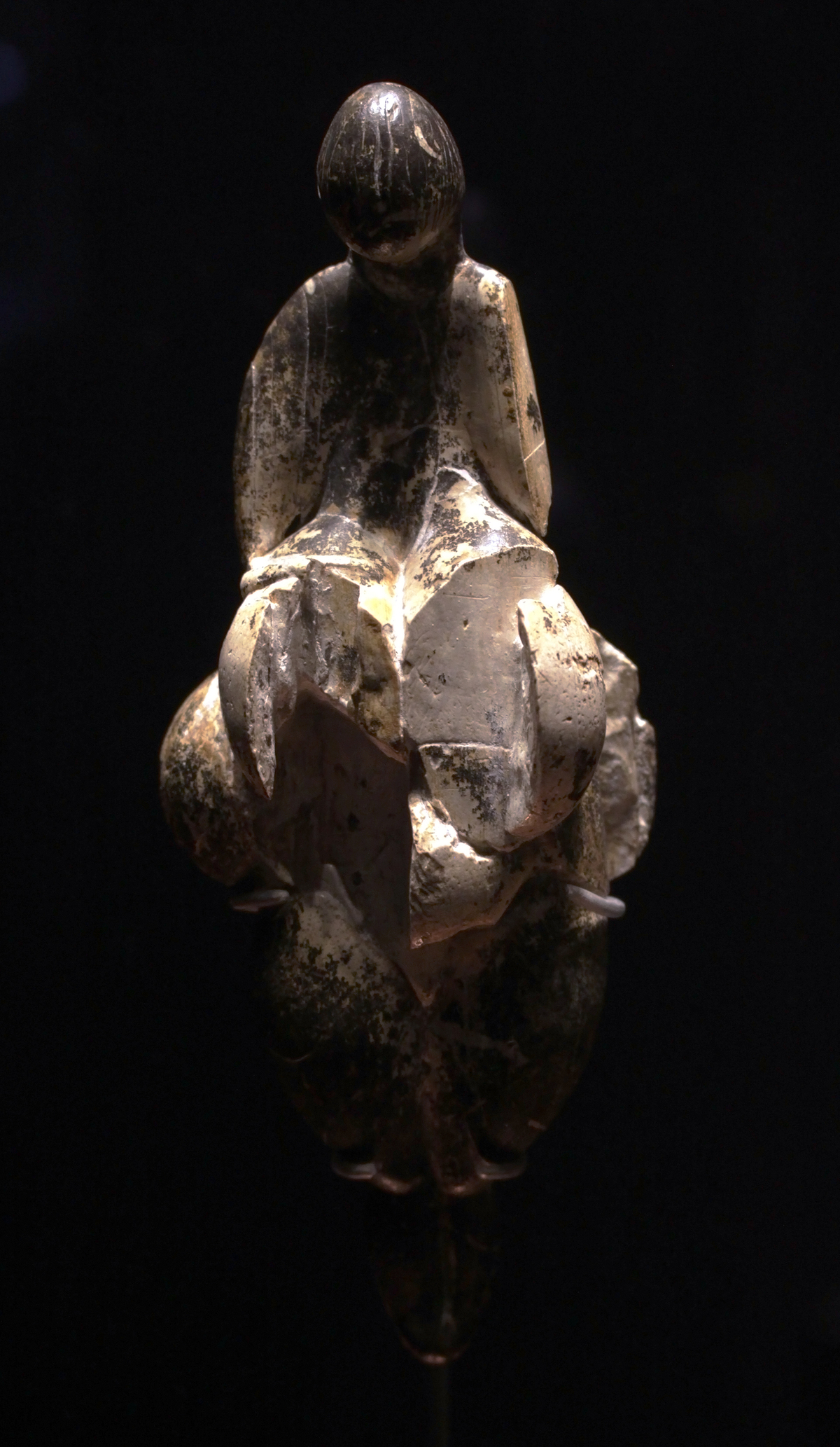
No object symbolises the Gravettian better than its famous Venus figurines. These small female statuettes, carved from soft stone, ivory or bone, or modelled in clay, constitute one of the summits of Palaeolithic portable artPortable artTransportable art objects (figurines, engravings on bone or ivory), such as the Palaeolithic Venuses.→. The term Palaeolithic VenusPalaeolithic VenusA small carved female figurine (stone, ivory, fired clay) of the Upper Palaeolithic, often with accentuated forms; their meaning (fertility, status, ritual) remains debated.→, inherited from the nineteenth century, is misleading: it obviously implies no link with the ancient goddess and carries an interpretive charge that must be held at arm's length. They are, more neutrally, portable female human representations, often a few centimetres tall, that could be held in the hand, carried, perhaps handled during gestures whose meaning escapes us.
These figurines often share a striking set of stylistic traits: accentuated female forms, with amplified breasts, belly and hips, while the extremities, hands and feet, are reduced or barely sketched, and the face most often remains anonymous, devoid of features. This convention is not universal, but it recurs regularly enough, from one end of Europe to the other, to suggest a shared plastic language, a visual code common to groups separated by thousands of kilometres. This formal recurrence, over so vast an area, is one of the most troubling facts of European prehistory, and one of the hardest to explain.
Among the most famous examples is the Venus of Willendorf, discovered in Austria in 1908, carved from oolitic limestone and bearing traces of red ochreOchreA red or yellow mineral pigment (iron oxides), used from prehistory for adornment, funerary rites and art.→ that once coloured it. Its head is covered by what resembles a finely worked hairstyle or headdress, arranged in regular rows, while its face remains invisible. In France, the Venus of Lespugue, carved from mammoth ivory, pushes geometric stylisation to a rare degree, its volumes organised into an almost abstract, symmetrical and rhythmic composition that fascinated twentieth-century artists and inspired creators such as certain masters of modern art.
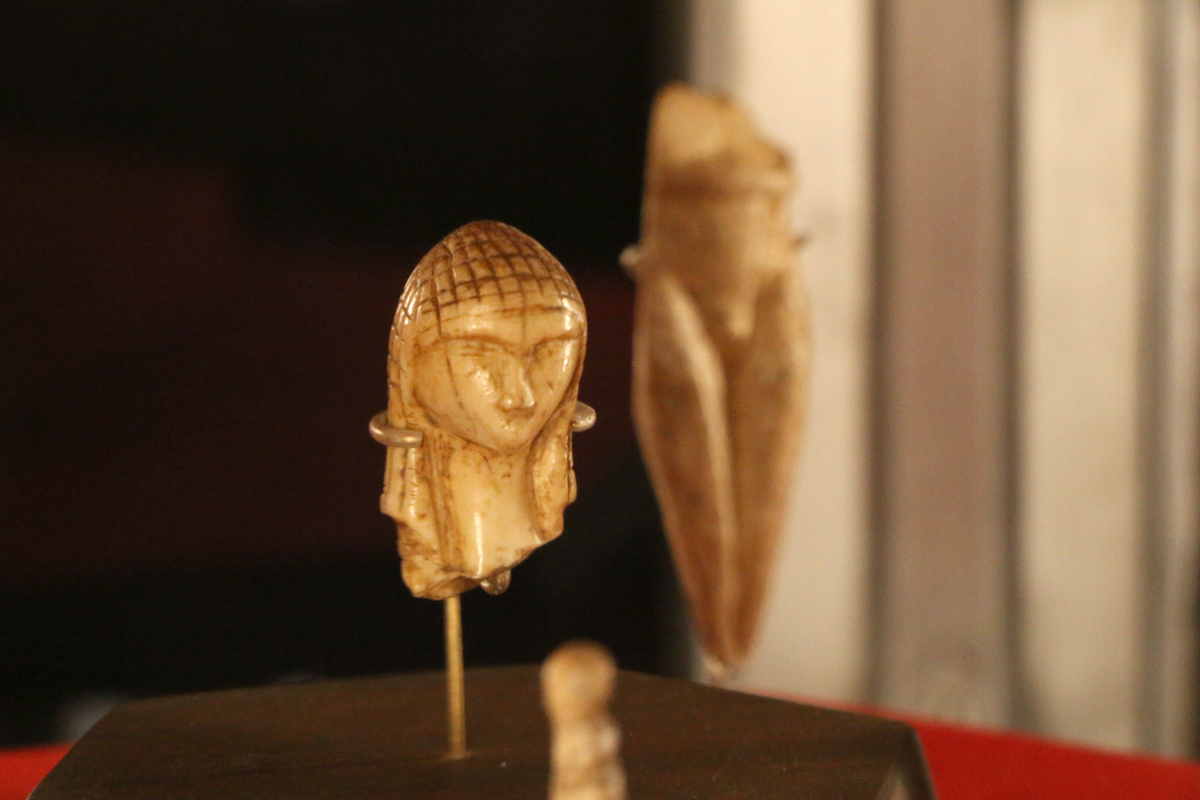
In the east, the Venus of Dolní Věstonice occupies a singular place: modelled in clay and then fired, it ranks among the oldest known ceramic objects in the world, with an age estimated approximately between 31,000 and 27,000 years2. Finally, the Lady of Brassempouy, also called the Lady with the Hood, brought to light in the Landes region in 1894, stands out for its clearly depicted face, with delicate features, forehead, nose and brow arches carefully rendered, a notable exception in a corpus where faces usually remain mute. It ranks among the oldest known representations of a human face, a small ivory fragment a few centimetres high that gazes at us from the depths of time.
Interpreting the uninterpretable?
What did these figurines mean to those who made them? The question has haunted prehistory for more than a century, and it must be said at once: we know nothing for certain. The Gravettian Venus figurines are mute, cut off from any narrative context, deprived of the words and stories that gave them meaning. Every interpretation remains a hypothesis, more or less supported but never demonstrated. This methodological humility is essential in order not to project onto these objects our own expectations, prejudices or contemporary frameworks, which often say more about us than about the Gravettians.
The readings proposed are numerous and often reveal the preoccupations of their own era. The oldest and most widespread sees in these ample bodies symbols of fertility, associated with maternity, abundance or the survival of the group. Other researchers have seen in them figures of social status, ancestors, deities or spirits, protective amulets, or even ritual supports handled during collective ceremonies. A more recent and provocative hypothesis suggests that certain figurines could be self-portraits made by women looking at themselves, which would explain certain distortions of perspective, the body seen from above naturally appearing wider at its middle. None of these readings can be either proven or definitively dismissed, and it is likely that these objects took on, according to place and period, multiple meanings.
One point deserves emphasis: these figurines were made, transported and sometimes buried with care, which attests to their value in the eyes of their owners. Some show traces of wear, as if they had been long handled, caressed, worn on the person. Others have been found broken or deliberately buried, gestures that suggest precise ritual practices. Far from being mere aesthetic curiosities, the Venus figurines seem to have accompanied the lives of their holders, taking part in ceremonies, in transmissions, perhaps in crucial moments of existence such as birth or death. It is this lived, embodied dimension that makes these objects so moving across the millennia.
What is striking is the remarkable stylistic coherence of these objects over an immense area and across several millennia. Such constancy suggests that the Venus figurines were not mere individual ornaments, the products of some carver's whim, but were inscribed in a shared system of representations, a tradition transmitted, learned and respected. They speak to us, in veiled terms, of a rich, structured spiritual and symbolic life, without our being able to decipher their message precisely. Herein lies all the fascination, and all the frustration, of prehistory: we hold in our hands objects laden with meaning, but the key to that meaning was lost with those who created them.
It should finally be recalled that Gravettian representations are not limited to the Venus figurines. This portable art also includes animal figures, engraved objects, elaborate ornaments, a whole universe of images and forms bearing witness to an intense symbolic activity. Alongside this portable, transportable art, a parietal art, that of cave walls, doubtless also developed, less abundant in the Gravettian than in the Magdalenian but clearly present, as attested by certain sets of negative hands and animal figures attributed to this period. Gravettian people were resolutely beings of symbols as much as hunters of the steppe.
Dolní Věstonice: the first firing of clay
The site of Dolní Věstonice, in Moravia, deserves a lengthy pause, for it concentrates within itself several of the most remarkable innovations of the Gravettian. Excavated first by Karel Absolon in the early decades of the twentieth century, then by Bohuslav Klíma, this exceptional site has yielded dwellings, burials, thousands of objects and, above all, the evidence of an unprecedented pyrotechnic mastery3. Together with the neighbouring site of Pavlov, it has given its name to an entire regional facies of the eastern Gravettian, the Pavlovian, one of the most brilliant expressions of this culture.
It was there, indeed, that one of the oldest known kilns was brought to light, a firing structure allowing clay to be raised to a high temperature. The Gravettian artisans of Dolní Věstonice modelled figurines, animal and female, from a mixture of clay and various materials, then fired them to harden them. The Venus of Dolní Věstonice is the most famous example. This technical gesture is capital: it long precedes the invention of NeolithicNeolithicThe "New Stone Age": a period marked by farming, herding, settlement and pottery, from around 10,000 BC.→ ceramics, which would appear thousands of years later and would serve to make storage and cooking vessels4.
This distinction must be stressed, for it illuminates the very nature of the Gravettian innovation. The ceramics of Dolní Věstonice were not utilitarian in the ordinary sense: no pots or jars were made there, but images. The first known use of fired earth by humanity thus belongs not to cooking or storage, but to art and doubtless to the symbolic. Some figurines display cracks that may result from a deliberate thermal shock, which has given rise to the seductive but uncertain hypothesis of a firing designed to make the object explode in the fire, for a ritual purpose that escapes us. We would then be dealing not with failed objects, but with objects deliberately subjected to the ordeal of fire, with an intention we can only guess at.
Dolní Věstonice has also yielded burials of great importance. A triple burialBurialThe intentional deposition of a body, sometimes with offerings; a marker of symbolic behaviour.→, designated by archaeologists under the numbers DV 13, 14 and 15, brings together three individuals in a singular arrangement that has given rise to countless interpretations, so charged with intention does the arrangement of the bodies appear. Not far from the kiln, the burial of a woman, known as DV 3, presented particularities that drew the attention of researchers, notably the presence of ochre and a careful funerary treatment. These graves bear witness to an elaborate relationship with death and the dead, to a thought of passage and perhaps of the afterlife, long before the appearance of the historical religions.
Ornaments, ochre and burials: the marks of status
The Gravettians were not only hunters and carvers: they adorned their bodies and honoured their dead with a care that sometimes borders on lavishness. Excavations have yielded countless items of adornment: beads carved from ivory, seashells sometimes transported over long distances, pierced teeth of fox or deer transformed into pendants. Red ochre, that mineral pigment omnipresent in the Upper Palaeolithic, coloured objects, bodies and graves, charged with a symbolism whose precise meaning escapes us but whose importance is beyond doubt. Its colour, that of blood and life, seems to have played a central role in the ritual gestures of these populations.
The site of Sungir, in Russia, offers the most striking testimony of this funerary investment. The burials there have yielded staggering quantities of mammoth-ivory beads: more than three thousand for the adult designated Sunghir 1, and more still, over ten thousand, for the double burial of children known under the numbers Sunghir 2 and 35. These children were accompanied by pendants of fox canines and long spears carved from straightened mammoth ivory, some of which reached a remarkable length, on the order of more than two metres. Making such objects, from naturally curved ivory that had to be softened and straightened, is a genuine technical feat whose secret remains partly a mystery to us.
The meaning of these richly furnished graves is arresting. Each bead required lengthy manufacture, several tens of minutes according to experimental estimates, and the accumulation of thousands of them on a single individual, sometimes a child, represents a considerable investment of time and collective know-how, the equivalent of thousands of hours of work. This suggests, cautiously, the existence of differences of status within these societies: certain individuals, including the young, benefited from an exceptional funerary treatment that others did not receive. Hunter-gatherer societies were long believed to be strictly egalitarian; these burials invite us to qualify that picture, without our being able, for all that, to reconstruct their real social organisation with certainty.
Should we see in this an inherited status, transmitted at birth and thus independent of the individual's merits, or an acquired distinction, linked to a particular role within the group? The fact that children received such treatment argues rather for an inherited status, but the data do not allow a definitive verdict. The very existence of these differences of funerary treatment, sometimes from childhood, opens a rare window onto the complexity of Gravettian societies, far more elaborate than the simplistic image of "primitive hunters" long conveyed by a certain popular science. These men and women lived in structured communities, endowed with rules, perhaps with hierarchies, and assuredly with a rich symbolic life.
A continent in a network
One of the most revealing discoveries of Gravettian archaeology concerns the circulation of materials and objects over very long distances. Marine shells have been found hundreds of kilometres from the shores from which they came; flints of particular quality, recognisable by their geological characteristics, travelled far beyond their sources of origin. These movements cannot be explained by chance alone: they trace networks of exchange and mobility on a continental scale, patiently woven from place to place.
How should these circulations be interpreted? Several mechanisms may have coexisted. Gravettian groups were mobile, following the herds and the seasons across vast territories, which naturally led them to cover long distances over the course of the year. But the presence of exotic objects, come from far away, also suggests direct exchanges between groups, gifts, alliances, perhaps marriages tying links between distant communities and sealing lasting relationships. The sharing of the same repertoire of Venus figurines and techniques, from one end of Europe to the other, is inscribed in this logic of long-range connections, along which not only objects circulated, but also people and ideas.
This network dimension radically changes our view of these societies. Far from isolated bands each surviving in its corner, cut off from the rest of the world, the Gravettian appears as a fabric of connected communities, exchanging raw materials, manufactured objects, but also technical knowledge, stories and symbols. Ideas travelled with the shells and the flint, passed from hand to hand, from camp to camp, over generations. This intense circulation doubtless helps to explain the astonishing cultural unity of the Gravettian technocomplex across so immense a space: a unity that was not imposed from above, but woven from below, through the thousand threads of human encounters.
It is hard to gauge today the feat that the maintenance of such networks represented in a world without writingWritingA system of conventional signs used to fix language or information durably; its appearance (c. 3300 BC) marks, by convention, the end of prehistory.→, without money, without permanent institutions. Everything rested on memory, on the spoken word, on the ties of kinship and alliance patiently sustained. Each exotic object found in a camp silently tells a story of travel, encounter and trust, the story of a humanity already deeply social, capable of weaving solidarities on the scale of a continent. The Gravettian, in this sense, is not merely a material culture: it is the testimony of a way of inhabiting the world, made of mobility, exchange and belonging.
These long-distance connections also had consequences we can only begin to imagine. Shared symbols and techniques may have eased encounters between strangers, providing a common ground of recognition across vast spaces. A Venus figurine carved in one region, a distinctive point knapped in another, could have functioned as marks of belonging to a wider world, signs legible far beyond the boundaries of a single band. In a landscape as demanding as the glacial steppe, such networks were not a luxury but a condition of survival, spreading risk, circulating information about game and resources, and knitting scattered communities into something larger than themselves.
The twilight of a world and the Gravettian legacy
All cultures come to an end, and the Gravettian was no exception. As the climate tipped towards the Last Glacial Maximum, that paroxysm of cold when the ice reached its maximum extent, living conditions grew harsher still. Part of northern Europe became inhospitable, almost unliveable, and human populations probably withdrew towards more clement zones, those southern refuges of the south-west and south-east of the continent where life remained possible and where the surviving groups concentrated.
It is in this context of climatic upheaval that the Gravettian gradually gives way to other traditions. In the west, the Solutrean emerges, with its admirable leaf-shaped points knapped to perfection, true feats of flint working. In the east and south, the Epigravettian prolongs the Gravettian legacy in a more marked continuity, preserving many of its technical and symbolic traits. These transitions were not brutal extinctions, disappearances of peoples, but transformations, carried by populations that adapted, moved and reinvented their ways of living in the face of a rapidly changing climate.
What remains to us of the Gravettian, more than twenty millennia after its disappearance? A material legacy of exceptional richness, first of all: Venus figurines that rank among the oldest works of figurative art of humanity, burials that reveal the complexity of unsuspected social relations, technical innovations such as the first firing of clay or the straightening of ivory. But also, and perhaps above all, the striking proof that our distant ancestors, faced with one of the harshest environments humanity has ever known, did not merely survive: they created, they thought, they honoured their dead and represented themselves, inscribing in ivory and clay the first traces of an aesthetic and symbolic consciousness.
The Gravettian holds up to us a dizzying mirror. In these ivory figurines and these graves laden with beads, we recognise something profoundly human, a need for meaning, for beauty and for memory that crosses the glacial ages and connects us, across the abyss of time, to those hunters of the mammoth steppe. Their world has vanished, swallowed by the thaw and by oblivion, but their artists' hands still speak to us. To understand the Gravettian is to accept the contemplation of what humanity holds most ancient and most enduring: its capacity to give meaning to the world, to create beauty and to defy oblivion, even in the heart of the greatest cold our species has ever faced.
La structure de vos articles est un modèle : accroche, développement, sources. Simple et efficace.
Les données chronologiques sont bien structurées. J'aimerais voir une API publique un jour.
Ce site me permet de donner de la profondeur historique à mes parties. Vraiment précieux.