A child from the last Ice Age
In 1998, deep inside Grotta delle Mura, a limestone cavity near Monopoli on the Adriatic coast of Puglia, excavators uncovered the remains of a very young child. The skeleton, remarkably complete and protected by a rockfall that had sealed it off, had rested there since the end of the Upper PalaeolithicUpper PalaeolithicThe final phase of the Palaeolithic (c. 45,000 to 10,000 years ago), marked by Homo sapiens in Europe, art, ornaments and a succession of cultures (Aurignacian, Gravettian, Solutrean, Magdalenian).→. Named Le Mura 1, the individual was the subject, in 2024, of a study in Nature Communications led by researchers from the universities of Florence, Bologna and Siena, who combined palaeogeneticsPalaeogeneticsThe study of ancient DNADNAThe molecule carrying genetic information, used to reconstruct kinship between species.→ extracted from remains (bones, teeth, sediments, walls) to reconstruct the past of populations.→, dental analysis, geochemistry and direct radiocarbon dating.1
Dating places the child's death between roughly 17,320 and 16,910 years before present, in those decisive centuries when Europe was only just emerging from the last glacial maximumLast Glacial MaximumThe peak of the last glaciation (c. 26,000 to 19,000 years ago), with ice sheets at their greatest extent; it pushed populations towards southern refuges.→ and human groups were beginning to spread northward again. Le Mura 1 is a boy, who died very young, between seven and a half and eighteen months according to the formation of his teeth, with an estimated height of around 82 centimetres.2
What makes this fossil valuable, beyond its age, lies in its state of preservation. Molecules of ancient DNAAncient DNAGenetic material preserved in old remains, often degraded, sequenced with cutting-edge techniques.→ degrade quickly under heat and humidity, and the Mediterranean basin is rarely generous in this respect. Here, the coolness of the cave and the speed of burialBurialThe intentional deposition of a body, sometimes with offerings; a marker of symbolic behaviour.→ preserved genetic material of rare quality, enough to yield the oldest known human genome for the whole Italian peninsula.3
The cultural context of this period is that of the EpigravettianEpigravettianMaterial culture of the final Upper Palaeolithic in Italy and the Balkans, contemporary with the end of the last glacial maximum.→, the material culture that dominates Italy and the Balkans at the end of the Upper Palaeolithic. Its makers knapped small blades and backed points, hunted deer and wild boar, and, as the ice retreated, began to widen their horizon. It was in this slowly reshaping world, between residual tundra and nascent forest, that Le Mura 1 came into being, then died.
An infant, by definition, has lived almost nothing. He made no tools, painted no walls, left no trace other than his own body. And yet, because that body preserves the chemical and genetic imprint of his very short existence and of the pregnancy that preceded it, he becomes one of the most eloquent witnesses to the daily life of a community of hunter-gatherersHunter-gatherersA way of life based on hunting, fishing and gathering wild resources, without farming or herding; it dominated almost the whole of human history.→ at the dawn of the post-glacial recovery.
The strength of the study lies precisely in this convergence of disciplines. Taken alone, each one (genetics, histology, geochemistry, anthropology) would yield only a fragment of the story; brought together around a single individual and set against one another, they corroborate each other and draw a coherent narrative. The stress markers of the teeth, for instance, agree with the fragility revealed by the genome, each discipline reinforcing the reading of the others.
The oldest genome from Italy
Reading the genome of Le Mura 1 first allowed his physical appearance to be reconstructed, with a precision that bone alone never permits. The child had dark skin, dark brown curly hair and, strikingly, blue eyes. This combination, surprising to a modern eye, was in fact common among European hunter-gatherers of the period, whose lighter skin would appear only much later.4
Beyond individual traits, the genome places the child within the family tree of European populations. Le Mura 1 belongs to the so-called Villabruna component, named after a site in northern Italy, which characterises the hunter-gatherers of western Europe after the last glacial maximum. But his genetic signature links him more closely still to the hunter-gatherers of southern Italy and Sicily, outlining an already distinct southern population.1
This result sheds light on the role of the south of the peninsula during the last Ice Age. While northern Europe remained inhospitable, the milder southern lands acted as a refuge where human groups could persist, and then as a crossroads from which, as the climateClimateThe long-term average atmospheric conditions of a region; its variations (glaciations, aridifications) shaped migrations, agriculture and the collapse of prehistoric societies.→ warmed, the lineages that would recolonise the continent spread out. The study also describes a gradual decline in genetic diversity from north to south in Italy, the mark of a complex settlement history.3
The Villabruna component to which the child belongs is not peculiar to Italy. It is found, in varying degrees, across the whole west of the continent after the last glacial maximum, the sign of a vast network of related populations that spread out from their southern refuges. Le Mura 1 adds an early, southern piece to this picture, and shows that this expansion was already under way along the Italian peninsula some seventeen millennia ago.3
The genome also carries more everyday clues. Le Mura 1, like most of his contemporaries, would have been lactose-intolerant in adulthood, the ability to digest milk beyond infancy having spread only long after the adoption of herding. Each of these details, taken alone, might seem anecdotal; together, they reconstruct the genetic portrait of an entire population through a single individual.
It is worth weighing what the reading of so ancient a genome means for knowledge of Italian settlement. Until now, the genetic history of the peninsula had been documented mainly through more recent remains. With Le Mura 1, researchers have an anchor point deep in time, a marker that allows the populations who came afterwards, and the transformations the region underwent over the millennia, to be better situated by comparison.
Close parents, a fragile heart
Examining the genome in detail, the researchers spotted long stretches where the two chromosomes inherited from the father and the mother are identical, what are called segments of homozygosityHomozygosityState of an individual whose two chromosomes carry the same version of a gene; long homozygous segments reveal related parents.→. Their length and abundance betray marked inbreedingInbreedingReproduction between related individuals; it leaves long identical stretches in the genome and reduces genetic diversity.→: the child's parents were closely related, most likely first cousins.2
This finding is not a judgement but a demographic fact. In small isolated bands, few in number and scattered across vast territories, the choice of partners is mechanically restricted, and unions between close relatives become frequent, sometimes unavoidable. The genome of Le Mura 1 thus offers a direct measure of the size and isolation of the human communities of southern Italy at the end of the Palaeolithic.
This low diversity has a biological downside. The more closely related the parents, the greater the chance that unfavourable genetic variants, normally masked, come together in a double copy in the child and are expressed. Le Mura 1 carried precisely such a variant, in genes (notably TNNT2 and MYBPC3) associated with hypertrophic cardiomyopathy, a thickening of the heart muscle that raises the risk of sudden death, especially in the young.4
The length of the homozygous segments is more than a curiosity: it translates into demographic estimates. Long, numerous segments point to recent kinship between the parents and to a reduced effective population, that is, a small number of individuals genuinely able to reproduce. The genome thus becomes a kind of indirect census, able to gauge, from a single body, roughly how many souls the community that bore it counted.
The authors remain cautious: nothing proves that this anomaly caused the child's death, and such a demonstration is beyond reach. But its presence illustrates a general mechanism, namely the way reduced genetic diversity, within sparse populations, amplifies the effect of harmful mutations and weighs on the health of later generations. This is one of the study's most striking contributions: directly linking the social structure of a prehistoric community to the biological fate of one of its members.
Nine stress lines etched in the enamel
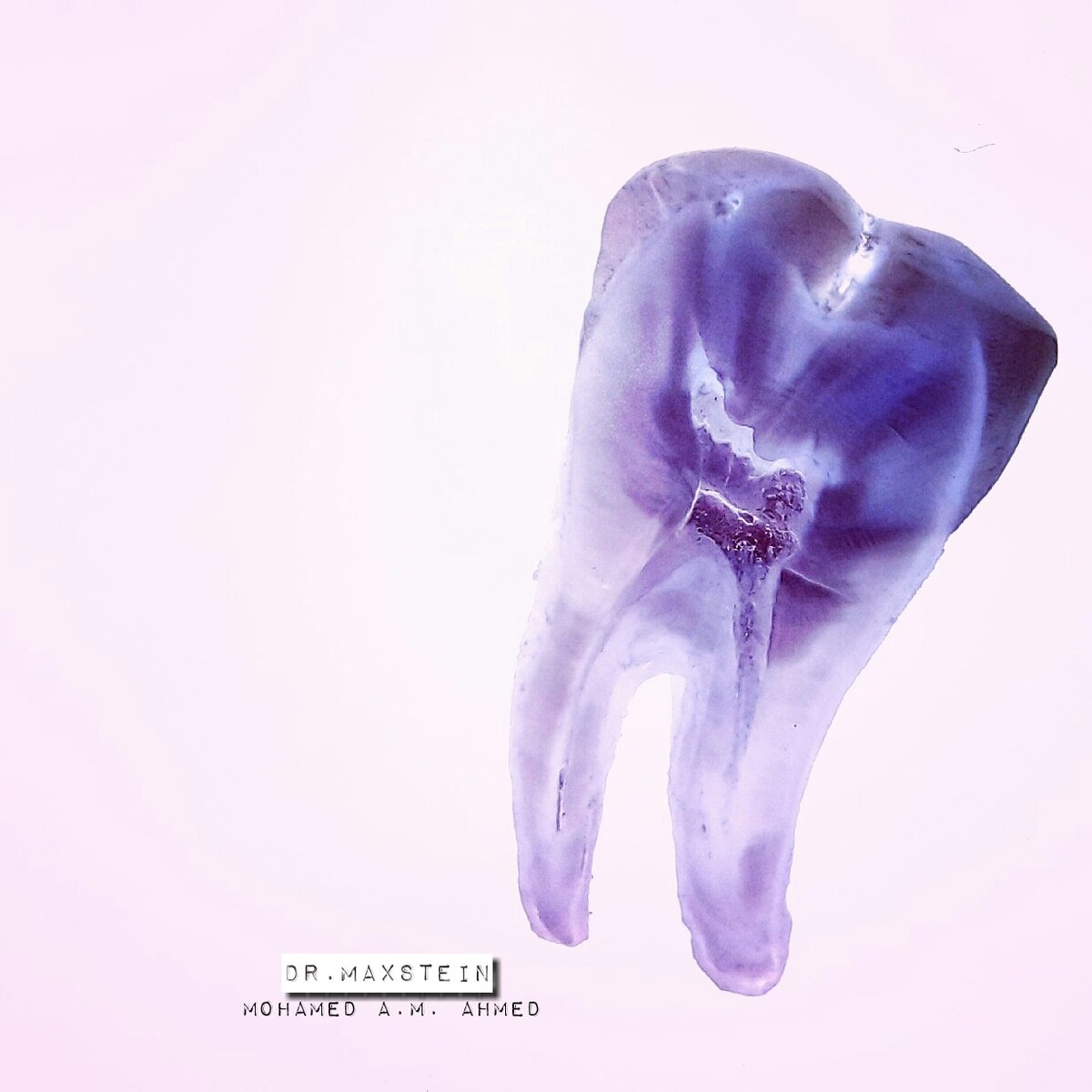
Teeth are archives. As they form, their enamel records, layer upon layer, the accidents of growth, rather like the rings of a tree. The histological analysis carried out at the University of Bologna revealed, in the teeth of Le Mura 1, at least nine stress lines, the defects known as linear enamel hypoplasiaLinear enamel hypoplasiaA growth defect of tooth enameltooth enamelThe hardest tissue in the body, laid down in rhythmic layers during tooth formation that preserve a precise memory of time.→ forming a visible line, a lasting trace of an episode of stress, deficiency or illness.→, each corresponding to an episode when growth was disrupted by a deficiency, an illness or distress.5
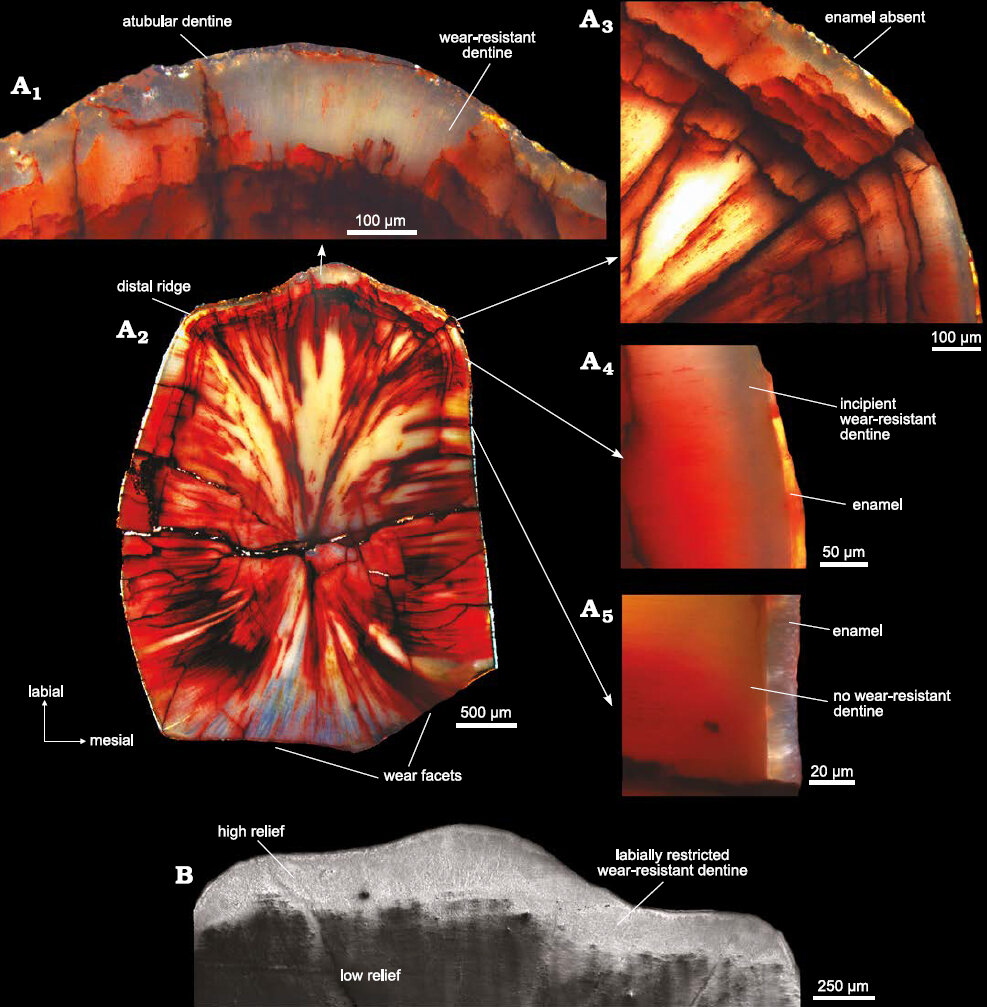
The most remarkable aspect lies in their timing. Three of these nine lines formed before birth, during intra-uterine life, a rare and precious fact: the enamel here keeps the trace of strains suffered by the foetus, and so, indirectly, by the mother during her pregnancy. A mother under duress, perhaps undernourished or ill, passes on her difficulties to the forming body she carries.
The six other lines were inscribed after birth, marking the few months of the child's life with as many ordeals. For an infant of less than eighteen months, to accumulate stress markers in this way signals a precarious existence, exposed to privation and disease from the very first moments.
These hypoplasias, combined with the cardiac variant spotted in the genome, sketch the picture of a child already weakened before even being born. The authors stress the consistency of these independent signals, with bone, tooth and DNA all pointing toward a shared vulnerability. It is this convergence, more than any single clue taken alone, that lends the retrospective diagnosis its strength.
Taken together, these lines compose a kind of bodily diary, legible under the microscope, which begins even before birth and stops with death. Where classical archaeology struggles to grasp childhood, often mute in the material record, dental histology restores the intimate rhythm of a tiny life, punctuated by its successive hardships.
An immobile mother in a world of nomads
The same teeth yielded another kind of information, geographical this time. As it forms, enamel fixes the chemical signature of the environment, in particular the ratio of strontium isotopesisotopic analysesMeasurement of the ratios between variants of the same element (oxygen, strontium, barium) in enamel, which inform on diet, climate and mobility.→, whose value varies with the soils and rocks of a region. By reading this signature layer by layer, the researchers were able to follow the mother's movements during the end of her pregnancy and the first months of the child's life.1
The result is surprising: the signature remains stable, which indicates that the mother stayed geographically fixed, within a single area, at a stage of life when hunter-gatherer groups were usually highly mobile. This low mobility contrasts with the expected way of life, made of seasonal movements following the resources.2
The authors see in this the possible sign of a survival strategy based on stability, a relative sedentismSedentismThe shift from a nomadic life to lasting settlement in one place, a precondition for the rise of villages.→ meant to protect the most vulnerable members of the band, pregnant women and infants, in a difficult environment. To stay put, near known and secure resources, could offer the most fragile better odds than the road.
This immobility is all the more striking because it sits within a world reputed to be nomadic. Contemporary hunter-gatherers in principle followed the herds and the seasons, ranging across wide territories. That the mother of Le Mura 1 stayed put invites us to temper this image of uniform mobility and to allow for varied behaviours, adjusted to circumstances and to individuals.
This behaviour, reconstructed from a single individual, opens an unexpected window onto the social organisation of these communities. It suggests that the groups of southern Italy knew how to modulate their mobility according to need, and that they gave the care of mother and child a place that shows through, millennia later, in the chemistry of a milk toothmilk toothA deciduous, temporary tooth that forms in childhood before being replaced by a permanent one; its enamel records the very first years of life.→.
Le Mura 1 lived only a few seasons. But between his genome, his teeth and the isotopes of his enamel, this child from Grotta delle Mura condenses a body of information that few adult fossils could have offered. He tells of a southern population withdrawn into its glacial refuge, of small inbred bands, of fragile health and of a mother careful to remain in a safe place. That so much can be read from a body that lived only a handful of months is itself a measure of how far the study of the human past has come, where a single milk tooth and a few grams of bone now speak as loudly as the richest burial. Through him takes shape, concrete and embodied, the Italy of the first days of the post-glacial recovery.
No comments yet. Be the first.