The decorated caves of the Basque Country and Cantabria form one of the densest concentrations of Palaeolithic cave art in the world. Ekain, Altxerri, Santimamiñe, Isturitz, Cueva del Castillo: these underground sites contain thousands of animal figures painted or engraved between 35,000 and 12,000 years ago. A systematic spatial analysis, conducted by Franco-Spanish teams over the past twenty years, has revealed something surprising: these sanctuaries were not supports for spontaneous expression. Their organization followed a deliberate logic, common to multiple sites over multiple millennia, suggesting a genuine shared iconographic program among communities.1
The idea that cave art obeyed a spatial grammar is not new: André Leroi-Gourhan intuited it in the 1960s, observing that certain animal species systematically concentrated in certain cave zones. But modern tools - 3D photogrammetric surveys, GIS analysis, field acoustics - have allowed these hypotheses to be tested and deepened with unprecedented quantitative rigor.
A Sacred Underground Geography
In each of the caves studied, archaeologists mapped the exact position of every figure relative to the natural features of the cavern: narrow passages, resonant zones, water sources, fissures, remarkable concretions. The result is striking: entrance zones, accessible and well lit by natural light, contain mainly abstract signs - dots, lines, negative handprints. Deep chambers, difficult of access, concentrate the most elaborate large animal compositions.2
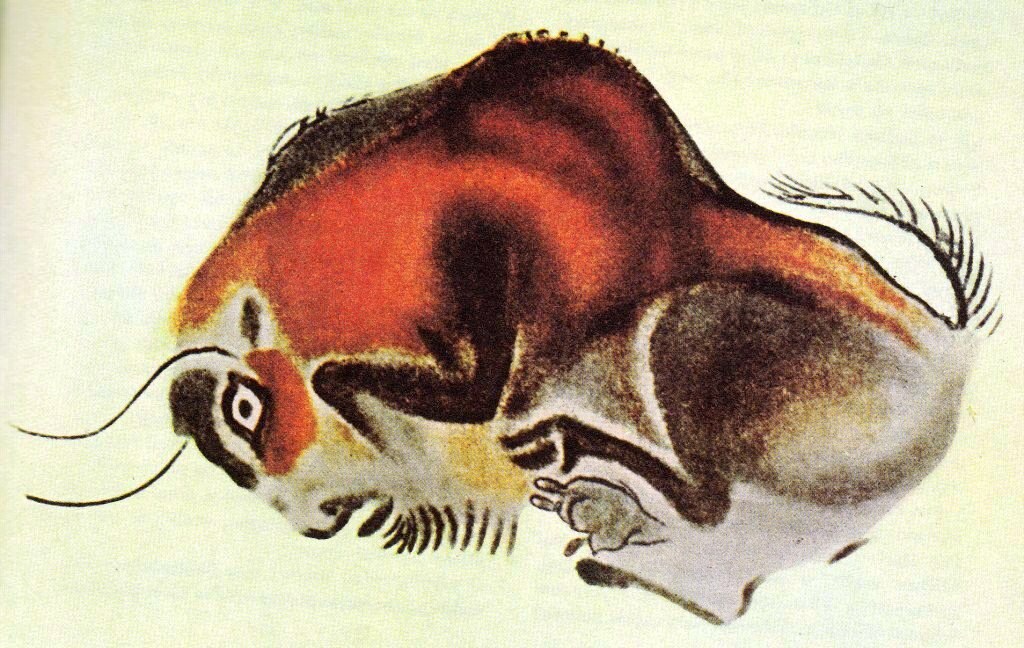
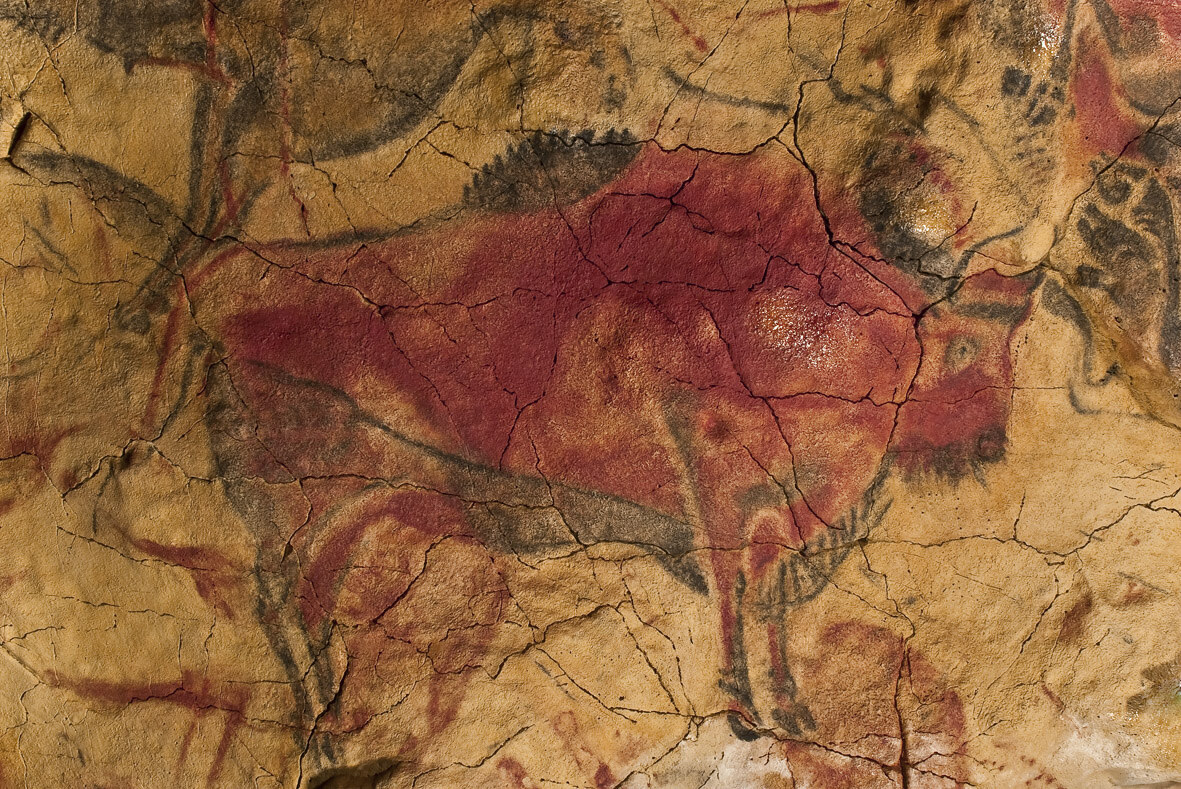
This gradient - from public to private, from abstract to figurative - transcends boundaries between sites and chronological periods. At Ekain, the 64 equine representations on the main panel are located in a central hall with maximum acoustic resonance. At Cueva del Castillo, the negative handprints, the oldest in Europe at 40,000 years, systematically occupy the walls at human height in the transition zones between entrance and depth. At Altamira, the famous bison ceiling is located precisely at the convergence point of several lateral passages, transforming this space into a visual and symbolic crossroads.
This organization suggests that caves were not simple supports: they were ritual architectures, whose topography artists deliberately exploited to create scenographic effects. Movement within the cave - progression from one zone to another - was part of the experience itself.
Animal Species Chosen, Not Randomly
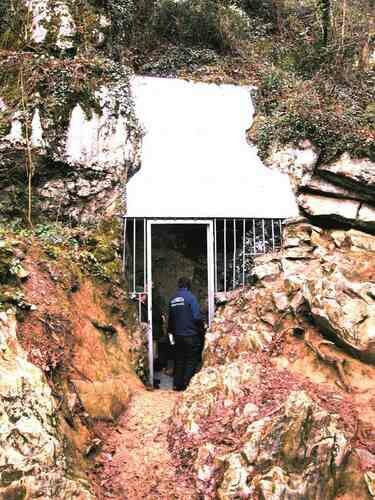
Statistical analysis of the species represented in Basque and Cantabrian caves reveals a flagrant bias relative to the fauna actually hunted. Horses dominate the central compositions of almost all major sites, sometimes representing 60 to 70% of all animal figures. Bison systematically occupy lateral alcoves and the walls of secondary chambers. Mammoths, woolly rhinoceroses, and bears - present but minority - appear mainly in the deepest or most difficult-to-access zones.3
Yet zooarchaeological analysis of bones from the habitation levels of these same caves indicates that reindeer was the most frequently hunted prey in this region during the Upper PalaeolithicUpper PalaeolithicThe final phase of the Palaeolithic (c. 45,000 to 10,000 years ago), marked by Homo sapiens in Europe, art, ornaments and a succession of cultures (Aurignacian, Gravettian, Solutrean, Magdalenian).→. Reindeer is one of the least represented species in cave art. This dissociation between hunted and painted fauna definitively invalidates the old "hunting magic" theory - according to which painting an animal would enable its capture. Artists chose their subjects for symbolic and cosmological reasons, not practical ones.
Systematic comparisons between sites show that this shared iconographic repertoire - horses at the center, bison on the sides, large predators in the depths - spans millennia and hundreds of kilometers of distance. There manifestly existed a common belief system, transmitted from generation to generation, that guided the artistic choices of Upper Palaeolithic artists in the Cantabrian-Pyrenean region.
Acoustics and Rites in the Darkness
Archaeoacoustics - the study of the sonic properties of ancient spaces - has brought a new dimension to understanding these sanctuaries. Researchers like Iegor Reznikoff and Michel Dauvois demonstrated from the 1980s that zones of highest figure concentration invariably correspond to zones of maximum echo in caves. At Ekain, the stalactites in the main hall produce, when struck, crystalline sounds that propagate and reverberate throughout the cavern.4
This correlation between acoustics and art is not trivial. In a nocturnal ritual context, lit only by torches or grease lamps, reverberant sounds and moving shadows would have transformed painted figures into animated entities. Horses would have seemed to gallop, bison to move. The officiants - shamans or initiators - would have exploited these sensory effects to produce altered states of consciousness.
All this data converges toward a conclusion: Basque and Cantabrian caves were not simple art galleries. They were underground temples, in which every element - topography, depicted fauna, acoustic properties - participated in a coherent ritual system. This system functioned for more than 20,000 years, crossing many generations, climatic changes, and cultural transformations, before fading with the end of the Upper Palaeolithic around 12,000 years BP.
No comments yet. Be the first.