Beneath the flagstones of a long-overlooked necropolisNecropolisA large organised burial ground, a "city of the dead", often spanning several periods.→, in the heart of modern Matariya (ancient Heliopolis), a team from Egypt's Supreme Council of Antiquities has unearthed what archaeologists had sought for decades: the first near-complete funerary assemblage ever discovered in this City of the Sun. The announcement, made on 31 May 2026, sent a ripple of excitement through the scholarly community.
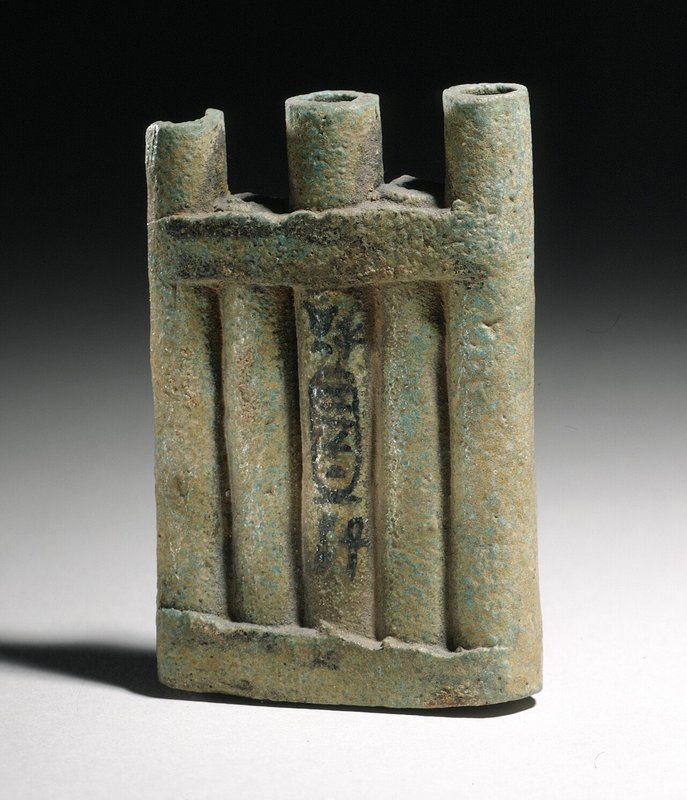
The tomb belongs to a man named Panehsy and dates to the New Kingdom, around 1,200 BCE. Beneath a mud-brick floor, excavators uncovered a trove of everyday and funerary objects: a copper mirror, three kohl containers (two in alabaster, one in volcanic obsidian), blue faience flasks, six scarabs — two of them gold-plated — a pair of solid gold earrings, and several amulets including a duck and an Atef crown, symbol of Osiris.
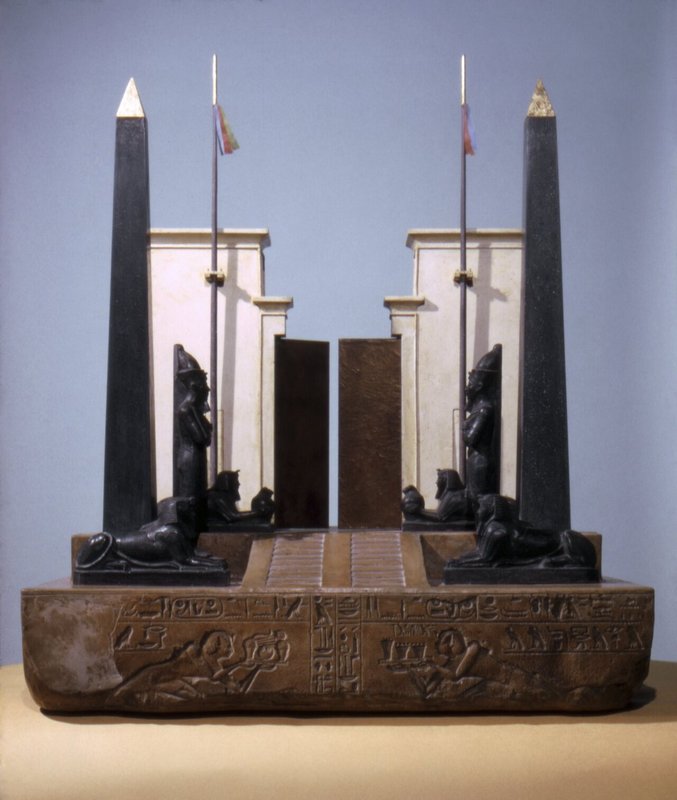
Heliopolis was ancient Egypt's great solar city, seat of the cult of Ra, rivalling Thebes and Memphis in prestige. Yet its cemeteries have remained largely unknown, overshadowed by the fame of Saqqara or the Valley of the Kings. The reason is urbanisation: Heliopolis now lies buried under modern Cairo, and excavations proceed under difficult conditions. The discovery of Panehsy's tomb is therefore an exceptional milestone.
The toilet objects found — kohl, mirror, flasks — reflect an Egyptian conception of the body and beauty that transcended the boundary between the living and the dead. Kohl was not merely cosmetic: applied around the eyes, it shielded against intense solar radiation and warded off evil spirits. Its presence in the tomb ensured the deceased would continue to enjoy this protection in the afterlife. The obsidian, a volcanic rock rare in Egypt (found mainly in Ethiopia or Anatolia), signals wealth and long-distance exchange networks.
The gilded scarabs also deserve attention. In Egyptian cosmology, the scarab (khepri) symbolises the rising sun and regeneration. Finding it here, in the necropolis of the City of the Sun, is no coincidence: Heliopolis was where the solar creation myth reached its fullest expression. The Atef crown — an Osirian attribute composed of a white crown flanked by feathers — indicates that the deceased sought to identify with Osiris, lord of the dead, to ensure his own resurrection. Excavations at Matariya continue, and each season brings new surprises from a site that archaeologists compare to a millefeuille: beneath the New Kingdom cemetery lie older layers, possibly reaching back to the Old KingdomOld KingdomThe first great period of unified pharaonic Egypt (c. 2700-2200 BC, 3rd-6th Dynasties), the golden age of the great pyramids and of a strongly centralised state.→ or even the PredynasticPredynasticThe period of Egypt before unification (c. 3100 BCE) and the First Dynasty, marked by the Naqada cultures and the gradual emergence of the state.→ period.
No comments yet. Be the first.