Some 850,000 years ago, the humans who inhabited the Sierra de AtapuercaAtapuercaA complex of archaeological sites in the Sierra de Atapuerca (Burgos, Spain), a UNESCO site, yielding an exceptional sequence of human fossils, including the Sima de los Huesos and Homo antecessor.→ in northern Spain were eating their own kind - including the youngest among them. New excavations led by the Catalan Institute of Human Paleoecology and Social Evolution (IPHES) have uncovered a neck bone belonging to a child aged two to four years, bearing a sharp cut mark characteristic of butchery practices.1
A deliberate cut mark on a toddler's bone
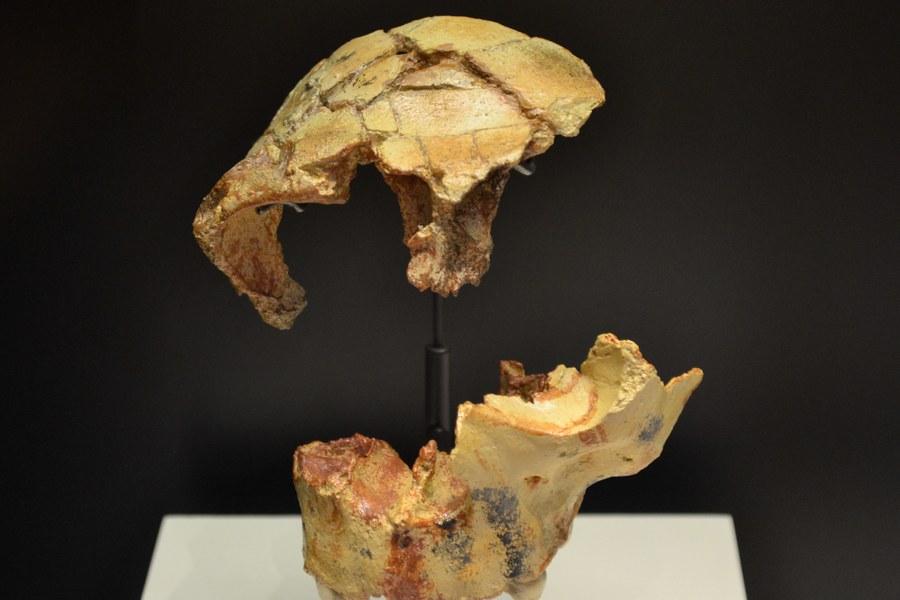
The cervical bone was discovered in July 2025, in the Gran Dolina cave at the heart of the Atapuerca site, a UNESCO World Heritage Site. The mark engraved into the bone's surface leaves little room for doubt: it is a deliberate cut made with a sharp stone tool, with the aim of removing flesh.
"This case is particular, not only because of the child's age, but also for the precision of this cut mark," explains Palmira Saladié, co-director of excavations at Gran Dolina. "It is direct evidence that this child was treated like any other prey." The bone is part of a set of some ten skeletons discovered during the same excavation campaign, a significant proportion of which bear similar marks.2
Thirty years of excavations, a dozen confirmed cases
This discovery is not isolated. In thirty years of systematic exploration of the Atapuerca site, researchers have documented a dozen confirmed cases of cannibalism. Even more telling: approximately 30% of all bones recovered from Gran Dolina bear marks suggestive of cannibalistic practices.
"The cut marks on the bones do not appear alone," specifies Palmira Saladié. "Human bite marks have been identified on the bones. This constitutes the strongest evidence that the bodies found at this site were consumed." The combination of lithic tool marks and human tooth impressions is considered by specialists to be the most reliable signature of a deliberate act of cannibalism.3
For researchers, these repeated findings demonstrate that cannibalism was not an exceptional behaviour at Atapuerca. "What we are able to document is the continuity of these cannibalistic behaviours. The consumption of the dead was not exceptional, but repeated," insists Palmira Saladié. Cannibalism may have served survival imperatives, but also functioned as a means of territorial control, intimidation of rival groups, or even ritual practices.
Homo antecessor: an enigmatic species at the crossroads of evolution
The remains exhumed at Gran Dolina belong to Homo antecessor, a species first identified in 1997 at Atapuerca, whose vestiges have to date only been found in western Europe. Dating between 850,000 and 780,000 years ago, it represents the oldest known member of the genus Homo discovered in Europe.
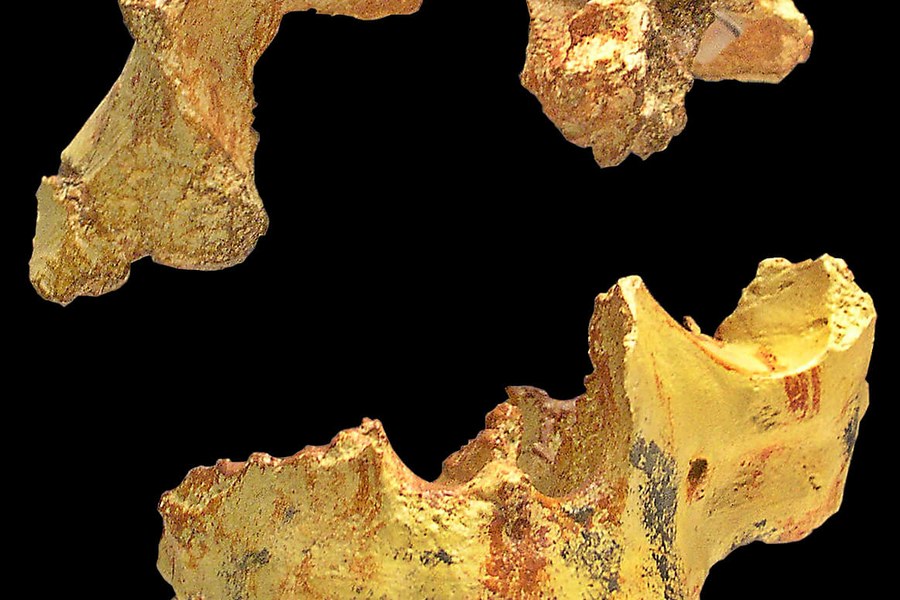
Its position in the human evolutionary tree remains debated. Some researchers consider it the common ancestor of Neanderthals and Homo sapiens. Others place it on a distinct branch, close to Heidelberg Man. A genetic study published in 2020 in Nature, based on fossil proteins extracted from a Gran Dolina tooth, suggested that Homo antecessor was a sister lineage of Neanderthals, Denisovans and modern humans, rather than their direct ancestor.4
Europe's earliest cannibals?
The question of cannibalism's antiquity remains open. Evidence of human consumption even older - dating back approximately 1.45 million years - had been found in Kenya, but the marks on the bones could not be formally attributed to humans rather than carnivores.
The inhabitants of Gran Dolina are therefore, to date, the strongest candidates for the title of "earliest documented cannibals in Europe." The systematic nature of the phenomenon at Atapuerca, across multiple stratigraphic levels and over thousands of years, gives this discovery a significance that goes far beyond prehistoric trivia. It raises profound questions about the nature of social relations and dietary behaviour among the earliest hominins on the continent.5
No comments yet. Be the first.