Il y a environ 1,9 million d'annees, une nouvelle forme d'hominineHominineMembre de la sous-famille Homininae incluant la lignée humaine (Homo, Australopithecus, Paranthropus…) mais excluant les orangs-outans et les gibbons. Le terme remplace progressivement « hominidé » dans son acception restreinte.→ emerge en AfriqueAfriqueContinent berceau de l'humanité : les premiers hominines y apparaissent, puis Homo sapiens il y a environ 300 000 ans, avant l'expansion vers le reste du monde.→ orientale. Plus grande, plus robuste, dotee d'un cerveau significativement plus volumineux que ses predecesseurs, elle ouvre une page decisive dans l'histoire de l'evolution humaine. Cette espece porte le nom d'Homo ergaster, l'Homme travailleur, et represente pour de nombreux paleontologues le premier representant veritable du genre Homo au sens moderne du terme.
La decouverte de KNM-ER 3733 : un crane qui change tout
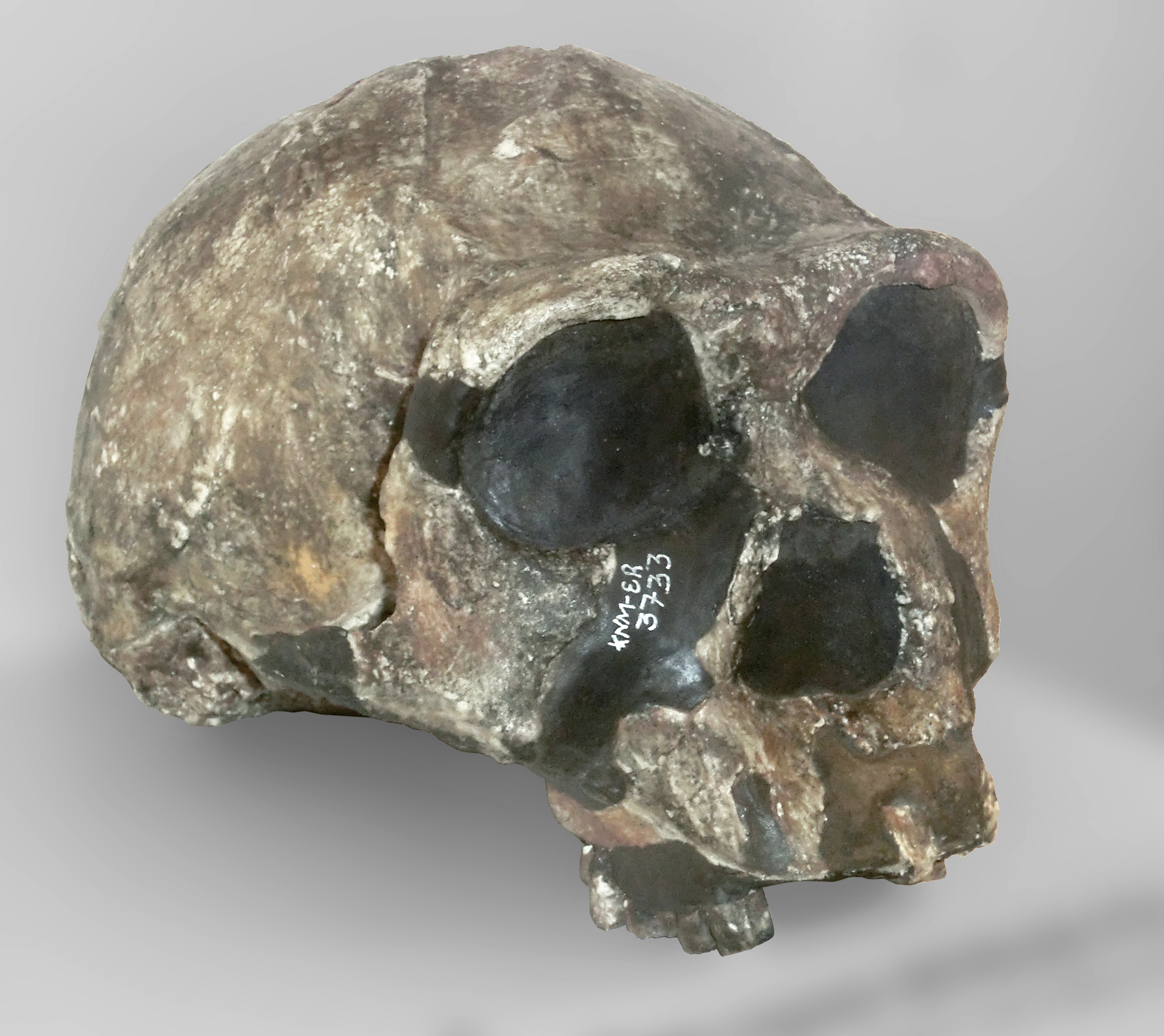
En 1975, sur les rives est du lac Turkana, dans la region de Koobi Fora au Kenya, le chasseur de fossiles Bernard Ngeneo met au jour un crane presque complet. Reference sous le numero KNM-ER 3733, ce specimen appartient a une femelle adulte ayant vecu il y a environ 1,63 million d'annees. La morphologie du crane surprend immediatement les specialistes : il est beaucoup plus gracile et plus evolue que les formes anterieures connues, avec un front montant, un bourrelet supra-orbitaire reduit et une capacite cranienne estimee a 850 cm1.
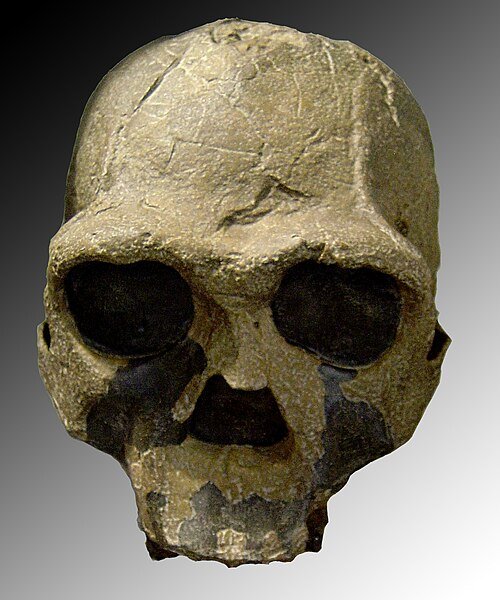
Richard Leakey et Alan Walker sont les premiers a decrire ce specimen en detail. Ils notent que KNM-ER 3733 presente des ressemblances frappantes avec Homo erectus d'Asie, mais aussi des differences significatives qui justifient, selon certains, d'en faire une espece africaine distincte. Le debat taxonomique qui s'ensuit dure encore aujourd'hui.
En 1984, une decouverte encore plus spectaculaire vient bouleverser les connaissances : le squelette quasi complet d'un jeune individu, baptise "le Garcon de Turkana".
Le Garcon de Turkana : le plus complet des squelettes d'hominine ancien
Le 23 aout 1984, Kamoya Kimeu, collaborateur de longue date des Leakey, decouvre pres du site de Nariokotome, toujours a l'ouest du lac Turkana, un fragment de crane qui depasse du sol. Les fouilles qui s'ensuivent livrent l'un des fossiles les plus remarquables de l'histoire de la paleontologie : KNM-WT 15000, dit "le Garcon de Nariokotome" ou "le Garcon de Turkana"2.
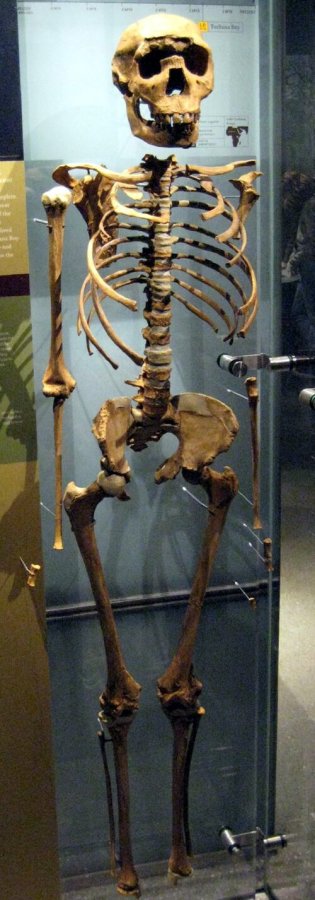
Le specimen represente un adolescent masculin ayant vecu il y a environ 1,5 a 1,6 million d'annees. Selon les analyses les plus recentes, il avait entre 7 et 11 ans au moment de sa mort, bien qu'il mesurait deja 1,60 m et aurait pu atteindre 1,80 m a l'age adulte. Sa capacite cranienne au moment du deces est evaluee a 880 cm3. Ce squelette remarquable revele pour la premiere fois les proportions corporelles d'un hominine primitif : des membres inferieurs longs, adaptes a la marche et a la course sur de longues distances, et des bras proportionnellement plus courts que chez les australopitheques. Le corps de Turkana Boy est, dans sa structure generale, etonnamment proche du corps humain moderne.
La mort de cet individu reste mysterieuse. Les analyses paleopathologiques suggerent une septicemie dentaire qui aurait pu affaiblir l'adolescent jusqu'a provoquer sa mort pres d'un plan d'eau, ou il fut rapidement enterre par les sediments.
Anatomie et caracteristiques distinctives
Homo ergaster se distingue des australopitheques et des premiers Homo par un ensemble de caracteres anatomiques progressifs :
- Capacite cranienne : entre 700 et 900 cm, soit pres du double de celle d'Australopithecus africanus.
- Dimorphisme sexuel reduit : la difference de taille entre males et femelles est beaucoup moins marquee que chez les australopitheques, se rapprochant du dimorphisme observe chez H. sapiens.
- Proportions corporelles modernes : membres inferieurs longs, bassin etroit, cage thoracique en tonneau.
- Reduction de la face : museau moins prognathe, arcades dentaires plus petites, dents reduites.
- Bourrelet supra-orbitaire : encore prononce, mais moins massif que chez H. erectus asiatique.
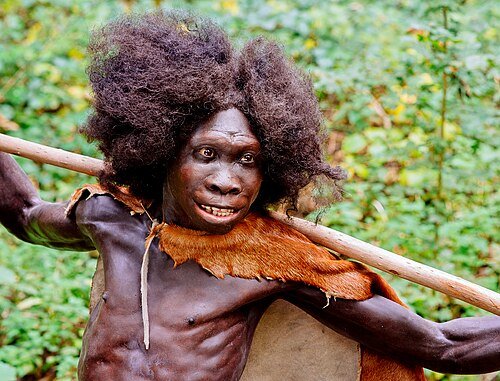
Ces caracteristiques indiquent un animal fondamentalement different des hominines qui le precedent. H. ergaster est le premier hominine a avoir quitte definitivement la niche ecologique des forets et des bords de lacs pour coloniser les milieux ouverts de la savane africaine.
L'industrie acheuleenne : la revolution cognitive
L'apparition d'Homo ergaster coincide avec l'emergence d'une nouvelle industrie lithique : l'Acheulien. Vers 1,76 million d'annees, des bifaces soigneusement tailles des deux cotes font leur apparition dans les gisements d'Afrique orientale. Ces outils, bien plus elabores que les galets amenages oldowayens4, impliquent une planification mentale sur plusieurs etapes, la capacite a se projeter vers le produit final avant meme de commencer le taillage.
Pour de nombreux specialistes, cette revolution acheuleenne est intimement liee a l'augmentation de la capacite cranienne d'H. ergaster et au developpement correlé des lobes frontaux. L'Acheulien persistera pendant plus d'un million d'annees, signe de sa redoutable efficacite.
Le debat taxonomique : une espece a part ou un erectus africain ?
La question de la validite de l'espece Homo ergaster divise la communaute scientifique depuis les annees 1970. D'un cote, des chercheurs comme Bernard Wood et Mark Collard soutiennent qu'H. ergaster represente une lignee africaine distincte d'H. erectus, qui serait une espece essentiellement asiatique. De l'autre cote, des paleontologues comme Ian Tattersall voient dans les fossiles africains de cette periode une simple variante geographique d'une seule et meme espece cosmopolite5.
Les arguments en faveur d'une distinction specifique incluent les differences morphologiques entre les specimens africains (crane plus gracile, parois moins epaisses, absence de carene sagittale nette) et les specimens asiatiques de Sangiran ou Zhoukoudian. Les partisans de l'unite specifique rappellent que la variabilite au sein d'une meme espece peut etre tres grande et que les differences observees n'excedent pas celles rencontrees dans d'autres especes de primates.
Place dans l'arbre evolutif
Homo ergaster occupe une position charniere dans l'evolution humaine. Il descend probablement d'Homo habilis ou d'une forme proche, et est considere par la majorite des paleontologues comme l'ancetre commun de plusieurs lignees importantes :
- Homo erectus d'Asie, dont les premiers representants quittent l'Afrique vers 1,8 Ma (voir les fossiles de Dmanisi en Georgie).
- Homo heidelbergensisHomo heidelbergensisEspèce humaine du Pléistocène moyen, souvent considérée comme l'ancêtre commun des Néandertaliens et de notre espèce.→, forme europeenne et africaine qui emerge vers 700 000 ans.
- Indirectement, Homo sapiensHomo sapiensEspèce humaine actuelle, apparue en Afrique il y a environ 300 000 ans, seule lignée humaine survivante après l'extinction de Néandertal et des Dénisoviens.→ via la chaine ergaster - heidelbergensis - sapiens.
Il est desormais etabli que les premiers hominines ayant quitte l'Afrique pour coloniser l'Eurasie n'etaient pas des H. ergaster evolues, mais des formes plus primitives, proches de celles de Dmanisi. Cela modifie la vision classique d'une "sortie d'AfriqueSortie d'AfriqueEnsemble des dispersions d'Homo sapiens hors d'Afrique, dont une expansion majeure il y a env. 70 000 à 60 000 ans et des sorties plus précoces.→" par une espece technologiquement sophistiquee : les premiers migrants etaient de petits individus, encore peu differents d'H. habilis, qui ont franchi le corridor levantin bien avant l'apparition de l'Acheulien en dehors d'Afrique.
La periode d'existence d'Homo ergaster voit egalement les premiers indices de comportements sociaux complexes. Le squelette KNM-ER 1808, une femelle adulte, presente des traces d'hypervitaminose A sur les os, condition qui aurait necessite des soins prolonges de la part de congeners : un indice precoce d'altruisme et de cohesion sociale6.
Conclusion
Homo ergaster represente un tournant decisif dans l'histoire de l'evolution humaine. Premier hominine aux proportions corporelles proches des notres, premier fabricant de bifaces acheuleens, premier conquérant des milieux ouverts africains, il incarne la transition entre les australopitheques bipedes mais encore largement arboricoles et le genre Homo tel que nous le reconnaissons. Que l'on considere ces fossiles africains comme une espece distincte ou comme une population ancestrale d'H. erectus, leur role pivot dans l'emergence de l'humanite ne fait aucun doute.
Aucun commentaire pour le moment. Soyez le premier.