A proteomic study published in the journal Cell brings a startling revelation about Homo naledi: the twenty individuals identified to date in the Rising Star cave system in South AfricaAfricaThe cradle of humankind: the continent where the first hominins appeared, then Homo sapiens around 300,000 years ago, before the expansion to the rest of the world.→ may all be female. The complete absence of male genetic markers in dental enamel raises new and vertiginous questions about the behaviour, biology, and possibly the funerary rituals of this enigmatic homininHomininMember of the subtribe Hominina, comprising the human lineage (Homo, Australopithecus, Paranthropus…) but excluding orangutans and gibbons. The term progressively replaces "hominid" in its narrow sense.→ that lived between 241,000 and 335,000 years ago.1
Homo naledi: an exceptional hominin
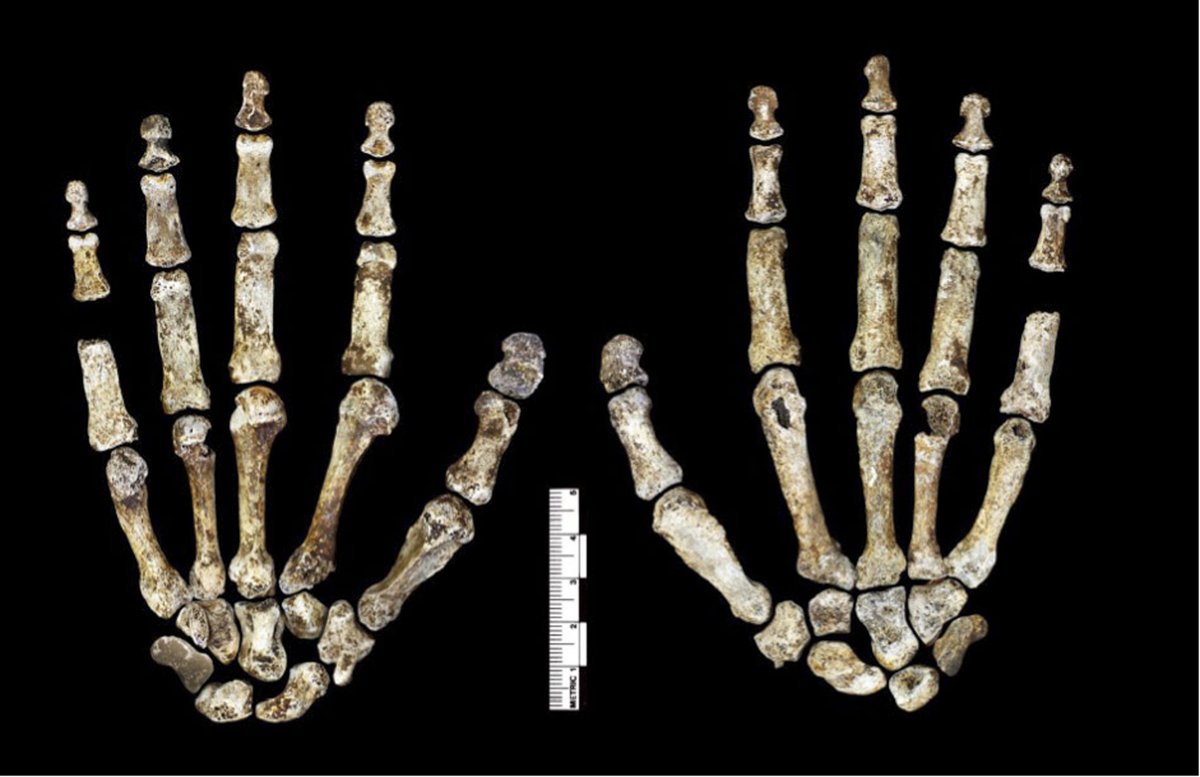
Since the discovery in 2013 of the first Homo naledi fossils in the Dinaledi Chamber of the Rising Star system near Johannesburg, South Africa, this species has continually defied conventional classification. Approximately 1.4 metres tall and estimated to weigh between 39 and 55 kilograms, it presents a mosaic of anatomical traits: a brain comparable in size to that of a chimpanzee (465 to 610 cc), but feet and legs very close to those of Homo sapiensHomo sapiensThe present-day human species, which emerged in Africa around 300,000 years ago, the only surviving human lineage after the extinction of Neanderthals and Denisovans.→, and hands adapted to both walking and tool manipulation. This unique combination does not resemble any other species on the human family tree.
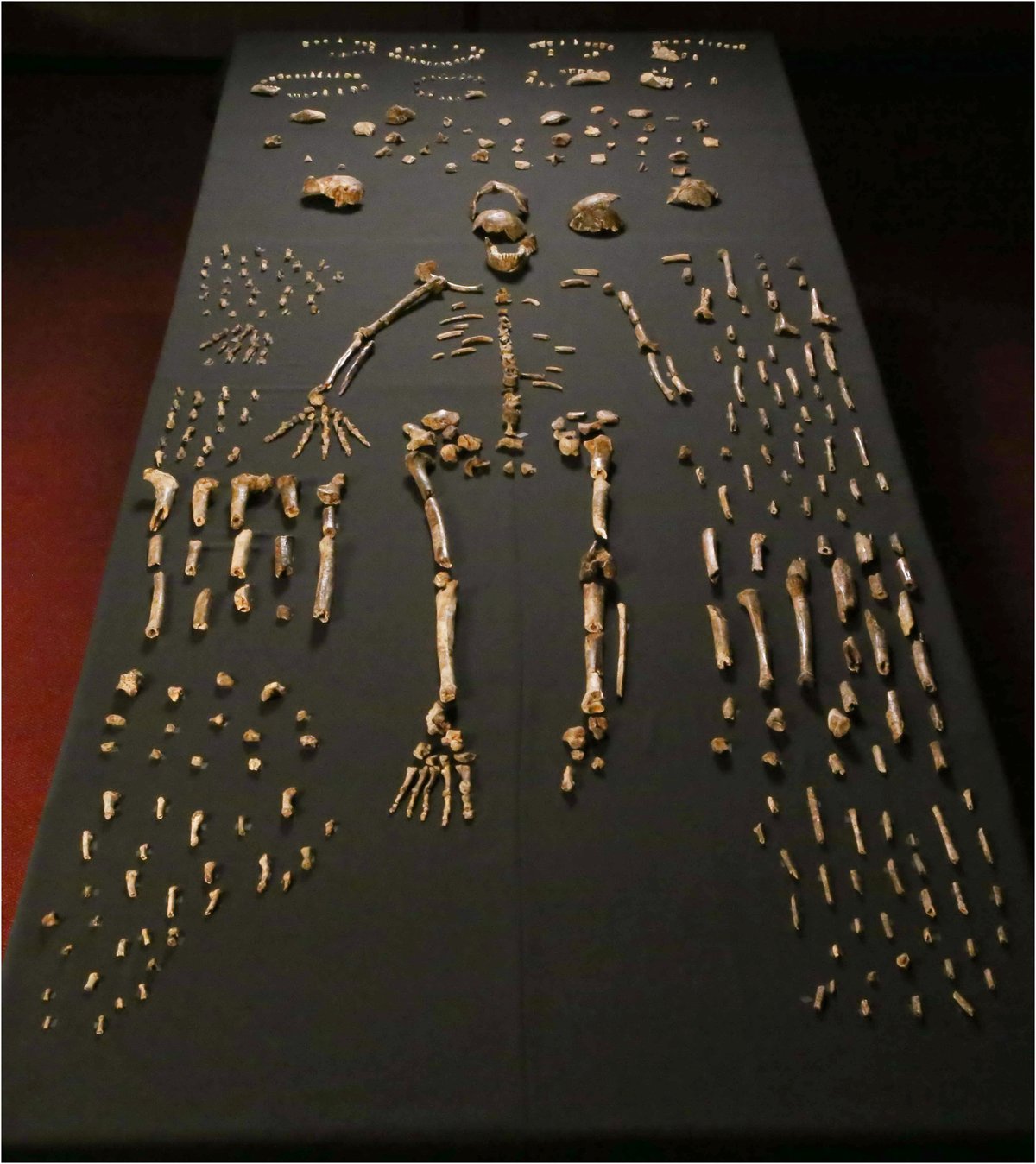
One persistent mystery since 2015 has been the near-absence of marked sexual dimorphism between individuals. In most primate and hominin species, males are substantially larger and more robust than females. In Homo naledi, differences in tooth size and shape between individuals are minimal, which had already puzzled paleoanthropologists. The new proteomic analyses illuminate this paradox in an unexpected way.
Dental enamel proteomics: a new key to the past
Scientists from the Max Planck Institute of Evolutionary Anthropology, the University of Copenhagen, and several partner institutions analysed microscopic protein fragments, called peptides, extracted from the dental enamel of 23 teeth belonging to 20 different Homo naledi individuals. The method uses dilute acid to release these molecules without damaging the fossils, before a mass spectrometer catalogues the molecular inventory. Dental enamel is the hardest tissue in the body; it can preserve proteins intact for hundreds of thousands of years, far beyond the preservation limits of DNADNAThe molecule carrying genetic information, used to reconstruct kinship between species.→ in tropical and subtropical regions.
The researchers specifically sought amelogenin-Y, a protein coded solely by the Y chromosome and therefore present exclusively in male individuals. Amelogenin plays a fundamental role in dental enamel formation during development. Its X-chromosome-coded version (amelogenin-X or AMELX) is present in all individuals, male and female alike, while the Y-chromosome version (AMELY) is only synthesised if the individual carries a Y chromosome.2
No males detected among twenty individuals
The result is astonishing: none of the 20 individuals examined showed traces of amelogenin-Y. All carried only AMELX, the enamel marker found in females. Statistically, the probability that a mixed-sex population of 20 individuals would consist entirely of females by pure chance is infinitesimal -- approximately one in a million if the natural sex ratio is 50-50.
Professor Lee Rogers Berger, director of the Rising Star excavations and one of the study's authors, proposes a radical explanation: Homo naledi may have developed "a particular cultural behaviour" differentiating between the sexes in funerary practices. Berger had already advanced the hypothesis of deliberate funerary practices by this species in previous papers -- a controversial claim given the small brain size of these hominins. The proteomics study now reinforces this hypothesis of a sex-selective burialBurialThe intentional deposition of a body, sometimes with offerings; a marker of symbolic behaviour.→ practice.
Alternative explanations
Palaeoanthropologist Karen Rosenberg of the University of Delaware raises an important chronological objection: "This was well before the appearance of sex-differentiated funerary practices, which don't appear in the archaeological record until about 5,000 years ago. There's something strange going on here." Other researchers have explored alternative biological scenarios, including the possibility that individuals had taken refuge in the cave to escape a threat, or had formed a particular social group. But as Berger points out, the juveniles of Rising Star -- including several children -- also lack AMELY, ruling out the hypothesis of a specifically female harem.
The Max Planck Institute suggests another possible, more parsimonious explanation: deletion of the AMELY gene. This would be a genetic mutation characterised by the loss of the AMELY gene on the Y chromosome, which would explain why both male and female Homo naledi individuals would have been identified as female by the analysis -- not because they were, but because their males did not produce the protein being sought.
Enrico Cappellini, professor of palaeoproteomicsPalaeoproteomicsThe study of ancient proteins preserved in fossils (bone, tooth enamel); can reveal species or sex when DNA is gone.→ at the University of Copenhagen and co-author of the study, concludes with rare scientific candour: "Intriguingly, these results raise new fundamental questions, the foremost of which is: if the H. naledi individuals from the Rising Star cave system are all female, where are the males? We must deploy a new generation of palaeproteomic tools to answer these and other fascinating questions." The enigma of Homo naledi is far from resolved.
No comments yet. Be the first.