A single tooth discovered in a cave in Borneo has pushed back the date of Homo sapiensHomo sapiensThe present-day human species, which emerged in Africa around 300,000 years ago, the only surviving human lineage after the extinction of Neanderthals and Denisovans.→' arrival in Southeast Asia by at least 10,000 years. Dated between 52,000 and 55,000 years ago using optically stimulated luminescence datingLuminescence datingA method dating the last heating or light exposure of sediments and minerals by measuring energy trapped in the crystal.→ of surrounding sediments, this human incisor, found at Gua Dagang (Trader's Cave) in Niah National Park, Sarawak, Malaysia, is now the oldest known Homo sapiens fossil in this part of the world.1
Niah Cave: A Prehistoric Crossroads
Niah Cave in the Malaysian state of Sarawak, on the island of Borneo, is a major archaeological site excavated since the 1950s. It has yielded some of the earliest evidence of human presence in island Southeast Asia, with human remains dated to 40,000–35,000 years ago in its upper layers. The recent discovery of an incisor in the nearby Trader's Cave (Gua Dagang), in a clearly older stratigraphic layer, significantly pushes this date back.1
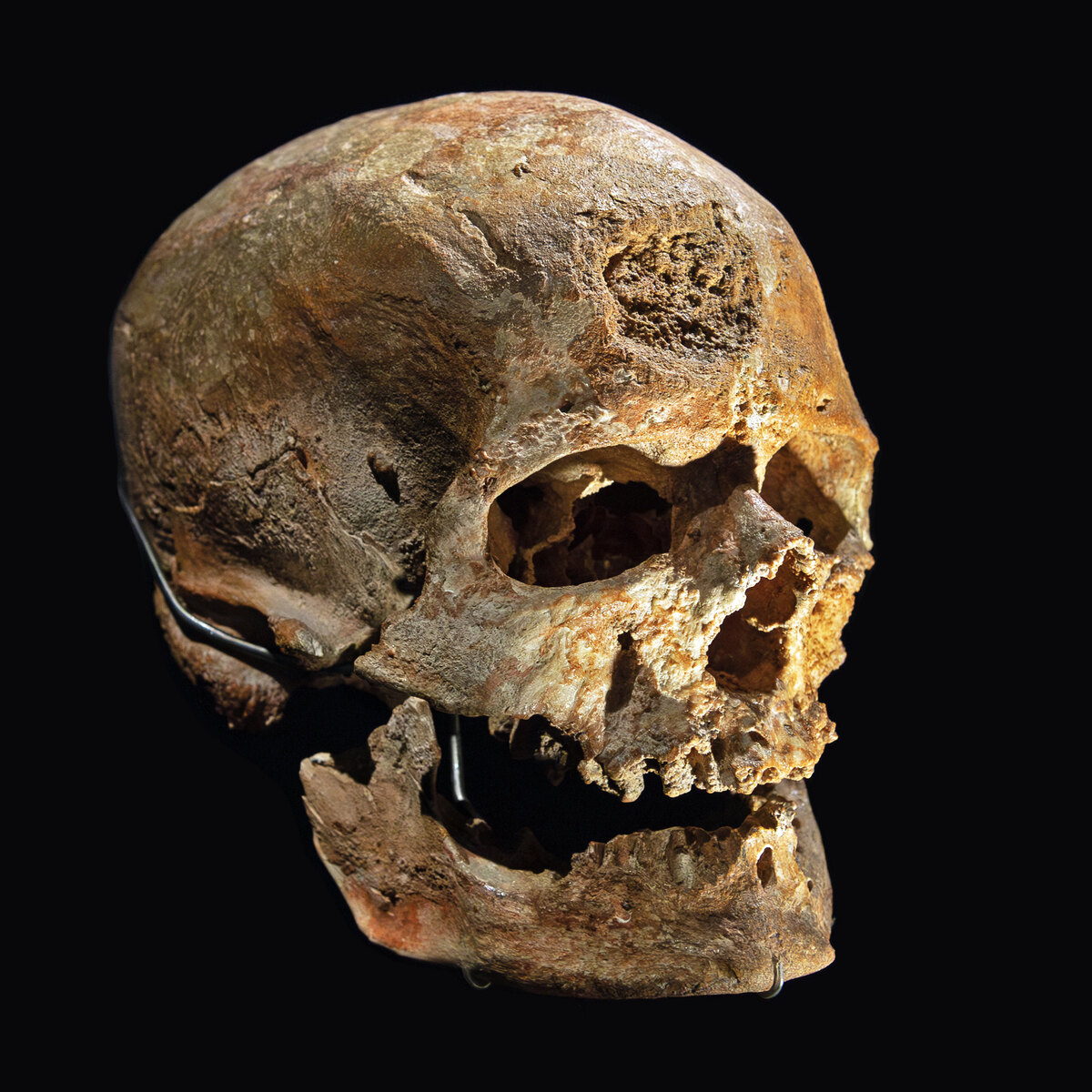
The tooth, an upper central incisor, has morphological features clearly attributable to modern Homo sapiens: gracile crown, single root, thin enamel. Analysis of its stratigraphyStratigraphyThe study of the superimposed layers (strata) of an archaeological site; each layer corresponds to a phase of occupation and yields a relative chronology.→ and OSL dating of associated sediments rule out the reworking problems that had undermined other older discoveries (such as the Chinese Daoxian teeth, initially dated to 80,000 years ago but whose dating and attribution were subsequently challenged).2
What Route Did the First Asians Take?
The presence of Homo sapiens in Borneo 52,000–55,000 years ago fits within the broader context of the human dispersal out of AfricaOut of AfricaThe dispersals of Homo sapiens out of Africa, including a major expansion c. 70,000 to 60,000 years ago and earlier exits.→. It suggests a rapid eastward progression, possibly along Indian Ocean coastlines, reaching the Indian subcontinent and then Southeast Asia within a few thousand years of leaving AfricaAfricaThe cradle of humankind: the continent where the first hominins appeared, then Homo sapiens around 300,000 years ago, before the expansion to the rest of the world.→. This "southern coastal route" is confirmed by other recent discoveries: human remains in Australia dating to 65,000 years ago and tools in India dating to 70,000 years ago attest to early human presence throughout this itinerary.
These discoveries challenge models that posited a Homo sapiens arrival in Southeast Asia only around 45,000–40,000 years ago. They suggest instead that our ancestors reached the islands of maritime Southeast Asia much earlier, and that the colonisation of Australia, traditionally dated to 65,000 years ago, is not an isolated phenomenon but the result of a migratory dynamic older and faster than previously thought.3
Southeast Asia: A Zone of Contact and Admixture
The Niah tooth adds to an increasingly complex picture of prehistoric Southeast Asia. Recent genetic studies have shown that current populations of East Asia and Oceania carry traces in their genomes of admixture with unknown archaicArchaicRefers to an ancient, now-extinct human population or form (Neanderthals, Denisovans, ghost lineages), as opposed to anatomically modern humans.→ hominins, sometimes called "island Denisovans," who coexisted with Homo sapiens in this region for perhaps tens of thousands of years. The earlier chronology of our species' arrival provides a longer time window for these interactions, whose genetic traces are still readable today in the DNADNAThe molecule carrying genetic information, used to reconstruct kinship between species.→ of millions of people.
Je viens de recouper avec votre chrono-carte. La route côtière sud confirme sa cohérence : une dent à -55 000 à Bornéo, des restes à -65 000 en Australie... La colonisation de l'Australie n'était pas un coup de chance mais l'aboutissement d'une dynamique migratoire déjà en marche depuis au moins 15 000 ans.
L'attribution taxonomique sur la base d'une seule dent est toujours délicate, mais les auteurs ont bien pris les précautions nécessaires pour exclure un remaniement stratigraphique. La comparaison morphométrique avec les populations de référence du Pléistocène supérieur semble solide. A suivre.