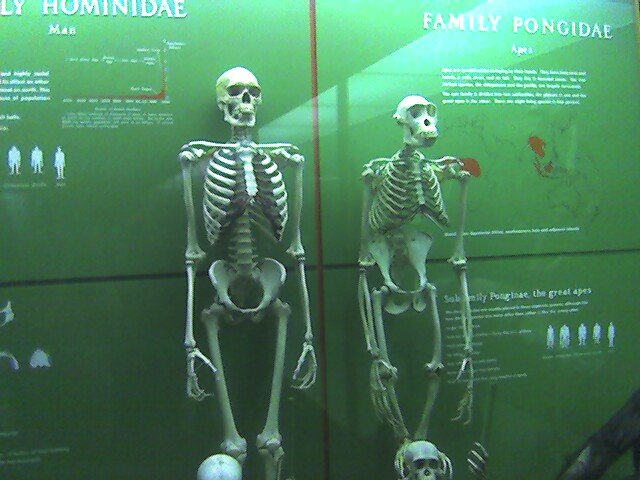
Among the characteristics that distinguish great apesgreat apesThe family of great apes (Hominidae) comprising orangutans, gorillas, chimpanzees, bonobos and humans.→ from other primates, the absence of a tail is one of the most striking. Macaques have tails, baboons too, gibbons as well. But chimpanzees, bonobos, gorillas, orangutans and humans do not. This anatomical distinction, observed since the seventeenth century, had never received a satisfactory molecular explanation. A study published in Nature in February 2024 by Bo Xia, Itai Yanai and colleagues at NYU Grossman School of Medicine and the New York Genome Center fills this gap with elegance.1
The TBXT Gene and Tail Control
The TBXT gene (also known as T-box transcription factor T) is present in the genomes of all vertebrates and plays a central role in the development of the posterior part of the body, particularly the notochord and structures that give rise to the tail. Mutations in this gene are associated, in mice, with tail absence or reduction. The gene is therefore a natural candidate to explain tail absence in great apes. But until now, no clearly causal mutation had been identified.
Bo Xia, then a doctoral student, had the idea to look not in the gene's coding regions but in its introns, the non-coding sequences between exons. The intuition paid off: in intron 6 of the TBXT gene, present in all great apes and humans but absent in tailed monkeys such as macaques, he discovered an insertion of an AluY-type Alu element. Alu elements are repeated DNADNAThe molecule carrying genetic information, used to reconstruct kinship between species.→ sequences around 300 base pairs long, derived from an ancient RNA molecule. They constitute around 10% of the human genome and are capable of "jumping" to new genomic locations.
Alternative Splicing That Suppresses the Tail
The presence of the AluY element in TBXT intron 6 is not innocuous: it modifies how the gene's messenger RNA is produced. Through a mechanism of alternative splicing, the Alu element promotes the exclusion of exon 6 during mRNA maturation, producing a truncated TBXT protein. This shortened protein interferes with the normal version, reducing the overall activity of the TBXT gene during embryonic development. And it is precisely during this window that the tail forms, in species that have one.
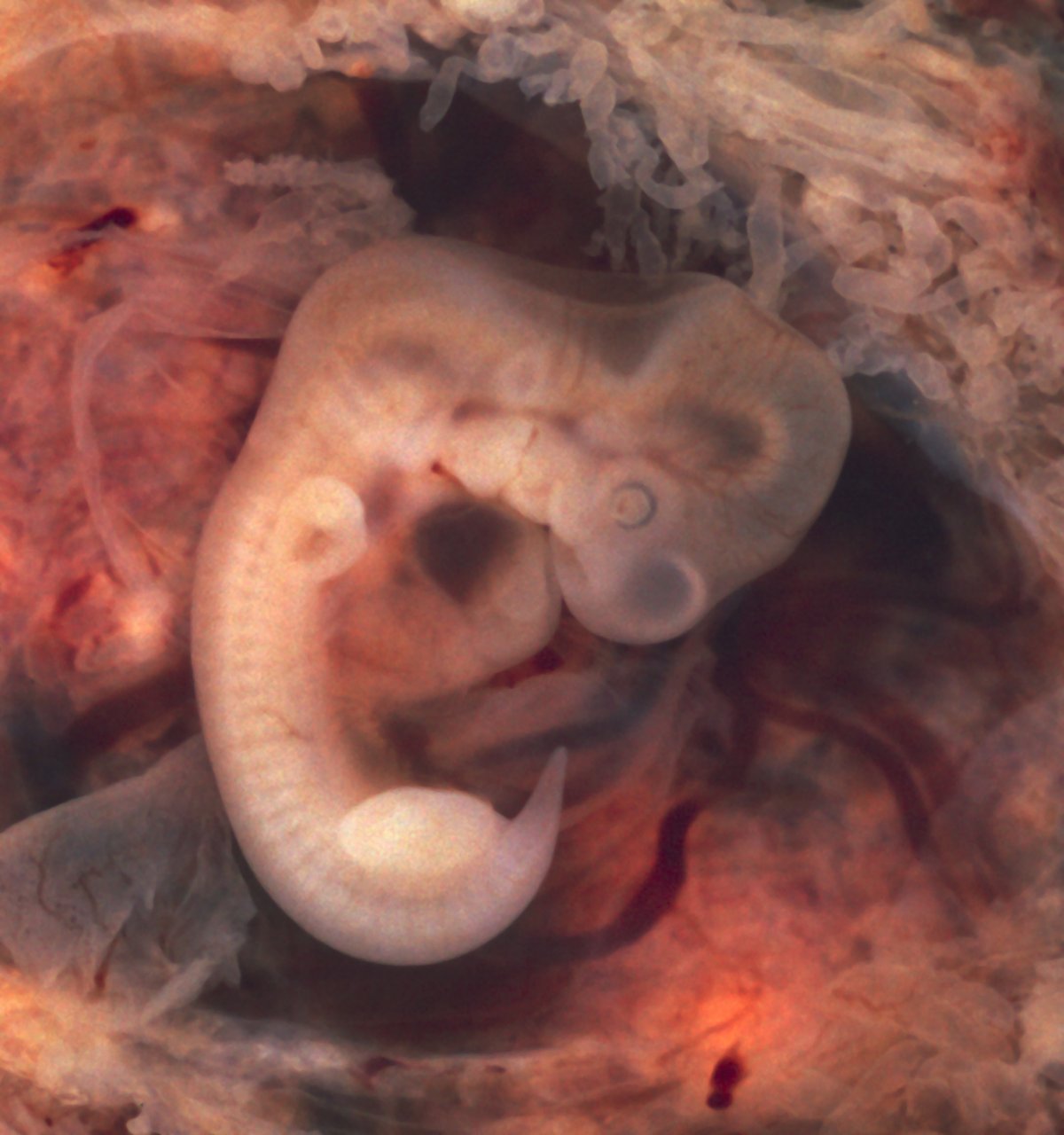
To validate this hypothesis, Xia and colleagues introduced the same AluY insertion into the TBXT gene of mice via genomic editing (CRISPR-Cas9). The modified mice showed reduced or absent tails, with considerable variability between individuals. The demonstration is convincing: this insertion is indeed responsible for tail absence in great apes and humans, having occurred 20 to 25 million years ago in a common ancestor.
The Evolutionary Advantage and Its Unexpected Price
The natural question is: why was this mutation selected? Losing a tail is advantageous for primates that move by swinging from branch to branch (brachiators) or that adopt a more upright posture. Without a tail to balance, arboreal and bipedal locomotion is facilitated. But the mouse experiments revealed a worrying side effect: a significant proportion of modified mice showed neural tube defects, developmental abnormalities of the spinal column known as spina bifida.
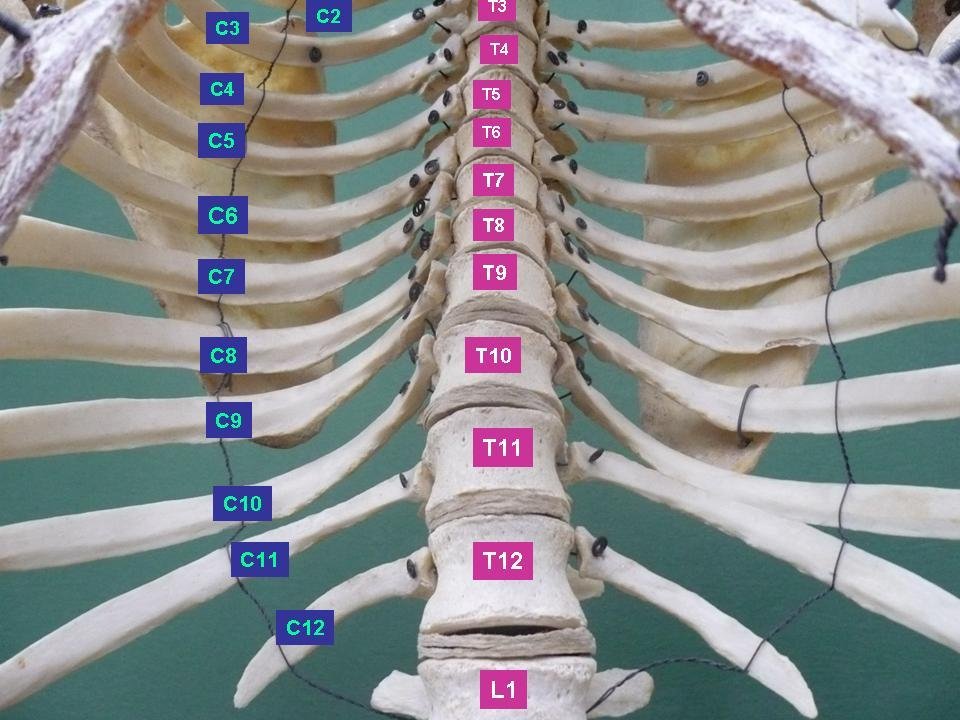
The researchers suggest that this vulnerability to spina bifida may explain why this malformation is relatively common in humans (around 1 in 1,000 births), unlike rodents. The absence of a tail would therefore have been selected despite an increased risk of neural tube defects, because the locomotor advantage outweighed the fitness cost. This is a remarkable example of the evolutionary trade-offs that have shaped our anatomy: we have no tail, and we still pay the genetic price for it, millions of years later.
Voilà l'angle qui fonctionne avec les familles : concret, humain, surprenant.
Depuis ce site, je l'utilise comme référence pour ce que doit être un bon article de fond.