Between 800 BC and the dawn of the Common Era, Europe undergoes profound transformations. Iron progressively replaces bronze as the dominant metal, reshaping the techniques of warfare, labour and trade. From the CeltsCeltsA set of Iron Age peoples sharing related languages and cultures, spread from central Europe to the Atlantic.→ to the ScythiansScythiansNomadic horse peoples of the Eurasian steppes (1st millennium BC), known for animal-style art, goldwork and kurgan burials; the Pazyryk culture is an eastern expression of them.→, from Hallstatt to La TèneLa TèneThe European second Iron Age (c. 450-50 BC), named after a Swiss site; the Celtic apogee, curvilinear art, oppida and coinage.→, from the Greek city-states to nascent Rome, this period sees the emergence of the first complex societies for which we possess written testimony -- a threshold beyond which prehistoryPrehistoryThe span of human history before the invention of writing, from the Palaeolithic to the Metal Ages, known mainly through material remains.→ gives way to history.
The iron revolution: from craft to domination
Iron was known well before 800 BC, notably in Anatolia and the Near EastNear EastA region of western Asia (Levant, Mesopotamia, Anatolia, Iran), cradle of the Neolithic revolution, agriculture, the first cities and writing.→. But it is around the beginning of the first millennium BC that its metallurgyMetallurgyThe techniques of extracting and working metals (copper, bronze, gold); its rise in the Eneolithic and Bronze Age transformed tools, weapons and social hierarchies.→ spreads massively across Europe. Unlike bronze, which required copper and tin -- two rare metals that often had to be imported over long distances -- iron ore is abundant almost everywhere. This democratisation of raw material upends economic and military balances.1
Iron production requires, however, more demanding technical mastery. Smelting iron requires temperatures above 1,200 degrees Celsius, unattainable by the bronze furnaces of the period. Smiths develop more powerful bellows, deeper forges, and above all the technique of hot hammering -- iron being too hard to be cast like bronze. This artisanal knowledge becomes a considerable source of power.
The spread of iron also transforms agricultureAgricultureThe cultivation of plants and production of food by working the soil, which emerged in the Neolithic in the Near East and independently elsewhere; it radically transformed human societies.→. Iron hoes, ploughs and sickles allow harder lands to be cleared, cultivated surfaces to be extended and yields to increase. This agricultural intensification supports significant demographic growth in Europe between 800 and 200 BC, fuelling in turn the development of oppida -- the large fortified Celtic agglomerations.
Hallstatt: the birth of a salt aristocracy
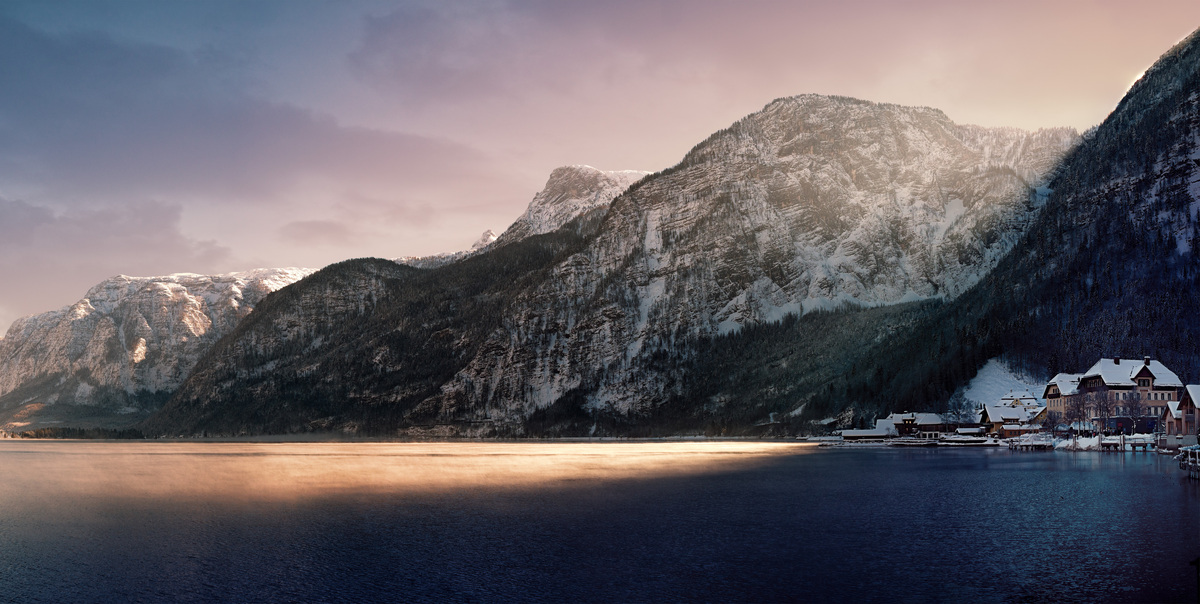
The first major Iron Age culture in central Europe takes its name from an Austrian village, Hallstatt, where excavations since the nineteenth century have revealed an exceptional cemetery of more than 1,000 graves. The site was active well before the Iron Age, thanks to its salt mines -- one of the oldest mining industries in the world. It is this salt, a rare and precious commodity used to preserve food, that enriched a local elite capable of procuring prestige goods over long distances.2
The princely tombs of Hallstatt (−800 to −450) yield four-wheeled chariots, bronze and iron weapons, gold and Baltic amber jewellery, and Greek or Etruscan bronze vessels. The presence of these Mediterranean imports testifies to extensive exchange networks spanning the entire continent. Local chiefs were embedded in an interconnected aristocratic system whose wealth derived from control of Alpine trade routes.
Hallstatt culture extends from present-day Austria to central France, Spain and the British Isles, in varied local forms. In some regions, such as Burgundy or Baden-Württemberg, Celtic "princes" have vast tombs built under burialBurialThe intentional deposition of a body, sometimes with offerings; a marker of symbolic behaviour.→ mounds, accompanied by their chariots, weapons and funerary banquets. These practices reveal a conception of power deeply linked to rituals of the afterlife.
La Tène: Celtic expansion and ornamental art
Around 450 BC, Celtic culture enters a new phase, called La Tène, named after a lakeside site in Switzerland where thousands of metal objects were recovered -- sacrificed, it seems, into the waters of Lake Neuchâtel. This period sees a spectacular expansion of Celtic peoples: they penetrate northern Italy (sack of Rome around 390 BC), raid Delphi around 279 BC, settle in Galatia (present-day Asia Minor) and gradually occupy the British Isles.3
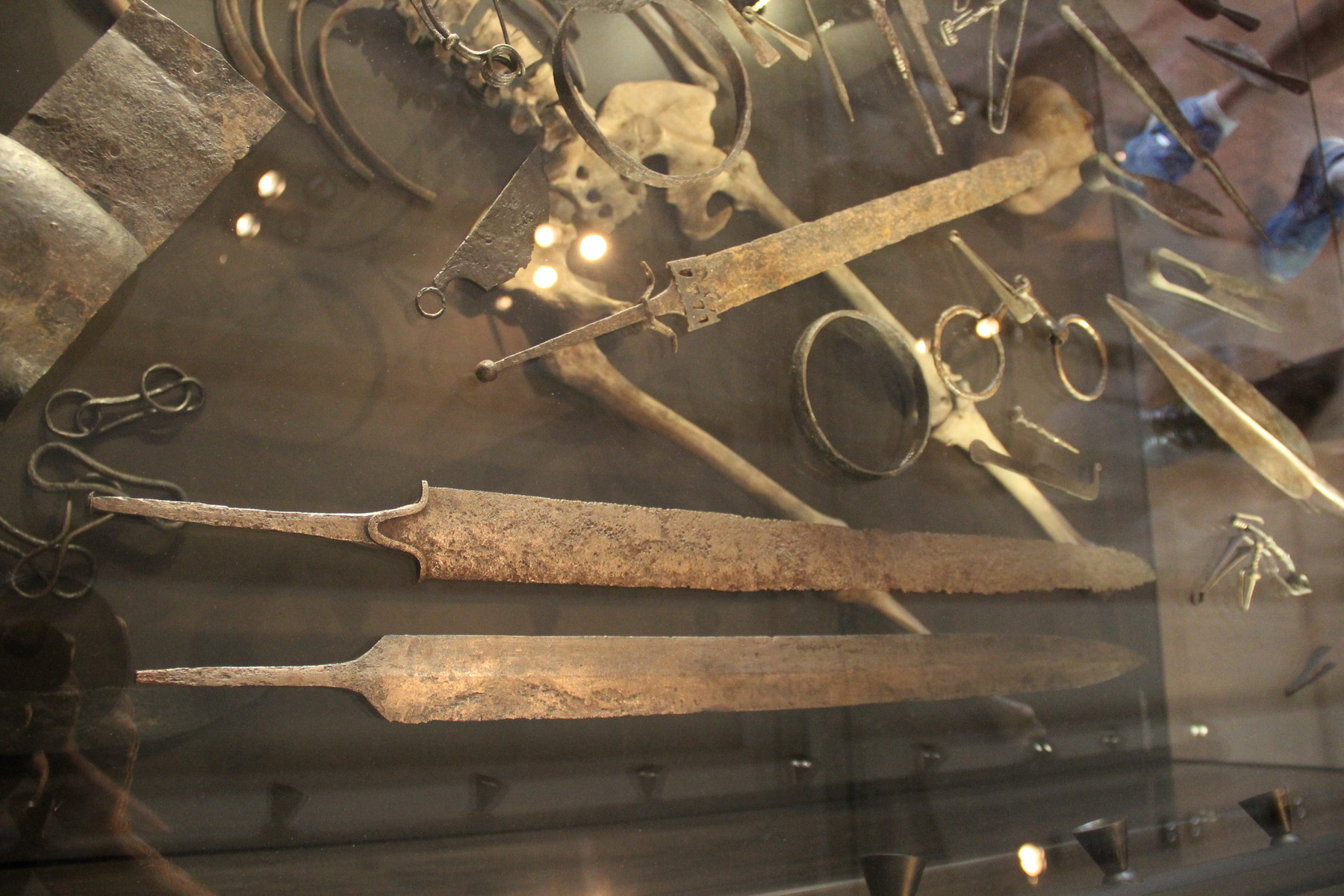
La Tène art is one of the most recognisable of European prehistory. It is characterised by stylised plant motifs -- vine leaves, spirals, triskelions -- interlaced with animal and human figures in curvilinear compositions of great complexity. This art adorns swords, fibulae, torques -- those rigid gold or bronze collars worn by chieftains -- and war chariots. It reflects a worldview in which the boundary between the human, animal and divine worlds is permeable.
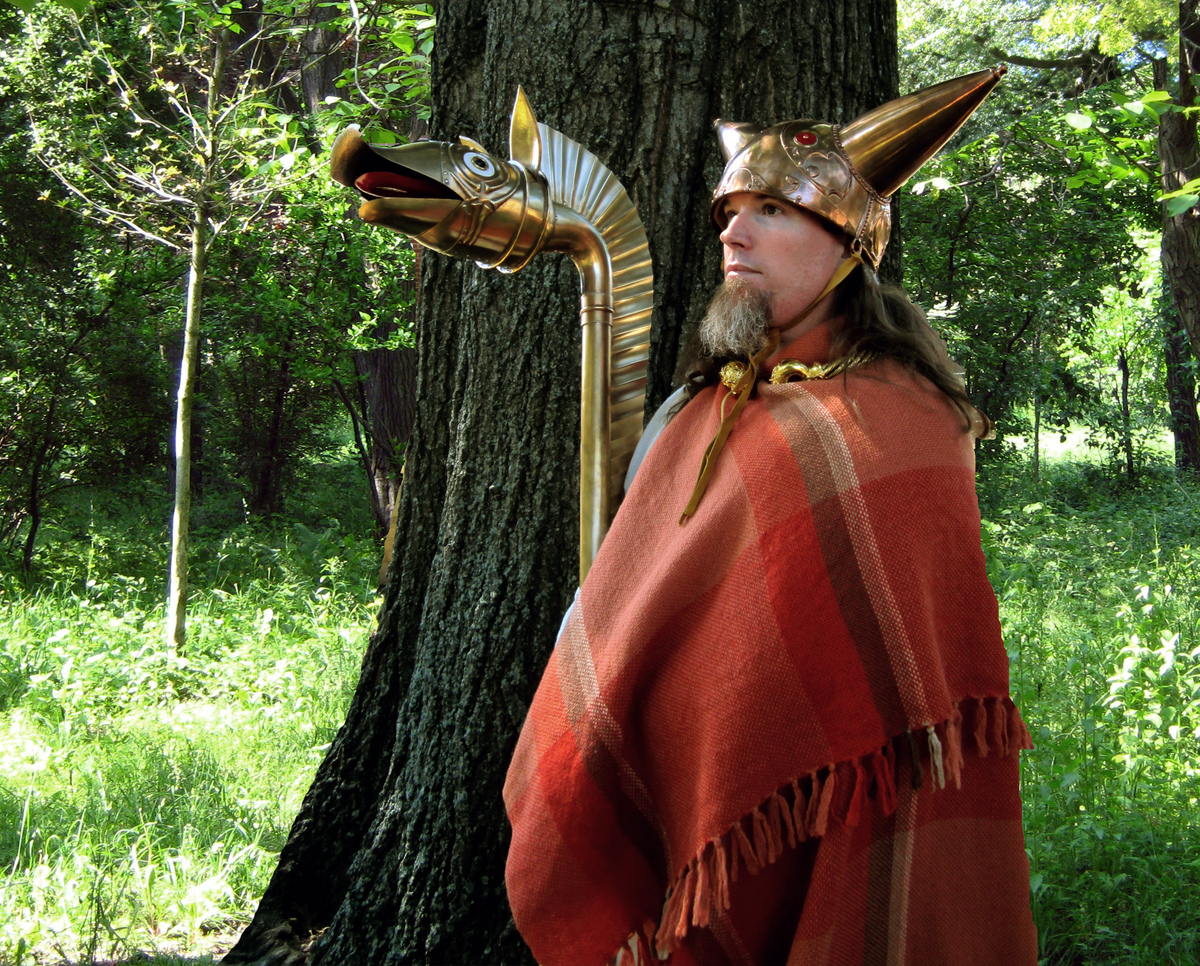
La Tène society is profoundly martial. Celtic warriors form a prestige caste, and severed heads -- considered seats of the soul -- are the object of a particular cult. Greek and Roman authors describe the Celts as fearsome warriors who often fought bare-chested, painted their bodies with woad and let out terrifying cries before battle. These descriptions, partly idealised, nonetheless reveal a martial reality that profoundly marked Mediterranean societies.
Torques and goldsmithery: markers of an elite
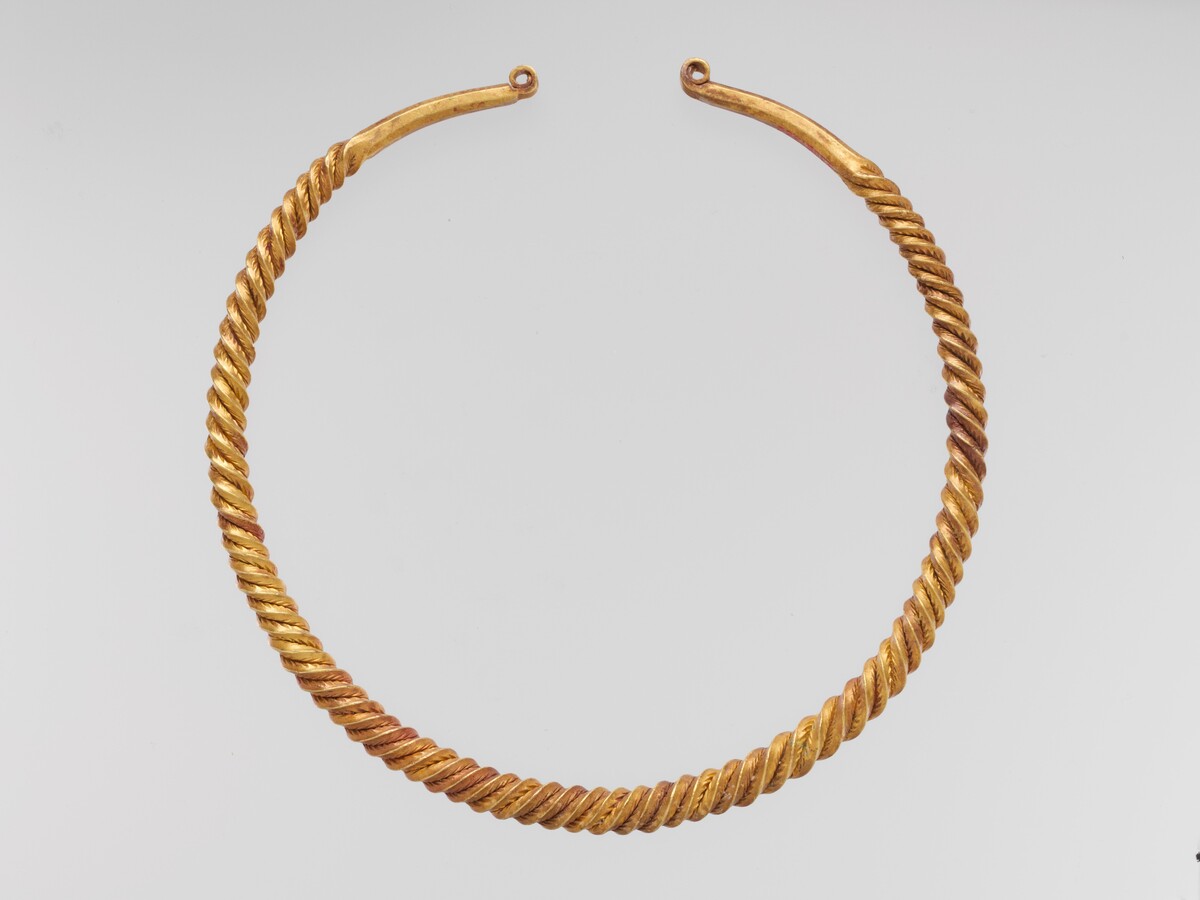
Celtic torques are among the most powerful symbols of the Iron Age elite. These rigid collars, open at the front, are made of gold, silver or bronze and often adorned with relief motifs of remarkable delicacy. Some reach considerable weight -- several kilograms -- and required exceptional goldsmithingGoldsmithingThe art of working precious metals (gold, silver) into jewellery, vessels and ornaments; the Maikop kurgans are among the earliest evidence of elite goldsmithing.→ skill. The Vix torque (Côte-d'Or), found in the tomb of a Celtic "princess", and that of Glauberg (Germany) are among the most celebrated.
Beyond their ornamental function, torques had a symbolic and perhaps religious dimension. Some Celtic deities are depicted wearing a torque -- such as the god Cernunnos, the antlered figure on the Gundestrup cauldron. Wearing a torque signalled membership of a superior class and visually separated warrior-aristocrats from the rest of the population. Some torques were deposited in tombs or sacred places as offerings to the gods.
Druids, bards and Celtic religion
Celtic society is structured into three main classes: warrior-aristocrats, druids (priests, judges and guardians of memory) and farmer-craftsmen. Druids hold a fundamental position: they ensure the link between the human world and the divine world, preserve oral traditions (no sacred text is ever written down), preside over sacrifices and administer justice. Their training lasted up to twenty years, based entirely on the memorisation of thousands of verses.4
Celtic religion is polytheistic and deeply rooted in natural forces. Springs, rivers, forests and heights are inhabited by local deities to whom votive deposits are offered -- weapons, jewellery, vessels, sometimes animals and human beings. The numerous deposits found in European lakes and rivers (La Tène in Switzerland, Llyn Cerrig Bach in Wales, Thorsberg in Denmark) testify to the intensity of these aquatic ritual practices.
The Scythians: horsemen of the steppes
Contemporary with Celtic cultures, the nomadic civilisations of the Eurasian steppes play an equally decisive role in Iron Age history. The Scythians, whose territory extended from north of the Black Sea to Central Asia between the eighth and third centuries BC, are the most famous representatives of these equestrian cultures. Perfect horsemen and formidable archers, they master techniques of harassing warfare and feigned retreat that demoralise armies fighting in ordered formation.
Scythian goldsmithery is among the most sumptuous of Antiquity. The kurgans -- Scythian burial mounds -- of the Dnieper region (present-day Ukraine) yield jewellery of extraordinary delicacy: pectorals depicting scenes of Scythian life, rhytons (drinking vessels in animal horn), repoussé gold dress appliqués. The famous Tovsta Mohyla pectoral (4th century BC) represents in its lower part animals attacking one another and in its upper part Scythians going about their daily occupations -- an iconographic programme of rare complexity.
The Mediterranean world: Greeks, PhoeniciansPhoeniciansA people of sailors and traders from the Levant (modern Lebanon) who founded trading posts across the western Mediterranean from the start of the first millennium BC.→, Carthage
While central and northern Europe lives under the Iron Age, the Mediterranean rim experiences a parallel but different evolution. The Phoenicians, from Tyre and Sidon (present-day Lebanon), founded trading posts throughout the Mediterranean from the ninth century BC: Carthage (814 BC), Gades (Cádiz), Ibiza. They disseminate the alphabet -- a major invention that would radically transform the transmission of knowledge -- along with craft techniques, glass, dyes and luxury objects.5
ArchaicArchaicRefers to an ancient, now-extinct human population or form (Neanderthals, Denisovans, ghost lineages), as opposed to anatomically modern humans.→ Greece (−800 to −500) sees the constitution of city-states (poleis), the unprecedented form of political organisation that will generate Athenian democracy, philosophy and the Olympic Games. The great Greek colonisations between the eighth and sixth centuries BC scatter cities from the Black Sea to the western Mediterranean: Massalia (Marseille), Neapolis (Naples), Syracusae (Syracuse). These colonies serve as commercial and cultural relay points that diffuse Greek civilisation while absorbing local influences.
Rome: from city-state to dominant power
Roman tradition places the founding of Rome in 753 BC, but archaeology shows occupation of the Palatine Hill site from the ninth century BC. Monarchical Rome (753-509 BC) is profoundly influenced by its Etruscan neighbours, from whom it adopts writingWritingA system of conventional signs used to fix language or information durably; its appearance (c. 3300 BC) marks, by convention, the end of prehistory.→, certain religious rites and architectural techniques. The fall of the last king Tarquinius Superbus in 509 BC opens the Republican period.6
The Roman RepublicRoman RepublicThe political system of Rome from 509 to 27 BC, led by elected magistrates and the Senate, before the founding of the Empire.→ progressively builds its hegemony over Italy, then over the entire Mediterranean. Victory over Carthage in the Punic Wars, the conquest of Greece (148 BC), and then the Hellenistic kingdoms of the East transform Rome into a world empire even before it officially takes that title. Roman legions, organised into disciplined cohorts and equipped with iron, represent the pinnacle of late Iron Age military technology.
The threshold of written history
The term "protohistoryProtohistoryThe transitional period between prehistory and history, covering societies without their own writing but known through external texts.→" designates precisely this transitional period between a prehistory without writing and fully documented history. For temperate Europe, this threshold is reached between the sixth and first centuries BC, as contacts with the alphabetised civilisations of the Mediterranean -- Greece, Rome, the Phoenician world -- begin to produce written sources about Celtic, Iberian, Germanic and other populations.
The first texts speaking of the Celts are Greek: Hecataeus of Miletus (around 500 BC) mentions them as living north of the Alps. Herodotus (fifth century BC) places them at the source of the Danube. Julius Caesar, in the first century BC, writes his Commentaries on the Gallic War -- an irreplaceable but partial source. The populations of central and northern Europe do not themselves develop writing before the Germanic runic inscriptions (second-third century AD) and Irish ogham (fourth century AD).
This documentary asymmetry means that our knowledge of the European Iron Age remains profoundly archaeological for non-Mediterranean regions. Objects, buildings, tombs and ritual deposits constitute our main window onto these societies. The written sources of Antiquity, though precious, filter the realities of these peoples through the often condescending or distorting gaze of Mediterranean authors.
Legacy and posterity
The Iron Age marks the end of prehistory in the strict sense but constitutes the foundation of historical Europe. The Celtic languages -- Irish Gaelic, Breton, Welsh, Cornish -- are direct heirs of the La Tène dialects. The tribal political structures of Iron Age societies shaped the kingdoms of the early Middle Ages. The agricultural practices, metallurgical techniques and exchange networks established between −800 and 0 draw an economic and cultural geography whose outlines persist into the twenty-first century.
Celtic mythologies -- notably those of the Irish Gaels and Welsh, preserved in medieval manuscripts -- carry the echo of beliefs and narratives born in the Iron Age. Cú Chulainn and the Ulster Cycle, the Welsh Mabinogion, the Arthurian cycle (some elements of which may go back to pre-Roman traditions) constitute a literary corpus whose roots plunge directly into Celtic protohistory.8
The Iron Age is not merely a period: it is a process of irreversible transformation that made Europe what it is. In a few centuries, dispersed tribal societies produced forms of political organisation, art and spirituality robust enough to survive Roman conquests, the migrationsMigrationsLong-distance movements of populations; a major driver of human history (the exit from Africa, the peopling of continents, Neolithic and steppe expansions).→ of peoples and the upheavals of the early Middle Ages, leaving traces still legible today in the landscapes, languages and memories of Europe.
No comments yet. Be the first.