For a long time, the textbooks told the same story: before PhoenicianPhoenicianRelating to the merchants and seafarers of the Levant who founded trading posts on the Iberian coasts and deeply influenced Tartessos.→ sailors reached the coast of present-day Morocco around 800 BC, the Maghreb was supposedly an almost empty land, a space of nomads without villages or agricultureAgricultureThe cultivation of plants and production of food by working the soil, which emerged in the Neolithic in the Near East and independently elsewhere; it radically transformed human societies.→, waiting to be "civilised" by colonists from the eastern Mediterranean. A study published in 2025 in the scientific journal Antiquity has just shattered that narrative. On a modest hill in northern Morocco, a site called Kach Kouch has yielded the evidence of a firmly established farming village between 2200 and 600 BC, nearly fifteen hundred years before the first Phoenician trading posts. This is no minor point: it is close to three thousand years of assumed history that these excavations force us to rewrite.1
A hill above the Oued Laou
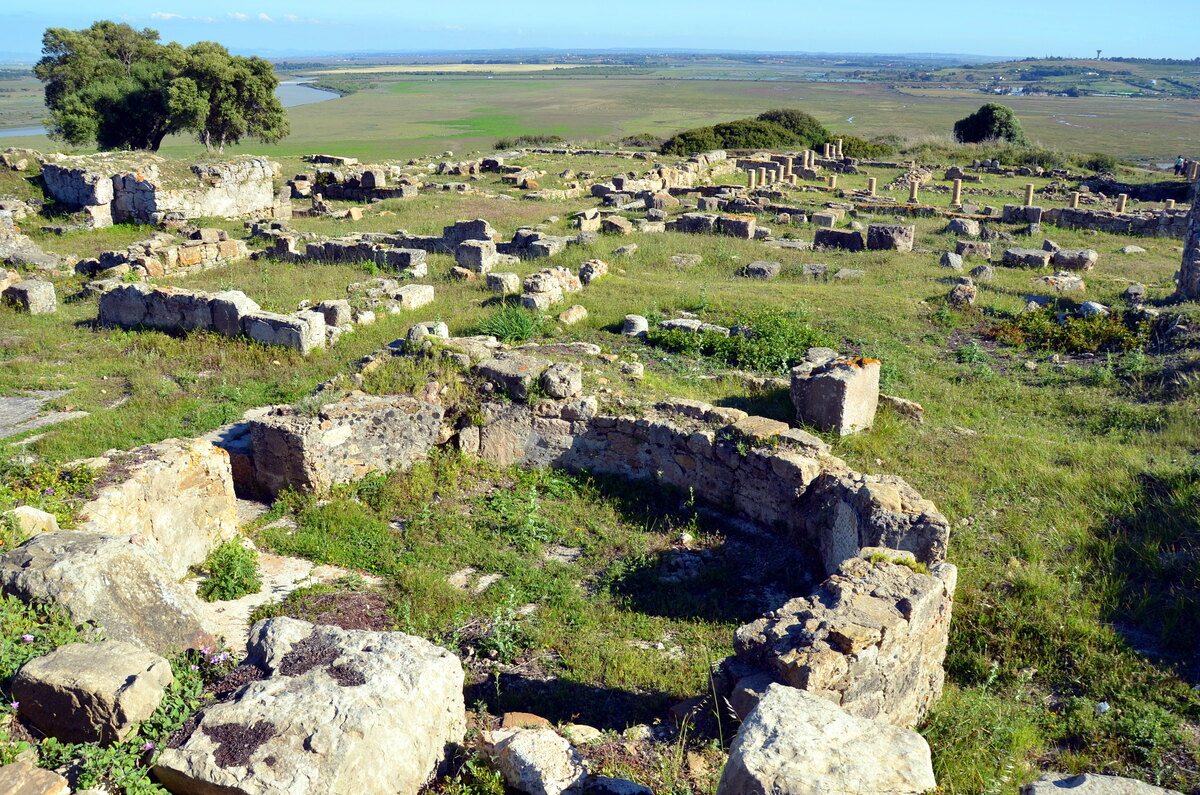
At first glance, Kach Kouch is nothing spectacular. It is a small limestone hill, known locally as Dhar Moudden, rising some sixty metres above the Oued Laou valley in the Tétouan region, at the foot of the western Rif. The site lies about ten kilometres from the present-day Mediterranean coast and roughly thirty kilometres southeast of Tétouan, near the village of Chrouda. Its location is far from trivial: perched on its promontory, the hill overlooks the valley that links the coast to the interior, a natural corridor towards the heights of the Rif.1
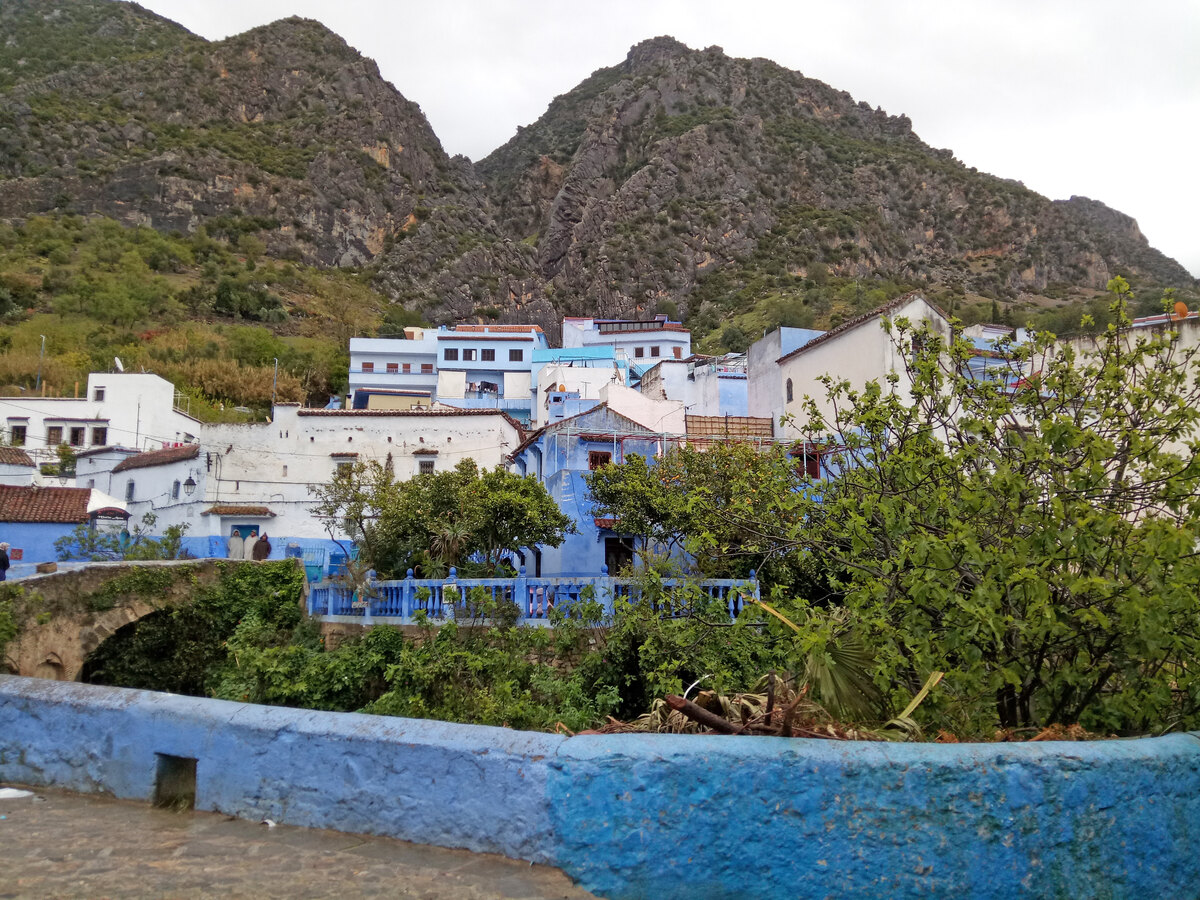
The place was not entirely unknown to archaeologists. It had been spotted in the late 1980s by a Moroccan-Spanish survey team, then test-trenched once in 1992, though the results were never really published. It took until 2021 and the launch of a new research project, co-directed by the young scholar Hamza Benattia, affiliated with the University of Barcelona and the National Institute of Archaeological and Heritage Sciences (INSAP) in Rabat, for the hill to finally reveal its true antiquity. A team made up largely of young Moroccan archaeologists carried out meticulous excavations there, supported by radiocarbon dating, the study of seeds and bones, photogrammetryphotogrammetryTechnique reconstructing a 3D relief model of an object from many photographs taken at varying angles.→ and drone surveys. It is this modern, cross-disciplinary approach that pushed the site's occupation back far further than anyone had imagined.2
Three thousand years thought to be empty
To grasp the significance of the discovery, one has to understand the narrative it upsets. In classical historiography, the protohistoric Maghreb was a kind of black hole. Lacking excavations of open-air settlements, researchers had long relied on burials alone, cist necropolises and caves, which offer only a fragmentary and often funerary picture of past populations. From this documentary gap arose a convenient idea: that of a near-empty region, home at most to itinerant shepherds, where "real" history only began with the arrival of the Phoenicians, then the Carthaginians and the Romans.4
This long-dominant view carried a colonial bias: it cast local populations as passive spectators, waiting for civilisation to be brought to them from outside. Kach Kouch demonstrates precisely the opposite. Long before any contact with the eastern Mediterranean, indigenous communities lived here in a settled way, farmed their fields, raised their livestock, stored their harvests and made their own pottery. The site is now presented as the oldest known farming village in Mediterranean AfricaAfricaThe cradle of humankind: the continent where the first hominins appeared, then Homo sapiens around 300,000 years ago, before the expansion to the rest of the world.→ outside Egypt, a status that alone redraws the map of North African protohistoryProtohistoryThe transitional period between prehistoryPrehistoryThe span of human history before the invention of writing, from the Palaeolithic to the Metal Ages, known mainly through material remains.→ and history, covering societies without their own writingWritingA system of conventional signs used to fix language or information durably; its appearance (c. 3300 BC) marks, by convention, the end of prehistory.→ but known through external texts.→.3
2200 BC: the earliest traces
The oldest occupation phase at Kach Kouch, which archaeologists named KK1, dates between 2200 and 2000 BC, at the hinge between the final NeolithicNeolithicThe "New Stone Age": a period marked by farming, herding, settlement and pottery, from around 10,000 BC.→ and the Bronze AgeBronze AgePeriod of late prehistory marked by bronze metallurgy and the rise of maritime trade, beginning in the Near East around 3300 BCE.→Bronze AgeA protohistoric period following the Neolithic, defined by bronze metallurgyMetallurgyThe techniques of extracting and working metals (copper, bronze, gold); its rise in the Eneolithic and Bronze Age transformed tools, weapons and social hierarchies.→ (a copper-tin alloy) and the rise of the first cities and states; in Egypt it corresponds to the age of the first pyramids.→. The remains from this period are slight: three undecorated pottery sherds, a flintFlintA hard, brittle siliceous rock, knapped by prehistoric people to produce blades, points and sharp tools.→ flake, a cow bone. Little enough, in appearance, but these few objects are enough to attest to a human presence in the valley far earlier than previously believed. Chronologically, this occupation coincides with the transition from the Copper Age to the Bronze Age on the other side of the Strait of Gibraltar, in the Iberian Peninsula, which is surely no coincidence given how long the two shores had shared people, ideas and techniques.1
The excavators remain cautious: it is hard to say whether Kach Kouch already housed a permanent settlement at that date or merely episodic visits. What is certain is that the hill was frequented by groups already familiar with pottery and animal husbandry. The site then seems to have been left alone for several centuries, as if the memory of the place had briefly faded, before a far more emphatic return during the late Bronze AgeLate Bronze AgeThe final phase of the Bronze Age in the Near East (c. 1550 to 1200 BCE), an age of great empires and international diplomacy, ended by a general collapse.→.
A true farming village (1300-900 BC)
It is from 1300 BC that Kach Kouch became a genuine village. This second major phase, the best documented, reveals a prosperous, settled farming community, durably installed on its hill. Archaeologists uncovered buildings made of earth and wood, using the wattle-and-daub technique: a framework of branches and posts, coated with a mixture of clay-rich earth and straw. Alongside the dwellings, silos cut into the rock served to store the harvests, and stone grinding tools bear witness to the daily processing of cereals into flour.3
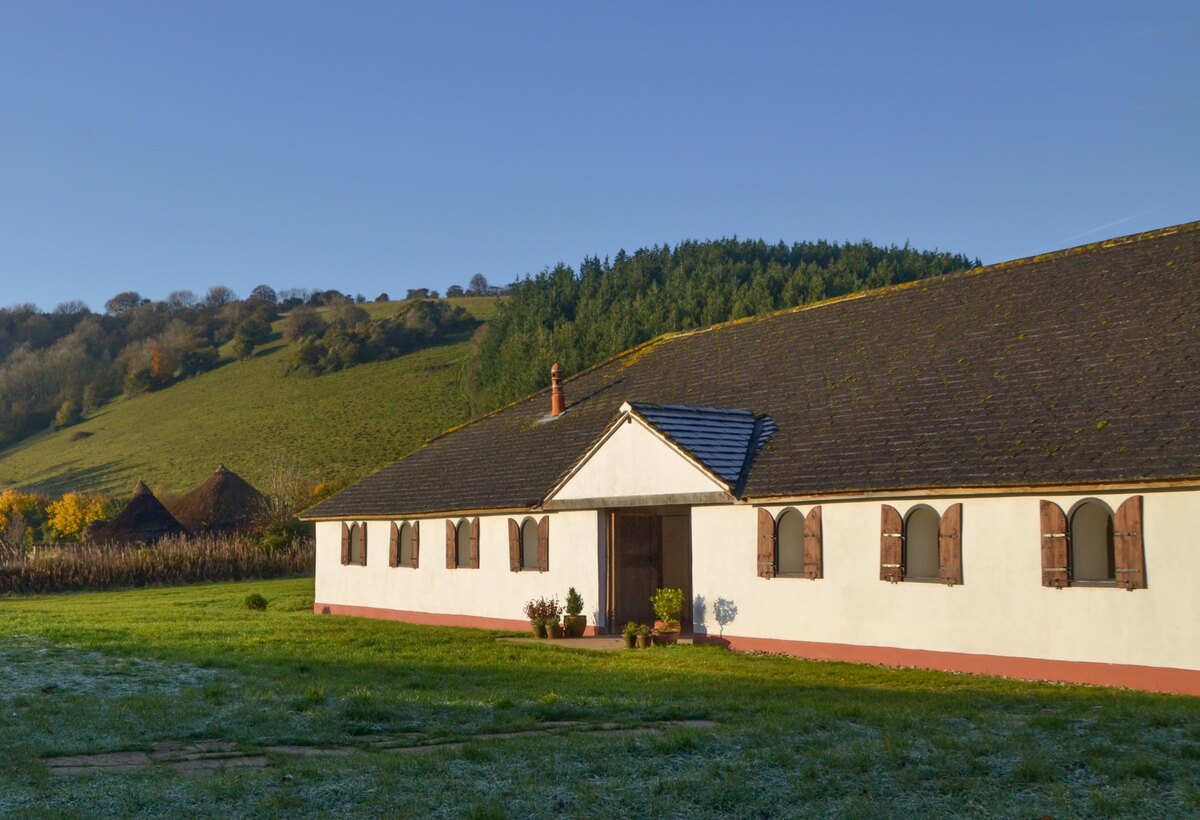
The diet of these inhabitants can be read in the remains they left behind. They cultivated barley and wheat, but also legumes such as beans and peas, a range of domestic plants inherited from the Neolithic and shared with the Mediterranean world. Herding rounded out this farming: more than eight thousand animal bones were recovered from the site, belonging mostly to cattle, sheep and goats. This considerable figure paints the picture of a self-sufficient community, able to produce, store and no doubt exchange a surplus. The village's population probably did not exceed a hundred people, yet it lived there stably, generation after generation.1
This agropastoral way of life, combining crops and herds, was nothing improvised. It belongs to an ancient tradition: as early as the sixth millennium BC, communities in northern Morocco already practised farming and herding, as the region's Neolithic caves attest. Kach Kouch proves that this legacy carried on, transformed and organised into open-air villages during the Bronze Age, at a time when the Maghreb was imagined to be frozen in immobility.
When the Phoenicians arrive (800-600 BC)
The third and final occupation phase, between 800 and 600 BC, corresponds to the start of the Iron AgeIron AgeThe last period of protohistory (from c. 1200 BC in Europe and the Near EastNear EastA region of western Asia (Levant, Mesopotamia, Anatolia, Iran), cradle of the Neolithic revolution, agriculture, the first cities and writing.→), marked by iron metallurgy and the first kingdoms.→ and to the moment when the PhoeniciansPhoeniciansA people of sailors and traders from the LevantLevantA region of the eastern Mediterranean Near East (Israel, Lebanon, Syria, Jordan), a major crossroads of the first human migrations out of Africa.→ (modern Lebanon) who founded trading posts across the western Mediterranean from the start of the first millennium BC.→ founded their first trading posts on the shores of the Strait of Gibraltar. One might have expected these newcomers to supplant the inhabitants of Kach Kouch. Nothing of the sort. The excavations instead show a local population that endures, absorbs certain novelties from the Mediterranean and integrates them into its own culture, without disappearing or renouncing itself.3
The signs of this cultural dialogue are everywhere. The wattle-and-daub houses, until then set directly on the ground, now rest on stone foundations, a technique characteristic of Phoenician architecture. Wheel-thrown pottery appears alongside the traditional hand-modelled ware, and the first iron tools arrive from the Mediterranean. One structure excavated on the site sums up this encounter on its own: it marries local wattle-and-daub with a stone plinth of Phoenician inspiration, like a material distillation of two worlds meeting. Far from being passive colonial subjects, the inhabitants of Kach Kouch appear as full participants in Mediterranean exchange networks, choosing what they adopted while keeping their own identity.2
Around 600 BC, the village was abandoned. Strikingly, archaeologists found no trace of violence or destruction: no fire, no layer of sudden ruin. The departure seems to have been peaceful. Researchers suggest that the inhabitants may have joined the new settlements then multiplying along the North African coastline, in the wake of the rise of coastal cities such as Carthage. The hill of Dhar Moudden, for its part, fell back into silence.1
The ancestors of the Amazigh
Who were the inhabitants of Kach Kouch? Everything points to indigenous North African populations, ancestors of the Amazigh (Berber) communities that still people the Maghreb today. Their way of life, blending farming and pastoralismPastoralismA way of life based on herding livestock (cattle, sheep, goats), often mobile, which spread across the Green Sahara and, in that region, preceded farming proper.→, fits what we know of ancient North African societies, adapted to a land of hills, valleys and coasts. They probably spoke a language related to Amazigh, a language that was only written down much later, thanks to contact with the alphabetalphabetA writing system in which each sign notes a single elementary sound, allowing writing with a very small number of letters.→ of Phoenician origin.4
This identity dimension gives the site a particular resonance. By making visible populations that the dominant narrative had erased, Kach Kouch restores to the Maghreb's indigenous societies a historical depth and a capacity for action long denied to them. It was not the Phoenicians who "invented" settled life and agriculture in this region: they arrived in a landscape already shaped, already inhabited, already cultivated, by communities that had preceded them by more than a millennium. The contact between the two worlds was an exchange, not a substitution.
Why Kach Kouch changes everything
The real importance of Kach Kouch lies not only in its antiquity, but in what it reveals about our blind spots. If such a complete village could remain in the shadows for so long, it is because no one was really looking for it: the idea of an "empty" Maghreb had discouraged excavations of open-air settlements. Yet recent surveys in the province of Tétouan alone have already spotted more than forty sites of this kind, datable between the third and the start of the first millennium BC, none of which has yet been excavated. Kach Kouch may be only the visible tip of a vast archaeological continent still to be explored.5
For Hamza Benattia and his team, the message is clear: the Maghreb was not a peripheral, passive space, but an active participant in the social, cultural and economic networks of the Mediterranean. The excavation of this unassuming hill, led by a new generation of Moroccan researchers, is a reminder that history is always written with the data one is willing to go and look for. By filling a three-thousand-year gap, Kach Kouch does not merely add a site to the map: it forces a rethinking of the entire narrative of North Africa's late prehistory, and does justice to those who lived there long before their achievement was ever recognised.2
Ce lien entre geste technique et intention symbolique, c'est tout le coeur de mon sujet de mémoire.
Ce site me permet de donner de la profondeur historique à mes parties. Vraiment précieux.