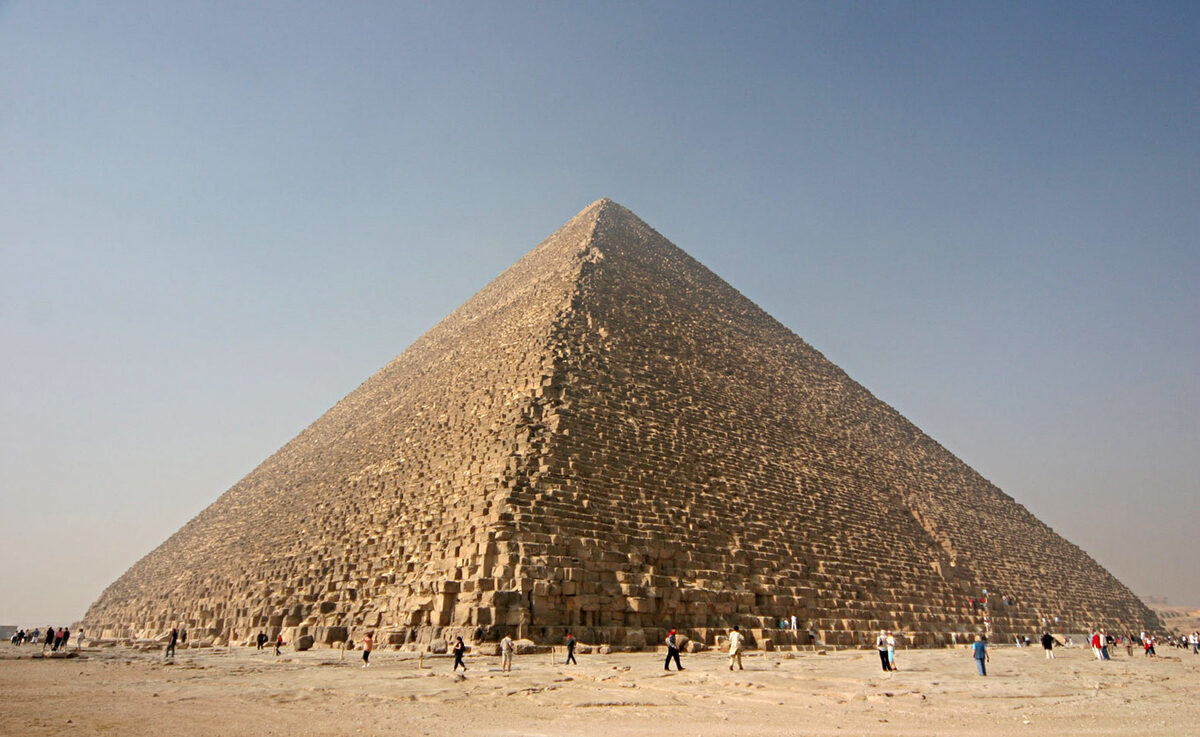
The Great Pyramid of Giza , built around 2560 BCE for pharaohPharaohThe title of the ruler of ancient Egypt, regarded as a living god guaranteeing cosmic order (Maat), supreme head of state, army and worship.→ Khufu (also known by his Greek name Cheops, 4th Dynasty) , is the only one of the Seven Wonders of the Ancient World to have survived to the present day. Originally 146.5 metres tall, it required more than 25 years of construction, tens of thousands of workers, millions of stone blocks, and a logistical genius that continues to astonish researchers. Yet, four and a half millennia after its completion, its deepest secrets remain jealously guarded.
"Khufu and the Tomb of Secrets" · Pyramids: Mysteries Revealed (SLICE Histoire, 2018, 47 min) · Dir. Marie Perrin, Lionel Langlade & Maud Guillaumin
Khufu: the pharaoh we barely know
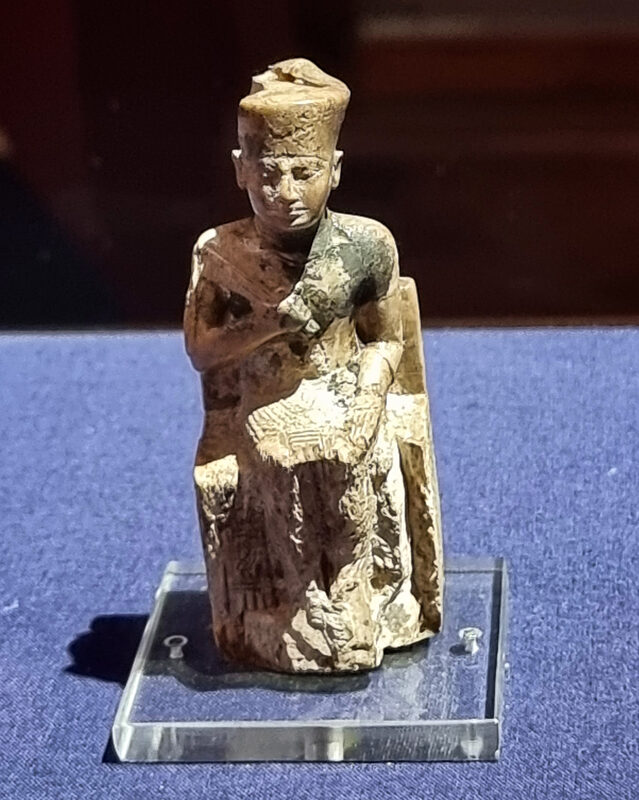
An absolute paradox: the pharaoh who ordered the construction of the most celebrated monument in history is known to us only through a 7.5-centimetre ivory statuette found at Abydos in 1903, and a handful of inscriptions. We know he reigned for approximately 23 to 27 years, that his coronation name was Medjédu ("He who strikes"), and that his sons Djedefre and Khafre succeeded him. Everything else , his beliefs, his personality, the precise reasons behind his architectural choices , remains terra incognita.
The pyramid itself, however, reveals much about the ambition of his reign. With its 2.3 million blocks of limestone and granite, weighing between 2.5 and 80 tonnes each, it represents the largest stone-cutting project ever undertaken by humanity. Its 230-metre base is perfectly aligned to the cardinal points, with a margin of error of less than 0.05 degrees , staggering precision for an era without modern instruments.
The interior: a three-level architecture
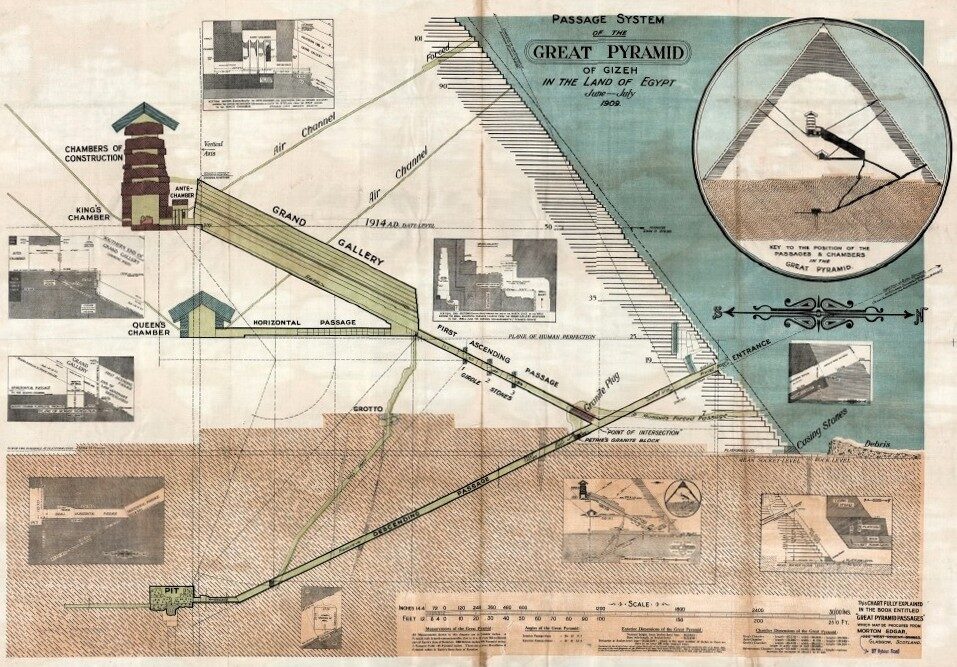
The pyramid's substructure contains a network of corridors and chambers whose exact purpose is still debated:
- The subterranean chamber, carved into bedrock 30 metres below the base, is unfinished. Some researchers see it as a deliberate decoy to mislead tomb robbers; others view it as a chamber abandoned when plans changed.
- The Queen's Chamber, slightly above foundation level, contained no mummyMummyA body preserved from decay, naturally (cold, aridity, peat) or artificially; the frozen Pazyryk kurgans yielded natural mummies with tattooed skin.→ but perhaps a statue of the pharaoh. Two "ventilation shafts" (or astronomical ducts) point toward specific stars.
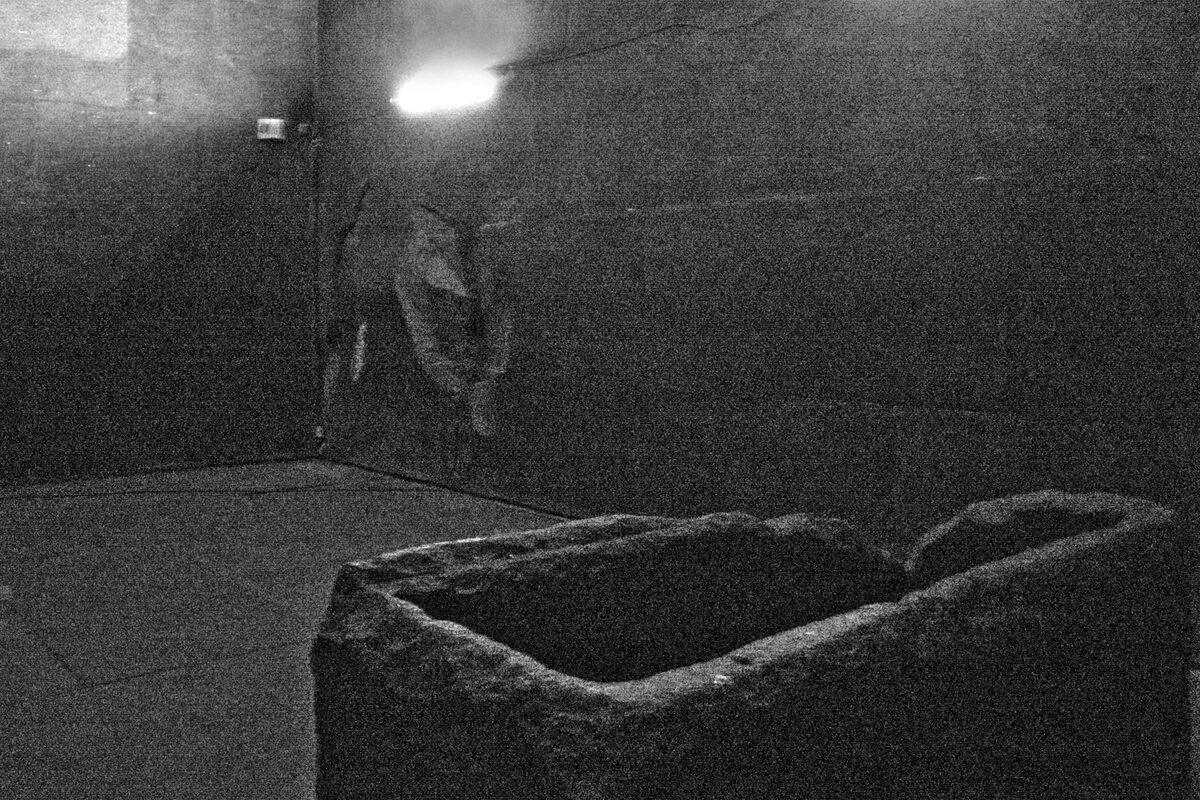
- The King's Chamber, at the pyramid's heart, is lined with red granite from Aswan. It contains an empty granite sarcophagus , too large to have been brought in after construction, meaning it was placed during the building phase.
The Grand Gallery: an architectural masterpiece
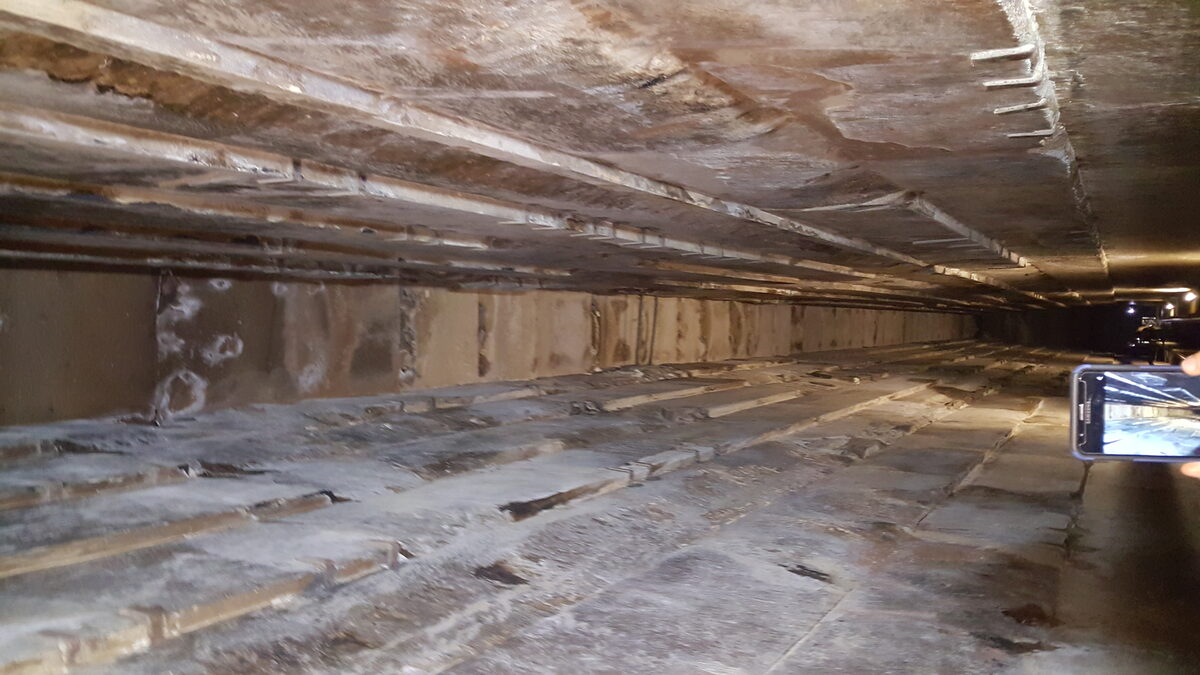
At the heart of the pyramid, the Grand Gallery rises 47 metres long and 8.74 metres high, its walls built using corbellingCorbellingA vaulting technique in which successive stone courses project progressively inward until they meet at the top, without centring or mortar. Used at Newgrange, Mycenae and many Neolithic tombs.→ (each course slightly overhanging the one below) , a technique allowing large spans to be bridged without arches or vaults. The grooves cut into its walls would have held granite plugs that were released after the pharaoh's interment, blocking access forever. Workers' graffiti found inside ("Friends of Khufu", "the vigorous gang") provide a rare human glimpse into this colossal construction site.
The Merer Papyrus: a 4,500-year-old construction log
In 2013, in the harbour caves of Wadi al-Jarf on the Red Sea coast, a French mission led by Egyptologist Pierre Tallet uncovered the oldest papyrus in the world: the Diary of Merer. Written during the 27th year of Khufu's reign (~2560 BCE), it is the logbook of an inspector named Merer, who oversaw a team of 200 workers.
Merer records day by day the rotations of his crew: extracting white limestone blocks from the Tura quarries (on the Nile's east bank), loading them onto boats, sailing along the Nile and a connecting canal to the Giza plateau. This direct account definitively shatters the myth of slave labour: the workers were paid state employees, housed, fed and cared for by the pharaonic administration.
The workers' village: a city at the foot of the pyramids
Since the excavations of Mark Lehner and Zahi Hawass in the 1990s, 2010s, we know of a full workers' city at the foot of the Giza plateau. It included barracks housing up to 20,000 workers, bakeries producing thousands of loaves daily, breweries, slaughterhouses processing large quantities of beef and sheep , and even an infirmary. The workers' skeletons show healed fractures, evidence of genuine medical care.
The labour force was organised into permanent large teams (the "Friends of Khufu") and rotating teams of a few thousand men drafted from across Egypt for stints of a few months. Current estimates put the total number of workers involved in the project at between 20,000 and 36,000 people at its peak.
2017: the "Big Void" detected by muon tomography
In November 2017, the ScanPyramids project , a consortium of Japanese, French and Egyptian researchers using muon tomography (cosmic-ray radiography) , announced the discovery of a large, previously unknown void inside the pyramid. Nicknamed the "Big Void", this structure extends at least 30 metres in length and over 2 metres in height, located above the Grand Gallery.
Muon tomography works on the same principle as a medical X-ray, but using naturally occurring cosmic particles (muons) that penetrate hundreds of metres of rock. Muons are deflected or absorbed by dense material; empty spaces allow a higher flux to pass through , detectable with special films. This non-invasive technique requires no drilling, no destruction.
The nature of the Big Void remains mysterious: a structural relieving space? A corridor leading to an unknown chamber? Proponents of the hidden burialBurialThe intentional deposition of a body, sometimes with offerings; a marker of symbolic behaviour.→ chamber hypothesis see it as a strong candidate for the true tomb of Khufu, the pharaoh perhaps having intended his real burial place to remain hidden for eternity.
2023: a 9-metre corridor, sealed for 4,500 years
In March 2023, still using muon tomography combined with ground-penetrating radar and ultrasound, the ScanPyramids teams accessed , via a 5-mm endoscope slipped between the mortar joints of the stones , a gabled-ceiling corridor situated just behind the north face of the pyramid. Nine metres long and over 2 metres wide, this passage had not been entered since it was sealed in the pharaoh's time. The floor is intact , no footprints, no signs of any human activity since its closure 4,500 years ago.
This corridor may be a weight-relieving chamber designed to distribute the load of the blocks above the pyramid's main entrance. But it could also lead to other, still unmapped spaces. The ScanPyramids excavations continue, promising new revelations in the years ahead.
Khufu's tomb: an unsolvable mystery?
Since antiquity, no one has ever found Khufu's mummy. The granite sarcophagus in the King's Chamber was empty when the first explorers entered it in the 9th century. What happened? Several scenarios are proposed:
- Ancient looting: the mummy may have been stolen along with its funerary treasures during periods of political instability.
- A secret burial chamber: Khufu may have planned a true hidden burial room, concealed behind seamlessly fitted blocks invisible to the naked eye , only modern technology could reveal it.
- Symbolic interment: some Egyptologists believe the visible chamber was intended to receive the pharaoh's ka (spiritual double) rather than his physical body.
Archaeology 2.0 , muon tomography, seismic tomography, radar, endoscopy, ancient DNAAncient DNAGenetic material preserved in old remains, often degraded, sequenced with cutting-edge techniques.→ , is ushering in a new era for pyramid exploration. Without touching a single stone. Without drilling a single wall. And with every revelation come new questions, as if the Great Pyramid had decided to yield its secrets one by one, at its own pace , for the past 4,500 years.
Reference documentary: "Khufu and the Tomb of Secrets", Pyramids: Mysteries Revealed, SLICE Histoire (2018). Dir. Marie Perrin, Lionel Langlade & Maud Guillaumin.
Scientific sources: Pierre Tallet & Grégory Marouard, Journal of Egyptian Archaeology (2014); Morishima et al., Nature 552, 386, 390 (2017); Procureur et al., ndT / CEA (2023).
C'est le genre de truc qu'on devrait nous montrer au lycée. Bien plus cool qu'un manuel.
Pour un documentariste, la pyramide de Khéops est un sujet inépuisable. La muographie utilisée par le projet ScanPyramids représente une révolution : on peut sonder l'intérieur sans toucher aux pierres. J'adorerais pouvoir filmer ces futures explorations si des chambres sont découvertes. La question de leur contenu est l'un des grands mystères de l'Egyptologie.
Passionné d'Egypte depuis toujours, je suis chaque nouvelle découverte concernant Khéops avec une attention particulière. La détection de vides cachés par muographie est une avancée technologique majeure qui pourrait enfin révéler ce que contenait la Grande Pyramide à l'origine. On espère tous que les chambres secrètes recèlent encore des trésors ou au moins des inscriptions !