On the right bank of the Don river, twenty-five kilometres south of Voronezh, a series of ravines and secondary valleys concentrates one of the greatest densities of PalaeolithicPalaeolithicThe oldest and longest period of prehistory (c. 3.3 Ma–12,000 BC), defined by chipped stone tools and a hunter-gatherer way of life.→ sites in the world. Kostenki-Borshchevo groups twenty-six archaeological stations whose earliest remains date back more than 45,000 years, making this complex a unique observatory of human presence in Eastern Europe throughout the glacial period.
Excavations conducted since the 19th century have uncovered dwelling structures of remarkable sophistication for the period. Circular or oval "houses", whose walls were built from stacked mammoth mandibles, tusks, and skulls, sheltered central hearths and organised storage areas. These structures, which could measure up to ten metres in diameter, imply elaborate spatial planning and social organisation. Some have yielded bone musical instruments, ivory female figurines, and fragments of plant-fibre textiles — testimony to a flourishing cultural life.
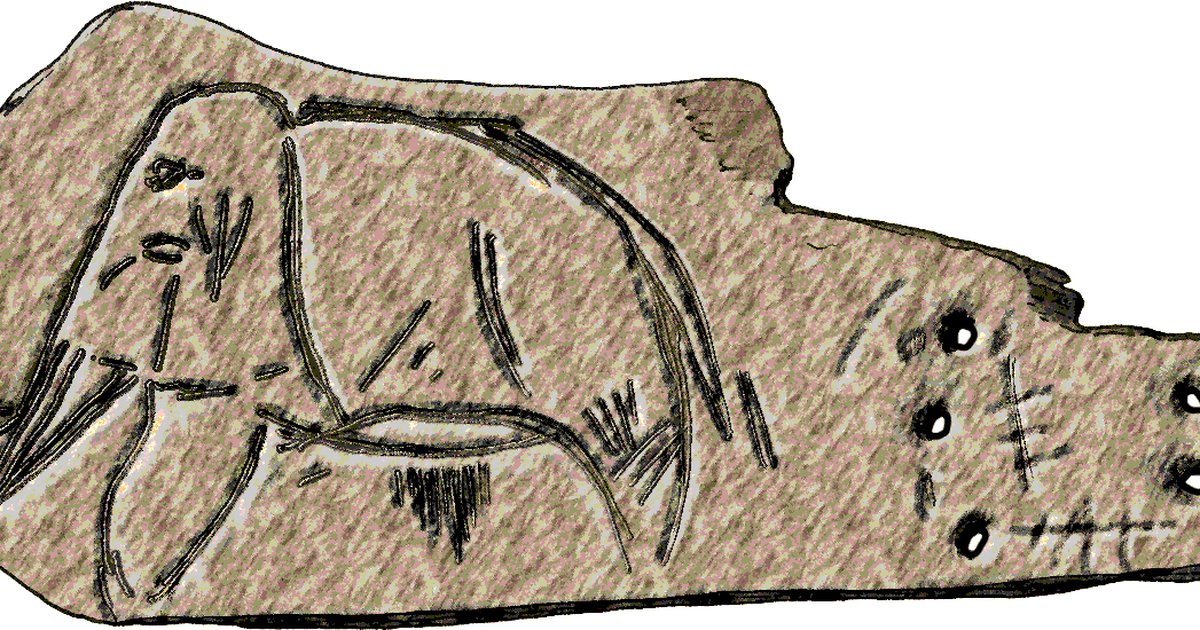
What makes Kostenki particularly valuable for modern science is the quality of the genetic remains it has preserved. In 2014, an international team published in Science the analysis of the genome of a Kostenki man who died 37,000 years ago — one of the oldest Homo sapiensHomo sapiensThe present-day human species, which emerged in Africa around 300,000 years ago, the only surviving human lineage after the extinction of Neanderthals and Denisovans.→ genomes ever sequenced. Unexpected result: this individual shares more genes with current Western European populations than with modern Siberians, suggesting complex migration flows across Eurasia. He is also the ancestor of all living non-African populations, confirming the single out-of-AfricaAfricaThe cradle of humankind: the continent where the first hominins appeared, then Homo sapiens around 300,000 years ago, before the expansion to the rest of the world.→ theory.
The Kostenki sites have also yielded evidence of surprisingly advanced material culture. Beads made from shells imported from the Black Sea (several hundred kilometres away) and the Baltic Sea testify to long-distance exchange networks as far back as 40,000 years ago. OchreOchreA red or yellow mineral pigment (iron oxides), used from prehistory for adornment, funerary rites and art.→ pigments used for decoration and possibly skin protection, bone needles with eyes allowing the making of fitted garments, and barbed bone spears complete the picture of a Homo sapiens fully adapted to the rigours of the European periglacial climateClimateThe long-term average atmospheric conditions of a region; its variations (glaciations, aridifications) shaped migrations, agriculture and the collapse of prehistoric societies.→.
No comments yet. Be the first.