Around 3,500 years ago, a population of extraordinarily skilled sailors and potters left the shores of western Melanesia and embarked on one of the most ambitious human adventures in history: the colonization of the Pacific. These peoples, whom archaeologists designate as the "Lapita culture," would within a few centuries people the archipelagos of the Pacific as far as Tonga and Samoa, laying the demographic and cultural foundations for what would one day become Polynesia.1
A Distinctive Pottery as Signature
The Lapita culture takes its name from a site in New Caledonia (Koné, Northern Province) where its remains were first identified in 1952 by American archaeologist Edward Gifford. The signature of this culture is its ceramics: pottery decorated with complex geometric patterns incised or stamped into the clay before firing. Triangles, spirals, broken lines, and stylized faces constitute a sophisticated iconographic repertoire unique in the Pacific of that era.
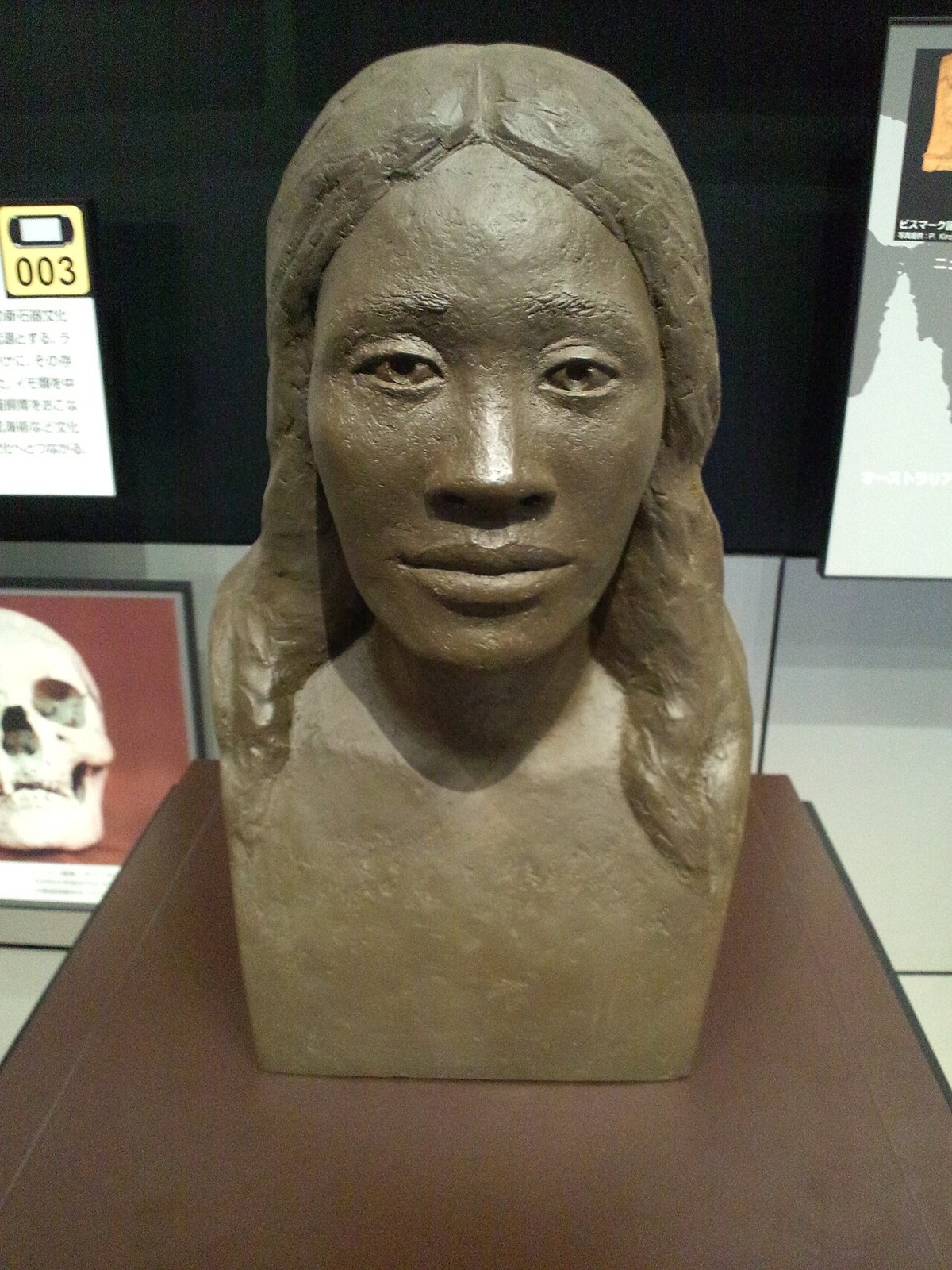
This pottery is not merely a utilitarian object: it constitutes a strong identity marker. The coherence of motifs observed across more than 5,000 kilometers -- from island Melanesia to Tonga and Samoa -- attests to a unified culture and regular maritime contact between communities dispersed across an immense ocean. Some researchers see in it the expression of a conscious identity, a shared "we" among geographically distant groups.2
Exceptional Navigators
To accomplish these crossings, the Lapita used outrigger canoes capable of facing open oceans. Modern studies of traditional navigation show that the dominant currents and winds of the southwestern Pacific allowed crossings of a few days between adjacent islands. But some leaps must have required several weeks on the open sea, without terrestrial landmarks.
Navigation was guided by observation of stars, ocean currents, bird behavior, and wave patterns. This knowledge, transmitted orally from generation to generation, constitutes an exceptional expertise that Polynesians would continue developing over millennia, eventually reaching Hawaii (~400 CE) and New Zealand (~1250 CE).
Recent genetic analyses have allowed the demographic history of the Lapita to be traced with increasing precision. These populations presented two major genetic components: one linked to the ancestors of today's Papuans (present in Melanesia for 45,000 years), and another corresponding to migrants from island Southeast Asia -- the ancestors of all Austronesians.3
Economy, Society, and Rituals
The Lapita practiced agricultureAgricultureThe cultivation of plants and production of food by working the soil, which emerged in the Neolithic in the Near East and independently elsewhere; it radically transformed human societies.→ (yam, taro, coconut) and animal husbandry (pig, chicken, dog) -- domestic species they had brought in their canoes during their migrationsMigrationsLong-distance movements of populations; a major driver of human history (the exit from Africa, the peopling of continents, Neolithic and steppe expansions).→. They fished, hunted, and gathered marine resources with remarkable efficiency. Their economy rested on extensive exchange networks: obsidian from New Britain, for example, has been found at Lapita sites more than 3,000 kilometers away.
Lapita funerary practices included burialBurialThe intentional deposition of a body, sometimes with offerings; a marker of symbolic behaviour.→ beneath house floors, but also secondary treatment of bones: skulls were sometimes removed and stored separately, perhaps for ancestral practices. Some individuals wore elaborate shell jewelry made from tridacna and spondylus.
The End of Pottery and the Rise of Polynesia
Around 2,500 years ago, Lapita pottery gradually disappears from archaeological sites in Tonga and Samoa, replaced by simpler ceramics or abandoned in favor of other containers. This transition marks the birth of properly Polynesian cultures. The common ancestor of Polynesians, reconstructed through genetics and linguistics, was indeed a Lapita from Tonga or Samoa.
Today, the Lapita culture is recognized as one of the most remarkable human expansions in prehistoryPrehistoryThe span of human history before the invention of writing, from the Palaeolithic to the Metal Ages, known mainly through material remains.→. In less than 500 years, these farmer-navigators colonized an oceanic territory as vast as a continent, carrying with them their language (ancestor of Proto-Polynesian), their plants, their animals, their gods, and their decorated pottery. Their legacy lives in every Polynesian tradition, from Maori carving to Samoan tattooing and Hawaiian traditional navigation.
No comments yet. Be the first.