For decades considered the "Sistine Chapel of prehistoryPrehistoryThe span of human history before the invention of writing, from the Palaeolithic to the Metal Ages, known mainly through material remains.→", the Lascaux cave must now contend with an important qualification: it is no longer where art was invented. Since its near-miraculous discovery on 12 September 1940 by four teenagers in the woods of the Vezere valley in the Perigord, Lascaux has been eclipsed in age by dozens of sites. The Chauvet-Pont d'Arc cave, discovered in 1994 and dated to around 36,000 years ago, predates it by more than 15 millennia. What if Lascaux were, in fact, the Middle Ages of prehistoric art?
This is the provocative question posed by medievalist Patrick Boucheron, professor at the College de France, in this short documentary from the series "Quand l'histoire fait dates" (ARTE / France, 2020, 27 min). Drawing on his storytelling talent and crisp animation, he invites us to overturn our perspective on this date in the prehistoric calendar: 18,000 BCE.
Lascaux: a legendary discovery
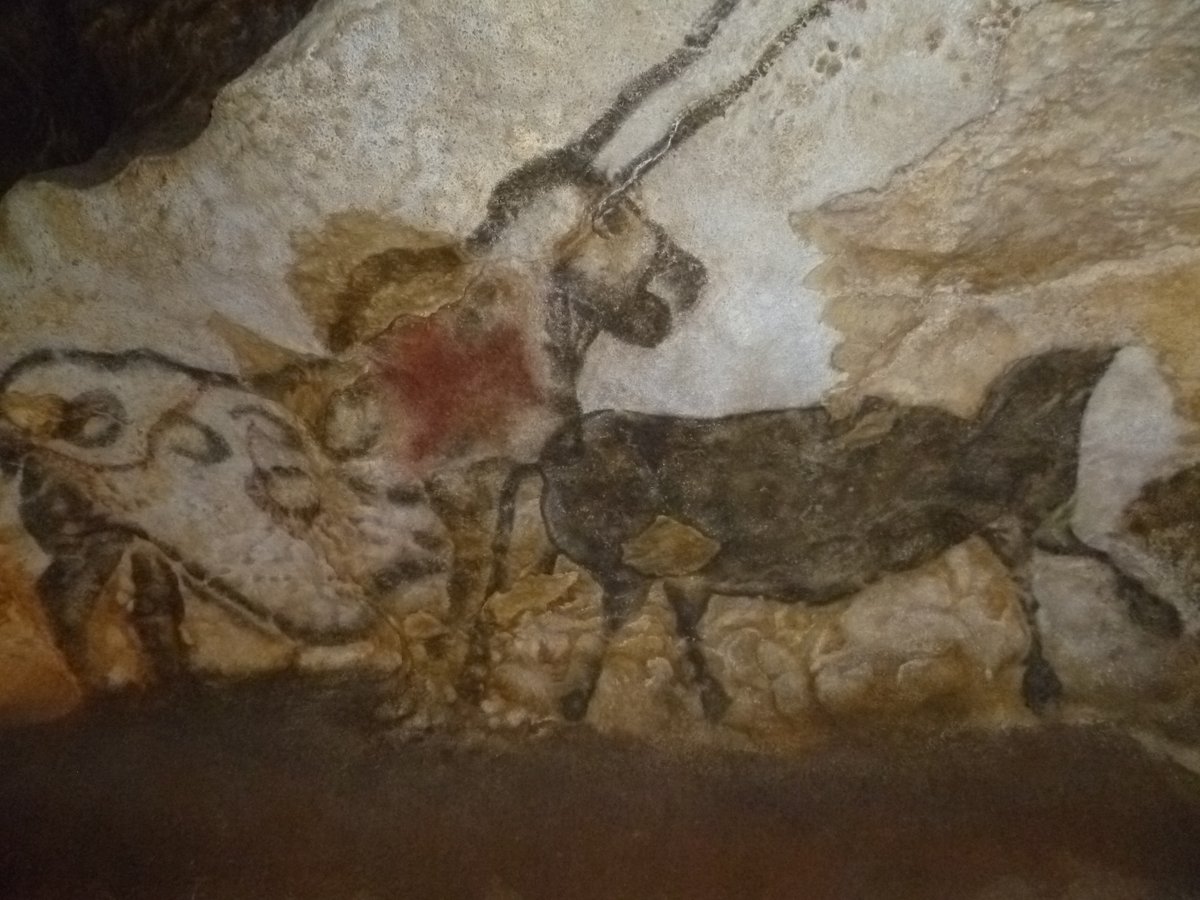
The story of Lascaux's discovery reads like a fable. On 12 September 1940, four teenagers from Montignac -- Marcel Ravidat, Jacques Marsal, Georges Agnel and Simon Coencas -- explored a hole in the woods after Marcel's dog vanished into it. They discovered a gallery covered in paintings of breathtaking beauty: aurochs, deer, horses, rhinoceroses, felines and a mysterious "unicorn" inhabited the walls across more than 200 linear metres. The Abbe Henri Breuil, alerted the following day, described the site as the "Sistine Chapel of Prehistory".
The cave was opened to the public in 1948. But 14 years later, in 1963, Andre Malraux, then Minister of Culture, ordered its permanent closure: visitors' breathing had triggered a proliferation of moss and algae threatening the paintings. Since then, the original Lascaux has been accessible only to a handful of researchers. The general public visits Lascaux II (a replica of the most famous sections, opened in 1983), or Lascaux IV, the International Centre for Cave Art at Montignac, opened in 2016, which offers a full reproduction of the galleries.
Before Lascaux: a much longer history
What Patrick Boucheron interrogates in his documentary is our relationship to prehistoric time. For decades, Lascaux embodied a beginning: the dawn of art, the first morning of creative humanity. This vision has been radically upended by successive discoveries of ever-older decorated caves.
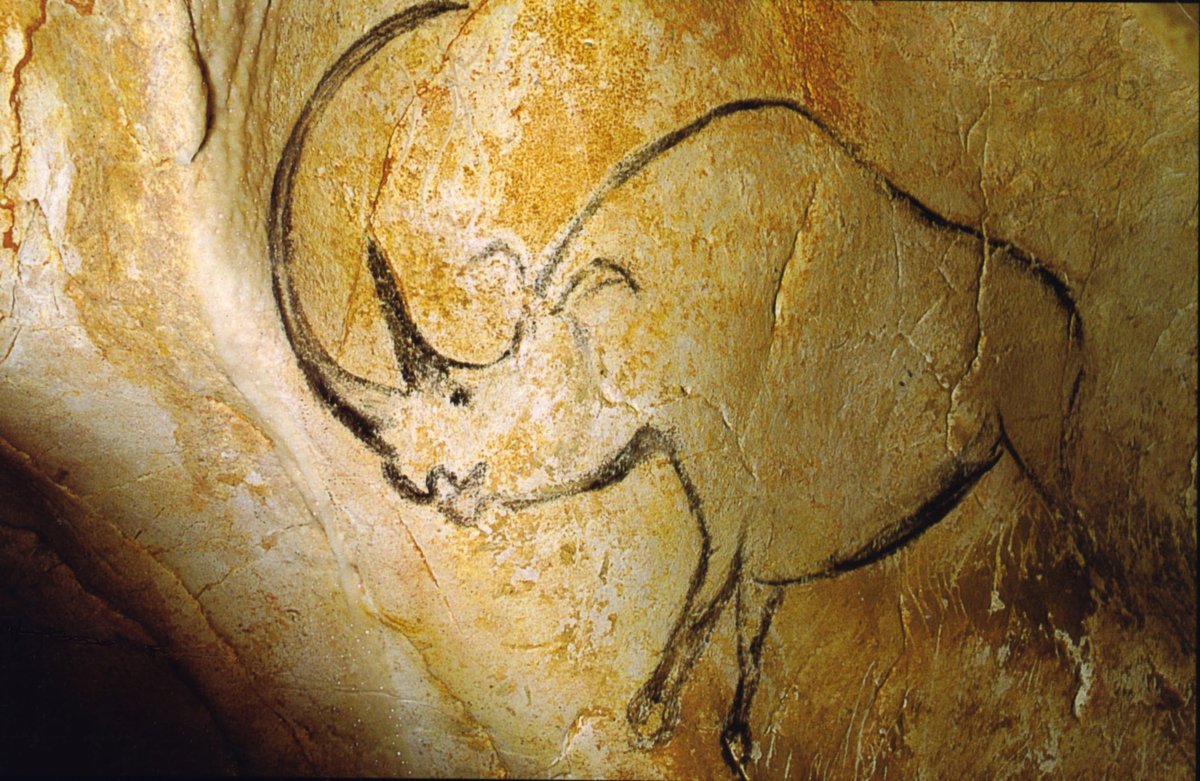
The Chauvet-Pont d'Arc cave (Ardeche), dated to around 36,000 years ago, shows woolly rhinoceroses, cave bears and mammoths painted with a technique just as accomplished as those at Lascaux. More recently, cave paintings in Sulawesi, Indonesia, were dated to over 45,000 years ago, and a painted line in a Spanish cave exceeds 65,000 years -- which would make it a work of NeanderthalsNeanderthalsA fossil humanity of Eurasia, robust and cold-adapted, extinct around 40,000 years before present.→ rather than Homo sapiensHomo sapiensThe present-day human species, which emerged in Africa around 300,000 years ago, the only surviving human lineage after the extinction of Neanderthals and Denisovans.→. Lascaux, at 18,000 BCE, is no longer a genesis but an apex: the MagdalenianMagdalenianThe last great Upper Palaeolithic culture (c. 17,000–12,000 BC), the peak of cave art (Lascaux).→ culture, contemporary with it, represents the culmination of an artistic tradition tens of millennia old.
The art of Lascaux: a fresh perspective
Patrick Boucheron's documentary does not merely situate Lascaux within a broadened chronology. It also questions the meaning of this art. What did these images intend to convey? Were they magical, narrative, calendrical, or simply the expression of a universal aesthetic impulse? Hypotheses have abounded for a century, and none commands consensus.
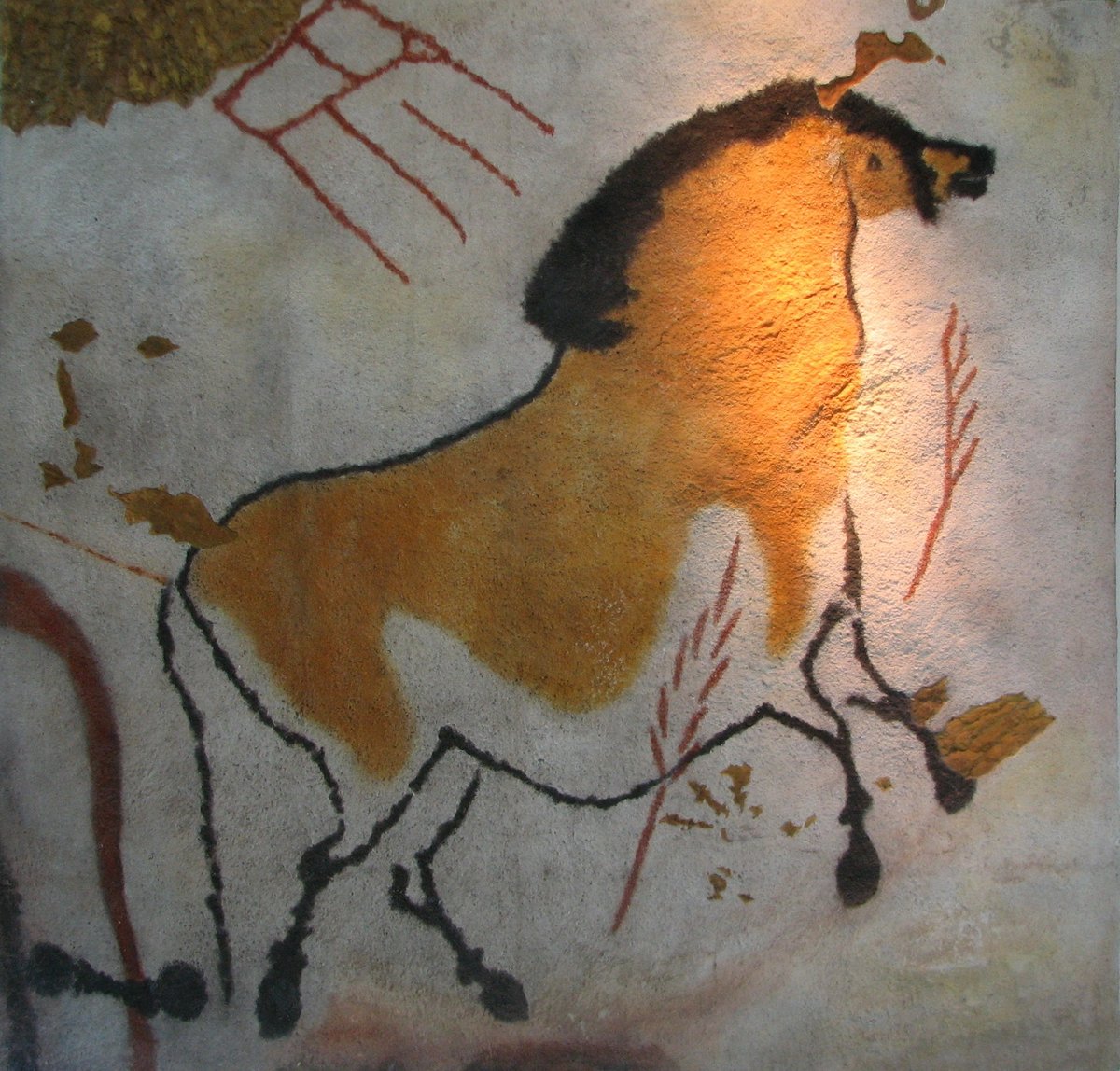
The great figures of Lascaux -- the wounded bison of the "well scene", the rhinoceros and the falling man, the horse frieze -- have been interpreted as hunting narratives, shamanistic rituals, representations of constellations or teaching tools for young hunters. Boucheron's approach is more humble and more ambitious at once: to recognise in these images proof of a fully constituted symbolic thought, without claiming to decode it entirely.
Recently, a 2023 study published in the Cambridge Archaeological Journal proposed a new reading: the animal representations at Lascaux and several other caves might be organised according to a lunar calendar, linking specific species to periods of reproduction. This contested hypothesis underlines, at the very least, that the reading of Lascaux is far from closed.
Lascaux and us: a wound, a heritage
Patrick Boucheron stresses the tragic dimension of Lascaux: a cave that can no longer be entered, protected from itself and from us, locked in darkness to survive. This inaccessibility is not incidental: it transforms Lascaux into a mythic work, reachable only through images and reproductions. The paradox is vertiginous -- the world's most famous paintings can be seen only in their copies.
But this is also what makes Lascaux so powerful as a symbolic date: it marks the moment when humanity began fighting its own mortality through images, seeking to leave a trace that would outlast it. That this date proves to be relatively recent within the long history of art does not diminish its meaning. It inscribes it within an even longer tradition -- one of which we are all heirs.
Quand l'histoire fait dates. Documentary series (France, 2020, 27 min). Available until 31/12/2027 on arte.tv.
No comments yet. Be the first.