When a human baby bursts out laughing while being tickled, it is repeating a gesture 15 million years old. A study published in June 2026 in Communications Biology reveals that isochronous laughter -- sounds produced at regular intervals -- is shared by all living great apes: orangutans, gorillas, bonobos, chimpanzees and humans. This pattern traces back to their common Miocene ancestor, long before the emergence of the genus Homo.[1]
Measuring the Rhythm of Laughter
Chiara De Gregorio (University of Warwick), Marina Davila-Ross (University of Portsmouth) and Adriano Lameira (Warwick) recorded 140 laughter sequences from 17 individuals: four orangutans (Pongo pygmaeus), two gorillas (Gorilla gorilla), three bonobos (Pan paniscus), four chimpanzees (Pan troglodytes) and four human children aged six months to seven years. Two contexts were used: spontaneous play and tickling. The researchers measured the intervals between each sound to quantify tempo and regularity.
Result: all species produce isochronous laughter. This rhythmic pattern therefore predates the divergence of hominid lineages approximately 15 million years ago. Another finding: tempo has accelerated over evolutionary time, with species phylogenetically closer to humans laughing faster. Tickling laughter is also more regular than free-play laughter -- thoracic contortions disrupt the respiratory cycle -- making it a better signal for cross-species comparison.
The Phylogenetic Tree of Laughter
Isochronous laughter in great apes is not trivial: it represents a biomechanical constraint. Producing sounds at regular intervals requires precise control of respiratory musculature. The fact that all great apes share this capacity suggests it was conserved from the Miocene common ancestor.
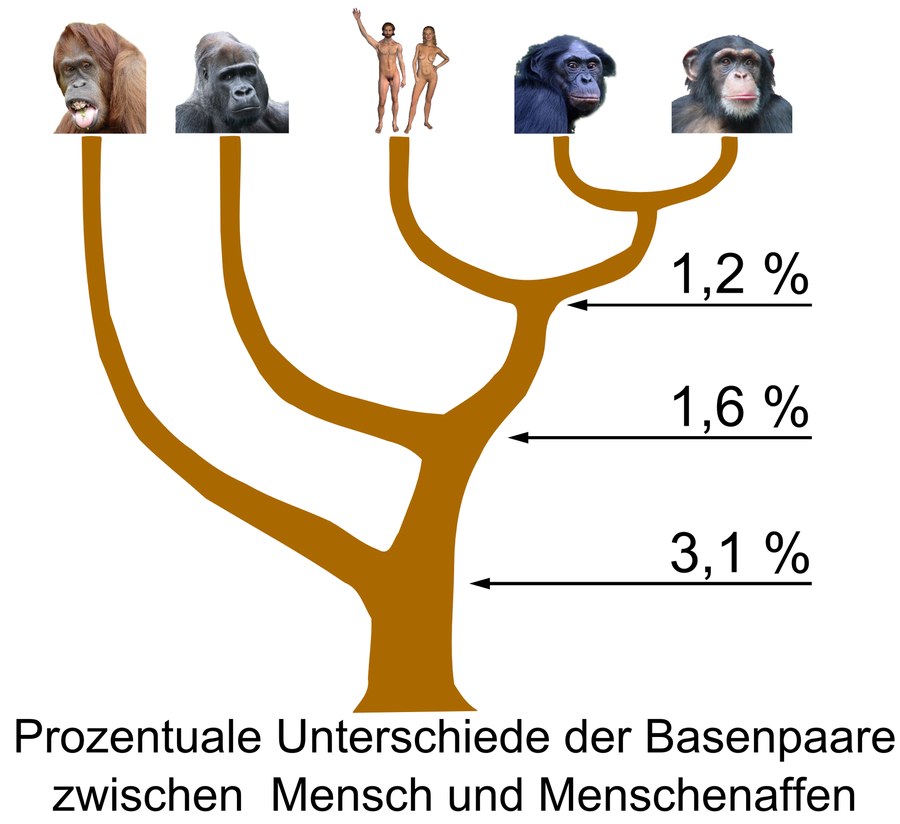
This progressive vocal control traces a continuous evolutionary trajectory. Adriano Lameira puts it plainly: "Humans do not represent a sudden break in vocal evolution. They represent the culmination of a continuum of vocal capacities refined over 15 million years." It was this gradually honed ability that eventually made articulate language possible.[1]
The Human Exception: Contextual Laughter
One finding distinguishes Homo sapiensHomo sapiensThe present-day human species, which emerged in Africa around 300,000 years ago, the only surviving human lineage after the extinction of Neanderthals and Denisovans.→ from all other great apes. Only humans modulate their tempo by context: tickling laughter is faster than free-play laughter -- a difference absent in all other species. Humans also show the greatest temporal variability: their laughter is less mechanical, more expressive.
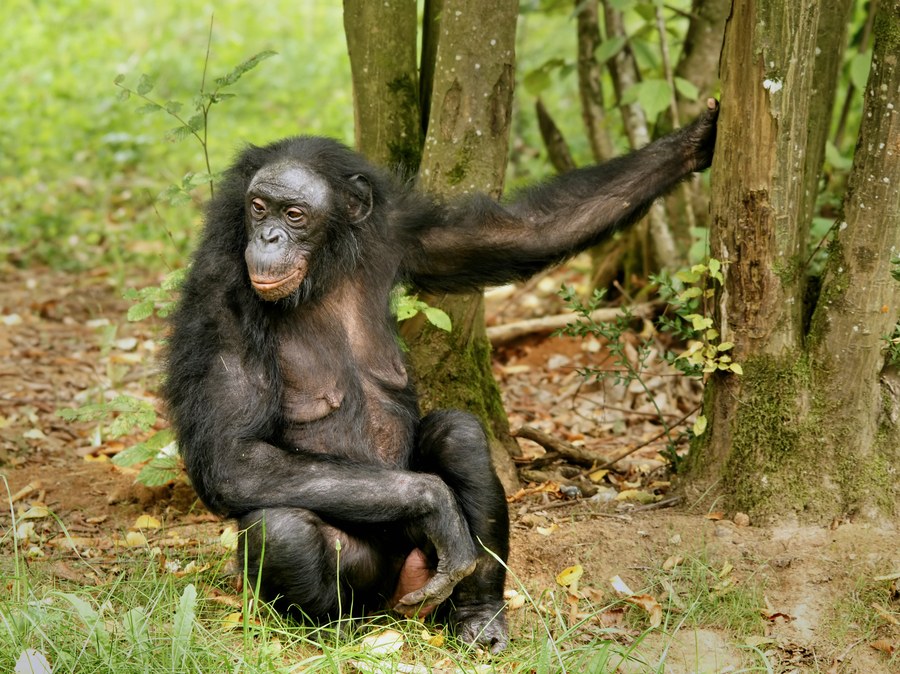
Previous studies suggest that variably-timed laughter is perceived as warmer and more socially positive than overly regular laughter. This uniquely human vocal plasticity may have played a key role in strengthening social bonds within early Homo groups -- and represents the direct precursor of the fine vocal control required for speech.
A Rare Window onto the Origins of Language
Sound does not fossilise. It is therefore impossible to study the vocal evolution of extinct ancestors directly. Laughter, shared by all living great apes, offers a rare substitute. By mapping its rhythmic transformations onto the phylogenetic tree, this study shows that fine vocal control -- indispensable for speech -- was built gradually, long before the emergence of the genus Homo.
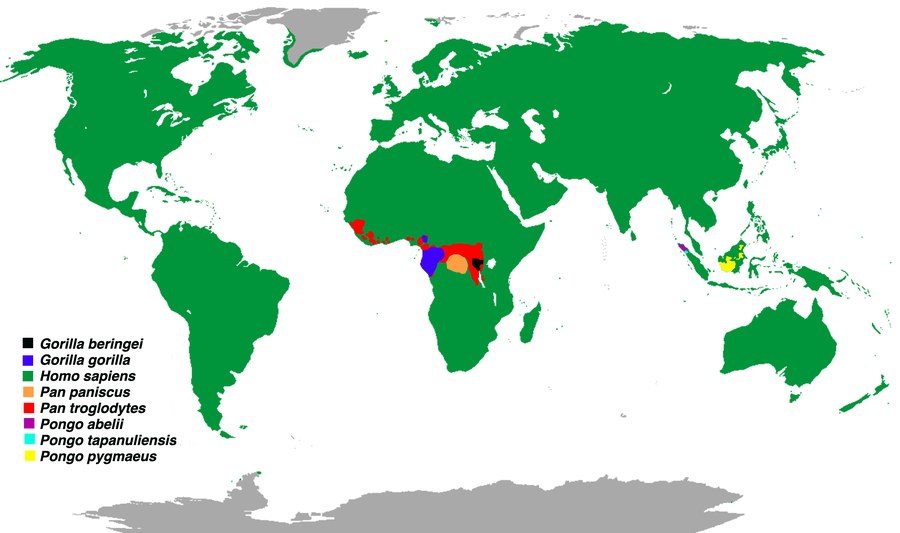
The study does have limitations: sample sizes per species are small (two to four individuals), and the authors themselves call for studies with larger cohorts to refine species-level estimates. The comparative approach also opens perspectives on the evolution of song and other musical vocalisations in non-human primates -- and, perhaps, on the evolutionary roots of music itself.[2]
No comments yet. Be the first.