For a long time it was assumed that Europe’s first inhabitants quickly swapped their dark African skin for a pale complexion suited to northern sunlight. A large University of Ferrara study, published in 2025, demolishes that story: by analysing the DNA of 348 individuals who lived between 45,000 and 1,700 BCE, it shows dark skin remained the majority in Europe until a surprisingly recent time.
Dark skin dominant throughout the PalaeolithicPalaeolithicThe oldest and longest period of prehistory (c. 3.3 Ma–12,000 BC), defined by chipped stone tools and a hunter-gatherer way of life.→
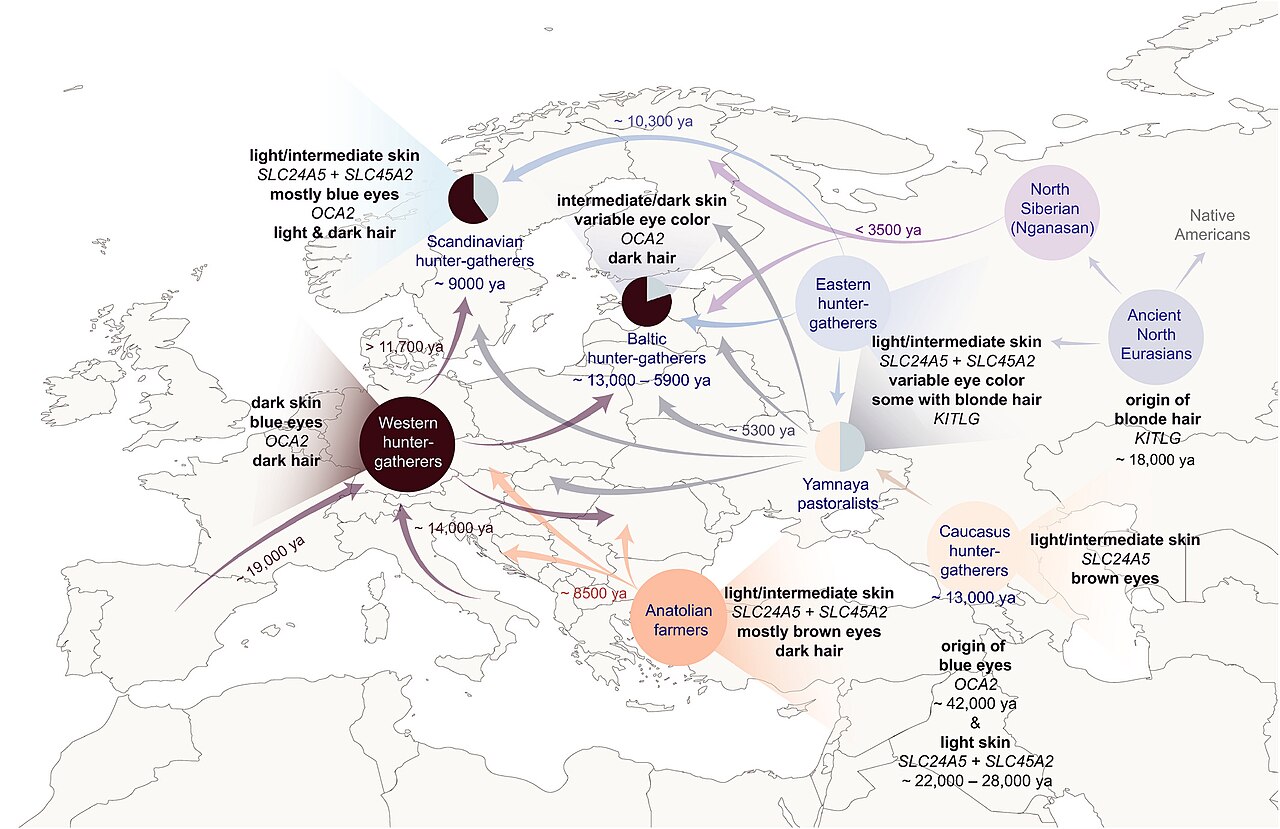
During the Palaeolithic, between 45,000 and 13,000 BCE, almost all sampled Europeans carried the genetic variants for dark skin, eyes and hair. These hunter-gatherersHunter-gatherersA way of life based on hunting, fishing and gathering wild resources, without farming or herding; it dominated almost the whole of human history.→, having come from AfricaAfricaThe cradle of humankind: the continent where the first hominins appeared, then Homo sapiens around 300,000 years ago, before the expansion to the rest of the world.→ into glacial Europe, did not yet have the pale skin now associated with the continent. The first light tones appear only around 14,000 BCE.
A late, patchy lightening
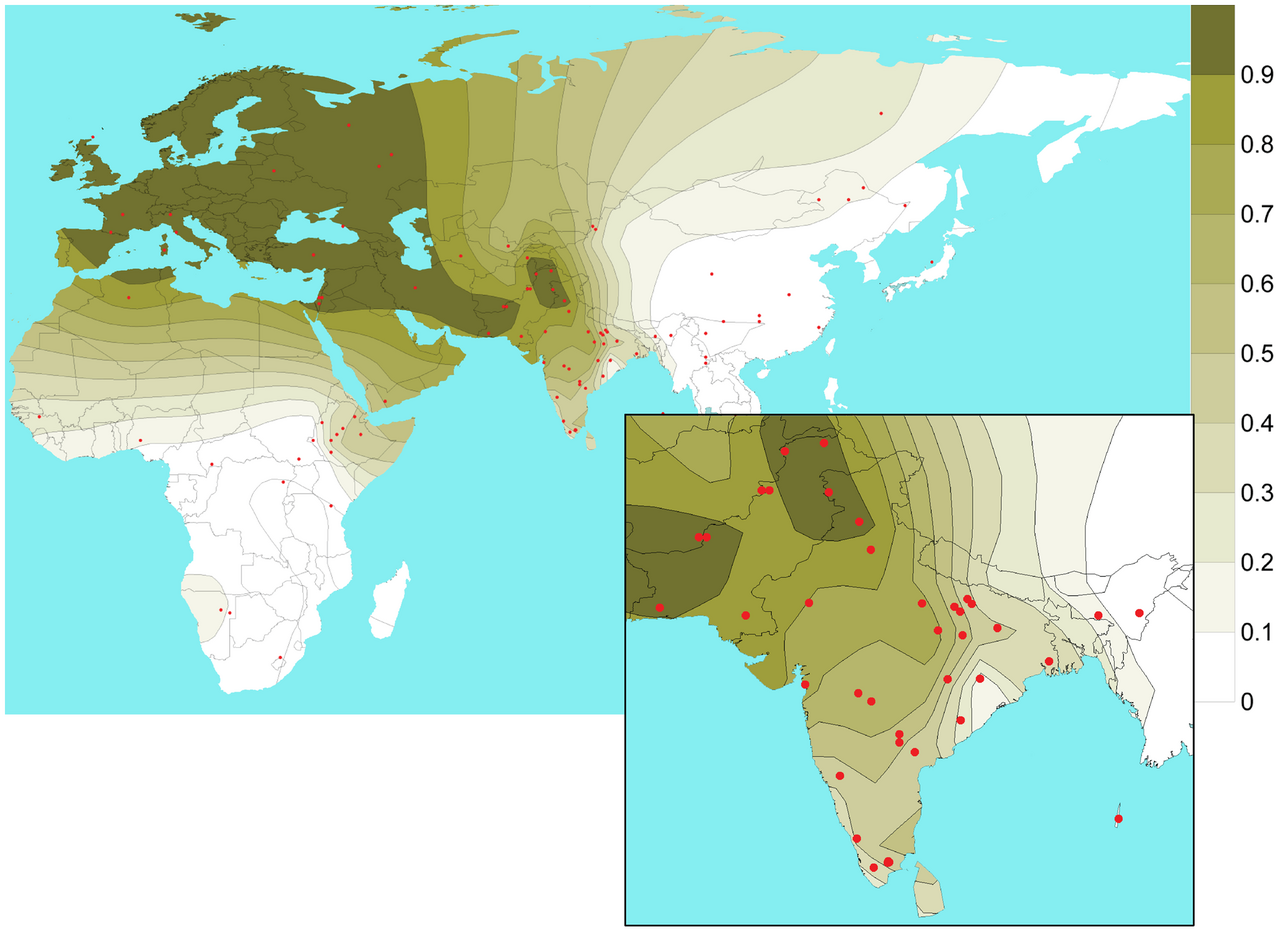
Far from a steady march toward paleness, the study describes a mosaic: through the NeolithicNeolithicThe "New Stone Age": a period marked by farming, herding, settlement and pottery, from around 10,000 BC.→, the Copper Age and into the Iron AgeIron AgeThe last period of protohistory (from c. 1200 BC in Europe and the Near East), marked by iron metallurgy and the first kingdoms.→, nearly half of individuals still showed dark or intermediate tones. Genes such as SLC24A5 and SLC45A2, now almost universal in Europe, spread only slowly. Light skin was not a decisive advantage imposed everywhere at once.
Migration more than selection
For the authors, the spread of light traits owes as much, if not more, to great population movements as to natural selection linked to vitamin D. The arrival of the first Anatolian farmers, then of the steppeSteppeA vast semi-arid, treeless grassland of Eurasia, suited to nomadic herding and the horse; a corridor for the movement of peoples and technologies in later prehistory.→ herders in the Bronze AgeBronze AgeA protohistoric period following the Neolithic, defined by bronze metallurgy (a copper-tin alloy) and the rise of the first cities and states; in Egypt it corresponds to the age of the first pyramids.→, reshuffled the continent’s genetic deck. Europeans’ skin colour is the product of admixture, not of a linear adaptation to climateClimateThe long-term average atmospheric conditions of a region; its variations (glaciations, aridifications) shaped migrations, agriculture and the collapse of prehistoric societies.→.
Cheddar Man, face of an ancient Europe
The icon of this reversal remains Cheddar Man, the 10,000-year-old British hunter-gatherer whose DNA points to dark skin and light eyes. Long deemed provocative, his reconstruction is now backed by data from hundreds of genomes: for most of prehistoryPrehistoryThe span of human history before the invention of writing, from the Palaeolithic to the Metal Ages, known mainly through material remains.→, Europe did not have the complexion we imagine.
No comments yet. Be the first.