In July 2022, in the pages of the Zeitschrift fur Assyriologie, five researchers led by French archaeologist Francois Desset published what the scientific community had been awaiting for over a century: the near-complete deciphermentDeciphermentThe reconstruction of the meaning and value of the signs of an unknown script, often from bilingual texts, repeated proper names or statistical regularities.→ of Linear ElamiteLinear ElamiteA script of Elam (Iran), used around 2300 BC, partly syllabic, long undeciphered and cracked in the 2010s-2020s thanks to repetitive royal inscriptions.→, a 4,500-year-old writingWritingA system of conventional signs used to fix language or information durably; its appearance (c. 3300 BC) marks, by convention, the end of prehistory.→ system used in the ancient kingdom of ElamElamAn ancient civilisation of south-western Iran, centred on Susa and Anshan, neighbour and rival of Mesopotamia from the 3rd to the 1st millennium BC.→, in present-day Iran.[1]
A Script Isolated Since 1903
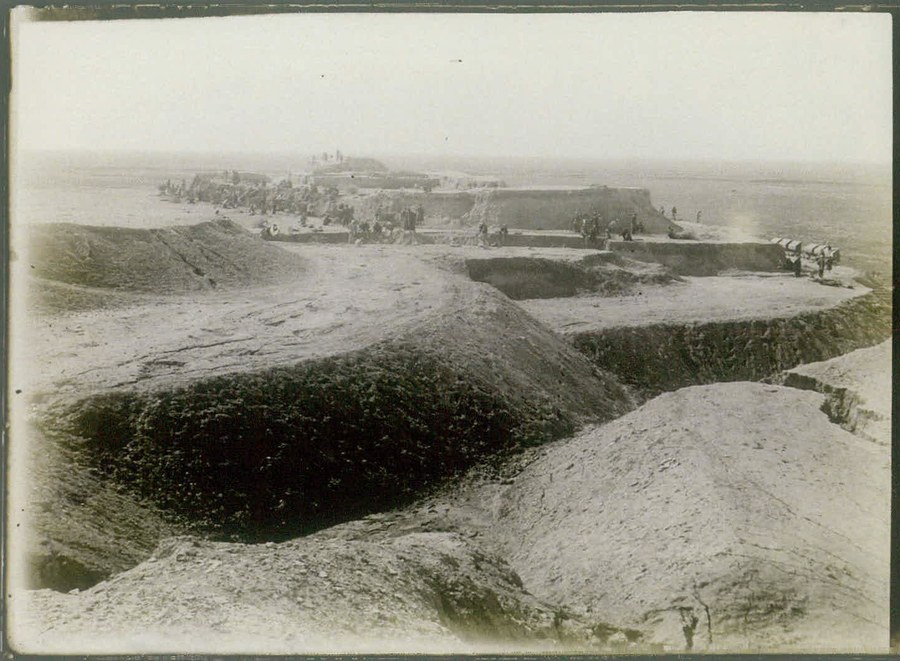
Linear Elamite emerged around 2300 BCE in the region of Susa, capital of the Elamite kingdom (modern Khuzestan, Iran). Its geometric and cursive signs -- diamonds, triangles, curves -- resemble no other known script. Discovered in 1903 during French excavations led by Jean-Vincent Scheil, about forty texts had been unearthed, but the script remained incomprehensible.[2]
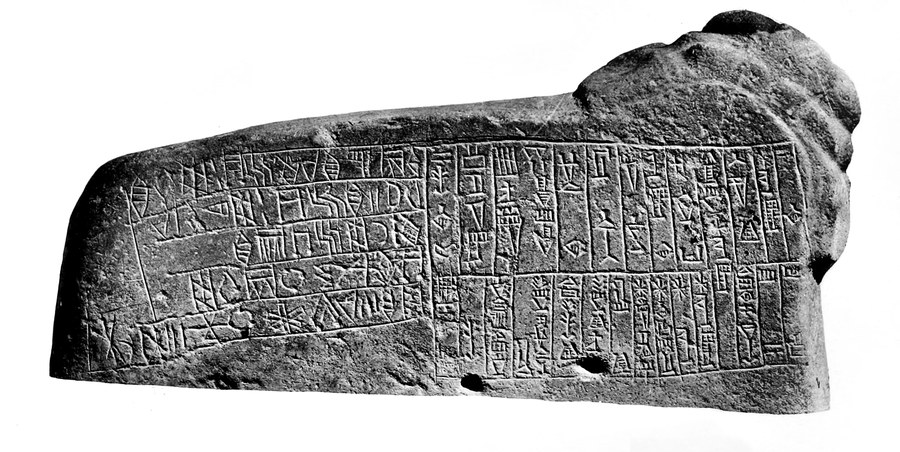
In 1905, German linguist Ferdinand Bork identified seven signs using this bilingual Linear Elamite/Akkadian monument. But without a sufficient corpus, decipherment stalled for a century. Elamite is a language isolate -- with no known relationship to any other linguistic family -- making the task even harder.
The Turning Point: the Kunanki Vessels
In 2015, Desset, then a CNRS associate researcher, finally gained access to a series of exceptional silver cups -- the kunanki -- from the Mahboubian collection, stored in a London vault. These ten vessels bear a total of 759 Linear Elamite signs, more than double the previously known corpus.
Metallurgical analyses confirmed the authenticity of the pieces: a silver-copper alloy consistent with production of the period. "I was thinking: eureka. But I was also sceptical, because everyone in the academic world was sure it was all fake," Desset told National Geographic.[3]
The Breakthrough: Recognising a King's Name
In spring 2017, analysing photos of the kunanki on his screen in Tehran, Desset spotted a repeated four-sign sequence. He recognised the first -- shi -- identified since 1905. The last two signs were identical. The repetition was the key: the name Shilhaha (shi-l-ha-ha), a ruler known from Akkadian texts.
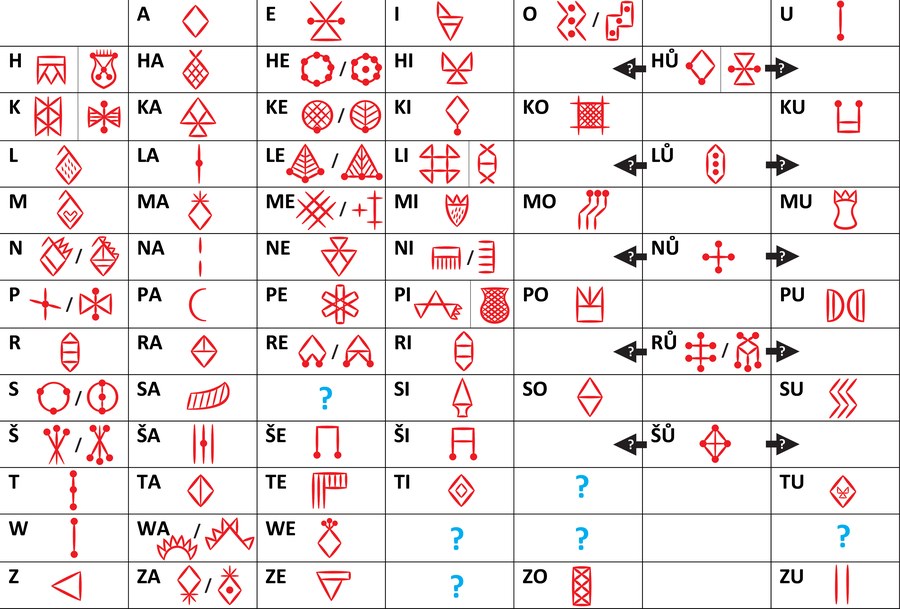
Within fifteen minutes, five more phonetic values. Then the names of king Eparti II and the supreme god Napirisha enabled the identification of further signs. Desset progressively reconstructed a syllabary of 77 signs: five vowels, twelve consonants and their combinations. An entirely phonetic script with no logograms -- potentially the oldest purely phonographic writing system known, predating the Proto-Sinaitic alphabet by 500 years.[1]
What the Inscriptions TellTellAn artificial mound formed by the accumulation of successive layers of settlement remains at the same spot, typical of the Near East. Each destruction-rebuilding event adds a stratum.→ Us
Of the 1,863 signs in the corpus, Desset can sound out 1,810 -- 97%. But meaning remains partially opaque. Elamite, a language isolate extinct around 1000 CE, has a partial vocabulary reconstructed from Achaemenid cuneiformCuneiformThe oldest known writing, born at Uruk; its signs, impressed into clay with a reed stylus, are wedge-shaped (from Latin cuneus).→ inscriptions. Among the words identified on the kunanki: zemt (king), hort (people), shak (son), kere (devotion). One inscription reads: "I, Pala-ishan, mighty lord... I am the servant of Napirisha."[3]
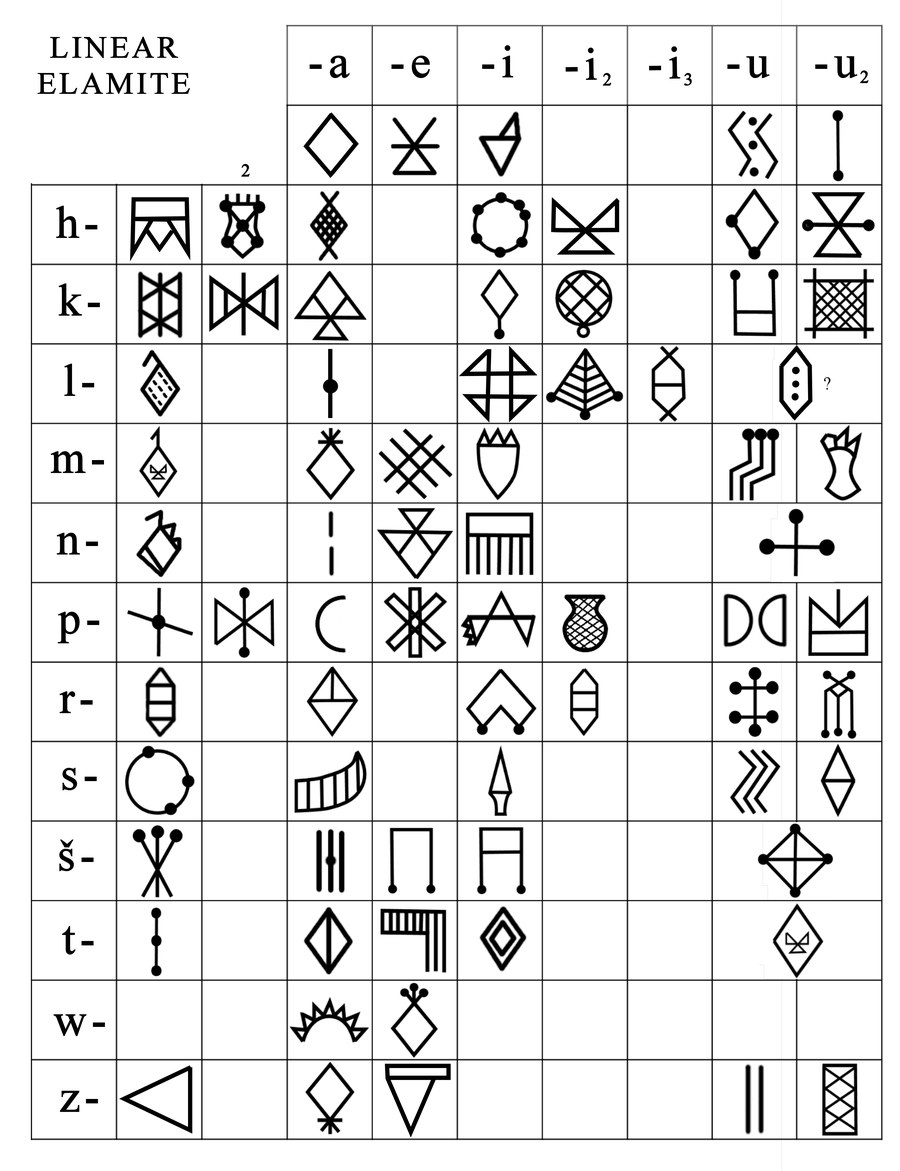
Desset's team -- including Kambiz Tabibzadeh, Matthieu Kervran, Gian Pietro Basello, and Gianni Marchesi -- showed that Linear Elamite probably derives from Proto-ElamiteProto-ElamiteThe oldest writing of Iran (c. 3300 BC), still largely undeciphered, contemporary with Mesopotamian proto-cuneiform but distinct from it.→ (3300-3000 BCE), itself still undeciphered. A Unicode font, Hatamti, is being designed at the Atelier National de Recherche Typographique to enable digital transmission of the script.
An Open Scientific Debate
The decipherment is not universally accepted. Oxford professor Jacob Dahl considers Desset's claims "premature" and argues the system likely included logograms. Without complete translation of full texts, the community remains divided. Desset's next target: Proto-Elamite, with 1,700 tablets dating to 3300-3000 BCE. "It is a total mystery," he says -- just the kind of challenge code-breakers love.[4]
No comments yet. Be the first.