Fifteen thousand years ago, as the ice slowly retreated, the last great hunters of the PalaeolithicPalaeolithicThe oldest and longest period of prehistory (c. 3.3 Ma–12,000 BC), defined by chipped stone tools and a hunter-gatherer way of life.→ brought art to a peak. The Magdalenian means Lascaux and Altamira, but also the reindeer-antler harpoon, bone sculpture and mobile societies following the herds across late-glacial Europe. This World View documentary examines the mystery of Magdalenian sculpture, the carved and engraved face of this culture of artists.
The Magdalenian, apex of the Palaeolithic
The MagdalenianMagdalenianThe last great Upper Palaeolithic culture (c. 17,000–12,000 BC), the peak of cave art (Lascaux).→ is the last great culture of the European Upper PalaeolithicUpper PalaeolithicThe final phase of the Palaeolithic (c. 45,000 to 10,000 years ago), marked by Homo sapiensHomo sapiensThe present-day human species, which emerged in Africa around 300,000 years ago, the only surviving human lineage after the extinction of Neanderthals and Denisovans.→ in Europe, art, ornaments and a succession of cultures (AurignacianAurignacianThe earliest culture of the European Upper Palaeolithic (c. 43,000–33,000 BC), tied to the arrival of Homo sapiens and the first artworks.→, GravettianGravettianAn Upper Palaeolithic culture (c. 33,000–21,000 BC) spanning from the Atlantic to Siberia, famous for its ivory female figurines ("Venuses") and, at Dolní Věstonice, the oldest fired ceramics.→, SolutreanSolutreanA European Upper Palaeolithic culture (c. 22,000–17,000 BC), remarkable for its leaf-shaped lithic points worked with flat retouch. Contemporary with the second art phase of Cosquer Cave.→, Magdalenian).→, between roughly 17,000 and 12,000 BCE. It takes its name from the La Madeleine rock shelterRock shelterA shallow cavity at the foot of a cliff or under a rocky overhang, offering natural shelter; a favoured site of prehistoric habitation and rock art.→ in the Dordogne. It is the golden age of reindeer hunters, in a Europe still cold but warming, emerging from the Last Glacial MaximumLast Glacial MaximumThe peak of the last glaciation (c. 26,000 to 19,000 years ago), with ice sheets at their greatest extent; it pushed populations towards southern refuges.→.1
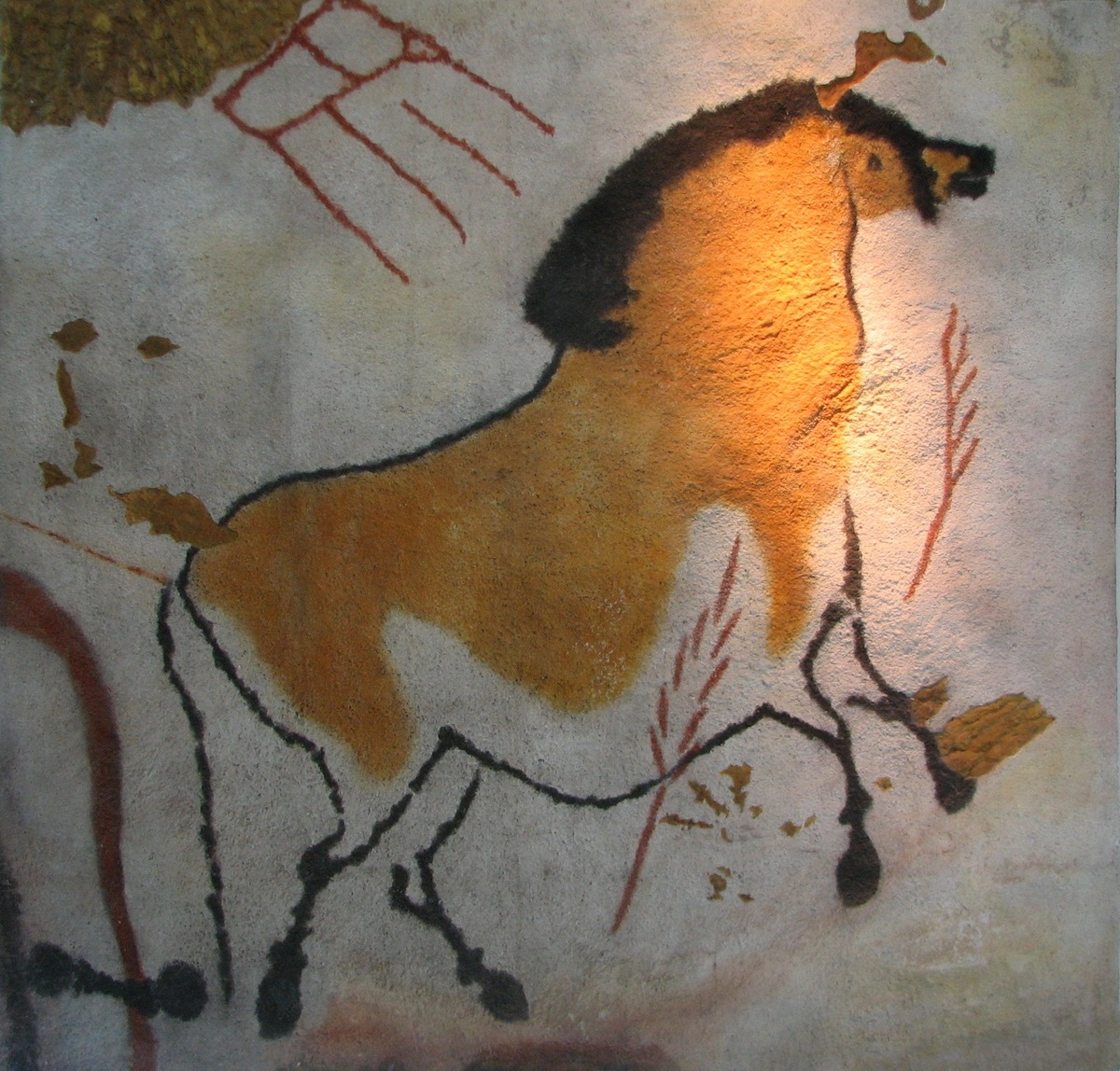
Stretching from the Iberian Peninsula to Poland, this world of hunter-gatherersHunter-gatherersA way of life based on hunting, fishing and gathering wild resources, without farming or herding; it dominated almost the whole of human history.→ left an unprecedented density of art and objects, so much so that prehistorians readily see in it a peak of Palaeolithic creativity.
Lascaux, Altamira and cave art
The Magdalenian is inseparable from parietal art. Lascaux (around 17,000 years ago) and Altamira in Spain are its jewels: friezes of horses, aurochs, bison and deer, painted in ochreOchreA red or yellow mineral pigment (iron oxides), used from prehistory for adornment, funerary rites and art.→ and charcoal, engraved into the rock, often deep in hard-to-reach galleries.2
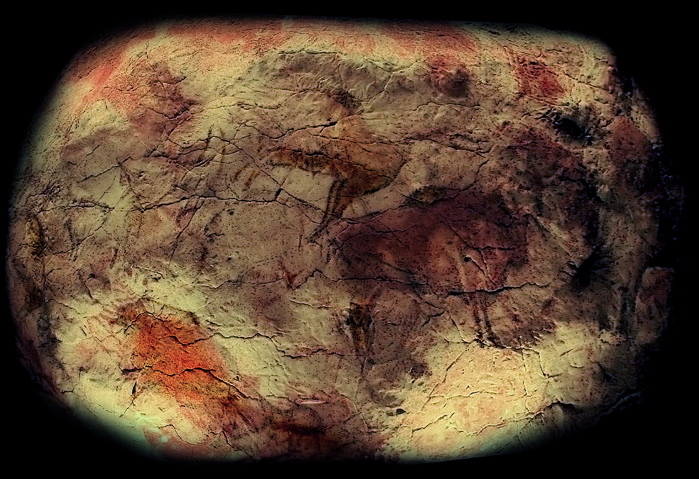
These images are not mere decoration: their placement, recurrence and animal associations suggest an elaborate symbolic thought whose exact meaning still escapes us. ShamanismShamanismA set of beliefs and ritual practices based on communication between the living and a spirit world, mediated by a practitioner (the shaman) entering a trance state. The shamanic hypothesis has been proposed to interpret part of Palaeolithic parietal art.→, myth, territorial marking: hypotheses abound, certainties are lacking.
The harpoon, signature of the hunters
If one object sums up the Magdalenian, it is the harpoonHarpoonA hunting and fishing weapon of reindeer antler or bone, fitted with barbs; an emblematic Magdalenian object whose forms help date archaeological layers.→ of reindeer antler or bone, with one or two rows of barbs. Hafted on a shaft, it served for fishing and hunting, notably salmon and reindeer.1
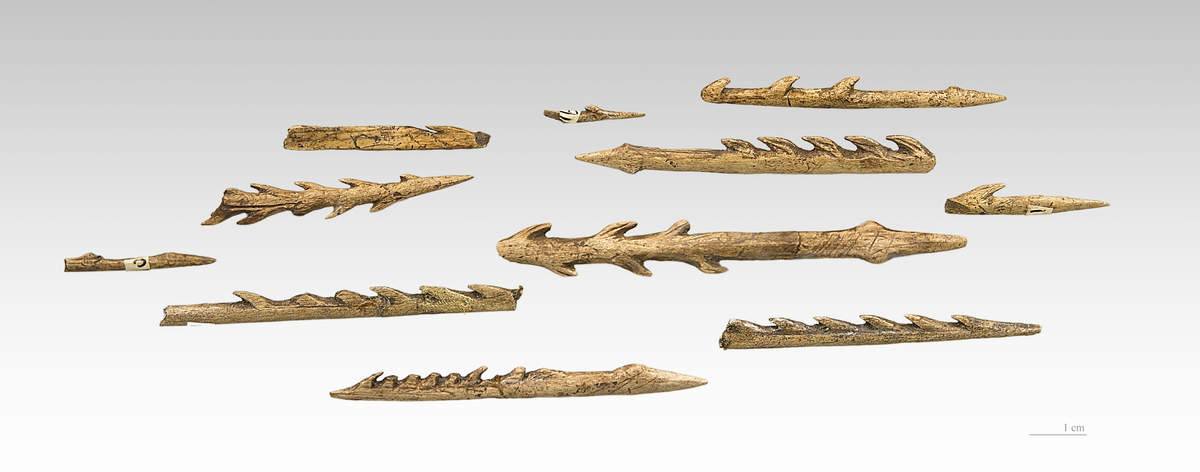
Magdalenian bone industry is remarkably rich: spear points, spear-throwers, eyed needles, smoothers, perforated batons. The working of reindeer antler, a supple yet tough material, reaches an unprecedented technical virtuosity.
Portable art of extraordinary refinement
Alongside decorated walls, the Magdalenian produced abundant portable artPortable artTransportable art objects (figurines, engravings on bone or ivory), such as the Palaeolithic Venuses.→: engraved and carved objects that could be carried. This is the heart of the World View documentary on Magdalenian sculpture.
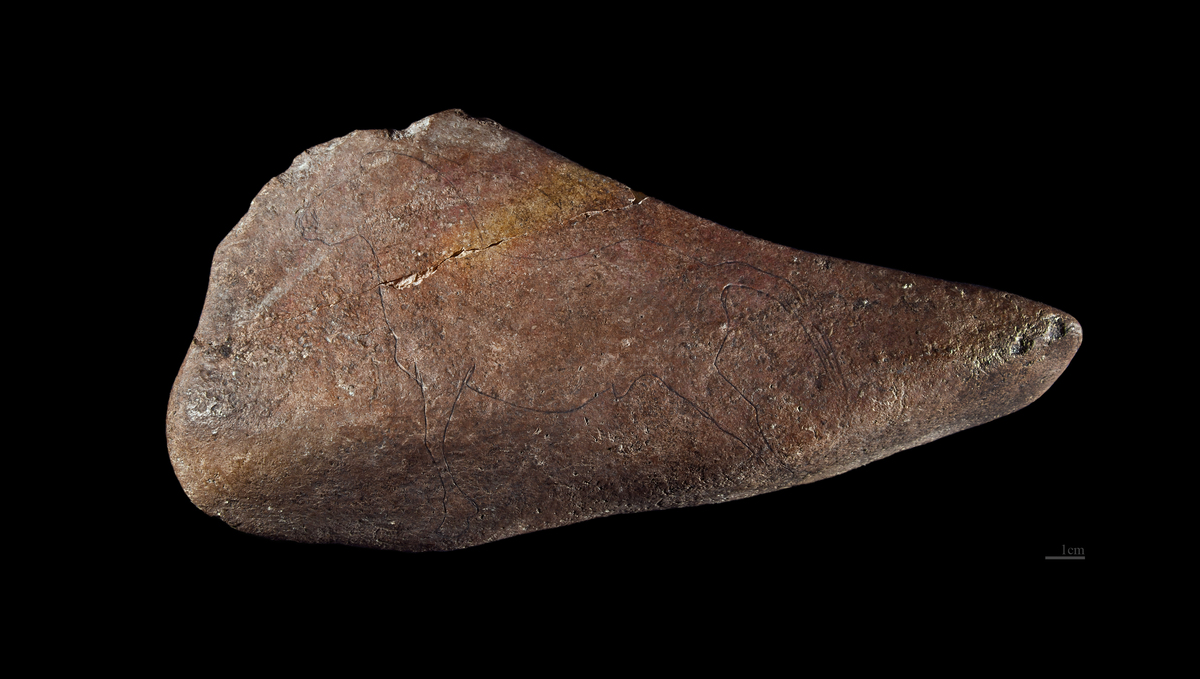
Spear-throwers adorned with carved animals, engraved plaquettes, cut-out contours, figurines: these pieces reveal artists observing wildlife with almost naturalistic precision. They sometimes travelled far from where they were made, evidence of extended exchange networks.
Reindeer, salmon and mobile societies
The Magdalenian economy rested largely on reindeer, hunted during their seasonal migrationsMigrationsLong-distance movements of populations; a major driver of human history (the exit from Africa, the peopling of continents, Neolithic and steppe expansions).→, supplemented by horse, bison, salmon and small prey. This dependence demanded great mobility: groups followed the game and gathered at certain seasons.3
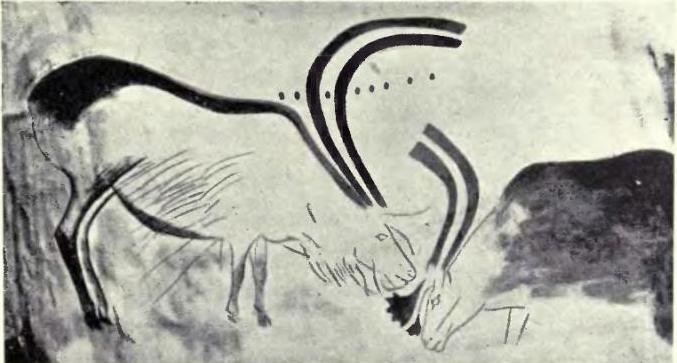
This mobility did not preclude complex social organization: open-air camps and rock shelters, specialized workshops, burials, shell and pierced-tooth ornaments exchanged over long distances outline communities connected on a continental scale.
A specialized stone toolkit
Magdalenian stone tools are based on the production of regular blades and bladelets, knapped with economy. Burins, scrapers, borers and above all fine backed bladelets, mounted as projectile armatures, make up an efficient, standardized kit.
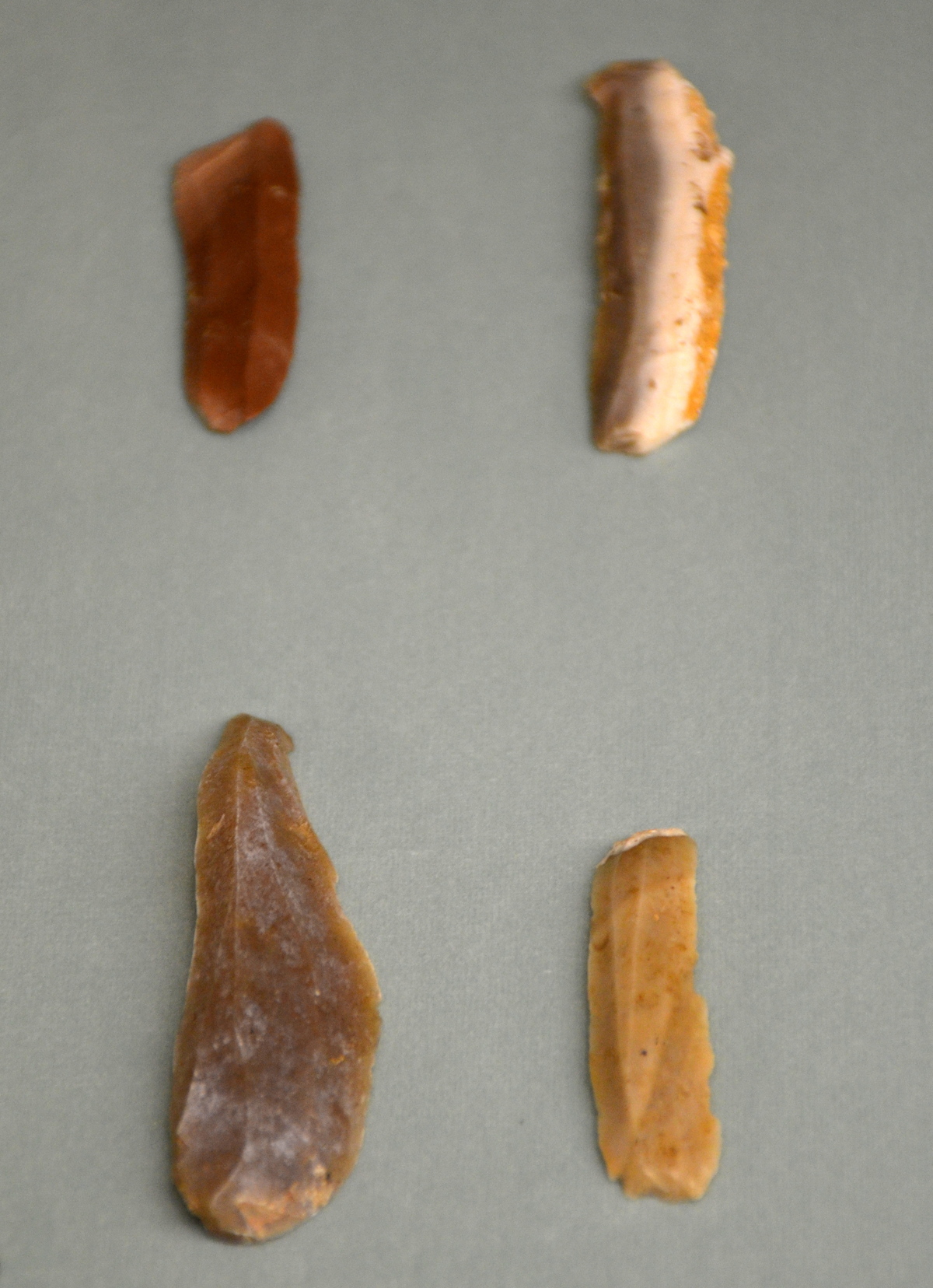
This technical efficiency freed time and resources for art and craft, whose abundance in this period is surely no coincidence.
The end of a glacial world
Around 12,000 BCE, warming accelerates: forest advances, the steppeSteppeA vast semi-arid, treeless grassland of Eurasia, suited to nomadic herding and the horse; a corridor for the movement of peoples and technologies in later prehistory.→ retreats, reindeer move north.4 Magdalenian societies transform, giving way to the Azilian and then the MesolithicMesolithicThe period between the Palaeolithic and the Neolithic (c. 10,000–6,000 BC in Europe), still based on hunting and gathering.→ cultures.
Cave art gradually fades, replaced by more modest expressions. But the Magdalenian legacy, Lascaux, Altamira, the harpoons and the thousands of engraved objects, remains one of the most dazzling testimonies to the genius of our hunter ancestors.
About this documentary
This film, 'Aux Origines de l'Art : Le Mystère des Sculptures Magdaléniennes', is offered by the channel World View, Civilisations.5 It explores the carved and engraved dimension of the Magdalenian, a valuable complement to the better-known cave art of Lascaux and Altamira.
Toujours utile d'avoir des sources récentes quand on enseigne. Cet article s'y prête vraiment.
Je vais utiliser ce contenu dans nos ateliers de médiation au musée. Narration accessible et rigoureuse.