Les mammouths laissaient des traces bien au-dela de leurs ossements : ils laissaient egalement la preuve de leur relation avec les chasseurs prehistoriques. Une etude internationale publiee fin juillet 2026 dans Current Biology a analyse l'ADN ancienADN ancienMatériel génétique conservé dans des vestiges anciens, souvent dégradé, séquencé grâce à des techniques de pointe.→ de 521 mammouths laineux et revele un desequilibre de sexe tres significatif entre les depots naturels et les sites de boucherie humains.1
100 squelettes de campement, 421 depots naturels
Pour distinguer ce que la nature et l'homme ont laisse derriere eux, les chercheurs ont reuni des echantillons d'ADNADNMolécule porteuse de l'information génétique, utilisée pour reconstruire les liens de parenté entre espèces.→ provenant de 521 mammouths laineux (Mammuthus primigenius) morts entre 30 000 et 20 000 ans avant notre ere, a travers l'Europe, l'Asie et l'Amerique du Nord. Parmi eux, 100 provenaient de 11 sites ou leurs os s'entassent pres de traces humaines -- silexSilexRoche siliceuse dure et cassante, débitée par les préhistoriques pour produire lames, pointes et outils tranchants.→ tailles, structures en os, foyers -- tandis que les 421 autres provenaient de depots formes sans intervention humaine, au fond d'un lac ou d'une riviere. Le sexe de chaque individu a ete lu directement dans les genes.1
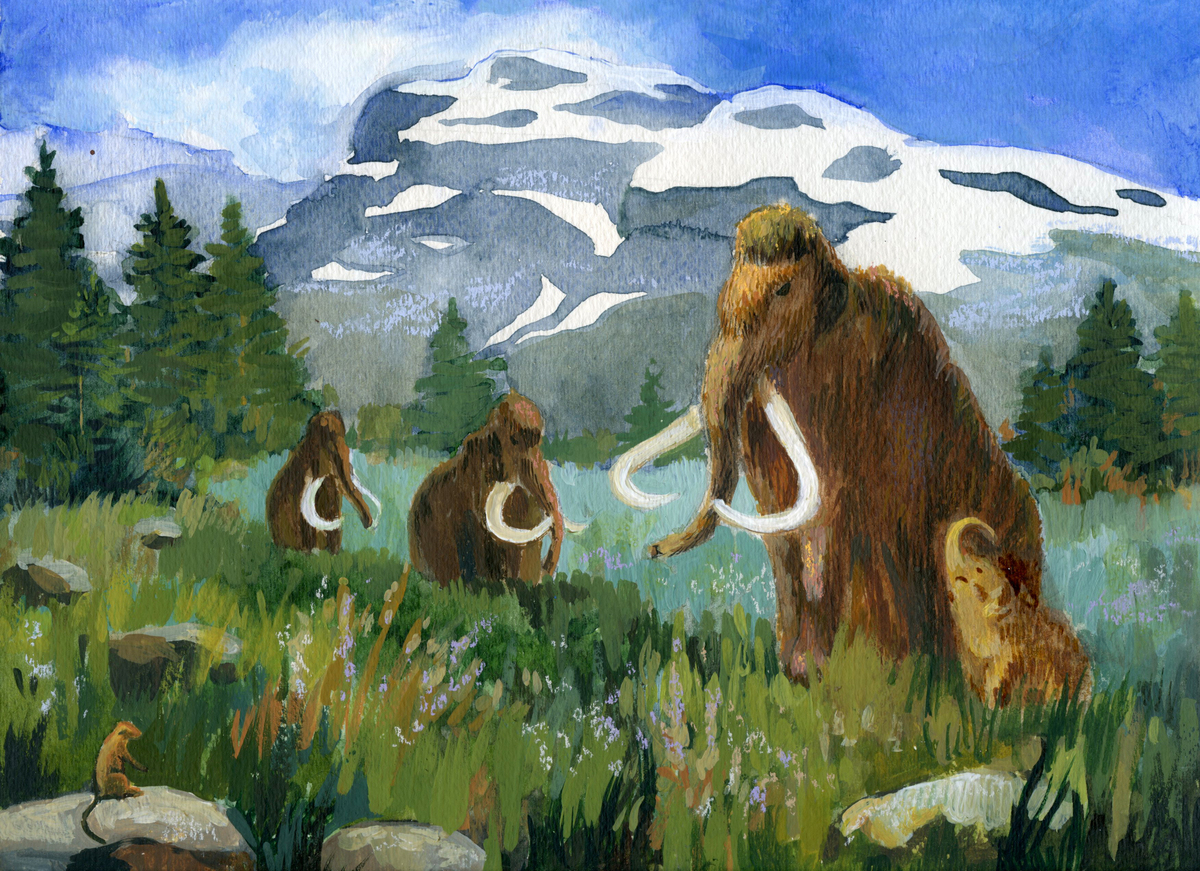
Le contraste est saisissant. Dans les accumulations naturelles, 66 % des individus sont des males, tandis que les campements livrent 70 % de femelles. Pour l'equipe, a laquelle participe le geneticien Love Dalen de l'universite de Stockholm, ce basculement constitue une preuve genetique solide que de nombreux amas d'os doivent leur existence a la chasse, et non au climatClimatConditions atmosphériques moyennes d'une région sur le long terme ; ses variations (glaciations, aridifications) ont orienté migrations, agriculture et effondrements de sociétés préhistoriques.→ ou aux accidents.
Pourquoi les chasseurs ciblaient les femelles
Comment expliquer ce penchant pour les femelles ? Plusieurs pistes se dessinent. Les mammouths vivaient sans doute en hardes segreguees selon le sexe, les femelles regroupees autour des jeunes et les males plus solitaires. Croiser un tel troupeau signifiait donc atteindre plusieurs proies d'un coup, et des meres peu disposees a fuir en abandonnant leurs petits. Les chasseurs les croisaient aussi plus souvent lors de leurs deplacements saisonniers.
S'attaquer a des femelles n'avait pourtant rien d'anodin. Regroupees autour de leurs jeunes, elles pouvaient charger et defendre la harde avec une grande violence, parfois comparable a celle d'un male solitaire. Une question reste ouverte : les humains les chassaient-ils activement ou exploitaient-ils des carcasses trouvees mortes ? La surreprésentation des femelles semble davantage indiquer une chasse active a des troupeaux precis.2
Le biais inverse observe dans les depots naturels s'explique par le mode de vie plus risque des males : plus solitaires, ils s'aventuraient plus loin du groupe, risquant davantage de tomber dans un ravin, une crevasse ou un cours d'eau gele. Leurs restes se conservaient alors loin de toute presence humaine.
Un mammouth au syndrome de Turner
L'ADN a aussi livre une surprise inattendue. Sur l'ile Wrangel, dans l'Arctique russe, un individu portait une seule copie du chromosome sexuel X dans une partie de ses cellules, deux copies dans le reste -- une anomalie connue chez l'humain sous le nom de syndrome de Turner, soit l'absence ou l'anomalie d'un second chromosome sexuel. C'est la premiere fois qu'un tel cas est decrit chez une espece eteinte.1
Ce diagnostic vieux de plusieurs millenaires montre jusqu'ou peut remonter l'ADN ancien lorsqu'il est bien conserve dans le permafrostPermafrostSol gelé en permanence ; dans l'Altaï, l'eau infiltrée dans les kourganes a gelé en lentilles de glace qui ont conservé corps, textiles et bois pendant des millénaires.→. Forte de sa methode, l'equipe compte l'etendre a d'autres amas d'ossements afin de separer partout ce qui revient aux chasseurs de ce que la nature a depose, et de dessiner peu a peu la carte des territoires de chasse paleolithiques.
Aucun commentaire pour le moment. Soyez le premier.