A team of international researchers at the Hebrew University of Jerusalem has announced a major breakthrough in the deciphermentDeciphermentThe reconstruction of the meaning and value of the signs of an unknown script, often from bilingual texts, repeated proper names or statistical regularities.→ of one of the most mysterious writingWritingA system of conventional signs used to fix language or information durably; its appearance (c. 3300 BC) marks, by convention, the end of prehistory.→ systems among the Dead Sea Scrolls. The graphic system known in scholarly literature as "Cryptic B" or "Cryptic Script C", present on a small number of scroll fragments found at Qumran and at other Judean Desert sites, had resisted interpretation since the initial publication of the manuscripts in the 1950s and 1960s1. New computational analyses suggest that this writing system is an intentional and sophisticated cipher, based on a modified version of the Phoenician consonantal alphabet.
The Dead Sea Scrolls, a textual treasure of ancient Judaism
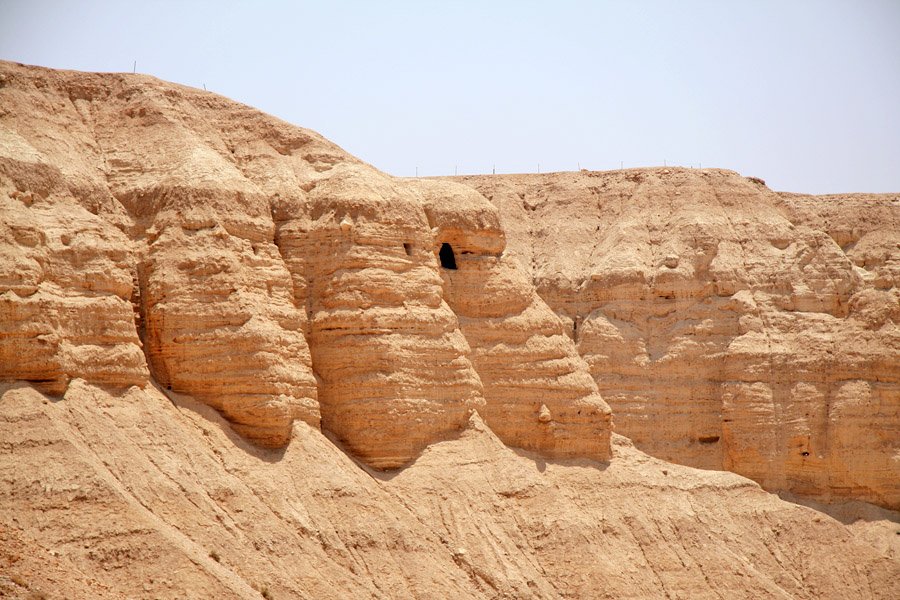
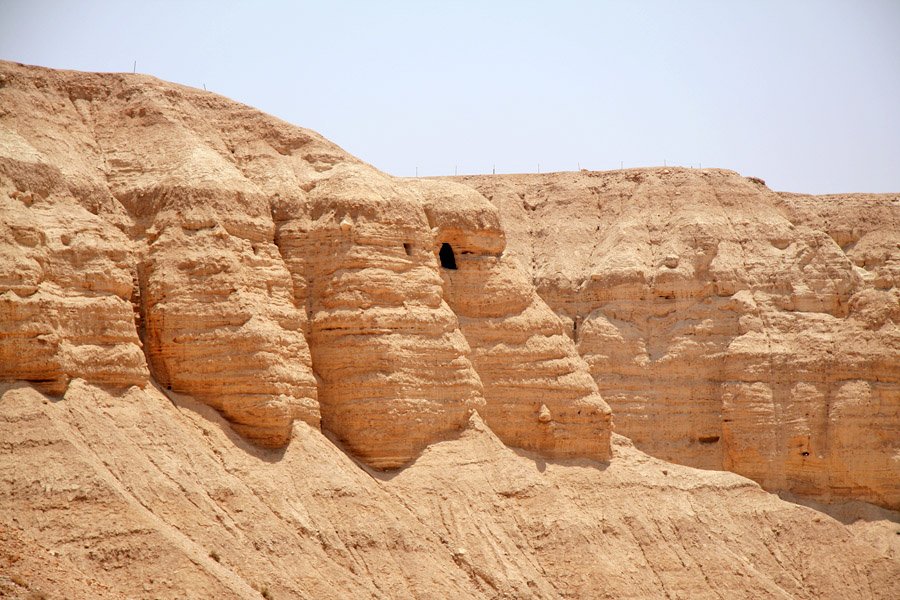
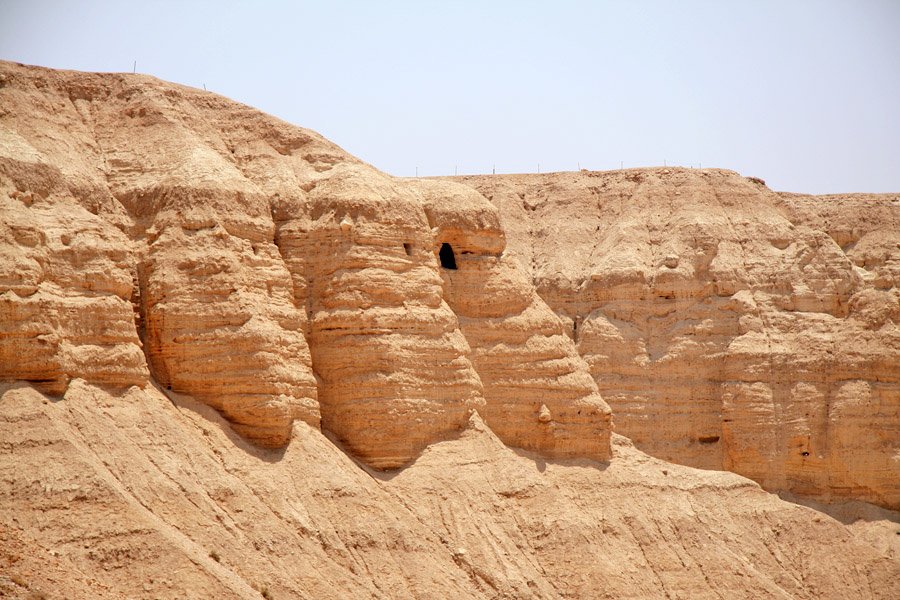
The Dead Sea Scrolls constitute one of the most famous archaeological discoveries of the 20th century. Approximately 900 manuscripts, found between 1947 and 1956 in caves in the Qumran region on the northwestern shore of the Dead Sea, date mainly from the 3rd century BCE to the 1st century CE. They include the oldest known copies of almost every book of the Hebrew Bible, as well as numerous sectarian texts associated with the Essene community that lived at Qumran. The vast majority of the scrolls are written in Hebrew or Aramaic in the standard square Hebrew script of the Second Temple period, but a few use alternative or cipher writing systems.
Scholars have identified several distinct cryptic writing systems in the Qumran scrolls, designated Cryptic A, Cryptic B, and other variants. Cryptic A was partially deciphered in the 1990s and proved to encode standard Hebrew text, suggesting its use as a deliberate cipher to restrict access to certain texts. Cryptic B proved far more resistant to analysis: it consists of a limited inventory of signs that do not correspond directly to any known ancient alphabet, and the underlying language of the texts remained unclear2.
Computational analysis reveals a sophisticated cipher
The new research applied computational methods including pattern analysis, frequency distribution statistics, and matrix comparison with corpora of known ancient alphabets. The results, after several iterations of the analysis algorithm, suggest that Cryptic B is a modified form of the Phoenician consonantal alphabet in which the letter forms have been systematically altered and their order rearranged. This is not a new alphabet but a substitution cipher based on the Phoenician alphabet, in which each cryptic sign corresponds to a specific Phoenician letter according to a consistent correspondence table.
If this interpretation is confirmed, Cryptic B would be one of the oldest known intentional cipher systems in the ancient world, predating the substitution ciphers described by Greek and Roman sources by several centuries. The sophistication of the system, which implies not only a modification of letter forms but also a rearrangement of their order in the alphabet, testifies to elaborated cryptographic thinking on the part of its creators3.
Sectarian liturgical and calendrical texts
The texts written in Cryptic B, once partially deciphered, prove to be mainly liturgical or calendrical in nature. They deal with ritual observances, festival dates, and priestly duties in terminology consistent with Essene theology as known from other Qumran texts. The use of a deliberate cipher for texts of this type is consistent with the Essene community's known concern for secrecy and its division into inner and outer circles of initiated members.
The Essenes, a Jewish sectarian group of the Second Temple period, attached supreme importance to ritual purity, strict observance of the liturgical calendar, and separation between initiated members and the outside world. Several non-cryptic Qumran texts mention rules for progressive, degree-by-degree initiation into the community, with increasing levels of access to sacred texts and secret rites. The existence of Cryptic B as an encoding system for the most sensitive liturgical texts fits perfectly within this sectarian logic.
Research still has a long way to go before a complete and reliable translation of the Cryptic B texts can be proposed. The alphabetic correspondences identified by the algorithms remain to be validated by traditional philological approach, testing whether the deciphered texts produce lexically and grammatically coherent sequences in Hebrew or Aramaic. The researchers involved in the study plan to submit their results to a peer-reviewed specialist journal in the coming months for evaluation by the Dead Sea Scrolls studies community.
No comments yet. Be the first.