At the foot of the mountains of Balochistan, in what is now western Pakistan, a dusty plain crossed by the Bolan River concealed one of the greatest secrets of South Asian prehistoryPrehistoryThe span of human history before the invention of writingWritingA system of conventional signs used to fix language or information durably; its appearance (c. 3300 BC) marks, by convention, the end of prehistory.→, from the PalaeolithicPalaeolithicThe oldest and longest period of prehistory (c. 3.3 Ma–12,000 BC), defined by chipped stone tools and a hunter-gatherer way of life.→ to the Metal Ages, known mainly through material remains.→. There, on the banks of a fickle watercourse, men and women founded nearly nine thousand years ago a village that would never stop growing. The place bears a name that has become famous in archaeology textbooks: Mehrgarh. For more than four millennia, from roughly 7000 to 2500 BCE, generation after generation lived here, sowing wheat and barley, herding goats, modelling terracotta, drilling the teeth of the sick and weaving trade networks that reached as far as the mountains of Afghanistan. Mehrgarh is no ordinary site: it is the birth certificate of village life in South Asia, and the distant matrix of the Indus CivilisationIndus CivilisationA major Bronze Age urban civilisation (c. 2600-1900 BC) across present-day Pakistan and north-west India: planned cities (Harappa, Mohenjo-daro), standardised bricks, undeciphered script, no monumental palaces.→, that of HarappaHarappaA major city of the Indus Civilization, in the Pakistani Punjab, the first site excavated and the one that gave the Harappan culture its name.→ and Mohenjo-daroMohenjo-daroOne of the largest cities of the Indus Civilization (Sindh, Pakistan), famed for its Great Bath and grid layout; a World Heritage site.→.
Discovered in the 1970s by a French archaeological mission, the site profoundly altered our understanding of the origins of agriculture. Until then it was believed that wheat and stock-raising had reached India and Pakistan ready-made, imported from the Near EastNear EastA region of western Asia (Levant, Mesopotamia, Anatolia, Iran), cradle of the Neolithic revolution, agriculture, the first cities and writing.→ by settlers or merchants. Mehrgarh showed something else: here, on the edge of the Iranian plateau, a local population carried out its own Neolithic revolutionNeolithic revolutionThe shift from hunter-gatherer societies to farming and settled life (c. 10,000 BCE in the Near East), giving rise to villages and then cities.→, slowly, on the spot, domesticating its plants and animals with a degree of autonomy no one had suspected. The village yielded houses of mud brick, communal granaries, thousands of figurines, ornaments of shell and semi-precious stones, and even the astonishing trace of the oldest known dental care in human history. To dive into Mehrgarh is to watch, almost live, the moment when hunter-gatherersHunter-gatherersA way of life based on hunting, fishing and gathering wild resources, without farming or herding; it dominated almost the whole of human history.→ become farmers, then craftspeople, then the ancestors of a great urban civilisation. [1]
It is worth recalling how recent our knowledge of this deep past truly is. For a long time the prehistory of the subcontinent was little more than a blank, squeezed between the spectacular cities of the Indus and a vague notion of Stone Age hunters. The systematic excavation of stratified village sites, of which Mehrgarh is the foremost example, gradually filled this void, giving flesh and chronology to the millennia that preceded urban life. Each season of fieldwork added a layer to a story that had to be reconstructed almost from nothing.
South Asia before the cities
Before Mehrgarh, the history of South Asia almost entirely escapes us. The Indian subcontinent was peopled very early by groups of Homo sapiensHomo sapiensThe present-day human species, which emerged in Africa around 300,000 years ago, the only surviving human lineage after the extinction of Neanderthals and Denisovans.→ who came out of AfricaOut of AfricaThe dispersals of Homo sapiens out of Africa, including a major expansion c. 70,000 to 60,000 years ago and earlier exits.→, probably more than sixty thousand years ago, following the shores of the Indian Ocean and spreading into the valleys. For tens of millennia these populations lived by hunting, fishing and gathering, knappingknappingThe set of operations for fracturing a stone block to extract flakes or blades.→ stone tools and following game with the rhythm of the seasons. Balochistan, an arid and mountainous region wedged between the Iranian plateau, Afghanistan and the Indus valley, occupies a pivotal position. It is a crossroads: through its passes, including the famous Bolan corridor, people, ideas and goods have always moved between Central Asia, the Iranian world and the plains of the Indus.
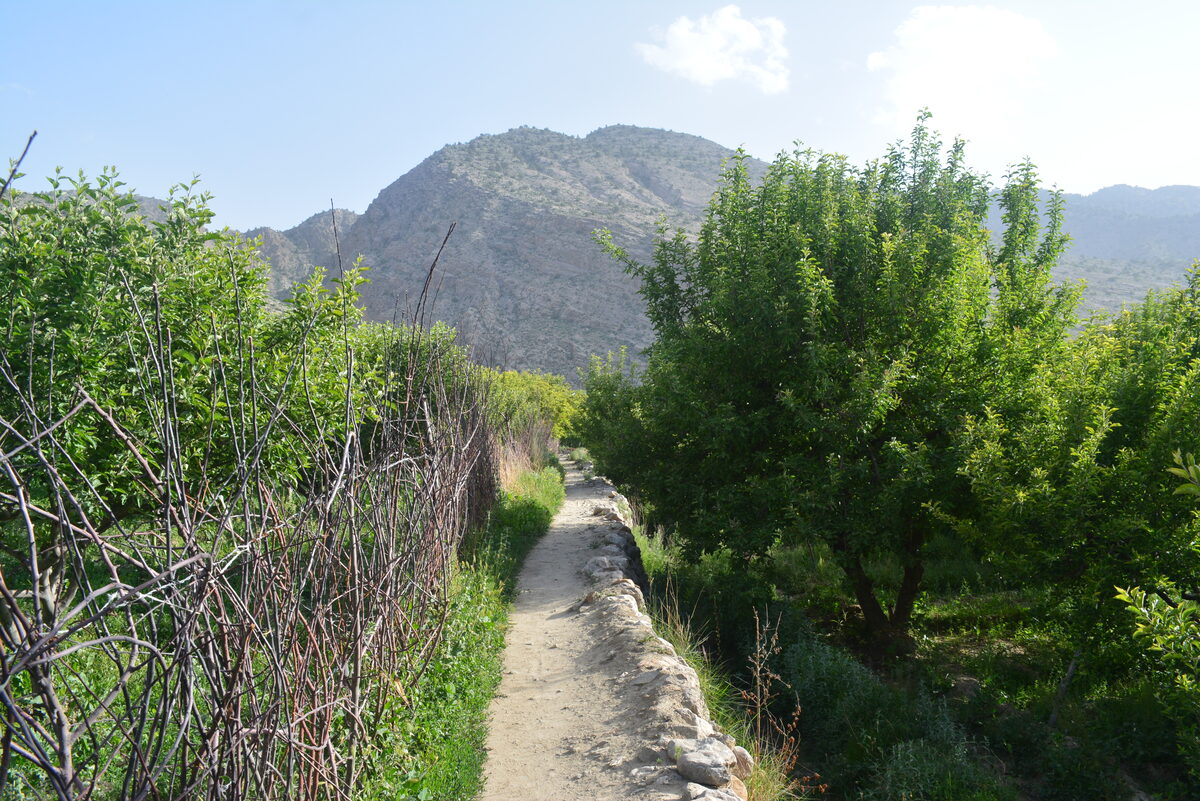
At the beginning of the HoloceneHoloceneThe current geological epoch, begun about 11,700 years ago at the end of the last ice age; the setting of all post-glacial history.→, after the last ice age, the climateClimateThe long-term average atmospheric conditions of a region; its variations (glaciations, aridifications) shaped migrations, agriculture and the collapse of prehistoric societies.→ grew warmer and more stable. Across the Fertile CrescentFertile CrescentAn arc-shaped region of the Near East (Levant, Mesopotamia) where farming and herding first emerged.→ of the Near East, communities invented agricultureAgricultureThe cultivation of plants and production of food by working the soil, which emerged in the Neolithic in the Near East and independently elsewhere; it radically transformed human societies.→ and stock-raising, giving birth to the NeolithicNeolithicThe "New Stone Age": a period marked by farming, herding, settlement and pottery, from around 10,000 BC.→. It was long imagined that this revolution had spread from a single hearth, like a wave, eastward and westward. But the eastern fringe of the Iranian plateau, of which Balochistan is part, also has its wild resources: cereals related to wheat and barley, wild goats and sheep in the mountains. The question Mehrgarh raises is precisely this: did the first farmers of South Asia receive everything from elsewhere, or did they take an active part in domesticating the species on which they depended? [2]
The answer, as we shall see, is nuanced, but it leans strongly towards a partly indigenous Neolithisation. The site lies at the western limit of what prehistorians call the natural range of wild barley and certain forms of wheat. The first inhabitants of Mehrgarh therefore did not need to import everything: they were able to gather, select and finally cultivate plants present in their immediate environment, while remaining open to influences from the west. It is this frontier position, at once receptive and creative, that makes pre-urban South Asia such a precious laboratory for understanding the many paths leading to agriculture.
The discovery: the Jarrige mission, 1974
The modern history of Mehrgarh begins in 1974, when a French archaeological mission led by Jean-François Jarrige, together with his wife Catherine Jarrige and a multidisciplinary team, undertook excavations in the Kachi plain, near Sibi, in the province of Balochistan. The team sought to understand the origins of the region's protohistoric cultures, upstream of the great Indus sites already known. What it unearthed exceeded all expectations: beneath metres of accumulated sediment stretched an immense complex of archaeological mounds covering nearly two hundred hectares, evidence of an extraordinarily long continuous occupation.
The site presented itself as a true tellTellAn artificial mound formed by the accumulation of successive layers of settlement remains at the same spot, typical of the Near East. Each destruction-rebuilding event adds a stratum.→, one of those artificial hills formed by the accumulation, over centuries, of the debris of mud-brick houses rebuilt one upon another. At Mehrgarh this process had operated not at a single point but over a vast area, the village slowly shifting over time, abandoning its old quarters to build new ones a little further on. Archaeologists were thus able to distinguish several major phases of occupation, numbered I to VII, succeeding one another from the aceramic Neolithic, around 7000 BCE, to the advanced ChalcolithicChalcolithicThe "Copper Age": a transition between the Neolithic and the Bronze AgeBronze AgeA protohistoric period following the Neolithic, defined by bronze metallurgy (a copper-tin alloy) and the rise of the first cities and states; in Egypt it corresponds to the age of the first pyramids.→, marked by the first copper objects (Ötzi's era).→ period, around 2500 BCE, on the eve of the rise of the great Indus cities. [3]
The excavation of Mehrgarh, carried out for more than twenty years under the auspices of the French Archaeological Mission in Pakistan, was a colossal labour of patience. The Jarriges and their collaborators, including specialists in seeds, animal bones, sediments and artefacts, reconstructed layer by layer the daily life of a community over four thousand five hundred years. Their conclusion was a landmark: Mehrgarh proved the existence of a Neolithic hearth proper to South Asia, several millennia older than the Indus Civilisation, and linking the latter to a very ancient village substratum. The site at once became an international reference, cited in every work dealing with the origins of agriculture and urbanisation.
Dating relied on stratigraphyStratigraphyThe study of the superimposed layers (strata) of an archaeological site; each layer corresponds to a phase of occupation and yields a relative chronology.→, on the typology of artefacts and, decisively, on radiocarbon. The deepest levels, devoid of pottery, yielded dates going back to the eighth millennium BCE, making Mehrgarh one of the oldest known farming villages east of Mesopotamia. The continuity of the occupation, without any major break, also offered something rare in archaeology: the possibility of following, almost uninterrupted, the transformation of a society of settled hunter-gatherers into a community of accomplished farmer-herders, and then into a refined craft centre.
The Kachi plain, in which Mehrgarh lies, is an alluvial basin open onto the Indus valley, dominated by the first foothills of the Baloch mountains. This geographical situation largely explains the destiny of the site. It offered at once the proximity of water and of silty land suited to cultivation, access to mountain pastures for the herds, and an opening onto the great routes linking Iran, Central Asia and the Indus. Few places brought together so many assets for a village to be transformed, over the long term, into a hearth of civilisation.
The first farmers: wheat and barley
The heart of the revolution achieved at Mehrgarh is the local invention of cereal agriculture. In the oldest levels, those of Period I, dated to around 7000 BCE, archaeobotanists have recovered carbonised grains and imprints of cereals in the mud bricks: above all barley, but also several forms of wheat, notably einkorn, emmer and bread wheat. These species correspond to the classic agricultural package of the Near Eastern Neolithic, but their very early presence at Mehrgarh, at the eastern edge of their wild range, suggests that the inhabitants did not merely receive already-domesticated plants: they cultivated and selected some of them on the spot.
Barley in particular played a pioneering role. Hardier than wheat, better suited to poor soils and dry climates, it adapted perfectly to the conditions of Balochistan. Analyses show a growing proportion of domestic forms over the centuries, a sign that human selection, conscious or not, was gradually doing its work: the ears that did not shatter spontaneously at maturity, easier to harvest, came to dominate the fields. This slow shift from the gathering of wild cereals to the genuine cultivation of domesticated plants is one of the essential markers of Neolithisation, and Mehrgarh offers an exceptionally complete reading of it. [1]
Cultivation requires water. Yet the Bolan River, like most watercourses of Balochistan, is capricious, swollen by seasonal floods then reduced to a thin trickle for the rest of the year. The inhabitants of Mehrgarh knew how to turn this to advantage: they laid out their fields on the silty land deposited by the floods, taking advantage of the residual moisture to grow their cereals. This flood-retreat agriculture, simple but effective, fed a population that never stopped growing, until the site became one of the largest Neolithic villages in all of southern Asia.
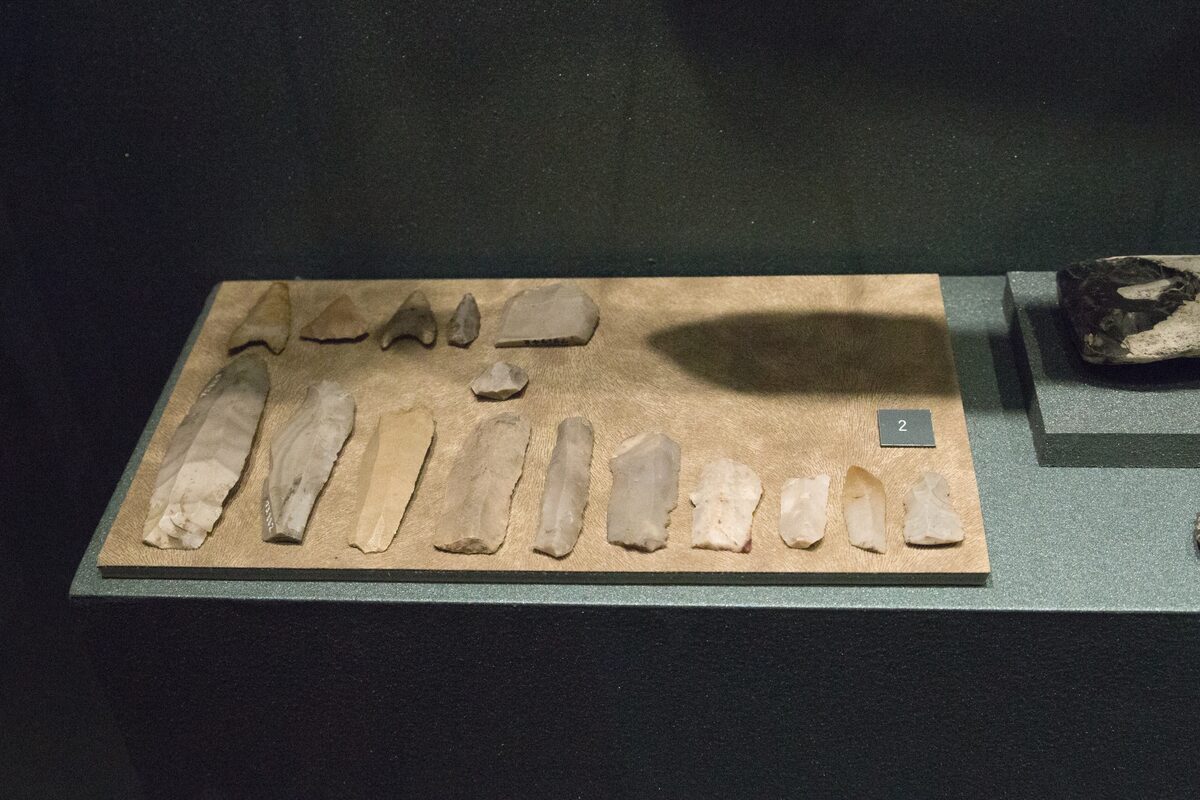
Harvesting and processing the grain left many traces. Flint blades have been found whose edges are glossed by the cutting of cereal stalks, remnants of composite sickles in which several bladelets were hafted side by side. Stone querns and grinders served to reduce the grain to flour. This modest-looking equipment tells of a profound transformation of daily life: from now on an essential part of the diet rested on cultivated, stored and prepared plants, no longer solely on opportunistic hunting and gathering.
This new dependence on harvests imposed a sedentary way of life and a collective organisation of labour: fields had to be prepared, seed sown at the right moment, ripening watched, the harvest gathered quickly, threshed and stored. The agricultural calendar now structured existence. With it appeared new vulnerabilities, for a poor flood or a drought could jeopardise the reserves of an entire village. Mastery of storage, as we shall see, thus became a central concern of the community of Mehrgarh.
Recent analyses, combining archaeobotany and genetics, are continually refining this picture. They show that the first cultivated forms at Mehrgarh have ties to the cereals of the Near East, but that the process of selection took place partly on the spot, in a particular ecological context. Far from the simple scheme of a one-way diffusion, what emerges is a history of back-and-forth, made of borrowings, local adaptations and original experiments. Mehrgarh thus confirms that South Asia was not a mere passive receptacle of the Neolithic revolution, but one of its actors.
Stock-raising and domestication
If cereal agriculture was one revolution, animal husbandry was another, just as decisive, and Mehrgarh offers some of the richest evidence for it in South Asia. The study of the tens of thousands of animal bones gathered at the site has made it possible to reconstruct, herd by herd, the march towards domestication. In the oldest levels, the bones still come largely from hunted wild animals: gazelles, deer, wild boar, but also wild bovids and caprids. Then, gradually, the share of domestic species increases, until it becomes overwhelming.
The goat was probably the first animal domesticated at Mehrgarh, from the early Neolithic levels onward. Small, sturdy, able to feed on poor vegetation, it was ideally suited to the mountainous, semi-desert environment of Balochistan. Sheep followed close behind. These caprids provided meat, milk, hides and, later, wool, while remaining easy to drive and to pen. Their husbandry constituted a reserve of food on the hoof, mobile and renewable, the ideal complement to uncertain harvests.
Next came the larger livestock. The bones show a gradual domestication of cattle, and above all the growing importance of a particular form of bovine: the zebuZebuA humped domestic bovine (Bos indicus) adapted to hot climates, domesticated in South Asia; depicted on many Indus seals and figurines.→, the humped ox adapted to hot climates, recognisable by the fatty mass over its shoulders. Mehrgarh is among the major sites documenting the early domestication of the zebu in South Asia, an animal that would become emblematic of the entire Indian subcontinent and remain so to this day. The decrease in the size of cattle bones through the layers, a classic sign of domestication, accompanies this rise of livestock in the village economy.
Stock-raising transformed society profoundly. To own a herd was to accumulate living, transmissible wealth, capable of growing. The animals also served as draught power and as manure for the fields, creating a virtuous circle between cultivation and husbandry. Milk and its derivatives enriched the diet. Above all, the combination of cereals and livestock gave Mehrgarh a solid and diversified economic base, capable of supporting a large population and generating surpluses, the indispensable condition for the later emergence of specialised craftspeople and long-distance exchange. [2]
The scientific debate on the origin of these animals remains open and fascinating. For the goat, some data argue for a first domestication in the Near East, followed by diffusion eastward. For the zebu, by contrast, modern genetics confirms a domestication proper to South Asia, from a local aurochs, distinct from that of Near Eastern cattle. Mehrgarh thus stands at the heart of an intertwined history, where imported influences and indigenous innovations cross paths. It is precisely this complexity that makes the site a reference case for understanding how, on the margins of the Neolithic world, societies were able to shape their own path towards a production economy.
Building in mud brick also reveals a shared technical culture. The bricks of Mehrgarh, moulded in standard sizes, presuppose agreed gestures and proportions, transmitted from one builder to the next. Behind this apparent simplicity lies a collective discipline: to raise solid walls, to align rooms, to plan storage cells all require know-how and cooperation. In the regularity of these humble earthen bricks one can already read the seed of the standardisation that would become, two millennia later, one of the hallmarks of Indus urbanism.
Houses, granaries and emerging urbanism
SedentismSedentismThe shift from a nomadic life to lasting settlement in one place, a precondition for the rise of villages.→ calls for architecture. At Mehrgarh, from the oldest levels onward, the inhabitants built their dwellings of mud brick, those hand-moulded, sun-dried clay bricks that would remain, for millennia, the master material of the entire East. The first houses are small rectangular units, divided into several rooms by low walls, sometimes with no visible doorway, which suggests access from the roof. Rebuilt generation after generation on their own rubble, these houses gradually raised the level of the ground and gave birth to the tell.
The most striking feature of Mehrgarh's architecture is undoubtedly the abundance of storage structures. Numerous small buildings compartmentalised into regular cells, with no communication between them, have been brought to light and interpreted as granaries intended to preserve grain. This obsession with storage says much about a society that has tipped into an agricultural economy: harvests had to be protected from rodents, damp and pilfering, and reserves built up for lean seasons and bad years. The capacity to accumulate and manage cereal surpluses is one of the very foundations of emerging social complexity.
These compartmented granaries irresistibly recall, in their principle, the vast storage installations found much later in the cities of the Indus, at Harappa in particular. Without there being any need to see a direct, continuous filiation, the kinship of spirit is striking: from Mehrgarh onward, the organisation of village space is articulated around the production, conservation and redistribution of foodstuffs. One can sense in it the beginnings of a collective management, perhaps already framed by rules and overseers, a condition for communal life on a large scale. [3]
Over the phases, the settlement grew denser and more organised. Houses multiplied, lanes took shape, residential areas became distinct from craft zones and funerary spaces. For Mehrgarh, like many Neolithic villages, buried its dead within the settlement itself, often beneath the floors of houses or in reserved areas. The graves, accompanied by offerings, ornaments and sometimes young goats sacrificed, inform us about the beliefs, the hierarchies and the exchange networks of the community.
This still embryonic urbanism foreshadows, over the very long term, the planned cities of the Indus. Mehrgarh is not a city: it is a great village, or rather a succession of superimposed and juxtaposed villages. But one can see sketched in it the ingredients of future urbanisation: the concentration of population, the specialisation of spaces, the accumulation of reserves, the standardisation of building techniques. The trajectory that leads, over more than two millennia, from the small Neolithic village to the metropolis of Mohenjo-daro begins right here, in these modest earthen houses of Balochistan.
It is tempting to picture these workshops in motion: the potter turning a vessel, the painter tracing an ibex frieze in dark slip, the bead-maker bent over a tiny drill, the metalworker tending a crucible of molten copper. Each gesture rested on accumulated experience, on recipes for clay, pigments and firing temperatures passed down within families. The sheer quantity of finished objects recovered at Mehrgarh, and the steady refinement of their forms over the centuries, bear witness to communities of practice that grew more confident and more specialised with every generation.
Craft, pottery and figurines
As the community prospered, its craftspeople grew in skill and specialisation. Mehrgarh yields one of the finest sequences in the history of pottery in South Asia. The earliest levels are described as aceramic: people lived there without fired-clay vessels, doubtless using containers of basketry or leather coated with bitumen. Then, from Period II onward, ceramics appear, at first coarse and hand-modelled, then increasingly fine. With the invention of the wheel, towards the end of the sequence, production became standardised and almost industrial, foreshadowing the serial workshops of the Indus age.
The potters of Mehrgarh developed a richly varied decorative repertoire. On a light ground they painted, in black or brown slip, geometric friezes, stylised animal motifs, birds, ibexes, fish. Some ceramics, such as the famous Togau Ware, testify to remarkable technical and aesthetic mastery, and their diffusion over vast territories reveals exchange networks and a shared stylistic language. TerracottaTerracottaClay shaped and then hardened by firing; the material of pottery, bricks and figurines, ubiquitous since the Neolithic.→ thus became, at Mehrgarh, the support for a genuine decorative art, and the marker of the various cultural phases that archaeologists use to date the site.
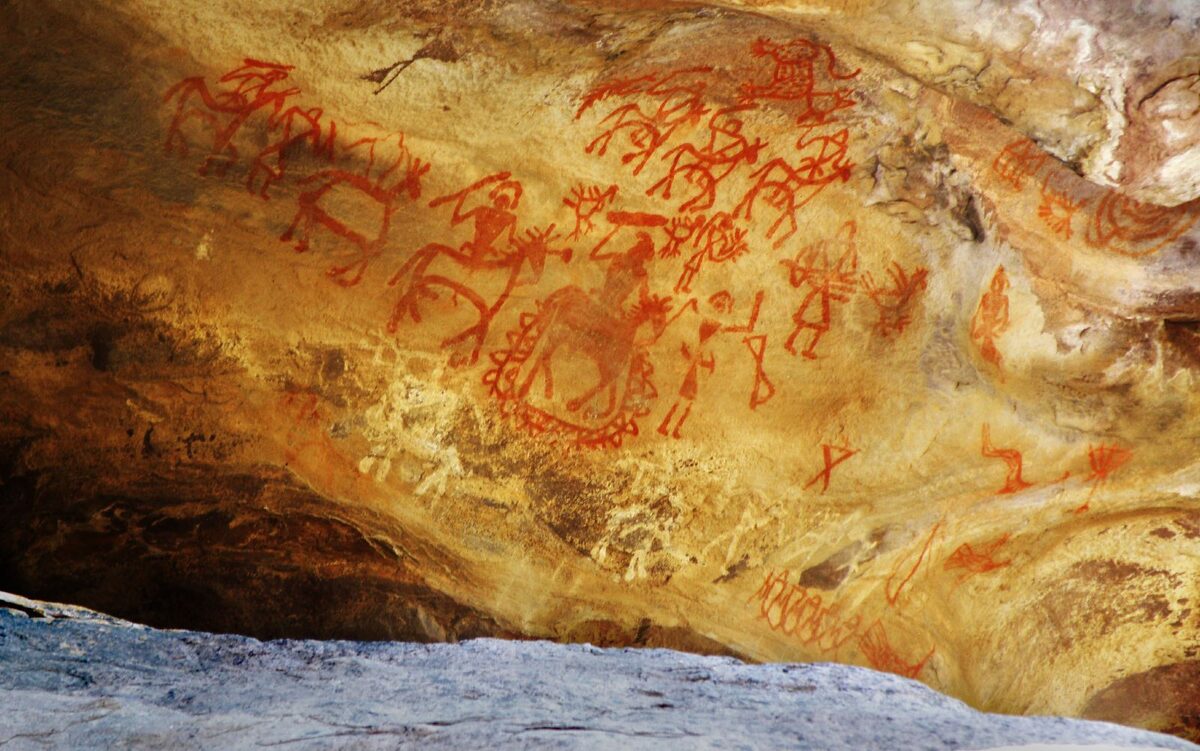
But the most emblematic object of Mehrgarh remains, without doubt, the figurine. The site has yielded thousands of terracotta statuettes, a majority of them female figures with generous forms, elaborate hairstyles, sometimes laden with modelled or painted jewellery. These figurines, among the oldest coroplastic traditions of South Asia, evolve over time: at first schematic, they become more and more detailed, with complex coiffures, layered necklaces, marked breasts. They have often been seen as representations of fertility, perhaps mother-goddesses, but their exact meaning remains debated. [1]
Beyond pottery and figurines, Mehrgarh was a many-sided craft centre. Bone and ivory were worked there, refined stone tools were knapped, and tiny beads were drilled in shell, steatite and semi-precious stones. The nascent metallurgyMetallurgyThe techniques of extracting and working metals (copper, bronze, gold); its rise in the Eneolithic and Bronze Age transformed tools, weapons and social hierarchies.→ of copper makes its appearance in the Chalcolithic levels, bringing the site into a new technical era. A small copper object, made by the lost-wax casting process, is among the oldest known examples of this sophisticated technique, proof of the ingenuity of the local craftspeople.
This craft effervescence is not incidental: it reflects a society able to generate surpluses sufficient to support specialists who did not themselves produce their food. The potter, the bead-driller, the metalworker lived off the agricultural labour of others, exchanging their products for foodstuffs. This division of labour, still embryonic, is one of the engines of the social complexification that would lead, centuries later, to the structured cities of the Indus, with their craft quarters and their standardised products exported over thousands of kilometres.
The craft of ornament deserves a pause, for it reveals a know-how of extreme fineness. To drill a bead a few millimetres across in hard stone, without breaking it, requires a mastery of the drill and a regularity of gesture that owe nothing to the medical gestures evoked above. The workshops of Mehrgarh produced in quantity these beads intended for necklaces, bracelets and ornaments sewn onto garments. This refinement of personal adornment, from the Neolithic onward, foreshadows the marked taste of the Harappans for jewellery and worked stone.
The dentistry of Mehrgarh
Among all the discoveries at Mehrgarh, one particularly strikes the imagination: the site revealed the oldest known traces of dentistry in human history. Examining the teeth of skeletons buried in the Neolithic cemetery, dated to roughly 7000 to 5500 BCE, researchers found that several adult molars bore tiny cavities drilled by human hand, in the centre of the chewing surface. Eleven dental crowns, belonging to nine individuals, showed these regular perforations.
Far from being accidents or effects of wear, these holes resulted from intentional drilling. Their walls bear the concentric striations characteristic of a rapid rotary movement. Archaeologists have proposed, with experimental support, that the practitioners of Mehrgarh used a kind of small bow drill, doubtless tipped with flint, similar to the tools that craftspeople already employed to perforate beads. With such a technique they were able to cut into enamel, the hardest substance in the human body, in just a few tens of seconds.
Why drill living teeth in this way? The most likely interpretation is therapeutic: it may have been a matter of treating caries or pain, removing decayed tissue much as a modern filling does. Several of the treated teeth indeed show signs of pathology. The position of the holes, on the chewing surface of the rear molars, and their presence in individuals of both sexes, point towards a medical rather than ornamental act. We would have here, at Mehrgarh, the trace of a genuine proto-medical practice, transmitted over several generations since the cases span nearly fifteen hundred years. [2]
This discovery, published in the journal Nature in 2006, overturned the history of bodily care. It pushes back by several millennia the appearance of dental treatment, which had been thought to begin much later, and it shows that Neolithic village communities, far from being mere primitives, possessed technical knowledge and an attention to care that one did not expect. That craftspeople accustomed to drilling beads should have applied their dexterity to relieving toothache speaks volumes about the circulation of know-how within this society.
The dentistry of Mehrgarh illustrates a more general trait of the site: the capacity of its inhabitants to observe, experiment and innovate. Whether domesticating the zebu, casting copper by the lost-wax method, standardising ceramics on the wheel or treating a toothache, one finds the same practical intelligence, the same will to master the material world. It is this spirit, accumulated and transmitted over millennia, that constitutes the true legacy of Mehrgarh, far more than any one spectacular object.
The position of Mehrgarh, at the hinge of several worlds, also makes it an observatory of contacts between populations. The exotic raw materials found at the site did not travel alone: with them moved people, techniques and stories. One imagines porters, nomadic herders, itinerant craftspeople linking the villages, passing on innovations from one to the next. This mobility, still hard to pin down precisely, was doubtless one of the engines of the diffusion of knowledge in the Neolithic, and one of the keys to the cultural vitality of Mehrgarh.
Exchange networks: turquoise and lapis lazuli
Mehrgarh was not an isolated village, turned in on itself. The excavations revealed that its inhabitants were connected, from the earliest periods, to vast exchange networks running across the Iranian plateau, Central Asia and the Indus valley. The most dazzling proof is the presence, in graves and workshops, of exotic raw materials that could only have come from very far away: above all lapis lazuli and turquoise.
Lapis lazuli, that stone of intense blue strewn with golden flecks, has an extremely localised geological origin. At the time, the bulk came from the mountains of Badakhshan, in the north-east of present-day Afghanistan, hundreds of kilometres from Mehrgarh. Its presence on the site means that a chain of exchanges, from intermediary to intermediary, carried this precious mineral all the way to Balochistan. Turquoise, of a luminous blue-green, probably came from Iranian Khorasan or Central Asia. These stones were worked on the spot into beads and pendants, witnesses to a refined taste for ornament and to a prestige economy.
Alongside these minerals, other materials travelled: marine shells from the distant shores of the Arabian Sea, transformed into bracelets and beads, as well as certain varieties of stone and metal. This long-distance trade did not carry heavy, perishable subsistence goods, but small, high-value objects, easy to carry and charged with social meaning. To own lapis or turquoise was to display status, to mark a distinction, perhaps to sealSealA small engraved object (often steatite) used to stamp a mark in clay; the Indus seals, bearing animals and signs, attest to administration and trade, though their script remains undeciphered.→ alliances. [3]
These exchange networks had profound consequences. They put Mehrgarh in contact with other communities, fostering the circulation not only of raw materials but also of ideas, techniques and styles. The kinship of certain ceramic motifs over vast regions, the diffusion of ornamental fashions, the simultaneous appearance of innovations at different points of the Iranian plateau, all testify to an already interconnected world, in which villages conversed across mountains and deserts.
Above all, these trade routes prefigure the economic geography of the future Indus Civilisation. The very axes that brought the lapis of Badakhshan to Mehrgarh would be travelled, two millennia later, by HarappanHarappanPertaining to the Indus Civilisation, named after its first excavated site, Harappa (Pakistani Punjab); refers to the material culture, script and people of that civilisation.→ caravans. The role of Balochistan as a corridor between Central Asia, Iran and the Indus, already active in the Neolithic, would only be reinforced. In this sense Mehrgarh is not only the agricultural and village ancestor of the Indus, but also one of the oldest anchor points of its exchange networks.
This filiation can also be read in funerary and symbolic practices. The female figurines of Mehrgarh, the motifs painted on the ceramics, the taste for ornaments of precious stones recur, transformed and enriched, in the repertoire of the Indus. The continuity is not only economic or technical: it also touches the imagination, beliefs, the way of representing the world and of dwelling in it. Following the thread that links the terracotta statuettes of Mehrgarh to the engraved seals of Mohenjo-daro, one perceives the slow sedimentation of a culture.
From Mehrgarh to the Indus
The great question Mehrgarh raises is that of its legacy. The site was occupied without any major interruption for more than four thousand years, then, around 2500 BCE, the population moved to the neighbouring site of Nausharo, a few kilometres away, at the very moment when, in the Indus plain, the first great cities were flourishing. This chronological coincidence is not fortuitous: it places Mehrgarh within the long prehistory of the Indus Civilisation, that brilliant urban culture which, between 2600 and 1900 BCE, covered an immense territory with its planned cities, its writing, its standardised weights and its exchange network.
Mehrgarh thus appears as a root, one of the soils from which the Harappan civilisation sprang. Many of the elements that would characterise the Indus are already present, in embryo, in the great village of Balochistan: the agriculture of wheat and barley, the husbandry of the zebu, the mud brick, organised storage, painted pottery, terracotta figurines, the working of beads and precious stones, long-distance exchange networks. Culturally as well as biologically, a continuity links the Neolithic villagers of Balochistan to the city-dwellers of Mohenjo-daro and Harappa.
This continuity does not mean that the Indus was born solely from Mehrgarh. The Harappan civilisation is the fruit of the convergence of several regional traditions, along the Indus and its tributaries, and influences from Iran and Central Asia mingled in it. But Mehrgarh occupies, in this picture, a founding and particularly well-documented place. It offers the most complete and most ancient sequence for following, on the spot, the passage from hunting to agriculture, then from village agriculture to proto-urbanProto-urbanRefers to a large agglomerated centre with urban features (density, craft, communal functions) without being a city in the classical sense.→ complexity. [1]
The most recent periods of Mehrgarh, described as Chalcolithic or EneolithicEneolithicThe "Stone-and-Copper Age": a transition between the Neolithic and the Bronze Age (c. 5000–3000 BC in south-eastern Europe), marked by the first copper objects, large farming settlements and, in places, the rise of fortified sites. Broadly synonymous with Chalcolithic.→, mark precisely this transition. Copper metallurgy develops, ceramics are standardised on the wheel, exchanges intensify, the population increases. The site shifts little by little from a Neolithic world towards a proto-historic one, on the eve of urbanisation. When, around the middle of the third millennium, the great cities of the Indus take their rise, Mehrgarh has already accomplished, on its own scale, the essential part of the road that separates the hunter from the city-dweller.
It must be stressed how long this history remained unknown. Before Mehrgarh, the Indus Civilisation was readily imagined as having arisen almost without preamble, or as imported from the Near East. The site demonstrated the existence of a long local rooting, of a slow village maturation over several millennia. It thereby restored to South Asia the historical depth it had lacked, and made the Kachi plain one of the oldest and most continuous cradles of agricultural and urban life in human history.
One can scarcely grasp today the patience that the excavation of such a site demanded. Over so great a thickness of deposits, each centimetre of sediment sometimes represents years of life, and the slightest object must be precisely situated in the stratigraphy to yield its meaning. The teams of the French mission worked season after season, sieving the earth, studying seeds under the microscope, identifying animal species from fragments of bone, dating charcoal by radiocarbon. It is this meticulous work, spread over decades, that transformed a heap of dusty hills into an archive of the South Asian Neolithic.
Conclusion
Mehrgarh has neither the monumental walls nor the straight streets of the cities it helped to bring forth. It is a discreet site, made of earthen hills and superimposed layers, whose richness reveals itself only to the patient eye of the archaeologist. And yet few places tell the human adventure so well. On its banks in Balochistan, for more than four millennia, men and women invented, or reinvented for themselves, almost everything that underpins our societies: to cultivate the land, to keep herds, to build durable houses, to store reserves, to fashion objects of beauty, to trade over long distances, to care for bodies.
What Mehrgarh teaches us is that the great Neolithic transformation was not a single event, setting out from one hearth to spread passively. It was a multitude of pathways, sometimes convergent, sometimes original, accomplished by communities that knew how to make use of their environment and of the ideas in circulation. On the eastern fringe of the Neolithic world, on the frontier of the Iranian plateau and the Indus plains, the inhabitants of Mehrgarh wrote one of these founding chapters, with an autonomy and an inventiveness we are only beginning to measure.
From these forgotten villagers would be born, centuries later, one of the greatest civilisations of antiquity. When one walks today through the ruins of Mohenjo-daro, one is in reality contemplating the distant outcome of a history begun at Mehrgarh, in the dust of the Kachi plain, around a few fields of barley and a few goats. It is there, more than anywhere else in South Asia, that the heart of the origins beats.
Le ton est idéal pour de la médiation : ni trop universitaire, ni trop simplifié.
Je galère à relier toutes les périodes en cours. Cet article m'aide vraiment à y voir plus clair.