A Summit Colloquium on a Fundamental Question
On 16 June 2026, the Amphithéâtre Marguerite de Navarre at the Collège de France hosted a full-day international colloquium devoted to one of palaeontology's most contested questions: what really happened between the last NeanderthalsNeanderthalsA fossil humanity of Eurasia, robust and cold-adapted, extinct around 40,000 years before present.→ and the first Homo sapiensHomo sapiensThe present-day human species, which emerged in Africa around 300,000 years ago, the only surviving human lineage after the extinction of Neanderthals and Denisovans.→ in Europe? Organised by Jean-Jacques Hublin, holder of the Palaeontology Chair since 2021, the event brought together seven leading specialists , archaeologists, palaeogeneticists, anthropologists , to confront their data on the Middle to Upper PalaeolithicUpper PalaeolithicThe final phase of the Palaeolithic (c. 45,000 to 10,000 years ago), marked by Homo sapiens in Europe, art, ornaments and a succession of cultures (Aurignacian, Gravettian, Solutrean, Magdalenian).→ transition.
The lectures were filmed and posted on the Collège de France's Sciences de la vie YouTube channel, forming a remarkable free resource for anyone seeking to understand where the science stands today. Here is our overview, lecture by lecture, with the scientific context that frames each one.
The Transition: Rupture or Continuum?
Between roughly 50,000 and 35,000 years ago, the European archaeological record undergoes a dramatic transformation. Flake-based MousterianMousterianThe stone-tool industry typical of Neanderthals, based on the Levallois flaking technique.→ industries give way to blade and bladeletBladeletA small flint blade, often under a centimetre wide, used as a projectile armature or tool in the Upper Palaeolithic.→ production, worked bone tools, shell and perforated tooth ornaments, and , crucially , the first figurative art in human history. During this same interval, Neanderthals disappear.
The coincidence long fuelled a simple narrative: Homo sapiens arrives, Neanderthals retreat. But data accumulated since the 2010s , ancient DNAAncient DNAGenetic material preserved in old remains, often degraded, sequenced with cutting-edge techniques.→ sequencingSequencingReading the order of the bases (A, T, G, C) of a DNA molecule; high-throughput sequencing reads millions of fragments in parallel.→, high-precision uranium-thorium datingUranium-thorium datingA method dating calcite formations (stalagmites, flowstones) via uranium decay into thorium; useful beyond the range of radiocarbon.→, reassessment of transitional assemblages , paint a far more nuanced picture: periods of coexistence spanning centuries to millennia, probable cultural exchange, geographically variable extinction timelines, and "transitional" industries whose biological attribution remains disputed.
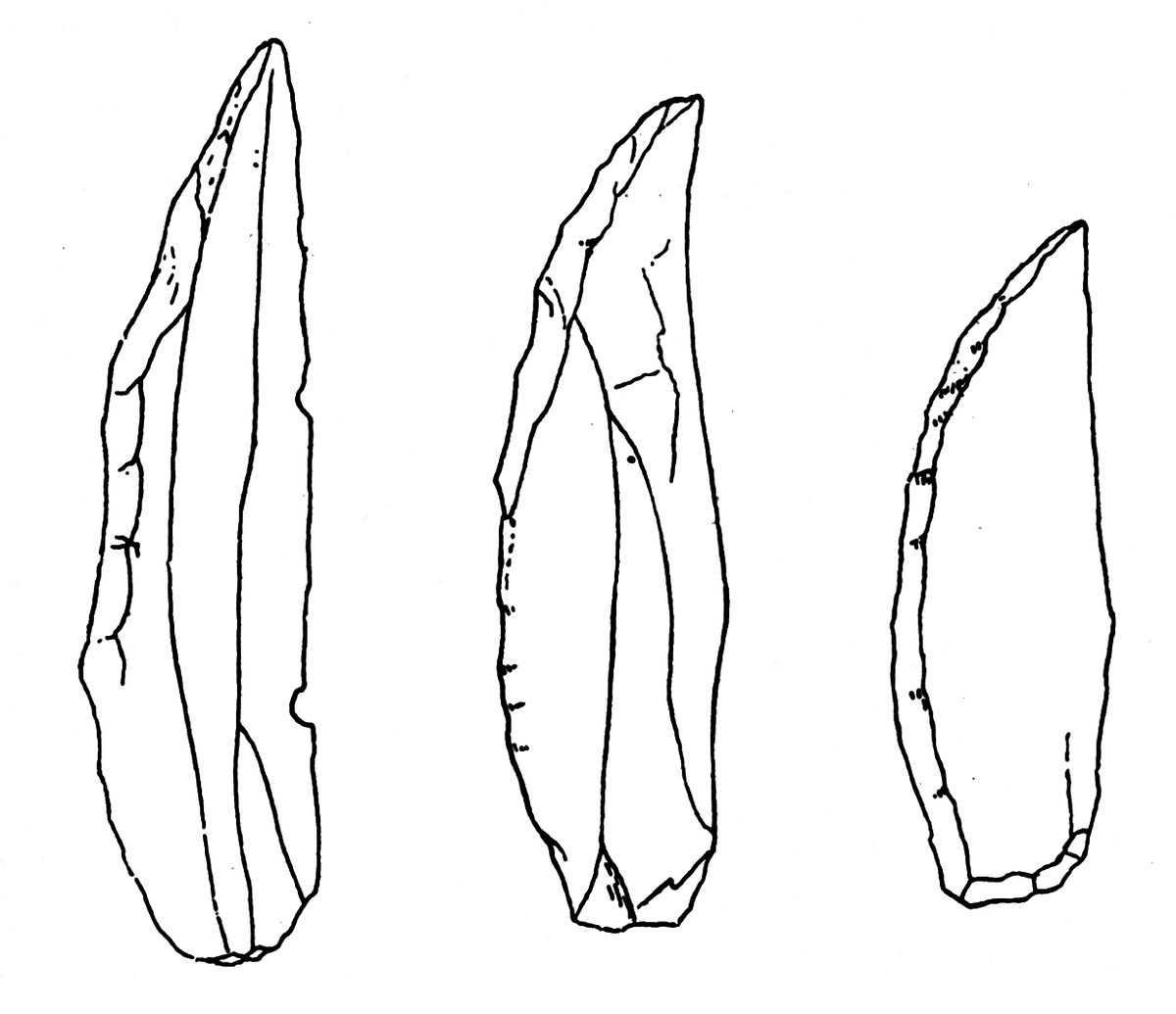
This is precisely the colloquium's central tension: is the transition a biological rupture (species replacement) or a more gradual process involving gene flow, cultural transfer, and local adaptation? As the seven lectures demonstrate, the answer likely differs by region.
The Filmed Lectures , Our Breakdown
Lecture 1 , Jean-Jacques Hublin: Framing the Question
 ▶
▶
From the Middle PalaeolithicMiddle PalaeolithicA Palaeolithic period (c. 300,000 to 40,000 years ago) associated mainly with Neanderthals and early Homo sapiens, marked by Levallois tools.→ to the Upper Palaeolithic: A Transition?
Jean-Jacques Hublin , Collège de France, 16 June 2026 (09:15, 09:55)
Hublin's opening lecture sets out the debate's terms with characteristic precision. He underscores that "transition" is itself an ambiguous term: does it denote a technological rupture, a demographic replacement, or both? He surveys current dating evidence and stresses that the Middle/Upper Palaeolithic boundary is not synchronous globally , it appears earlier in the LevantLevantA region of the eastern Mediterranean Near East (Israel, Lebanon, Syria, Jordan), a major crossroads of the first human migrations out of Africa.→ and North AfricaAfricaThe cradle of humankind: the continent where the first hominins appeared, then Homo sapiens around 300,000 years ago, before the expansion to the rest of the world.→ than in Western Europe.
Watch on YouTube →Lecture 2 , Tsenka Tsanova: Central and Eastern Europe
 ▶
▶
What Are the "Transitional" MP-UP Industries in Central-Eastern and Southeastern Europe?
Tsenka Tsanova , Collège de France, 16 June 2026 (11:00, 11:40)
Tsanova focuses on a critical geographic arc , from the Balkans to the Central European Plain , where late Levallois industries, blade-based technocomplexes, and early Upper Palaeolithic assemblages overlap. She demonstrates that Homo sapiens dispersals were not a single wave but multiple successive flows, traceable through technological shifts from Levallois to laminar production across the MP/UP boundary.
Watch on YouTube →Lectures 3, 5: Far East, Genetics, Western Europe (coming soon)
Three further lectures round out the morning and early afternoon programme. Nicolas Zwyns (UC Davis) presents evidence that Upper Palaeolithic-like blade assemblages appear in Mongolia as early as 45,000 years ago , sometimes predating European equivalents. Arev Pelin Sümer analyses ancient DNA from transitional-period individuals, revealing asymmetric gene-flow signals that point to repeated but geographically bounded contacts between Neanderthals and modern humans. Marie Soressi revisits the Western European "transitional" industries , above all the Châtelperronian , in light of new taphonomic analyses and refined radiocarbon dating. All three lectures will be available on the Collège de France channel shortly.
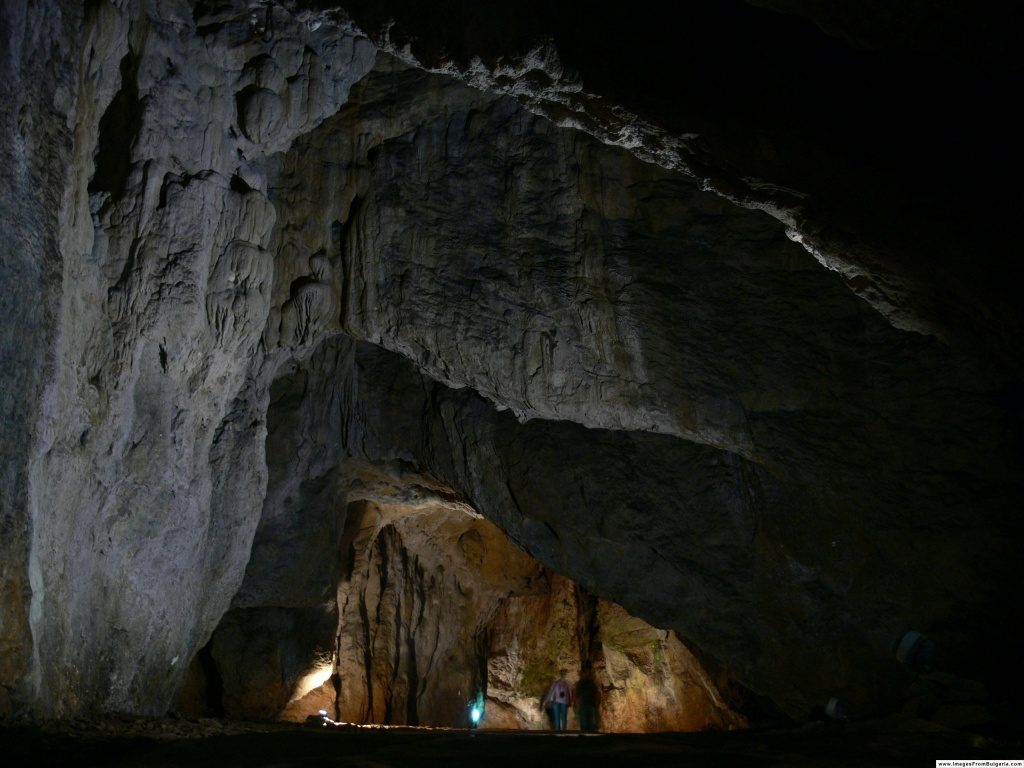
Bacho Kiro has become the reference site for Initial Upper Palaeolithic studies. Genomic analysis of the individuals found there reveals a recent Neanderthal introgressionIntrogressionThe lasting transfer of DNA segments from one population or species into another through repeated interbreeding, detectable in genomes long afterwards.→: their Neanderthal ancestors were at most six generations removed. A sign that coexistence was not merely geographic, but also reproductive.
Lecture 6 , Juliette Henrion: Arcy-sur-Cure
 ▶
▶
Arcy-sur-Cure: On the Trail of France's Last Neanderthals
Juliette Henrion , Collège de France, 16 June 2026 (15:20, 16:00)
Arcy-sur-Cure (Yonne, France) is one of the best-documented Châtelperronian sites in Europe. Henrion presents new results from Grotte du Renne, which has yielded Neanderthal remains alongside personal ornaments , perforated teeth, incised bone, collected fossils , and Upper Palaeolithic-style tools. The stratigraphic integrity of these layers has been contested, but new micro-taphonomic analyses are providing crucial evidence.
Watch on YouTube →Lecture 7 , Solange Rigaud: Ornaments, Social Networks and Cultural Diversification
 ▶
▶
Ornaments, Social Networks and Cultural Diversification During the MP, UP Transition
Solange Rigaud , Collège de France, 16 June 2026 (16:20, 17:00)
This lecture tackles one of the transition's most striking phenomena: the explosion of personal ornaments. Perforated teeth, marine shells, engraved bone, ochreOchreA red or yellow mineral pigment (iron oxides), used from prehistory for adornment, funerary rites and art.→ pigments , these symbolic objects signal long-distance exchange networks and publicly displayed cultural identity. Rigaud shows how the geographic distribution of ornament types allows us to reconstruct prehistoric social networks and distinguish the cultural groups that coexisted during the transition.
Watch on YouTube →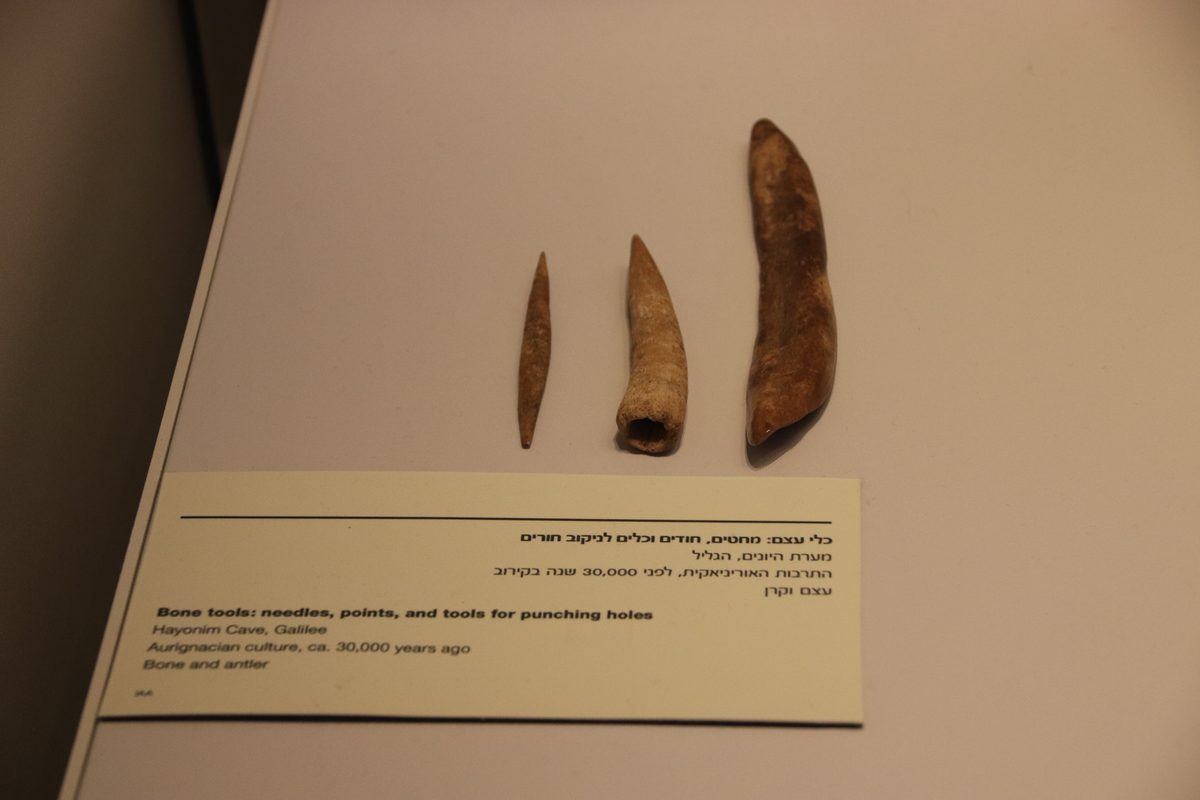
The proliferation of worked bone, antler and ivory is one of the clearest markers of the transition. These materials allow forms impossible to achieve in flintFlintA hard, brittle siliceous rock, knapped by prehistoric people to produce blades, points and sharp tools.→ , slender projectile points, hooks, eyed needles , and reflect a level of technical planning and cultural transmission that marks a qualitative shift in human behaviour.
What the Science Says , Beyond the Lectures
Several recent studies illuminate the questions raised at this colloquium. A 2023 paper in Nature confirmed the presence of Homo sapiens at Ranis (Germany) as early as 45,000 years ago , individuals adapted to the cold steppeSteppeA vast semi-arid, treeless grassland of Eurasia, suited to nomadic herding and the horse; a corridor for the movement of peoples and technologies in later prehistory.→ of Isotope Stage 3, well before the durable European occupation by modern humans. A 2024 study in Science Advances modelled Neanderthal, sapiens coexistence dynamics relative to ecosystem carrying capacity: in low-productivity environments, Neanderthals disappeared before the full arrival of modern humans, driven out by indirect resource competition alone. A 2025 paper in PNAS on La Roche-à-Pierrot (Saint-Césaire) brought new data on Châtelperronian shell ornaments and pigments associated with Neanderthal remains, showing strong similarities with contemporaneous Aurignacian productions , opening anew the question of independent invention versus acculturation.
Our Take
This Collège de France colloquium is as much a lesson in method as a scientific update. It shows that the Middle, Upper Palaeolithic transition is not an event but a process , geographically heterogeneous, biologically complex, culturally multiform. There was no cognitive "big bang" that suddenly endowed Homo sapiens with superiority over Neanderthals. There were contacts, borrowings, local extinctions, regional persistence, and ultimately a shift whose mechanisms we still only partially understand.
The lectures available now , and those coming online shortly , form an exceptional panorama of where research stands in 2026. They are free, open to all, and scientifically rigorous in a way rarely matched in public-facing content. Bookmark the channel.
- Hublin (1) , The transition, in question
- Tsanova (2) , Central and Eastern Europe: from Levallois to laminar
- Henrion (6) , Arcy-sur-Cure: France's last Neanderthals
- Rigaud (7) , Ornaments, social networks and cultural diversification
Lectures by Zwyns (Far East), Sümer (genetics) and Soressi (Western Europe) will be linked here as soon as they appear on the Sciences de la vie , Collège de France channel.
Sources
- Collège de France , Colloquium programme (16 June 2026): college-de-france.fr
- Hublin J.-J. et al. (2020) , Initial Upper Palaeolithic Homo sapiens from Bacho Kiro Cave, Bulgaria. Nature, 581, 299, 302.
- Trevorrow A. et al. (2023) , Homo sapiens reached higher latitudes of Europe by 45,000 years ago. Nature, 615, 388, 395.
- Camarós E. et al. (2024) , Neanderthal coexistence with Homo sapiens in Europe was affected by herbivore carrying capacity. Science Advances, 10, eadi4099.
- Caron F. et al. (2025) , Châtelperronian cultural diversity at its western limits. PNAS, 122, e2508014122.
Je vais utiliser ce contenu dans nos ateliers de médiation au musée. Narration accessible et rigoureuse.
Je vais utiliser cet article comme document-source en classe. La clarté de l'écriture est rare.
Je télécharge les images pour ma veille visuelle. Le traitement éditorial est vraiment soigné.
Les recherches publiées en 2025-2026 sur cette transition enrichissent considérablement le débat. La coexistence possible entre Homo sapiens et Néandertaliens pendant plusieurs millénaires dans certaines régions d'Europe complexifie les scénarios de remplacement simple. Il faut désormais parler de transition en mosaïque, variable selon les régions géographiques.
La transition entre le Paléolithique moyen et le Paléolithique supérieur est l'une des grandes questions de la préhistoire européenne. Ce basculement correspond au remplacement des Néandertaliens par les Homo sapiens, mais aussi à l'explosion de l'art pariétal et des parures. La question de savoir si ces innovations ont été transmises ou réinventées reste ouverte et passionnante.