A toolkit forgotten in the glacial steppeSteppeA vast semi-arid, treeless grassland of Eurasia, suited to nomadic herding and the horse; a corridor for the movement of peoples and technologies in later prehistory.→
Around thirty thousand years ago, somewhere on the windswept plains of what is now South Moravia, a hunter set down, lost or abandoned a small set of stone tools. Twenty-nine blades and bladelets of silexFlintA hard, brittle siliceous rock, knapped by prehistoric people to produce blades, points and sharp tools.→, carefully gathered together, most likely slipped into a pouch or a container made of hide, bark or plant fibres. That container vanished long ago, dissolved by the millennia, yet its contents stayed grouped, as if frozen at the very moment they were laid on the ground. It is this modest cluster of stones, uncovered during excavations carried out in 2021 at the site of Milovice IV, that archaeologists now interpret as the personal toolkit of a single GravettienGravettianGravettianAn Upper Palaeolithic culture (c. 33,000–21,000 BC) spanning from the Atlantic to Siberia, famous for its ivory female figurines ("Venuses") and, at Dolní Věstonice, the oldest fired ceramics.→An Upper PalaeolithicPalaeolithicThe oldest and longest period of prehistory (c. 3.3 Ma–12,000 BC), defined by chipped stone tools and a hunter-gatherer way of life.→ culture (c. 33,000–21,000 BC) famous for its female figurines, the "Venuses".→ hunter-gatherer.
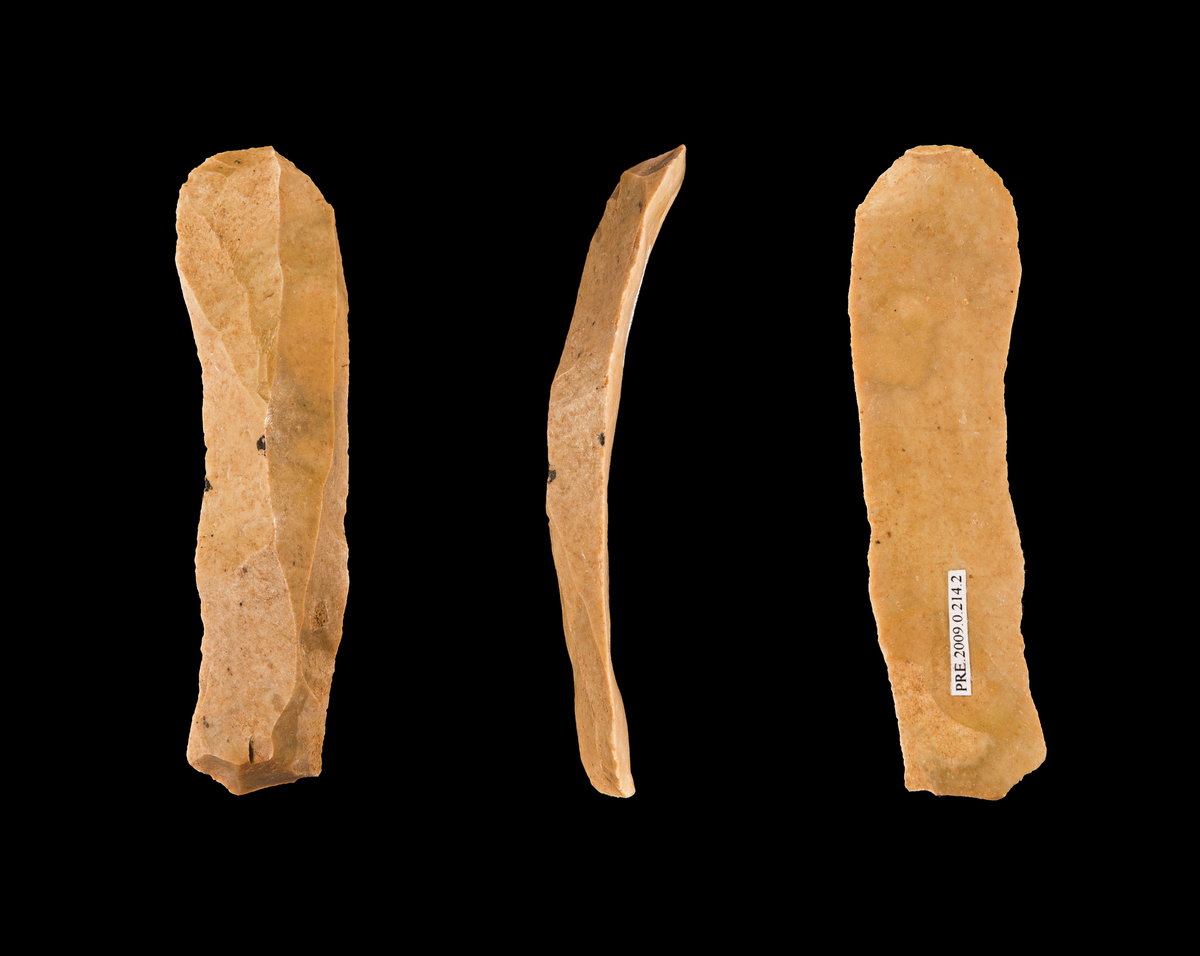
There is something striking about the scene. In prehistoryPrehistoryThe span of human history before the invention of writing, from the Palaeolithic to the Metal Ages, known mainly through material remains.→, we are used to working with heaps of objects accumulated over centuries, mixed together, trampled, reworked by people and animals. Here, by contrast, everything points to a single gesture, almost intimate: that of a person who carried their tools with them and who, one day, left them behind. The Milovice IV find was presented in a study published in 2025 in the Journal of Paleolithic Archaeology1, and it quickly drew attention, because the personal belongings of a single individual, preserved as they were, are extremely rare for this period.
Milovice IV, a window onto Palaeolithic Moravia
The site of Milovice lies in South Moravia, in a region of the Czech Republic already well known to prehistorians. For more than a century, this corner of Central Europe has yielded some of the richest mammoth-hunter camps on the continent. The hills that overlook the valleys offered ideal vantage points over the herds, along with access to water, wood and raw materials. Milovice IV is only one of the localities within this vast complex, but it produced an assemblage of remarkable coherence.
The 2021 excavations brought to light an archaeological layer containing, among other things, this tight group of twenty-nine stone pieces. What struck the researchers was the concentration: the blades and bladelets were not scattered across the living surface, as knappingknappingThe set of operations for fracturing a stone block to extract flakes or blades.→ waste or tools lost over successive occupations would be. They formed a compact, coherent set, as if they had been held together by a container that has since disappeared. It is this apparently minor detail that shaped the entire interpretation.
For in the soils of the Paléolithique supérieurUpper PalaeolithicThe final phase of the Palaeolithic (c. 45,000 to 10,000 years ago), marked by Homo sapiensHomo sapiensThe present-day human species, which emerged in Africa around 300,000 years ago, the only surviving human lineage after the extinction of Neanderthals and Denisovans.→ in Europe, art, ornaments and a succession of cultures (AurignacianAurignacianThe earliest culture of the European Upper Palaeolithic (c. 43,000–33,000 BC), tied to the arrival of Homo sapiens and the first artworks.→, Gravettian, SolutreanSolutreanA European Upper Palaeolithic culture (c. 22,000–17,000 BC), remarkable for its leaf-shaped lithic points worked with flat retouch. Contemporary with the second art phase of Cosquer Cave.→, MagdalenianMagdalenianThe last great Upper Palaeolithic culture (c. 17,000–12,000 BC), the peak of cave art (Lascaux).→).→, organic matter is rarely preserved. Leather, bark, fibres, cordage: all of it rots and vanishes, save under exceptional conditions of permanent freezing or waterlogging. At Milovice IV, the container itself did not survive. But the arrangement of the stones, grouped rather than dispersed, argues strongly for deliberate storage. Archaeologists speak of an assemblage preserved in position, a precious clue that turns a mere batch of flint into evidence of human behaviour.
Twenty-nine blades and bladelets, the gear of a mobile craftsman
What did this toolkit contain? Twenty-nine pieces of knapped stone, blades and lamelleBladeletA small flint blade, often under a centimetre wide, used as a projectile armatureArmatureThe cutting or piercing element (stone, bone) fixed to the tip of an arrow, javelin or spear.→ or tool in the Upper Palaeolithic.→s. A blade, in the vocabulary of prehistory, is an elongated flake, at least twice as long as it is wide, detached methodically from a block of raw material called a core. The bladelet is its miniature version, thin and narrow. These elongated blanks are the technical signature of Upper Palaeolithic hunters: instead of shaping large, massive tools, these populations mass-produced regular blades, sparing of raw material, which they could then turn into knives, scrapers, burins or projectile inserts.
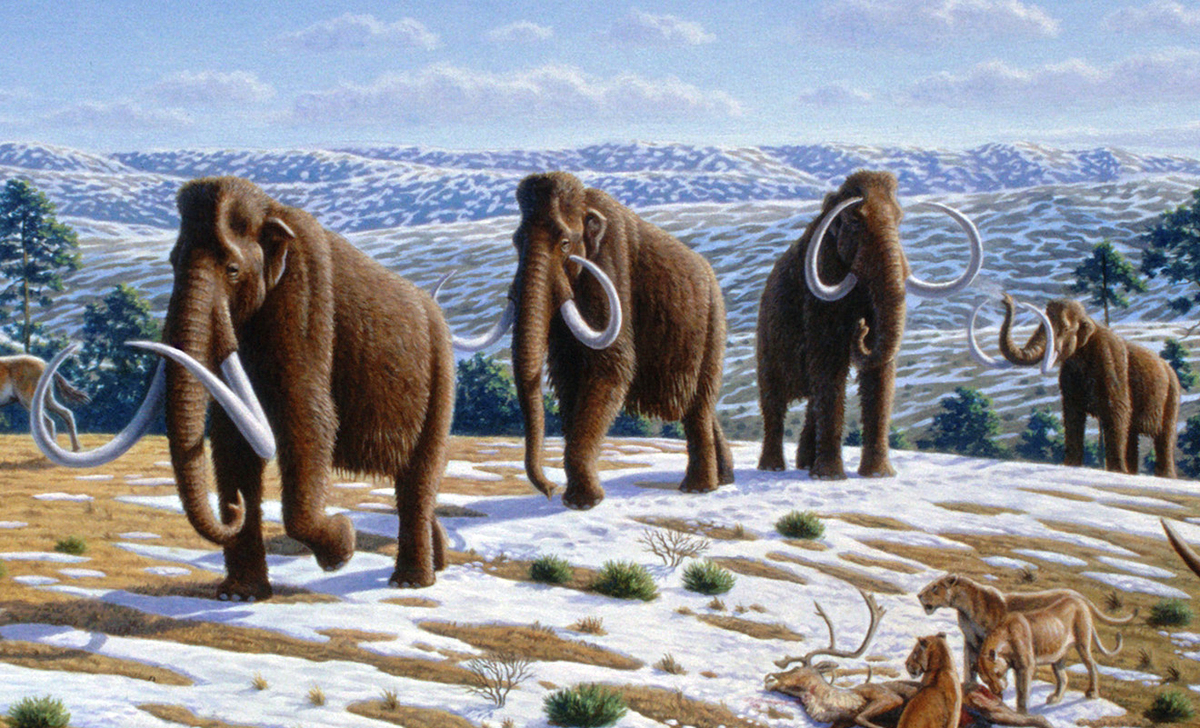
Bladelets in particular played a decisive role in hunting weaponry. Hafted side by side along a wooden or bone shaft, they formed composite cutting edges of formidable efficiency, capable of inflicting wide wounds on game. A spear fitted with several bladelets penetrated deeply and made the animal bleed, increasing the chances of bringing down a large prey. In a world peopled by horses, reindeer, bison and mammoths, having reliable and repairable weaponry was a matter of survival.
The make-up of the assemblage, combining larger blades and fine bladelets, suggests precisely a versatile kit. One can imagine everything needed to cut meat, work a hide, repair a weapon or make a new one. This is the typical equipment of a mobile individual, one who had to provide for himself far from any fixed camp, carrying with him the essentials of his technology. Gathering these pieces into a single container followed a simple logic: lose nothing, keep everything within reach, stay ready to act.
The kit of a single man?
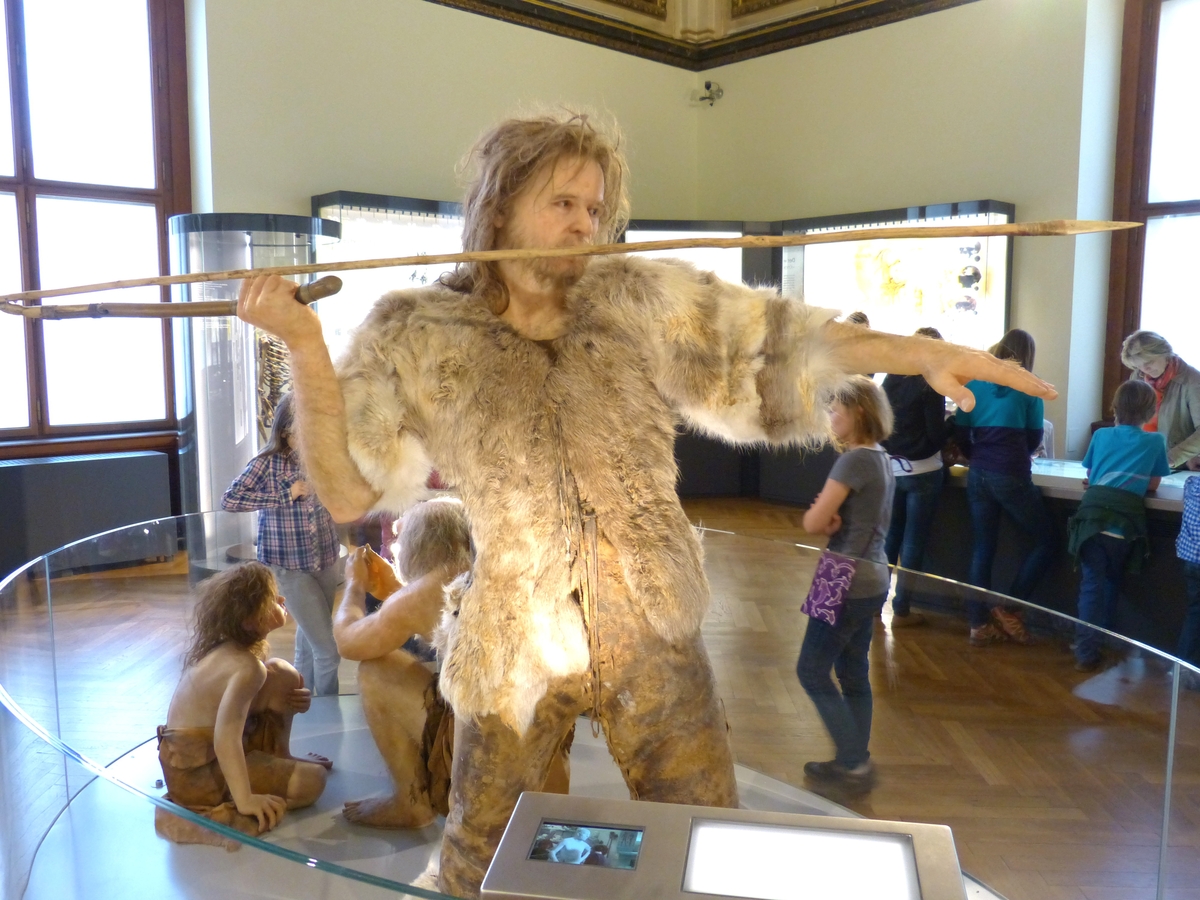
The most compelling interpretation, and the one favoured by the authors of the study, is that this batch represents the personal equipment of a single hunter-gatherer. Not a collective stock, not a reserve of raw material shared by a group, but the toolkit of one individual, shaped by his needs, his movements and his habits. This hypothesis rests on several converging elements: the small quantity of objects, their grouping, their functional and complementary character, and the absence of associated knapping waste that would betray a workshop.
Here we must keep a cool head. The idea of an individual toolkit is a reconstruction, not a raw fact. No one has found the body of this hunter, nor his bag, nor his name. What archaeologists observe is a coherent set of stones, and what they propose is the most economical explanation to account for that coherence. This caution matters: between the material data and the story drawn from it, there is always a share of interpretation. But the hypothesis holds up well, because it agrees with what is known elsewhere of mobile hunter societies, in which each adult individual probably had his own basic equipment.
If we accept this reading, then the Milovice IV toolkit becomes an object of considerable human value. It brings us closer to a singular person, with his gestures and his trajectory, where prehistory most often speaks to us only of anonymous groups and statistical averages. To hold in one's hand the tools of a single man, to know that they travelled together in one and the same pouch, is to recover a fragment of biography thirty thousand years old.
Stones brought from afar, one hundred and thirty kilometres and more
The most spectacular detail of the discovery lies not in the number of tools, but in their geographical origin. By analysing the raw material of each piece, the researchers found that most of the flints did not come from the immediate surroundings of the site. The bulk came from outcrops situated at least one hundred and thirty kilometres to the north. To these are added radiolarites, a siliceous rock, originating in western Slovakia, as well as an opal transported from a source about one hundred and thirty-five kilometres away.
One hundred and thirty kilometres on foot, across a landscape of cold steppe, with no road and no mount, represents a considerable effort. For a prehistorian, such a distance is no trivial matter: it means that raw material circulated, in one way or another, over expanses far larger than the mere daily hunting territory. These stones did not end up there by chance. They were transported, selected, carried from one region to another by human beings who knew exactly what they were looking for.
The diversity of the sources reinforces this impression still further. Flint from the north, radiolarites from the east, opal from elsewhere: the Milovice IV toolkit is like a small map of glacial Central Europe, condensed into a container of hide. Each rock tells of a place, a source, a point on the vast horizon travelled by these populations. Together they sketch a world far more connected than one sometimes imagines when thinking of cave men.
Networks, exchange or long journeys?
How can we explain that stones brought from so far away ended up gathered in the toolkit of a single hunter? Two broad hypotheses compete, and there is no need to choose one against the other. The first is that of direct mobility: the hunter, or his group, travelled long distances himself over the seasons, picking up raw material wherever he met it, and keeping the best blocks to knap later. The second is that of exchange: the stones passed from hand to hand, from group to group, through encounters, alliances or barter, until they reached the man who finally carried them off.
In both cases the conclusion is the same: the societies of the GravettienGravettianAn Upper Palaeolithic culture (c. 33,000–21,000 BC) famous for its female figurines, the "Venuses".→ were by no means isolated. Whether it involved long journeys or exchange circuits, these distances imply extensive social and geographical networks, contacts maintained over hundreds of kilometres, a fine knowledge of the territory and its resources. Far from the cliché of the small band closed in on itself, we glimpse a web of relationships linking the valleys, the uplands and the plains of Central Europe. Information circulated, raw material too, and probably people as well.
These networks had a vital function. In a harsh environment, subject to abrupt seasonal variations, maintaining ties with neighbouring groups could make the difference between surviving and perishing. Knowing where to find good silexFlintA hard, brittle siliceous rock, knapped by prehistoric people to produce blades, points and sharp tools.→, being aware of the migration routes of the game, being able to count on the welcome of allies in times of scarcity: all of this rested on relationships woven and sustained over long distances. The Milovice IV toolkit, with its motley stones, is a mute but eloquent witness to this interconnected glacial Europe.
The Gravettian world, hunters of mammoths
To grasp the significance of this discovery, it must be placed back in its own time. The Gravettian designates a great culture of the European Upper Palaeolithic, which flourished between roughly thirty-four thousand and twenty-four thousand years before present. This is the age of the great mammoth hunters, of the female figurines known as Venuses, of burials sometimes richly adorned, of structured camps where the bones of large herbivores were burned for lack of sufficient wood. Czech Moravia, with world-famous neighbouring sites, occupies a central place in this story.
The people of the Gravettian lived in a world colder than ours, dominated by steppe and tundra, roamed by immense herds. They had developed a sophisticated toolkit, based on the production of regular blades and bladelets, on the use of bone, ivory and reindeer antlerantlerThe mass of solid bony material that male deer grow on their heads and renew each year, a sought-after raw material for tools and weapons.→, on sewing and weaving techniques whose trace survives in impressions of fibres. Their art, their ornaments and their funerary rites reveal a rich symbolic life, very far from the image of crude beings solely occupied with survival.
Within this framework, the Milovice IV toolkit is not an isolated object but a coherent fragment of a way of life. It illustrates in concrete terms the mobility of these hunters, their technical mastery, their relationship to raw material and to space. It gives flesh to the grand reconstructions that prehistorians build from thousands of remains: behind the distribution maps and the statistics, there were individuals who walked, knapped, hunted and carefully stowed their tools before taking to the road again.
What the dating reveals, and the share of uncertainty
The chronology of the discovery rests on a layer containing charcoal, dated by radiocarbon between thirty thousand two hundred and fifty and twenty-nine thousand five hundred and fifty years2. This bracket places the toolkit at the heart of the Gravettian, in the depths of the Ice Age. To date charcoal associated with a layer does not mean directly dating each tool, but the stratigraphic association is solid, and the order of magnitude, thirty thousand years, is not in dispute3.
It is worth stressing the distinction between the facts and their interpretations, for this lies at the core of an honest scientific approach. The facts here are clear: twenty-nine blades and bladelets, grouped, made of identified raw materials, many of them coming from more than one hundred and thirty kilometres away, in a layer dated to about thirty thousand years. The interpretations add a layer of narrative: the pouch of perishable material, the idea of a single owner, the choice between distant journey and exchange. These proposals are plausible, coherent, supported by comparisons, but they remain hypotheses.
This rigour in no way diminishes the interest of the discovery, quite the opposite. To recognise what we know and what we suppose is to give the public the means to understand how archaeology works. The Milovice IV toolkit is worth as much for what it teaches us as for what it invites us to imagine with caution4. A man, thirty thousand years ago, gathered his tools with care. The rest, we reconstruct step by step, always distinguishing the stone from the story. Perhaps this is the finest lesson of this discreet assemblage exhumed from the soils of Moravia: prehistory does not merely hand us objects, it teaches us to think about the distance between the trace and the history.
Je prépare un voyage dans cette région. Cet article m'est très utile pour comprendre ce que je vais voir.
Ce qui me plaît c'est que vous citez vos sources. Je peux vérifier par moi-même.
Je lis vos articles le soir après le travail. Instructif mais pas épuisant. C'est parfait.