In 1847, a French engineer named Boucher de Perthes pulled strange almond-shaped stones from the gravel pits of Saint-Acheul, near Amiens. His contemporaries mocked him: he claimed these "axes" had been made by humans who lived before the biblical flood. Twenty years later, geology proved him right. Though the culture that now bears this French site's name was discovered in Europe, its origins lie 6,000 kilometres to the south, in the African savannah, 1.76 million years ago.1
Born in Kenya, Spread across Three Continents
The site of Kokiselei, on the shores of Lake Turkana in Kenya, has yielded the oldest known AcheuleanAcheuleanLower Palaeolithic technical culture characterised by hand axes, present across three continents.→ bifaces. Dated to 1.76 million years ago by Christopher Lepre and colleagues in a 2011 Nature study, these tools predate previously known specimens by at least 300,000 years. What makes the discovery remarkable is that virtually identical bifaces then appear across an enormous geographic zone: from East AfricaAfricaThe cradle of humankind: the continent where the first hominins appeared, then Homo sapiens around 300,000 years ago, before the expansion to the rest of the world.→ to Western Europe, from the Near EastNear EastA region of western Asia (Levant, Mesopotamia, Anatolia, Iran), cradle of the Neolithic revolution, agriculture, the first cities and writing.→ to India, the same tool form persists with puzzling homogeneity for over a million years.2
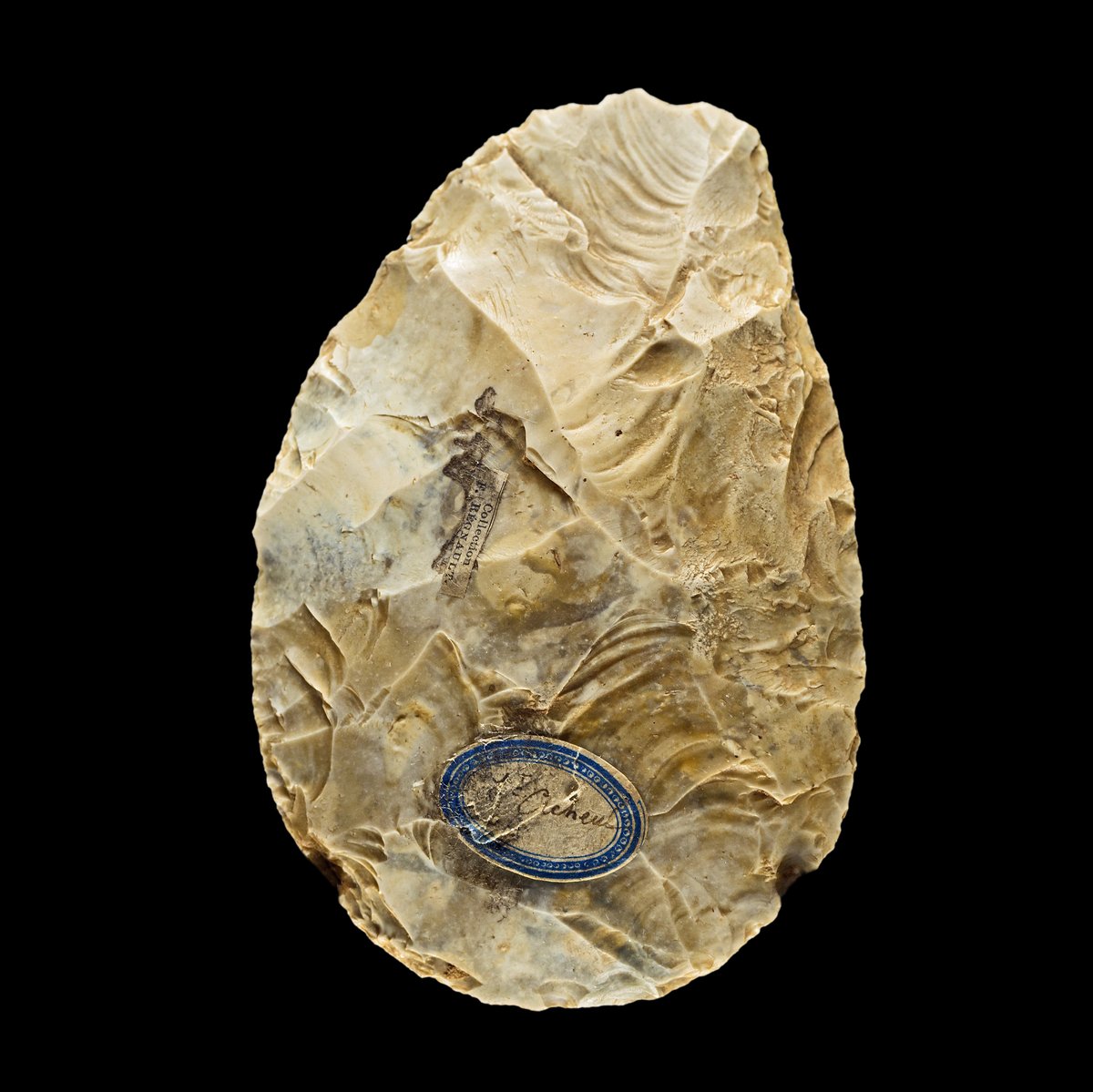
Acheulean tools were made, depending on the period and region, by Homo ergaster in East Africa, Homo erectus in Asia, and Homo heidelbergensisHomo heidelbergensisMiddle Pleistocene human species, often seen as the common ancestor of Neanderthals and our own species.→ in Europe. Hominins with different cognitive abilities and anatomies nonetheless produced the same tool using very similar techniques. How can such coherence across time and space be explained?
The Enigma of Perfect Bifaces Never Used
The first anomaly that prehistorians struggle to explain is that of "monumental" bifaces: large, exquisitely worked pieces that traceological analysis reveals were never used. Found notably at Boxgrove in England and Olorgesailie in Kenya, these tools represent hours of patient work. Their edges are straight, their faces symmetrical, their balance calculated with a precision that exceeds functional needs. Yet no trace of wear.
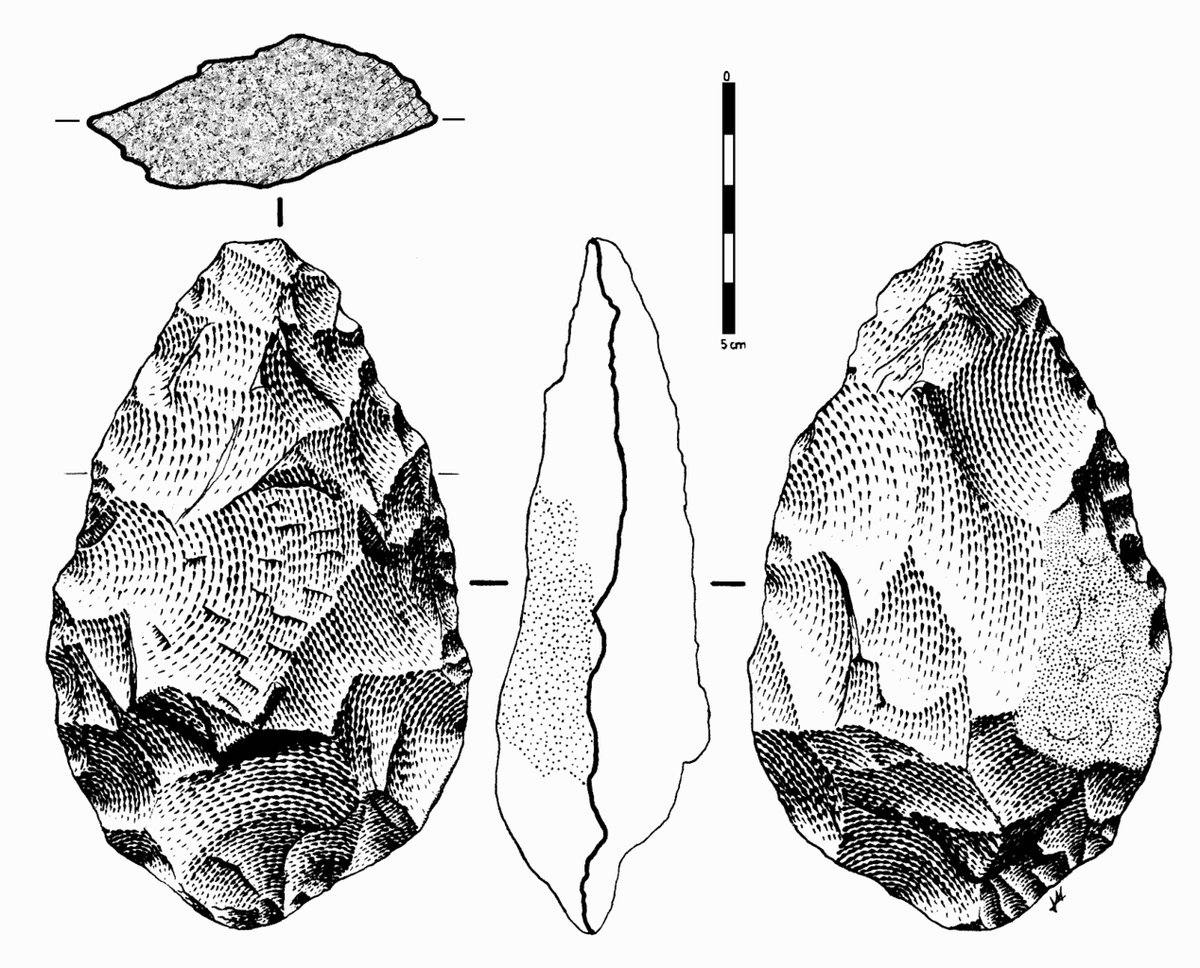
Several hypotheses have been proposed. Some researchers see these perfect bifaces as a sexual signal: the ability to produce such a beautiful tool would demonstrate the maker's genetic quality, much like elaborate plumage in birds. Others see a social function, a group identity marker in a world where human bands needed to recognise and distinguish themselves. Still others suggest they were reserves of raw material transported over long distances before being deployed elsewhere.
1.5 Million Years of an Unchanging Tradition
The second enigma lies in the almost incomprehensible duration of the Acheulean. From 1.76 million to around 300,000 years ago, a span of 1.46 million years, hominins produced remarkably similar bifaces. To put this in perspective: agricultureAgricultureThe cultivation of plants and production of food by working the soil, which emerged in the Neolithic in the Near East and independently elsewhere; it radically transformed human societies.→ is only 12,000 years old, writingWritingA system of conventional signs used to fix language or information durably; its appearance (c. 3300 BC) marks, by convention, the end of prehistory.→ 5,000, and the Industrial Era 250 years. The Acheulean covers a period six hundred times longer than all of recorded human history.
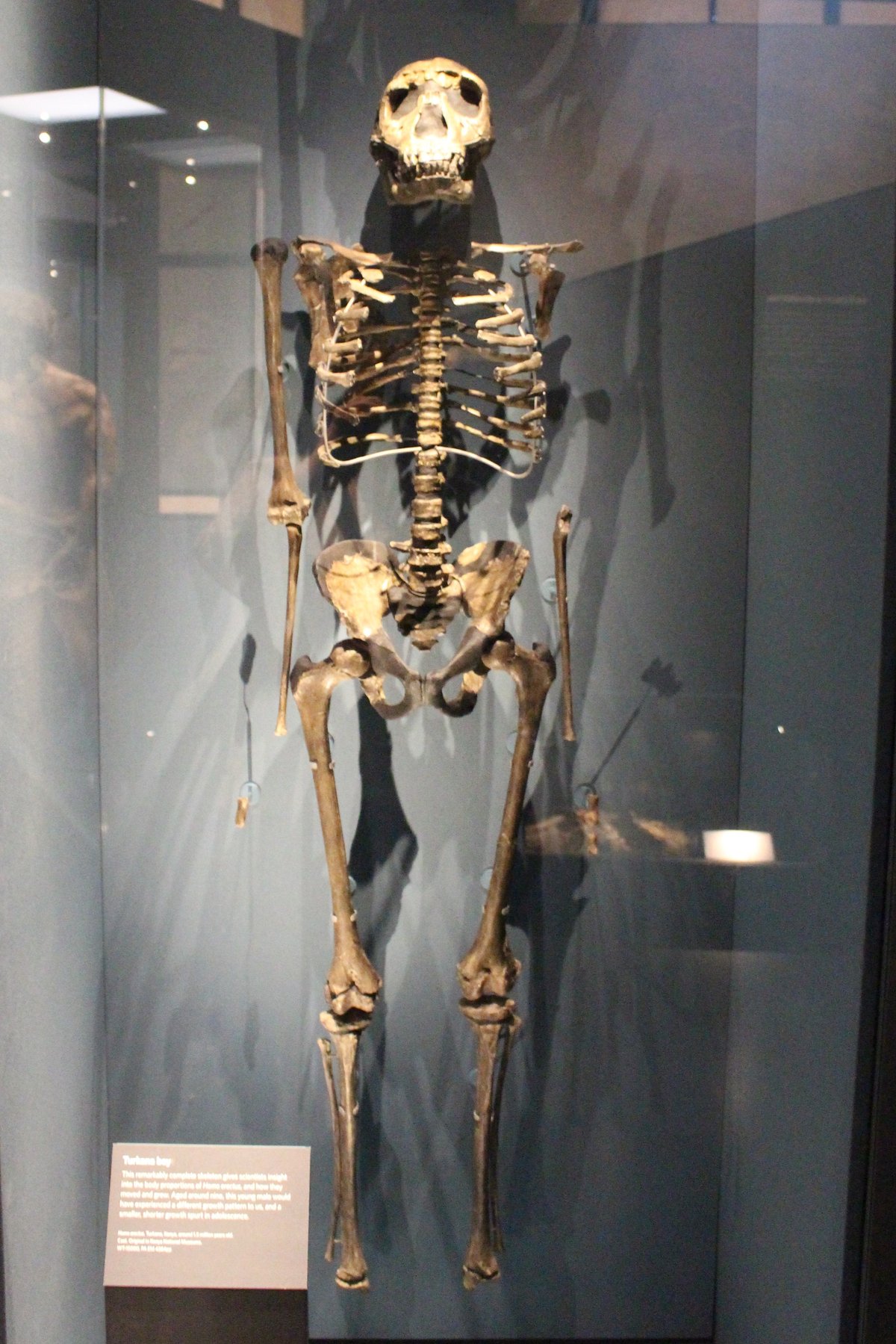
How does a technique perpetuate itself for so long, across so many generations and such a vast expanse, apparently without notable rupture or innovation? The question is troubling because the Acheulean was transmitted without articulate language, without writing and perhaps without formal instruction as we understand it. Learning likely occurred through direct imitation, generation after generation, across tens of millennia. It was only around 300,000 years ago, with the emergence of the Middle PalaeolithicMiddle PalaeolithicA Palaeolithic period (c. 300,000 to 40,000 years ago) associated mainly with Neanderthals and early Homo sapiens, marked by Levallois tools.→ and its Levallois tools, that this ancient tradition ended and gave way to more varied and adaptable technologies.
La comparaison géographique via la carte interactive, c'est ce qui manquait dans la vulgarisation.
J'ai enfin trouvé un site qui explique la préhistoire sans me noyer dans le jargon.