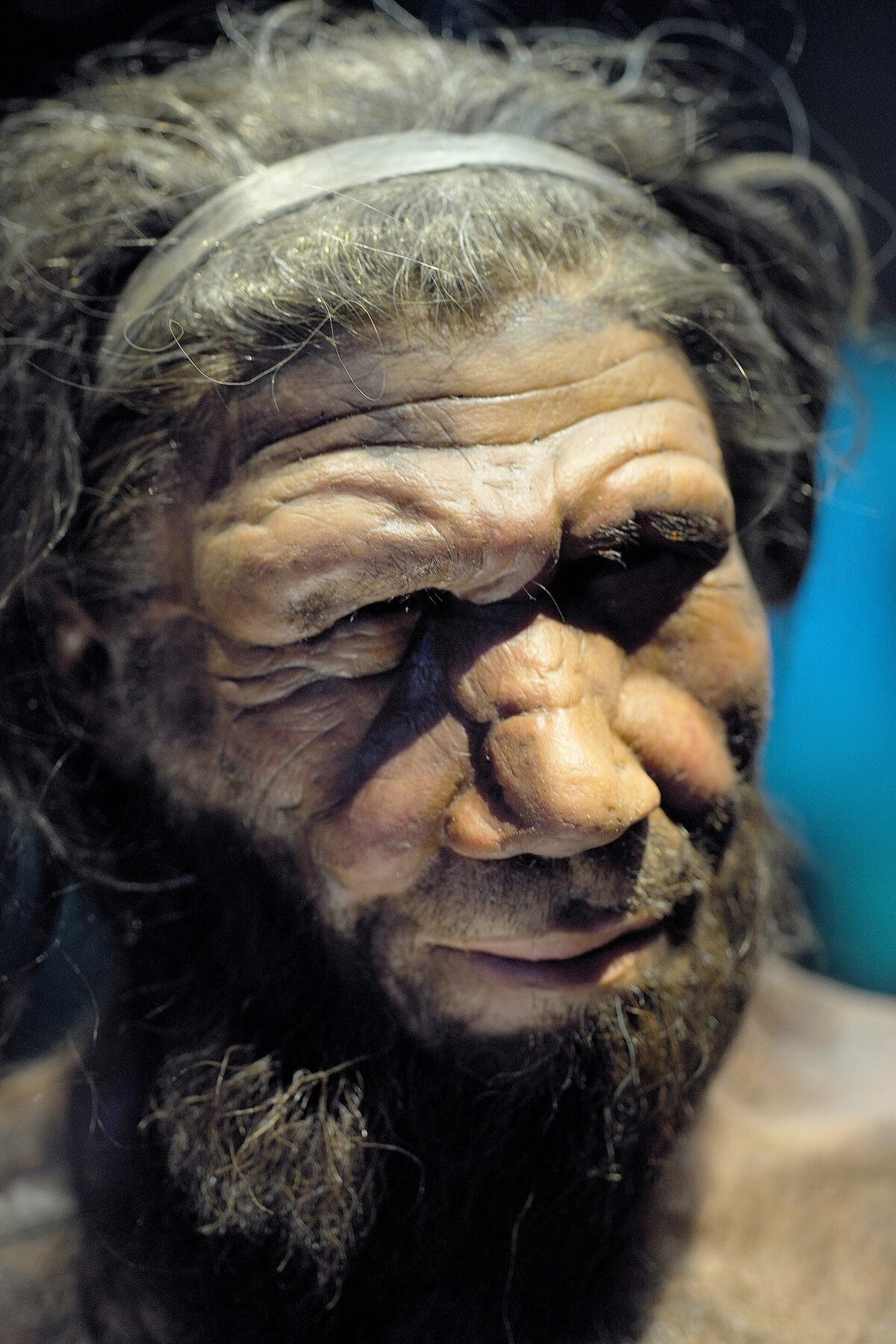
For more than a century, the image of Neanderthal man has been in constant flux. Long reduced to the caricature of an archaicArchaicRefers to an ancient, now-extinct human population or form (Neanderthals, Denisovans, ghost lineages), as opposed to anatomically modern humans.→, stooped brute, this vanished cousin now appears as a deeply human being, capable of caring for the sick, burying the dead, fashioning sophisticated tools and perhaps even sketching out forms of art. Yet despite the accumulation of discoveries, one question remains stubbornly open: why did this population, which reigned over Eurasia for hundreds of thousands of years, eventually die out some forty thousand years ago, while our own species, Homo sapiensHomo sapiensThe present-day human species, which emerged in Africa around 300,000 years ago, the only surviving human lineage after the extinction of Neanderthals and Denisovans.→, flourished and spread across every continent? Hypotheses abound: climateClimateThe long-term average atmospheric conditions of a region; its variations (glaciations, aridifications) shaped migrations, agriculture and the collapse of prehistoric societies.→ change, competition for resources, epidemics, failing demographics. A study conducted by researchers from the CNRS and the French Blood Establishment, bringing together notably the palaeoanthropologist Silvana Condemi and the biologist Stéphane Mazières, has recently added an unexpected and fascinating piece to this puzzle: blood. By decrypting the blood groups of Neanderthal and its cousin Denisova from their genomes, these scientists have uncovered troubling clues about the reproductive health, genetic diversity and vulnerability of these populations.
Blood, that liquid tissue we all share, tells a story we did not expect of it. Beyond its vital function of transporting oxygen, it carries on its surface inherited molecular markers that define what we call blood groups. These markers are by no means neutral: they govern compatibilities between individuals, condition transfusions, and above all, in certain configurations, can turn a pregnancy into a biological tragedy. It is precisely this dimension that makes the study of Neanderthal blood groups so compelling. For if we can reconstruct, from fragments of ancient DNADNAThe molecule carrying genetic information, used to reconstruct kinship between species.→Ancient DNAGenetic material preserved in old remains, often degraded, sequenced with cutting-edge techniques.→, the nature of the blood groups carried by these vanished men and women, we can then ask about the consequences of their unions, among themselves and with us, and try to understand whether part of their fate was sealed in the intimacy of their blood cells.
Understanding blood groups: ABO, Rhesus and much more
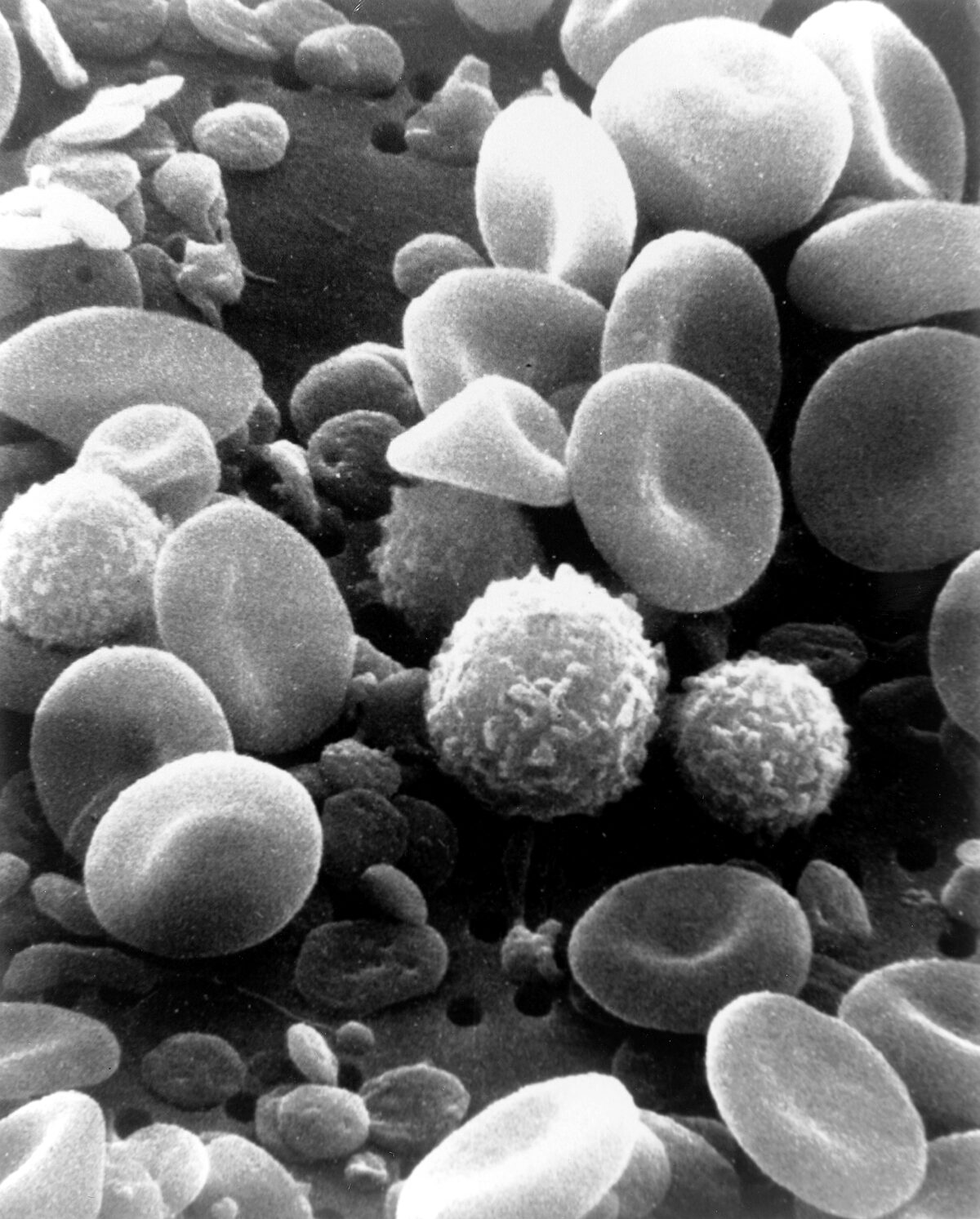
Before plunging into prehistoryPrehistoryThe span of human history before the invention of writing, from the Palaeolithic to the Metal Ages, known mainly through material remains.→, it is worth recalling what a blood group really is. When the subject comes up in everyday life, we spontaneously think of the famous ABO system, which distinguishes groups A, B, AB and O. This system, discovered at the very beginning of the twentieth century by Karl Landsteiner, rests on the presence or absence of certain sugar molecules, the antigens, fixed to the surface of red blood cells. A person of group A carries antigen A, a person of group B carries antigen B, group AB carries both, and group O carries none. To these antigens correspond antibodies naturally present in the plasma: an individual of group A possesses antibodies directed against antigen B, and vice versa. This is why mixing incompatible bloods during a transfusion can provoke a massive and potentially fatal immune reaction.
But the ABO system is only the tip of the iceberg. The human body in fact has several dozen blood group systems, defined by hundreds of different antigens. Among them, the most important clinically, after ABO, is without doubt the Rhesus system, abbreviated Rh. This system owes its name to the rhesus macaque monkey, in which the antigen was initially identified. The Rhesus system rests mainly on the presence or absence of a protein called antigen D on the surface of red blood cells. When this protein is present, the individual is said to be Rhesus positive; when it is absent, they are Rhesus negative. In present-day human populations, about eighty-five per cent of people are Rhesus positive, the rest being Rhesus negative, with significant variations across regions of the globe.
What makes the Rhesus system so crucial is not only transfusion, but pregnancy. Unlike the antibodies of the ABO system, which are present from the outset, anti-Rhesus antibodies only form after a first exposure to antigen D. This peculiarity, seemingly innocuous, opens the door to a fearsome phenomenon well known to doctors: feto-maternal incompatibility. When a Rhesus negative mother carries a Rhesus positive child, her body can, under certain circumstances, begin to manufacture antibodies directed against the blood of her own child. We shall return to this at length, for it is here that the potential drama of unions between human populations with different blood groups is knotted. Besides ABO and Rhesus, other systems exist, such as the Kell, Duffy, Kidd or MNS systems, each defined by its own genes and antigens. All together, they compose a biological signature of extraordinary richness, unique to each individual and each population.
Reading blood in ancient DNA: a feat of palaeogenetics
How, then, can one claim to know the blood group of an individual who died tens of thousands of years ago, of whom nothing remains but fossilised bones? The answer lies in one word: palaeogeneticsPalaeogeneticsThe study of ancient DNA extracted from remains (bones, teeth, sediments, walls) to reconstruct the past of populations.→. This discipline, born in the nineteen-eighties and which has undergone a spectacular boom over the past two decades, consists of extracting, sequencingSequencingReading the order of the bases (A, T, G, C) of a DNA molecule; high-throughput sequencing reads millions of fragments in parallel.→ and analysing the ancient DNAAncient DNAGenetic material preserved in old remains, often degraded, sequenced with cutting-edge techniques.→ preserved in biological remains. Technical progress has been such that it is now possible to reconstruct the complete genome of a Neanderthal or a DenisovanDenisovanAn extinct human population, cousin of the NeanderthalsNeanderthalsA fossil humanity of Eurasia, robust and cold-adapted, extinct around 40,000 years before present.→, identified in 2010 from the DNA of remains in Denisova Cave (Siberia).→ from a fragment of bone or a tooth, sometimes minuscule. The Swedish scientist Svante Pääbo, a pioneer of this research, indeed received the Nobel Prize in Medicine in 2022 for his foundational work on the genomes of extinct hominidsHomininHomininMember of the subtribe Hominina, comprising the human lineage (Homo, Australopithecus, Paranthropus…) but excluding orangutans and gibbons. The term progressively replaces "hominid" in its narrow sense.→A member of the human lineage in the broad sense, including modern humans, their ancestors and related great apesgreat apesThe family of great apes (Hominidae) comprising orangutans, gorillas, chimpanzees, bonobos and humans.→.→.
Now, blood groups are not inscribed in the blood itself, which does not fossilise, but in the genes. The antigens of the ABO and Rhesus systems are encoded by precise DNA sequences, located on well-identified chromosomes. Knowing the sequence of an individual's ABO gene allows their blood group in that system to be deduced; the same goes for the RHD and RHCE genes that govern the Rhesus system. This is exactly the approach followed by Silvana Condemi, Stéphane Mazières and their colleagues. By examining the already sequenced genomes of several Neanderthal individuals, from sites located in Siberia and Croatia, as well as that of a Denisovan individual, they scrutinised the genomic regions corresponding to the main blood group systems.
This approach has a considerable advantage: it does not depend on the preservation of blood, but only on that of DNA, far more robust under certain conditions. Nevertheless, it demands extreme rigour. Ancient DNA is fragmented, degraded, often contaminated by the DNA of soil bacteria or modern human handlers. Laboratory protocols of almost surgical cleanliness and sophisticated bioinformatic tools are therefore needed to distinguish the authentic signal from background noise. When researchers announce that a Neanderthal individual possessed this or that allele of a blood group gene, that assertion rests on the repeated and statistically validated reading of the sequence in question. It is this methodological reliability that gives the study its scientific weight.
The study's results: rare alleles and a singular Rhesus
What, then, do these analyses concretely teach us? The results published by the Franco-international team paint a rich and nuanced picture. Concerning the ABO system, the Neanderthals studied turn out to belong predominantly to group O, the same that dominates today in many human populations. But it is on the side of the Rhesus system and a few other markers that the most striking surprises emerged. The researchers indeed identified, in Neanderthals and DenisovansDenisovanAn extinct human population, cousin of the Neanderthals, identified in 2010 from the DNA of remains in Denisova Cave (Siberia).→, particular allelic variants, sometimes rare or absent in present-day Homo sapiens, which testify to an evolutionary history distinct from our own.
One of the most salient points concerns the Rhesus system. Neanderthals seem to have carried a combination of alleles of the RHD and RHCE genes that has no exact equivalent in modern human populations, or only in the state of extremely rare traces. In other words, the Rhesus profile of Neanderthal constituted a kind of distinctive signature, distinct from that of our species. This peculiarity, at first sight innocuous, takes on its full importance as soon as one thinks of the unions between Neanderthals and Homo sapiens, which we now know took place and left traces in our genomes. For two populations that do not share the same Rhesus profile are precisely those in whom the most dangerous feto-maternal incompatibilities can arise.
Beyond Rhesus, the study also revealed that the diversity of blood groups within Neanderthal populations was remarkably low. Where modern human populations display a great variety of alleles, reflecting a broad genetic mixing, Neanderthals appeared relatively homogeneous. This poverty of allelic diversity is not an anecdotal detail: it is the symptom of a population of small size, turned in on itself, where consanguinity had ended up impoverishing the genetic heritage. We shall see that this double characteristic, a singular Rhesus profile and low diversity, draws a convergent set of clues about the biological fragility of these populations.
It must also be stressed that certain alleles identified in Neanderthal corresponded to variants known to be associated, in modern man, with forms of haemolytic disease of the newborn. In other words, these men and women carried in their genes blood configurations which, in certain unions, could trigger deleterious immune reactions against their own offspring. It is this observation, more than any other, that led the researchers to formulate the hypothesis of a possible role of blood in the reproductive difficulties of these populations.
Feto-maternal incompatibility and haemolytic disease of the newborn
To grasp the significance of these discoveries, one must enter into the mechanism of feto-maternal incompatibility, which leads to what is called haemolytic disease of the newborn, or foetal erythroblastosis. The classic scenario stages a Rhesus negative mother and a Rhesus positive father. If the child they conceive inherits the Rhesus positive character from the father, its blood then carries antigen D, which the mother's blood does not possess. As long as the two blood circulations remain separated by the placental barrier, all goes well. But during childbirth, or sometimes in the course of pregnancy, a little foetal blood can pass into the maternal circulation.
The mother's body, confronted for the first time with this antigen D that it does not recognise, reacts as it would to an intruder: it manufactures antibodies directed against it. During this first pregnancy, the child is generally spared, because antibody production occurs too late. But the mother is now immunised. If she later conceives another Rhesus positive child, her antibodies, already present and able to cross the placenta, will attack the foetus's red blood cells. This massive destruction of red blood cells, haemolysis, causes severe anaemia in the child, jaundice, sometimes cerebral damage, and in the gravest cases death in utero or shortly after birth. Such is haemolytic disease of the newborn, a dreaded scourge before modern medicine learned to prevent it through injections of anti-D immunoglobulins.
Now, in Neanderthal times, no medicine could halt this process. Each incompatible pregnancy unfolded according to the sole implacable logic of biology. When such an incompatibility arose within a couple, it could considerably reduce the number of viable children, striking in particular successive pregnancies. In an already small population, where every birth counted, such a hindrance to reproduction could have heavy demographic consequences. It is here that blood groups cease to be a mere biological curiosity and become a potential factor in the history of populations.
Sapiens-Neanderthal interbreedingInterbreedingGenetic mixing between human populations or species; between Neanderthals and Homo sapiens it left 1 to 2% of Neanderthal DNA in non-Africans.→ and the reproductive cost of unions
We now know, thanks to palaeogenetics, that Homo sapiens and Neanderthal man did not merely cross paths: they united and had children together. This hybridisationHybridisationCrossing between two distinct species or lineages, such as Homo sapiens and Neanderthals, leaving a trace in the genome.→ left a lasting imprint on our genomes, since present-day human populations outside AfricaAfricaThe cradle of humankind: the continent where the first hominins appeared, then Homo sapiens around 300,000 years ago, before the expansion to the rest of the world.→ generally carry between one and two per cent of Neanderthal DNA. This interbreeding, irrefutably attested, was long presented as a fine tale of encounter between two humanities. But the study of blood groups invites us to qualify this picture and consider the other side of the coin: the reproductive cost of these unions.
If the Rhesus profiles of Neanderthal and Homo sapiens differed, as the data suggest, then mixed couples were particularly exposed to the risk of feto-maternal incompatibility. A Neanderthal woman carrying the child of a sapiens man, or vice versa, could find herself in a configuration where her immune system turned against the foetus born of that union. Hybrid children, carriers of a combination of blood markers from both lineages, were thus statistically more likely to suffer the deleterious effects of foetal erythroblastosis. Each mixed pregnancy then became a kind of biological lottery, where blood compatibility partly decided the child's survival.
This mechanism could have acted as a partial barrier to reproduction between the two species, an invisible brake that limited the success of mixed unions. It might also explain certain peculiarities observed in the transmission of Neanderthal DNA to our genetic heritage. We observe indeed that some regions of our genome are curiously devoid of Neanderthal contribution, as if natural selection had eliminated certain unfavourable combinations. The hypothesis of a reproductive cost linked to blood groups fits into this broader framework of a hybridisationHybridisationCrossing between two distinct species or lineages, such as Homo sapiens and Neanderthals, leaving a trace in the genome.→ both real and thwarted, fertile yet strewn with biological pitfalls.
It is important to measure the scope of this idea. It does not mean that every child born of a sapiens-Neanderthal union was doomed, far from it. The interbreeding manifestly succeeded, since we carry its trace. But it suggests that on the scale of populations, and over hundreds or thousands of generations, even a modest reproductive disadvantage could weigh heavily. For a Neanderthal population already weakened by other factors, this biological surcharge on unions, internal as well as external, represented an additional constraint that must be taken into account.
Low genetic diversity and consanguinity: the trap of small populations
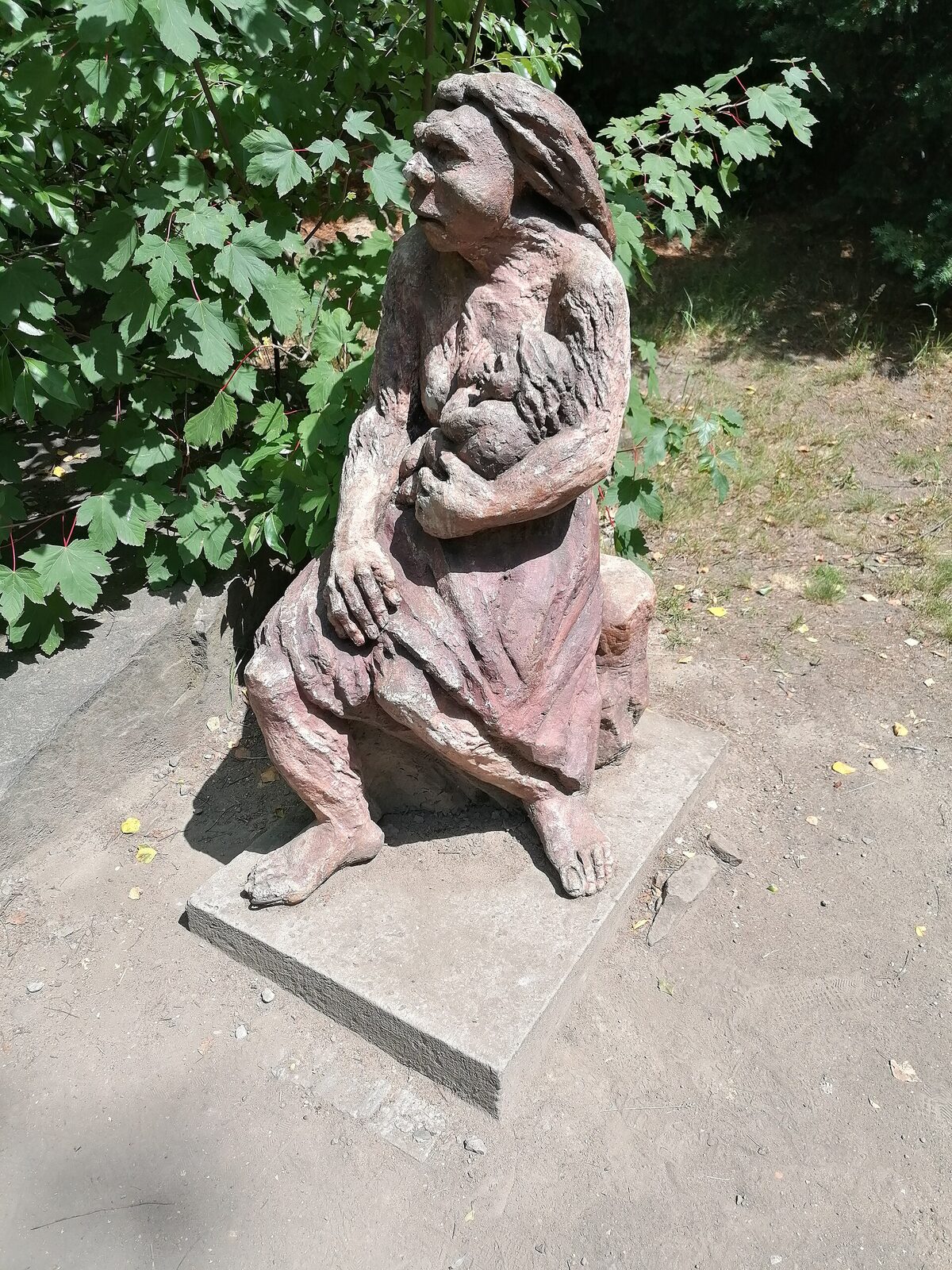
One of the major lessons of the study of Neanderthal blood groups concerns the weakness of their genetic diversity. This observation, already known by other avenues of palaeogenetics, is confirmed and refined by the analysis of blood alleles. Neanderthals formed populations of small size, scattered over a vast Eurasian territory, but few in number within each group. Such a demographic structure inevitably favours consanguinity, that is, unions between related individuals.
The consequences of consanguinity are well documented in biology. When partners are genetically close, the probability increases that their children will inherit two identical copies of the same unfavourable allele, which can cause recessive genetic diseases to emerge. More broadly, consanguinity reduces what biologists call allelic diversity, that is, the richness of a population's genetic repertoire. Yet this diversity is a precious asset: it confers an adaptive capacity in the face of diseases, parasites and environmental variations. A genetically homogeneous population is, conversely, more vulnerable, because a single pathogen can strike indistinctly all its members lacking the appropriate defences.
The analysis of blood groups concretely illustrates this genetic poverty. Where one would expect to find, in a flourishing population, a mosaic of different alleles, Neanderthals presented a relative uniformity. This homogeneity testifies to a long isolation, reduced numbers and limited genetic mixing. It draws the portrait of populations caught in the trap of their own scarcity, where consanguinity maintained a vicious circle: fewer individuals, hence more consanguinity, hence less diversity, hence increased vulnerability, and ultimately a diminished capacity to recover after each blow. Blood groups, in short, offer a window onto this deleterious demographic spiral that probably affected Neanderthal in the last millennia of its existence.
It should be added that the low immune diversity that flows from this genetic homogeneity could have made Neanderthals particularly sensitive to infectious diseases. When Homo sapiens, coming from Africa, penetrated Neanderthal territory, it may have brought with it pathogens against which the local populations were not immunised. A population with impoverished genetic diversity had fewer resources to resist these new infections. Blood groups, which themselves intervene in certain interactions with infectious agents, fit into this broader problem of immunological vulnerability.
One factor among others in Neanderthal extinction
Should we conclude that blood groups caused the extinction of Neanderthal? Such an assertion would be excessive and would betray the very spirit of the scientific approach. The authors of the study themselves are careful not to present blood as the sole cause of the disappearance of our cousins. What they propose is more subtle and, in many respects, more convincing: the blood peculiarities of Neanderthals would have constituted one of the many factors that contributed to their fragility, an additional element in a bundle of convergent causes.
The extinction of a species is rarely the fruit of an isolated cause. In the case of Neanderthal, researchers generally invoke several interlocking elements. The climate of the late PleistocenePleistoceneThe geological epoch of the great ice ages (c. 2.6 Ma–11,700 BP), spanning most of human prehistory.→, marked by abrupt oscillations and episodes of intense cold, may have severely tested already small populations. Competition with Homo sapiens, perhaps better organised, endowed with more extensive exchange networks or decisive technical innovations, may have heightened the pressure on resources. Epidemics, as we have mentioned, may have decimated groups lacking adequate immunity. And to all this is added demographics: low numbers, high consanguinity, and now, perhaps, reproductive difficulties linked to blood incompatibilities.
It is in this context that the contribution of the study takes on its full meaning. Blood replaces none of the earlier explanations; it complements them. It adds an intimate biological dimension to a picture that was until now dominated by environmental and cultural factors. A population of small size, genetically impoverished, confronted with blood incompatibilities both in its internal unions and in its interbreeding with the newcomers, saw its capacity for renewal eroded with each generation. Over the long term, this silent erosion of fertility may have accelerated a decline already begun by other causes. Blood groups are therefore not the culprit, but one of the many accomplices in a disappearance with multiple springs.
This pluralistic vision of Neanderthal extinction has the advantage of reconciling hypotheses sometimes presented as rivals. Rather than seeking the cause, one identifies a set of fragilities which, combined, got the better of a humanity that was nonetheless remarkably resilient. Blood simply reminds us that the fate of populations is also played out at the scale of molecules, in the secrecy of cells and genes, where the eye of the archaeologist cannot directly reach.
What we carry of them: the Neanderthal legacy in our veins
If Neanderthal disappeared as a distinct population, it has not for all that entirely left the stage. A part of it survives in us, in our DNA. As we have recalled, present-day human populations established outside Africa carry a fraction of Neanderthal genome, the inheritance of those ancient unions. This legacy is not merely a statistical curiosity: it concretely influences our biology. Genes of Neanderthal origin intervene in our immune system, in our metabolism, in our response to infections, and even, according to certain studies, in our susceptibility to certain diseases.
Concerning blood groups themselves, the study underlines that some of the allelic variants carried by Neanderthal are found, in the state of traces, in present-day human populations. This observation strikingly illustrates the genetic continuity between these extinct hominidsHomininA member of the human lineage in the broad sense, including modern humans, their ancestors and related great apes.→ and us. When a person today carries a particular rare allele of a blood group gene, it is not impossible that this peculiarity comes to them, in a direct line, from a Neanderthal ancestor who lived tens of thousands of years ago. Our blood, in short, keeps the memory of those prehistoric encounters.
This legacy reminds us that the boundary between Neanderthal and Homo sapiens was far more porous than was once imagined. Far from being two watertight humanities, they were two populations capable of uniting, of exchanging their genes, of mingling their lineages. The hybridisationHybridisationCrossing between two distinct species or lineages, such as Homo sapiens and Neanderthals, leaving a trace in the genome.→ that resulted makes us, in a sense, the partial descendants of Neanderthal. To study its blood groups is therefore also to explore a part of our own biological identity. The DenisovanDenisovanAn extinct human population, cousin of the Neanderthals, identified in 2010 from the DNA of remains in Denisova Cave (Siberia).→, that other cousin known chiefly through its DNA, also left its mark in certain human populations, notably in Asia and Oceania, adding still further to the complexity of our family tree. We are the product of a mosaic of humanities, and our blood cells bear witness to it.
The limits of the study: caution and perspectives
Every scientific advance calls for measure, and the study of Neanderthal blood groups does not escape this rule. Its limits must be honestly stressed, for it is precisely this lucidity that distinguishes robust knowledge from speculation. The first limit lies in the number of individuals analysed. Neanderthal and Denisovan genomes of sufficient quality for this type of analysis remain rare. The conclusions therefore rest on a restricted sample, which calls for caution when generalising to the whole of Neanderthal populations, spread over an immense territory and over tens of thousands of years.
A second limit concerns the very nature of the inference. Deducing a blood group from a sequence of ancient DNA, fragmented and sometimes incomplete, involves a degree of uncertainty. The researchers take great care to validate their readings, but certain genomic regions may remain ambiguous. Moreover, the link between a blood profile and its reproductive consequences rests on models, themselves established from modern human biology. Nothing guarantees that these models apply exactly to Neanderthals, whose physiologyPhysiologyThe study of how the body functions, drawn on to assess women's aptitude for hunting.→ may have presented subtle differences.
Finally, the hypothesis of the role of blood groups in extinction remains, by nature, difficult to prove directly. One cannot observe Neanderthal pregnancies, nor measure the real rate of losses linked to blood incompatibilities. The argument rests on probabilistic reasoning and on analogies with the phenomena observed in modern man. It is a plausible hypothesis, supported by solid genetic data, but one that demands to be confirmed and refined by future research. As new genomes are sequenced, as analytical tools improve and as other blood group systems are examined, the picture will become clearer. Science thus advances, by successive hypotheses, each opening the way to new questions.
Acknowledging these limits in no way diminishes the interest of the study. On the contrary, it is by clearly setting the bounds of what we know that we can fruitfully explore what we still ignore. The contribution of Silvana Condemi, Stéphane Mazières and their colleagues lies less in a definitive certainty than in the opening of a promising field of research, at the crossroads of palaeoanthropologyPalaeoanthropologyThe science that studies human evolution from the fossil remains of hominins (bones, teeth, footprints) and their context, to reconstruct our biological origins.→, genetics and transfusion medicine.
The context of a discovery: at the origins of the research project
It is enlightening to return to the genesis of this work in order to measure its scope. The idea of scrutinising the blood groups of extinct hominidsHomininA member of the human lineage in the broad sense, including modern humans, their ancestors and related great apes.→ did not fall from the sky. It is part of a long tradition of research on the biology of ancient populations, but it now benefits from a radically new technological context. For decades, blood groups were a precious tool of physical anthropology: before the advent of DNA sequencing, it was by comparing the frequencies of ABO groups among living populations that researchers tried to retrace human migrationsMigrationsLong-distance movements of populations; a major driver of human history (the exit from Africa, the peopling of continents, Neolithic and steppe expansions).→ and kinships. Blood was then read directly, on present-day individuals, and served as a marker of the great movements of history.
The arrival of palaeogeneticsPalaeogeneticsThe study of ancient DNA extracted from remains (bones, teeth, sediments, walls) to reconstruct the past of populations.→ overturned this approach by making it possible to go back well beyond living populations, all the way to the genomes of extinct species. Silvana Condemi, a renowned palaeoanthropologist, and Stéphane Mazières, a specialist in population genetics and blood groups, combined their skills to apply modern haematological methods to the genomic data of Neanderthal and Denisova. This disciplinary meeting is in itself remarkable: it illustrates how the boundaries between transfusion medicine, anthropology and genetics now tend to blur, in favour of an integrated science of life and its history. The genomic data exploited came from sequencing carried out over the years by various international teams, constituting a common heritage that the researchers were able to interrogate from an unprecedented angle, that of blood.
This detour through the history of the discipline helps us understand why the study aroused such interest. By linking an object as familiar as the blood group to a question as vertiginous as the extinction of Neanderthal, it offers a bridge between the daily routine of medicine and the great mysteries of our past. Each of us knows our blood group, has written it on a card, has perhaps given it during a blood donation. To learn that this same system of markers may have weighed on the fate of an entire humanity confers on these molecules an unsuspected historical depth.
The placental barrier and the fine mechanics of immunisation
To properly grasp why Rhesus incompatibility is so fearsome, one must dwell on the fine mechanics of pregnancy and immunisation. The placenta, a transient organ that links mother to child, plays the role of interface and filter. It lets nutrients and oxygen pass to the foetus, and evacuates its waste, while in principle keeping the two blood circulations separate. This compartmentalisation is not, however, absolute. Minuscule quantities of foetal blood regularly cross the barrier, especially at the end of pregnancy and during childbirth, but also in cases of trauma, miscarriage or certain medical procedures.
It is this passage, however tiny, that suffices to trigger maternal sensitisation when the blood groups differ. The mother's immune system, designed to track down everything foreign to it, spots antigen D carried by the foetal red blood cells and mounts a specific response. It then manufactures antibodies and, above all, keeps the memory of this encounter, so that any subsequent exposure triggers an immediate and amplified riposte. This immune memory, so precious for defending us against microbes, here becomes a trap: it transforms the mother into a threat to her future Rhesus positive children.
In Neanderthal times, devoid of any medical follow-up, this mechanism unfolded without hindrance and without recourse. A woman sensitised during a first incompatible pregnancy saw her subsequent pregnancies threatened, sometimes to the point of a succession of miscarriages or neonatal deaths. In a hunter-gatherer society where the survival of each child was already a challenge, where infant mortality was high and where each woman could carry to term only a limited number of pregnancies, such a repeated hindrance weighed heavily. It is this accumulation of potential losses, generation after generation, that the study invites us to take into account in the demographic balance sheet of Neanderthal populations.
Neanderthal and Denisova: two destinies, one same fragile blood
The study was not limited to Neanderthal: it also encompassed the mysterious DenisovanDenisovanAn extinct human population, cousin of the Neanderthals, identified in 2010 from the DNA of remains in Denisova Cave (Siberia).→, that other member of the human genus identified mainly thanks to DNA extracted from a few bone fragments discovered in the Denisova cave, in Siberia. Known chiefly through its genetic signature, the Denisovan shared with Neanderthal a relatively recent common ancestor, and the two lineages coexisted in Eurasia before dying out. Comparing their blood profiles makes it possible to better situate Neanderthal in the tree of hominidsHomininA member of the human lineage in the broad sense, including modern humans, their ancestors and related great apes.→ and to distinguish what derives from a common heritage from what constitutes a peculiarity proper to each lineage.
The analyses reveal that Denisovans and Neanderthals shared certain blood characteristics, inherited from their common ancestor, while differing on other points. This comparison considerably enriches the picture, for it shows that low genetic diversity and singular blood profiles are not the exclusive preserve of Neanderthal, but seem to characterise more broadly these archaic human lineages of Eurasia. The interbreeding between these different groups, attested by genetics, further complicates the narrative: we know for example that Denisovans and Neanderthals also crossed, as testified by the genome of an individual whose mother was Neanderthal and father Denisovan. HybridisationHybridisationCrossing between two distinct species or lineages, such as Homo sapiens and Neanderthals, leaving a trace in the genome.→ was therefore a widespread phenomenon in prehistoric humanity, with its share of benefits and risks, notably on the blood level.
This comparative dimension gives the study a scope that goes beyond the Neanderthal case alone. It draws the portrait of a prehistoric world peopled by several closely related humanities, capable of mingling, but also exposed to the same biological fragilities. Blood, in this picture, appears as a thread linking these different lineages, a shared inheritance that carries both the memory of their kinship and the seeds of their common vulnerabilities.
Conclusion: blood, discreet witness of a vanished humanity
At the end of this journey, one conviction imposes itself: the blood of Neanderthals had much to tellTellAn artificial mound formed by the accumulation of successive layers of settlement remains at the same spot, typical of the Near East. Each destruction-rebuilding event adds a stratum.→ us, provided we knew how to listen to it through the filter of ancient DNAAncient DNAGenetic material preserved in old remains, often degraded, sequenced with cutting-edge techniques.→. By decrypting their blood groups, the researchers of the CNRS and the French Blood Establishment have opened an unprecedented window onto the intimate life of these vanished populations. They have revealed to us a singular Rhesus profile, a low genetic diversity, alleles sometimes associated with haemolytic disease of the newborn, and a possible reproductive cost of unions, whether internal or woven with the newly arrived Homo sapiens.
From this bundle of clues emerges a strong, though cautious, hypothesis: the blood peculiarities of Neanderthal may have counted among the many factors that contributed to its extinction. Not as a sole and fatal cause, but as an additional fragility, one more grain of sand in a demographic mechanism already jammed. Alongside climate, competition with our species, epidemics and consanguinity, blood comes to enrich the complex narrative of this disappearance.
This research admirably illustrates the power of contemporary palaeogeneticsPalaeogeneticsThe study of ancient DNA extracted from remains (bones, teeth, sediments, walls) to reconstruct the past of populations.→, capable of making molecules tens of thousands of years old speak and drawing from them lessons on the fate of entire populations. It also reminds us that Neanderthal is not a distant stranger, but a close cousin whose trace we still carry in our veins. By exploring its blood, we explore a part of ourselves. And this is perhaps the finest lesson of this study: to understand Neanderthal is always, ultimately, to better understand humanity as a whole, in its diversity, its fragility and its profound unity. Extinct and surviving hominidsHomininA member of the human lineage in the broad sense, including modern humans, their ancestors and related great apes.→ share one same history, written down to the discreet chemistry of their blood cells. Blood, silent witness of the loves and dramas of prehistory, has surely not finished delivering its secrets to us, as science refines its methods and multiplies its discoveries. [1] [2] [3]
Ultimately, the most lasting lesson of this research perhaps lies in the reversal of perspective it operates. We were accustomed to thinking of Neanderthal extinction in terms of great visible phenomena: glaciations, migrations, clashes of cultures. The study of blood groups invites us to descend a notch, to the molecular scale, where fertility, the transmission of genes and the survival of newborns are silently played out. It reminds us that a species does not die out only under the blows of climate or competition, but also through the slow and discreet erosion of its capacity to reproduce. And it shows us that palaeogeneticsPalaeogeneticsThe study of ancient DNA extracted from remains (bones, teeth, sediments, walls) to reconstruct the past of populations.→, by making ancient DNAAncient DNAGenetic material preserved in old remains, often degraded, sequenced with cutting-edge techniques.→ speak, can illuminate these intimate processes that classical archaeology could only graze.
It is worth dwelling, in closing, on the broader human resonance of this work. There is something profoundly moving in the idea that the same blood test a doctor might order today, the same letters and signs that label a transfusion bag, can also serve as a key to one of the oldest dramas of our lineage. The continuity is dizzying: the Rhesus factorRhesus factorA blood-group system; a Rhesus mismatch between mother and fetus can cause haemolytic disease of the newborn.→ that a modern obstetrician monitors in a pregnant patient is, in its molecular essence, the very same biological reality that may have shaped the reproductive fortunes of populations who hunted mammoths across the frozen steppes of Ice Age Europe. Across that immense gulf of time, the chemistry of our cells has remained recognisably continuous, binding us to our vanished cousins in a shared corporeal heritage.
This continuity also carries an ethical and philosophical charge. To recognise Neanderthal not as a failed experiment of nature, but as a sibling humanity undone in part by the same biological constraints that still touch us, is to dissolve the comfortable distance we once placed between ourselves and the rest of the human story. The frailties of Neanderthal were not the frailties of an inferior being; they were the frailties of a small, isolated, deeply human population, and in many respects they could have been ours. Had the demographic dice fallen differently, had our own ancestors remained few and scattered, the spiral of low diversity, consanguinity and reproductive incompatibility might have closed around Homo sapiens instead. The study of Neanderthal blood is thus, in the end, also a meditation on our own contingency, on the slender margin by which our species survived where another did not.
As future research extends these analyses to further genomes, to additional blood group systems, and to ever more refined demographic models, the story will continue to unfold. New discoveries may strengthen the hypothesis of a blood-linked reproductive cost, or temper it, or reveal nuances we cannot yet imagine. Whatever the outcome, the path opened by this work will remain a model of interdisciplinary inquiry, in which the tools of the haematology laboratory, the patient excavations of the archaeologist and the algorithms of the bioinformatician converge on a single, haunting question: who were they, these others who were so nearly us, and why are they gone while we remain? The blood of Neanderthal, decrypted at last, offers not a final answer but a richer way of asking.
L'art pariétal, la céramique, les objets rituels... tout ça nourrit mon travail. Merci.
Deux mains, un outil, une intention. Depuis 2 millions d'années. Ce site me réconcilie avec mon métier.
Fascinant. Je travaille justement sur ce thème pour mon mémoire et cet article m'apporte un éclairage nouveau.
Les données sur les groupes sanguins néandertaliens permettent de tester des hypothèses sur la compatibilité reproductive entre Néandertaliens et Homo sapiens. La présence de certains allèles néandertaliens dans les populations humaines modernes, notamment pour les gènes du système HLA, témoigne d'un flux de gènes bidirectionnel et probablement de métissages répétés.
L'étude du groupe sanguin et des caractéristiques génétiques immunitaires des Néandertaliens ouvre des perspectives extraordinaires. Savoir qu'ils partageaient certains groupes sanguins avec Homo sapiens et avaient transmis des variants génétiques qui nous protègent encore aujourd'hui de certaines infections est un rappel puissant de notre connexion profonde. Les Néandertaliens vivent en nous.