For more than a century, Homo neanderthalensis embodied, in the popular imagination, the prehistoric brute: receding forehead, stooped gait, crude intelligence. That caricature, born of a biased reading of the first fossils, has collapsed. Science now paints the portrait of an accomplished humanity, skilled, social, sensitive, endowed with a symbolic world, that ruled Eurasia for hundreds of thousands of years before vanishing about 40,000 years ago. And which, above all, did not entirely disappear: we carry its trace in our genes. This feature retraces what we know of them, from the first bones to the latest revolutions of palaeogeneticsPalaeogeneticsThe study of ancient DNADNAThe molecule carrying genetic information, used to reconstruct kinship between species.→ extracted from remains (bones, teeth, sediments, walls) to reconstruct the past of populations.→.
A discovery that named a humanity
In August 1856, in a steep little valley near Düsseldorf, Germany, the Neandertal, "Neander's valley", limestone quarry workers unearthed a skullcap and oddly shaped long bones. Opinions wavered: cave bear? a rickets-stricken Cossack? a pathology? It took years of debate to accept that this was a human different from us, which in 1864 received the scientific name Homo neanderthalensis. The German valley thus named an entire species, even though comparable remains had already been recovered at Engis (Belgium, 1829) and Gibraltar (Forbes' Quarry, 1848) without being recognised for what they were.
Neanderthal's misfortune was to fall, in the early 20th century, into the hands of palaeontologist Marcellin Boule. Studying the skeleton of the "old man" of La Chapelle-aux-Saints, an elderly individual riddled with arthritis, Boule drew the portrait of a stooped, ape-like being, incapable of fully upright posture. The error, considerable, left a lasting mark. Only in the second half of the 20th century would an anatomy that was in fact perfectly bipedal, robust and well adapted be rehabilitated.
A body shaped by ice
Neanderthal was not a failed human: it was a different human, finely adapted to the rigours of glacial Eurasia. Its stocky, powerful build obeyed the laws of thermoregulation: a thick trunk, relatively short limbs, a high body mass, all features that limit heat loss, as in present-day human populations of high latitudes. The large, prominent nose warmed and humidified frozen air before it reached the lungs.
The skull, elongated front to back, housed a brain equal to or larger than ours, between 1,200 and 1,750 cm³. The forward-projecting face was organised around a continuous brow ridge and receding cheekbones. The jaw, lacking a projecting chin, was driven by powerful muscles: the often heavily worn incisors probably served as a "third hand" to grip hides and materials during work. Robust down to its bones, Neanderthal endured fractures whose frequency and location recall those of rodeo riders, the marks of close-contact hunting, grappling hand to hand with large herbivores.
Across all of Eurasia
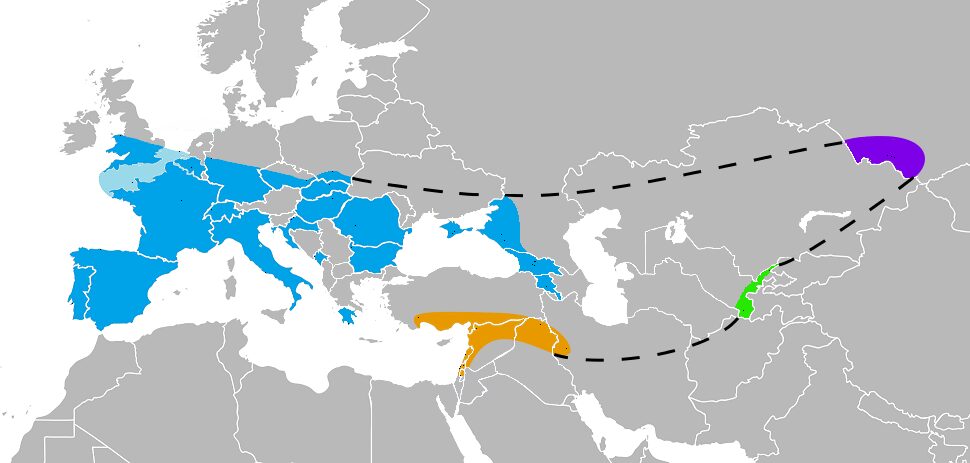
Emerging in Europe probably more than 400,000 years ago from populations of Homo heidelbergensisHomo heidelbergensisMiddle Pleistocene human species, often seen as the common ancestor of Neanderthals and our own species.→, Neanderthals occupied a vast territory, from the Iberian Peninsula to southern Siberia, and from Wales to the LevantLevantA region of the eastern Mediterranean Near East (Israel, Lebanon, Syria, Jordan), a major crossroads of the first human migrations out of Africa.→ and the Zagros mountains. This range was neither continuous nor stable: it contracted and expanded with the glacial cycles, pushing groups back to southern refuges, Iberia, Italy, the Balkans, during the coldest phases. These repeated isolations favoured low genetic diversity, whose consequences we measure today.
Everywhere, Neanderthal could read its environment. On Mediterranean coasts it exploited marine resources, shellfish, seals, fish. In the mountains it followed ibex and chamois. On the plains it took horses, bison, reindeer, sometimes mammoth and woolly rhinoceros. This ecological plasticity, long underestimated, is one of the keys to its longevity.
The technical genius of the Mousterian
Neanderthal's material signature has a name: the MousterianMousterianThe stone-tool industry typical of Neanderthals, based on the Levallois flaking technique.→, after the type-site of Le Moustier, in the Dordogne. At its heart lies a method of great geometric intelligence: Levallois knappingknappingThe set of operations for fracturing a stone block to extract flakes or blades.→. The toolmaker carefully prepares a flintFlintA hard, brittle siliceous rock, knapped by prehistoric people to produce blades, points and sharp tools.→ block, the core, sculpting in advance the shape of the flake to be removed, before striking it off in one precise blow. It is an act of predetermination: the object exists in the knapper's mind before it exists in the stone. Such anticipation implies elaborate cognition, working memory and the rigorous transmission of gestures from one generation to the next.
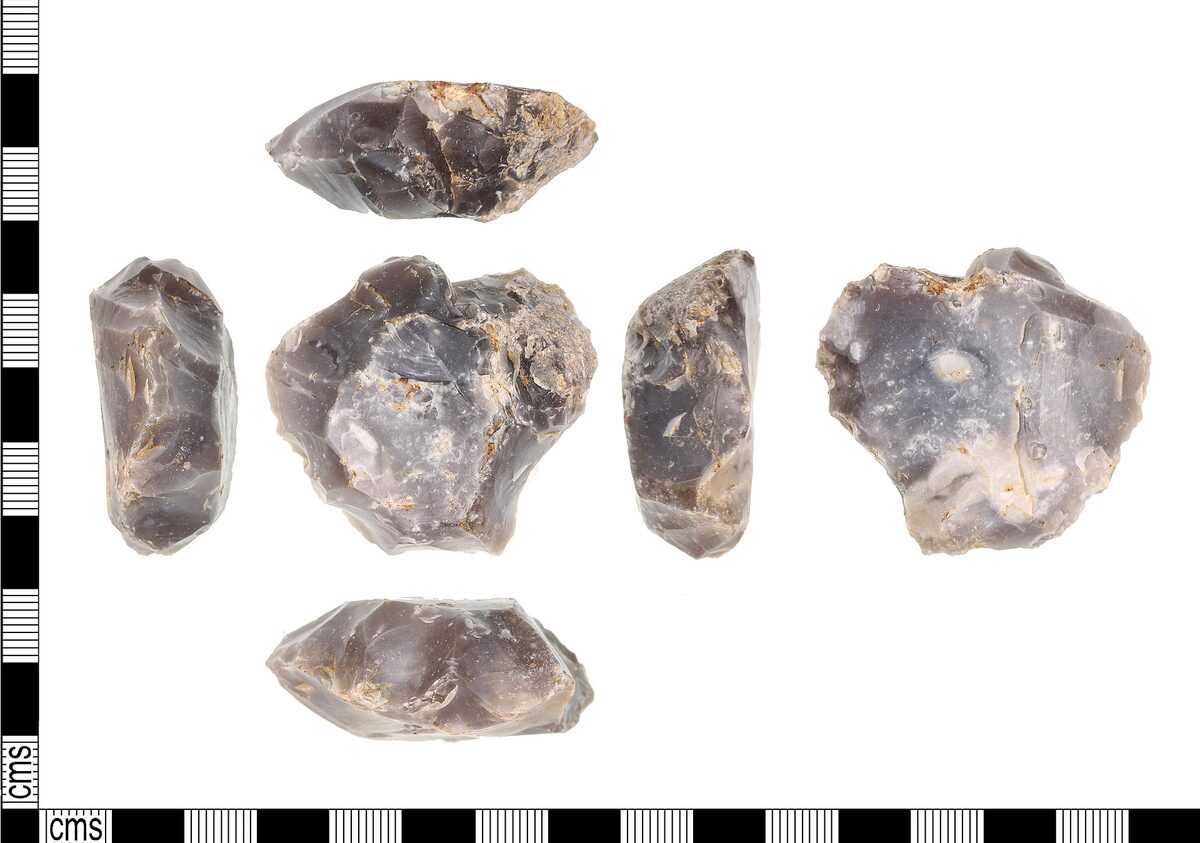
But stone tools are only the visible part. Neanderthal mastered fire, which it produced notably by striking pyrite against flint. It made a true glue: birch-bark tar, obtained by dry distillation of bark at a controlled temperature, in the absence of oxygen, a "chemistry" before its time, used to haft points and blades onto wooden shafts. It made clothing from scraped hides, carved bone tools, and exploited the feathers of birds of prey. Nothing in any of this evokes the textbook brute.
A diet without taboo
What did Neanderthal eat? For a long time, isotopic analysis of its bones presented it as a near-exclusively carnivorous super-predator at the top of the food chain. The picture has become more nuanced. Dental tartar, that microscopic archive of diet, has yielded cooked starch grains, plant phytoliths, residues of fungi, mosses and pine nuts. Neanderthal gathered, perhaps cooked, and healed: its tartar has revealed traces of bitter, non-nutritious plants with recognised medicinal properties, such as yarrow and chamomile.
More surprising still, a study of tartar revealed regular consumption of insects, larvae and eggs, which its digestive system, equipped with the enzymes needed to break down chitinChitinA rigid molecule forming the exoskeleton of insects; digesting it requires specific enzymes.→, could assimilate, unlike ours. Far from a detail, this finding illustrates the extraordinary dietary opportunism of a humanity able to exploit every resource of its environment, from big game to the humblest arthropod.
A symbolic world
The most burning question remains that of the mind. Did Neanderthal think the world symbolically? The clues are mounting. At Krapina (Croatia), eagle talons bearing cut marks form, 130,000 years ago, what looks very much like an ornament. Perforated shells coated with pigment, in Spain, tellTellAn artificial mound formed by the accumulation of successive layers of settlement remains at the same spot, typical of the Near East. Each destruction-rebuilding event adds a stratum.→ the same story. Blocks of manganese and ochreOchreA red or yellow mineral pigment (iron oxides), used from prehistory for adornment, funerary rites and art.→ have been found, some shaped into "crayons", used to colour bodies, hides or objects.
More spectacular still: in several Iberian caves, La Pasiega, Maltravieso, Ardales, red marks, discs and a "negative" hand have been dated by uranium-thorium to more than 64,000 years, well before the arrival of Homo sapiensHomo sapiensThe present-day human species, which emerged in Africa around 300,000 years ago, the only surviving human lineage after the extinction of Neanderthals and Denisovans.→ in Europe. If these dates hold, their only possible authors are Neanderthals. The idea of a Neanderthal cave artCave (parietal) artArt made on the walls of caves and shelters (paintings, engravings), as opposed to portable artPortable artTransportable art objects (figurines, engravings on bone or ivory), such as the Palaeolithic Venuses.→.→, once heretical, is now discussed in the most serious journals. At Bruniquel, in south-west France, broken stalagmites arranged in circles deep in a cave, 336,000 years ago, attest to an organised use of the underground world, by firelight, whose meaning still escapes us.
Burying the dead
Did Neanderthal bury its dead? For many prehistorians, the answer is yes. Several sites, La Ferrassie and La Chapelle-aux-Saints in France, Kebara in Israel, have yielded bodies in flexed positions, in pits, sometimes protected. The most famous case remains the cave of Shanidar, in Iraqi Kurdistan, excavated from the 1950s by Ralph Solecki.
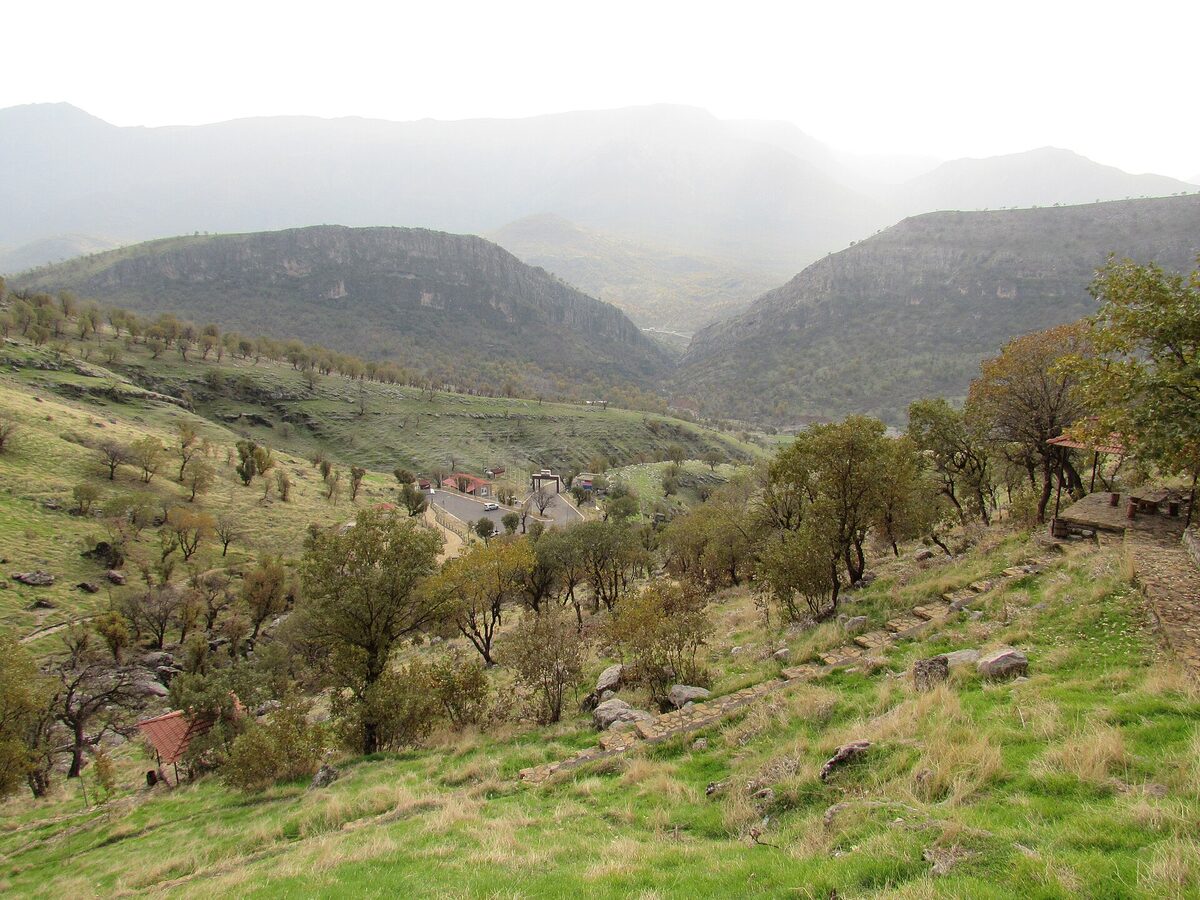
Shanidar yielded around ten individuals. Beneath one of them, pollen analyses had suggested a deposit of flowers, the famous "flower burial", interpreted as a funerary gesture tinged with emotion. The hypothesis has been challenged: the pollen could come from burrowing rodents. But in 2019, the Cambridge team uncovered a new articulated skeleton, "Shanidar Z", in a context that revives the debate over the intentionality of these deposits. Beyond the quarrel, one fact remains: on several occasions, Neanderthals removed some of their dead from abandonment and scavengers. That simple gesture already says much about a relationship to loss and time. Severely disabled or toothless individuals who survived for years, as at Shanidar 1, also speak of a group's solidarity towards its most vulnerable.
Did they speak?
The question of Neanderthal language remains open, since we cannot "hear" the dead. Several clues converge nonetheless. The hyoid bone, which supports the tongue, found at Kebara is almost identical to ours. The inner-ear canal shows sensitivity to the frequencies of human speech. The FOXP2 gene, involved in language, carried in Neanderthals the same version as in us. Nothing proves they possessed articulate language as complex as ours; but the idea of elaborate vocal communication, necessary to transmit techniques as demanding as Levallois, now seems reasonable.
The ancient-DNA revolution
The decisive turn came from elsewhere: from palaeogeneticsPalaeogeneticsThe study of ancient DNA extracted from remains (bones, teeth, sediments, walls) to reconstruct the past of populations.→ laboratories. By sequencingSequencingReading the order of the bases (A, T, G, C) of a DNA molecule; high-throughput sequencing reads millions of fragments in parallel.→ ancient DNAAncient DNAGenetic material preserved in old remains, often degraded, sequenced with cutting-edge techniques.→ extracted from bones, the team of Svante Pääbo, crowned with the Nobel Prize in Physiology or Medicine in 2022, published the first Neanderthal genome in 2010. The discovery upended our genealogy. Neanderthals and DenisovansDenisovanAn extinct human population, cousin of the Neanderthals, identified in 2010 from the DNA of remains in Denisova Cave (Siberia).→ form a sister lineage to ours, split from the Homo sapiens branch hundreds of thousands of years ago.
Above all, comparing genomes revealed the unthinkable: present-day non-African human populations carry 1 to 2% Neanderthal DNA. These genes are not neutral. Some influence immunity, blood clotting, metabolism, pigmentation, the response to viruses, it has even been shown that Neanderthal variants modulate the severity of certain present-day respiratory infections. Others have been selected against, a sign that interbreedingInterbreedingGenetic mixing between human populations or species; between Neanderthals and Homo sapiens it left 1 to 2% of Neanderthal DNA in non-Africans.→ was not without biological cost. Neanderthal lives on, fragmented, in the genome of billions of humans.
The age of encounters
Sapiens and Neanderthals crossed paths several times, and from an early date. In the Near East, the re-examined child of Es-Skhul, around 120,000 years old, suggests a possible hybridHybridisationCrossing between two distinct species or lineages, such as Homo sapiens and Neanderthals, leaving a trace in the genome.→. Statistical models estimate an overlap of several centuries to several millennia between the two populations in Western Europe before Neanderthal's disappearance. Interbreeding was therefore recurrent, but asymmetric and, in places, thwarted.
Why did they disappear?
No single cause explains Neanderthal extinction. A web of factors is emerging. ClimateClimateThe long-term average atmospheric conditions of a region; its variations (glaciations, aridifications) shaped migrations, agriculture and the collapse of prehistoric societies.→ first: the abrupt oscillations of the late PleistocenePleistoceneThe geological epoch of the great ice ages (c. 2.6 Ma–11,700 BP), spanning most of human prehistory.→ fragmented habitats and depleted resources. Demography next: living in small, scattered, sparse groups, Neanderthals were vulnerable to chance. Inbreeding, attested by the genome of the El Sidrón family in Spain, may have worsened the burden of malformations.
To these is added a more intimate hypothesis: their blood. Neanderthal carried a variant of the Rhesus factorRhesus factorA blood-group system; a Rhesus mismatch between mother and fetus can cause haemolytic disease of the newborn.→ incompatible with that of other human populations. During interbreeding, a mother and fetus with mismatched Rhesus risked haemolytic disease of the newborn, potentially fatal. Combined with low genetic diversity, this fragility may have weighed on reproductive success. Finally, competition with Homo sapiens, wider exchange networks, more dynamic demography, probably gave the newcomers the edge. Neanderthal did not collapse overnight: it died out slowly, population by population, down to the last southern refuges.
From Heidelberg to Neanderthal
Neanderthal did not come from nowhere. Its lineage is rooted in the European populations of Homo heidelbergensis, robust homininsHomininHomininMember of the subtribe Hominina, comprising the human lineage (Homo, Australopithecus, Paranthropus…) but excluding orangutans and gibbons. The term progressively replaces "hominid" in its narrow sense.→A member of the human lineage in the broad sense, including modern humans, their ancestors and related great apesgreat apesThe family of great apes (Hominidae) comprising orangutans, gorillas, chimpanzees, bonobos and humans.→.→ settled on the continent for more than 600,000 years. The Spanish site of AtapuercaAtapuercaA complex of archaeological sites in the Sierra de Atapuerca (Burgos, Spain), a UNESCO site, yielding an exceptional sequence of human fossils, including the Sima de los Huesos and Homo antecessor.→, and especially the Sima de los HuesosSima de los HuesosA natural shaft at Atapuerca (Spain) that yielded over 6,500 bones of at least 29 Homo heidelbergensis individuals dated to −430,000: the largest Middle Pleistocene human fossil assemblage.→, offers an exceptional window onto this transition: there, about 430,000 years ago, skulls already display "Neanderthalised" traits. Palaeogenetics confirmed the anatomists' intuition: the Sima DNA is closer to Neanderthal's than to that of Denisovans. Neanderthalisation was thus a gradual process, spread over hundreds of millennia, not a sudden appearance.
A species, or a variety of human?
Should we speak of a distinct species, Homo neanderthalensis, or a subspecies, Homo sapiens neanderthalensis? The debate is not merely about names. The biological definition of a species rests on interfertility, yet we now know Neanderthals and Sapiens had fertile children, from whom we partly descend. By that measure, the boundary blurs. But interfertility was neither total nor cost-free, genetic incompatibilities, reduced fertility of male hybrids, perhaps immunological conflicts. Biologists now readily speak of two deeply divergent populations at the fuzzy edge of speciation, rather than two watertight species. Neanderthal forces us to recognise that human evolution was not a tree with clean branches, but a network of lineages that separate, recross and merge.
The ChâtelperronianChâtelperronianA transitional material culture (c. 45,000-40,000 years ago) straddling the Middle and Upper Palaeolithic in France and northern Spain; curved-backed knives and, at the Grotte du Renne at Arcy, ornaments and bone tools attributed to Neanderthals.→: Neanderthal in contact
What happened when Neanderthal and Sapiens lived side by side in Europe? One enigmatic material culture sheds light: the Châtelperronian, dated to about 45,000–40,000 years, which blends Mousterian traits with Upper PalaeolithicUpper PalaeolithicThe final phase of the Palaeolithic (c. 45,000 to 10,000 years ago), marked by Homo sapiens in Europe, art, ornaments and a succession of cultures (Aurignacian, Gravettian, Solutrean, Magdalenian).→ innovations, fine blades, bone tools, ornaments. At the Grotte du Renne, at Arcy-sur-Cure, these objects are associated with Neanderthal remains. Two readings clash: for some, Neanderthal invented or adopted these novelties in contact with Sapiens, proof of its capacity for innovation; for others, stratigraphic mixing blurs the attribution. The still-lively debate illustrates a central difficulty of prehistoryPrehistoryThe span of human history before the invention of writing, from the Palaeolithic to the Metal Ages, known mainly through material remains.→: linking an object to the hand that made it.
Giving the vanished a face
What did a Neanderthal look like? Reconstructions, long hostage to prejudice, have sharpened thanks to palaeogenetics. DNA tells us about traits invisible in bone: some Neanderthals probably had fair skin and red or auburn hair, the legacy of an MC1R variant adapted to the weak sunlight of high latitudes. Eyes could be light. The broad face with its powerful nose was nothing ape-like: reconstructed with skin, hair and a gaze, it pierces the screen of strangeness and returns the face of a relative. This rediscovered familiarity is not trivial: it transformed our emotional relationship with Neanderthal, from cave monster to lost cousin.
Neanderthal in our bodies today
The Neanderthal legacy is not just a laboratory curiosity: it acts, here and now, in the biology of billions of humans. Variants inherited from Neanderthal modulate the immune response, sometimes at the price of heightened susceptibility to autoimmune disease or allergies. Others affect clotting, fat and sugar metabolism, bone density, circadian rhythm, even mood. During the Covid-19 pandemic, researchers identified a chromosomal segment of Neanderthal origin associated with more severe forms of the disease, while another, also Neanderthal, appeared protective. This paradox captures the nature of the legacy: neither good nor bad in itself, but the product of ancient adaptations, selected in a glacial world and recycled, for better and worse, into ours.
A tour of the great sites
Neanderthal geography is read in a constellation of now-legendary deposits. La Ferrassie and Le Moustier, in the Dordogne, provided burials and defined a culture. Spy, in Belgium, yielded skeletons in 1886 that proved the species' antiquity. El Sidrón, in Asturias, revealed through DNA a family wiped out, perhaps consumed, 49,000 years ago, a rare window onto social structure and inbreeding. Vindija (Croatia) and Mezmaiskaya (Caucasus) provided the bones from which the first genomes were sequenced. Saccopastore and Guattari (Italy), Shanidar (Iraq), Tabun and Amud (Levant) complete this web that traces, from Portugal to Uzbekistan, the empire of a vanished humanity.
Digging without bones: sediment DNA
Palaeogenetics has achieved a feat that once seemed like science fiction: extracting Neanderthal DNA directly from the soil of caves, without any bone at all. Genetic molecules, released by bodies and waste, adsorb onto sediment minerals and persist there for tens of thousands of years. By sampling a site's layers, researchers can now detect the presence of Neanderthals, Denisovans or Sapiens, and even track the replacement of one population by another through the stratigraphyStratigraphyThe study of the superimposed layers (strata) of an archaeological site; each layer corresponds to a phase of occupation and yields a relative chronology.→. This "archaeology without digging" extends a revolution: the human trace is no longer only an object or a bone, but a diffuse molecular signature, legible in the dust of millennia.
Hunting together: economy and society
Hunting big game in the Middle PalaeolithicMiddle PalaeolithicA Palaeolithic period (c. 300,000 to 40,000 years ago) associated mainly with Neanderthals and early Homo sapiens, marked by Levallois tools.→ was no solitary affair. Kill and butchery sites reveal sophisticated collective strategies: driving a herd toward a natural trap, selecting prey by age and season, standardised butchery on the spot, selective transport of the richest cuts. At Mauran and La Borde, in France, accumulations of bison and aurochs attest to specialised hunts, repeated at the same place over long periods, evidence of a memory of places and group-scale planning. Far from the opportunistic predator, Neanderthal appears as the organiser of a genuine subsistence economy, tuned to the rhythms of fauna and climate. Compared with those of Homo sapiens, however, Neanderthal networks seem to have been more restricted, raw materials travelling shorter distances, a difference of social scale that may, in the long run, have counted in the outcome of the encounter.
What Neanderthal taught us about ourselves
The history of Neanderthal is, in mirror, the history of our own gaze. Each generation projected its certainties onto it: the Darwinian primitive of the 19th century, the brute of 20th-century reconstructions, then, as prejudices fell, the artist, the carer, the cousin. This intellectual trajectory is a lesson in method: what we think we know about a vanished humanity often says as much about us as about it. By restoring Neanderthal's full humanity, science has not merely rehabilitated a species; it has widened the very definition of the human, showing that thinking, creating, healing and mourning the dead were never the privilege of a single lineage.
One final, dizzying riddle remains: why us, and not them? No obvious cognitive superiority distinguishes Sapiens from Neanderthal. Perhaps everything turned on slender margins, a little more fertility, slightly wider networks, slightly more resilient demography, a climatic accident. Neanderthal thus reminds us of the contingency of our own existence: we are not the necessary culmination of evolution, but the improbable survivors of a world that once held several ways of being human. Not long ago, on the scale of prehistoryPalaeolithicThe oldest and longest period of prehistory (c. 3.3 Ma–12,000 BC), defined by chipped stone tools and a hunter-gatherer way of life.→, the Earth was peopled not by one humanity but by many. We are the last of a lineage that counted many, and we carry, in our blood and our genes, the living memory of those who came before us. The most precious legacy of the cave cousin may be this: a lesson in humility, written into our DNA. The clearest proof of these neighbourings comes from Denisova cave in Siberia, where the DNA of a teenage girl nicknamed "Denny" showed she was born of a Neanderthal mother and a Denisovan father, the first first-generation hybrid between two humanities ever identified. In us, Neanderthal blood flows mingled with that of other vanished worlds.
The cold refuges
Neanderthal's story is inseparable from that of climate. The Middle Palaeolithic unfolds through a succession of glacial and interglacial stages, punctuated by abrupt oscillations, Heinrich and Dansgaard-Oeschger events, that could, sometimes within decades, turn a game-rich steppeSteppeA vast semi-arid, treeless grassland of Eurasia, suited to nomadic herding and the horse; a corridor for the movement of peoples and technologies in later prehistory.→ into a polar desert. With each cold snap, populations contracted toward southern refuges: Iberia, Italy, the Balkans, the Black Sea margins. With each warming, they set out again to conquer the northern plains. This pendulum movement, repeated over hundreds of millennia, sculpted the species' diversity, or rather its low diversity, and weakened the populations isolated in their peninsular dead-ends. The last known Neanderthals lived precisely in these southern refuges, in Iberia notably, as if the species had died out where it had so often taken shelter.
Ornaments, pigments and identity
Why adorn oneself? Ornament has no material use: it speaks, it signals belonging, rank, identity. Yet the clues of Neanderthal ornamentation keep multiplying: raptor talons worn as pendants, perforated shells, bright feathers taken from inedible birds, ochres and manganese to colour skin or objects. These seemingly gratuitous gestures are at the heart of what makes a culture: the capacity to invest objects with shared meaning, to distinguish and recognise oneself. That a humanity vanished 40,000 years ago feltFeltA non-woven fabric made by pressing and matting wool fibres; steppe nomads used it for rugs, saddles and appliqués, remarkably preserved in the frozen Pazyryk tombs.→ the need to adorn itself is enough to ruin the idea of a purely utilitarian being. Neanderthal did not merely survive: it represented itself, signified itself, inhabited a world of symbols of which we decipher only a fraction.
Two centuries of gazes
The history of research on Neanderthal is marked by reversals. After the 1856 discovery, opinion wavered between pathology and a new humanity. The publication of Darwin's On the Origin of Species in 1859 offered a framework: Neanderthal became a piece of the great story of evolution. Marcellin Boule, in the early 20th century, froze the image of the stooped primitive. Post-war excavations, at Shanidar then across the Levant, revealed a more complex being. The 1980s and 1990s saw advocates of continuity clash with those of replacement. Finally, from 2010, palaeogenetics both settled and complicated matters: Neanderthal disappeared and survives in us. This trajectory, from monster to cousin, is one of the finest lessons in humility in the history of science: our certainties about the past are provisional hypotheses, endlessly overturned by new methods.
A presence in culture
Few fossils have so marked the imagination. "Neanderthal" has become, in everyday speech, the, unjust, synonym of the coarse, backward man. Literature, cinema and comics have seized on it, oscillating between brute and sage, victim and rival. This cultural presence is not neutral: it shapes how the public pictures prehistory, and therefore the human. By correcting the myth, by showing a thinking, creative, sensitive Neanderthal, science also performs a social task: it invites us to recognise the dignity of a different humanity, and, in turn, to question our tendency to despise what is not quite us. The cave cousin has thus become a mirror held up to our age.
A day in a Neanderthal camp
Let us try, for a moment, to reconstruct the everyday. Sheltered beneath a rocky overhang or at a cave mouth, a small group bustles around a hearth whose ashes, excavated millennia later, will yield their memory. Some revive the fire, tended with care because hard to relight; others bring back a quarter of horse butchered at the kill site, a few hours' walk away. A woman scrapes a stretched hide that will become clothing or a container; a knapper, crouching, prepares a Levallois core, striking off flakes whose edge he checks. A teenager watches, learns, repeats the gestures, for everything here is transmitted by imitation and speech. Children play near the fire; a toothless elder, fed by the group, dozes. At nightfall, in the dancing firelight, perhaps something is told: the position of a herd, the memory of a death, a story of which we shall never know anything. This ordinary scene is nonetheless the beating heart of Neanderthal humanity, a fabric of gestures, care and words of which archaeology gathers only the rare mineral fragments.
For this is the difficulty of all prehistory: the essential, words, bonds, beliefs, emotions, does not fossilise. It must be cautiously deduced from knapped stones, broken bones, ashes and burials. Each advance in method, tartar analysis, ancient DNA, refined dating, restores a little of that lost depth. But a part will forever remain out of reach, and it is this missing part that paradoxically makes Neanderthal so fascinating: we know it well enough to recognise it as a relative, and too little to stop questioning it.
The lesson of the ages of life
The study of Neanderthal skeletons reveals short, hard lives. Few exceeded forty; infant mortality was high; bodies bear the marks of accidents, deficiencies and disease. Yet at the heart of this harshness, a constant emerges: care. Severely injured or disabled individuals, a one-armed, one-eyed man at Shanidar, toothless elders elsewhere, survived for years, possible only at the cost of prolonged group assistance. This solidarity, attested long before any medicine, says something essential: mutual aid is not a late refinement of civilisation, but a survival strategy inscribed very early in the human adventure. Neanderthal cared for its own because a group that cares for its members better withstands adversity. Affection, perhaps, was first an evolutionary force.
Neanderthal among humanities
Neanderthal was not alone. At the same time, the Earth was home to several humanities: the DenisovansDenisovanAn extinct human population, cousin of the Neanderthals, identified in 2010 from the DNA of remains in Denisova Cave (Siberia).→ of Asia, revealed by their DNA alone; the enigmatic Homo floresiensis, the "hobbit" of Flores; Homo luzonensis in the Philippines; and, in AfricaAfricaThe cradle of humankind: the continent where the first hominins appeared, then Homo sapiens around 300,000 years ago, before the expansion to the rest of the world.→, populations of Homo sapiens in full diversification, not to mention the strange Homo naledi of South Africa. This image of a planet peopled by several contemporary human species, long inconceivable, is now the norm. Neanderthal is its best-known figure, the benchmark against which all the others are measured. By placing it back in this galaxy of parallel humanities, recent prehistory offers a profoundly renewed vision of our history: not a linear march toward Homo sapiens, but a teeming bush of which we are, for now, the sole surviving twig. To understand Neanderthal is to understand that our present solitude as a human species is recent, fragile and, on the geological scale, exceptional.
Beyond stone: wood, hide and bone
Because stone survives and wood rots, our image of the Palaeolithic is skewed toward the mineral. Yet exceptional finds remind us that Neanderthal worked many materials. At SchöningenSchöningenGerman site that yielded eight wooden throwing spears about 300,000 years old, among the oldest known wooden weapons.→, in Germany, wooden throwing spears nearly 300,000 years old, admittedly pre-NeanderthalPre-NeanderthalMiddle Pleistocene human populations (c. 300,000 to 130,000 years ago) already showing incipient Neanderthal traits, at the hinge between Homo heidelbergensis/erectus and classic Neanderthals.→, but from the same lineage, prove a mastery of woodworking and balanced weapons. Neanderthals shaped digging sticks, hafts and hand-grips; they made bone smoothers, the lissoirs used to work hides supple, sometimes more efficient than stone for the task. They processed skins into clothing and containers, twisted plant fibres into the earliest cordage, and managed the thermal economy of their shelters with hearths whose layout reveals planning. This perishable technology, of which only ghosts remain, was probably the larger part of their material world. To picture Neanderthal solely through flint is to mistake the surviving fragment for the whole, like judging a library by its surviving spines.
The same caution applies to social and spiritual life. The deep structures of Bruniquel, rings of broken stalagmites assembled 336,000 years ago, far from daylight, required fire, coordination and intent. Whatever their purpose, ritual or practical, they prove that the underground world was deliberately entered and organised, long before the painted caves of Homo sapiens. Between the lines of stone and bone, an entire civilisation of gestures and meanings is dimly legible, most of it lost to us forever.
An unfinished portrait
And so the portrait closes, provisionally, for it is constantly being rewritten. From the German valley of 1856 to today's palaeogenetics laboratories, Neanderthal has made a singular journey: from anonymous bone to sequenced genome, from the monster of origins to the rediscovered cousin. It leaves us a plural humanity, a legacy lodged in our chromosomes, and a question without a definitive answer about the reasons for its disappearance. Above all, it leaves us a certainty: not long ago, on the scale of deep time, the Earth was peopled not by a single humanity but by several. We are the last of a lineage that counted many.
Perhaps that is why Neanderthal fascinates us so. In its broad face, reconstructed with skin and gaze, we recognise both a stranger and a kin. In its genes, mingled with ours, we read the proof that humanity was never pure, but always a meeting. And in its silent disappearance, we glimpse the fragility of our own adventure. To study Neanderthal is, in the end, to study the human condition itself, its inventiveness and its vulnerability, its capacity for care and its taste for symbols, its solitude and its bonds. The cave cousin holds up to us, across forty millennia, a mirror in which we are still learning to read our own face.
The first chemists: fire and tar
If a single achievement should dispel the brute myth, it is the manufacture of birch-bark tar. To obtain this adhesive, the bark must be heated in a near-oxygen-free environment within a precise temperature window: too cool, nothing happens; too hot, the useful compounds burn off. Reproducing the process in the laboratory has shown how demanding it is, a genuine pyrotechnical chemistry, mastered tens of thousands of years before the first kilns. With this glue, reinforced by binding, Neanderthal hafted stone points onto wooden shafts, turning two materials into a composite weapon greater than the sum of its parts. The very idea of a composite tool, assembling distinct components into a new functional whole, is a cognitive milestone, evidence of planning across several steps and several days.
Fire itself was far more than warmth and light. It cooked food, making meat and tubers more digestible and freeing energy for that costly organ, the brain. It hardened wooden points, kept predators at bay, and gathered the group in a circle of light where, perhaps, knowledge and stories passed from one generation to the next. Controlling fire on demand, striking pyrite against flint to make sparks, marks a threshold: nature's most untameable force becomes a domestic tool, carried, tended, transmitted. In the flickering hearths of their caves, Neanderthals were already doing what defines us most: turning the world into culture, and culture into inheritance. It is there, around the fire, that the distance between them and us all but vanishes, and that the old image of the brute finally turns to ash.
Each new analysis adds a brushstroke to this portrait, and each erases an old prejudice. Where once we saw a dead end of evolution, we now see a successful humanity that endured through ice ages we could scarcely imagine. Where we saw a rival vanquished by our supposed superiority, we now see a partner with whom our ancestors had children. And where we saw a stranger, we increasingly see ourselves. The science of Neanderthal is, ultimately, a long apprenticeship in recognising the other as a kin, a lesson whose relevance reaches far beyond the caves of the Palaeolithic. To give a vanished humanity back its dignity is also, quietly, to enlarge our own.
For a century and a half, then, Neanderthal has travelled from quarry curiosity to genomic revelation, from feared monster to mourned cousin. It has forced anatomy, archaeology and genetics to talk to one another, and it has rewarded them with one of the great stories of modern science: the proof that being human was never the property of a single species. As laboratories refine their methods and new sites surrender their secrets, that story keeps growing, and with it, our sense that the boundary we once drew between "them" and "us" was always more porous, and more provisional, than we cared to admit.
Depuis votre chrono-carte, je passe des heures à explorer les périodes et migrations. Addictif.
Bonne synthèse. Les sources citées sont solides — rare pour un article de vulgarisation.
J'ai utilisé cet article comme exemple de bonne vulgarisation dans un cours de rédaction web.
Le dossier Néandertalien de ce site est l'un des plus complets que j'aie trouvé en français. La mise à jour régulière avec les nouvelles publications est particulièrement appréciable dans un domaine qui évolue si rapidement. Je l'utilise souvent comme point de départ pour préparer mes cours sur la paléoanthropologie du Pléistocène moyen et supérieur.
Ce dossier sur les Néandertaliens est une ressource précieuse pour qui veut dépasser les clichés. L'image du Néandertalien brutal et stupide a été définitivement enterrée par les recherches des 30 dernières années. Sépultures, parures, soins aux malades, art possible : les Néandertaliens étaient des êtres complexes et adaptés à leur environnement. Leur extinction reste l'une des grandes tragédies de l'histoire de la vie.