On 4 July 2025, excavations at La Roche-a-Pierrot in Saint-Cesaire (Charente-Maritime, France) yielded a second Neanderthal baby tooth, discovered just a few centimetres from a first one found in 2024. Dating back around 55,000 years, these two deciduous teeth from the same archaeological layer offer unprecedented insights into Neanderthal social life, according to Isabelle Crevecoeur, CNRS research director at the University of Bordeaux and lead excavator.[1]
A Site Spanning 30,000 Years of Human History
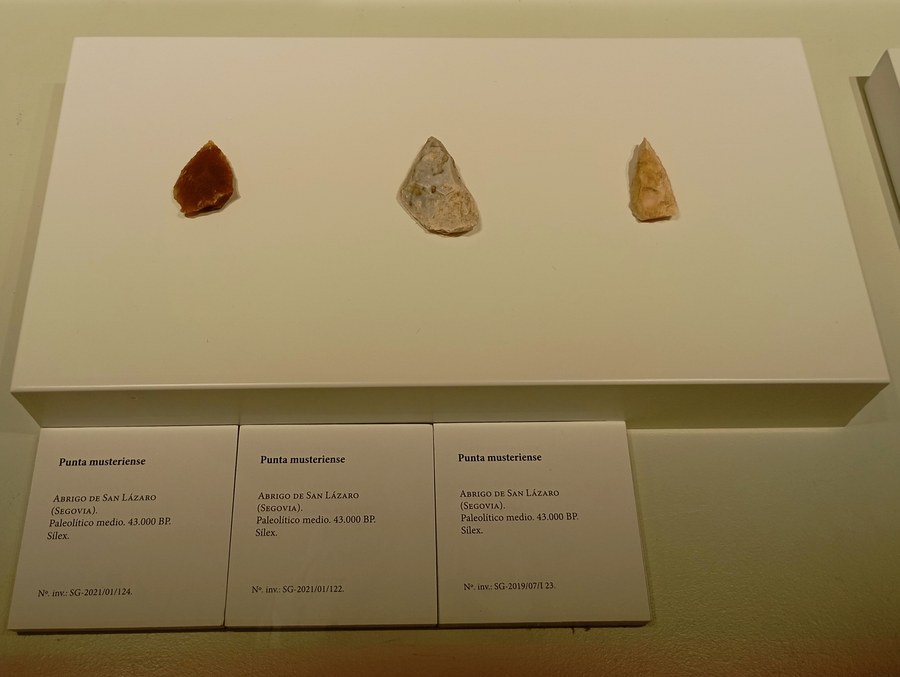
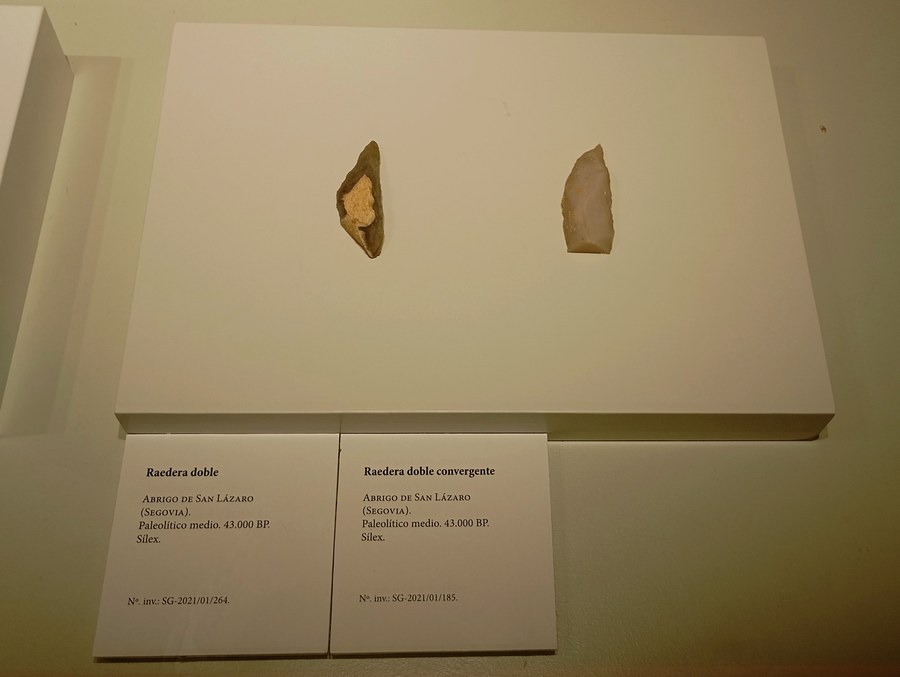
Since 2013, Crevecoeur's team has been methodically excavating La Roche-a-Pierrot. The stratigraphic column spans -60,000 to -30,000 years, documenting the successive human occupations during a pivotal transition: the last Neanderthals and the first incursions of Homo sapiensHomo sapiensThe present-day human species, which emerged in Africa around 300,000 years ago, the only surviving human lineage after the extinction of Neanderthals and Denisovans.→ into western Europe. Archaeologists identify transitional lithic industries combining MousterianMousterianThe stone-tool industry typical of Neanderthals, based on the Levallois flaking technique.→ elements -- scrapers and points made on flakes -- with AurignacianAurignacianThe earliest culture of the European Upper Palaeolithic (c. 43,000–33,000 BC), tied to the arrival of Homo sapiens and the first artworks.→ features attributed to Homo sapiens.
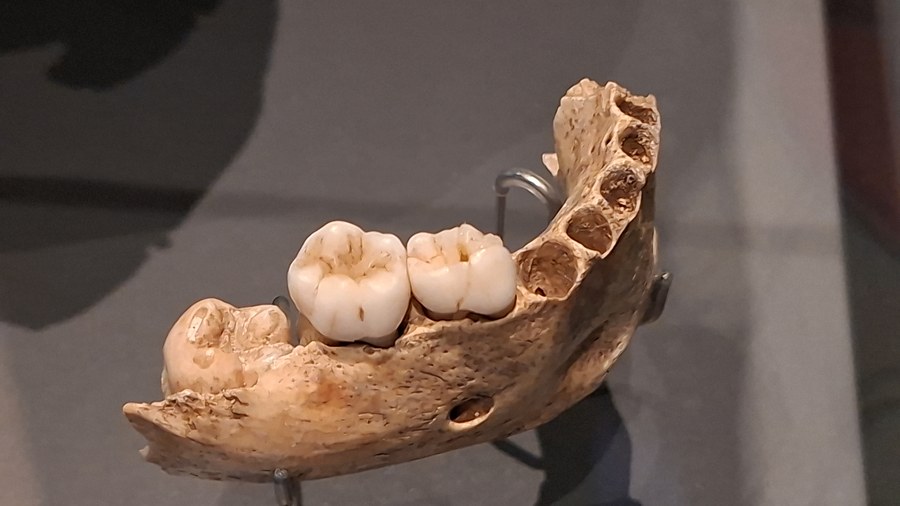
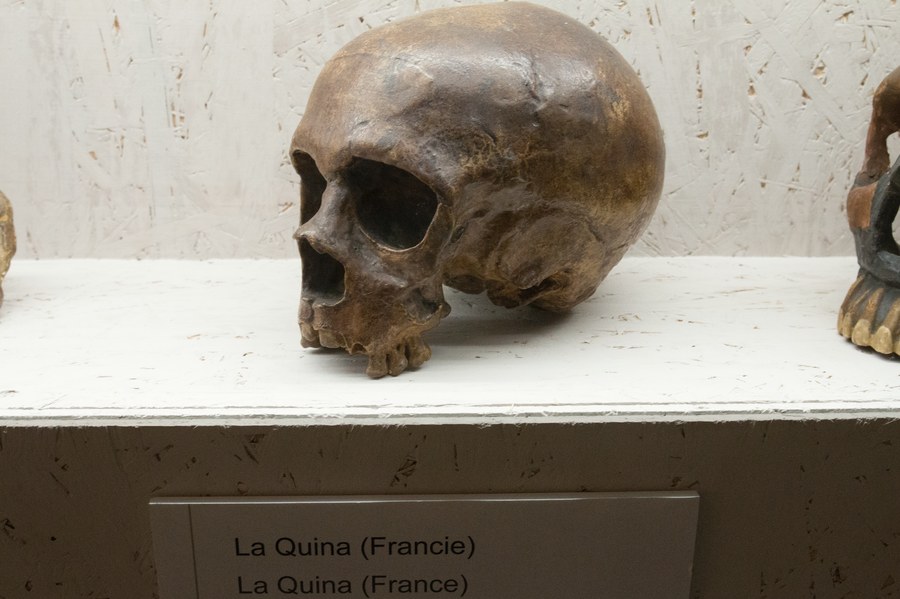
The two new teeth come from individuals roughly 10,000 years older than "Pierrette", the Neanderthal skeleton found at the same site in 1979 and now dated to 41,000-48,000 years ago. These older individuals reflect a more robust, archaicArchaicRefers to an ancient, now-extinct human population or form (Neanderthals, Denisovans, ghost lineages), as opposed to anatomically modern humans.→, and numerically vigorous population -- quite different from the more gracile late Neanderthals who followed.
Two Teeth, Multiple Scenarios
One tooth belonged to a child aged 6-7, the other to a child aged 8-9. Their spatial and stratigraphic proximity places them in the same contemporaneous context. But whose teeth were they? Two scenarios are possible.
If both teeth came from the same child, the 1-2 year gap between their loss suggests regular seasonal returns by the same group. If they belonged to two different children, this would indicate a community large enough to include several young members simultaneously -- pointing to a far more structured settlement than a simple hunters' camp. The archaeological context supports the second hypothesis: fractured and calcined horse and bison bones, nuclei and lithic flakes testify to "a collective living space." Children were at the very heart of group activities.[1]
Archaic Teeth with Puzzling Wear
Examination reveals traits typical of early Neanderthals: greater volume than modern deciduous teeth, pronounced ridges and cusps, morphology adapted to a more massive jaw. But it is the wear patterns that attract most attention.
Such marked wear on children's baby teeth could reflect a coarse, fibrous diet. But archaeologists also consider a hypothesis documented in adult Neanderthals: using teeth as a "third hand" to hold hides or fibres while working. Analogous behaviours are known among indigenous peoples of the Americas and Greenland. Future analyses of enamel and dentine may help settle the question.
Children at the Heart of the Group
For Crevecoeur, these two teeth carry a strong social message. Whether from one child or two, their presence in this active campsite -- rich in butchery debris and stone tools -- suggests the early integration of the youngest members into communal activities. Neanderthals did not keep their children away from the group: they raised them in the midst of daily work, perhaps even involving them in it.
The question of population dynamics remains open. Do these children belong to the same lineage as Pierrette, or to distinct groups who successively occupied the same shelter? La Roche-a-Pierrot, with its 30,000 years of deposits, is one of the rare sequences capable of answering such questions. The excavations continue.[2]
No comments yet. Be the first.