Why is the X chromosome of modern humans almost devoid of Neanderthal DNA, while the rest of the genome retains traces of it? A study published in Science (February 2026) finally provides an answer -- and it is unexpectedly elegant: it was not biological incompatibilities that erased these sequences, but the mating preferences of our ancestors.
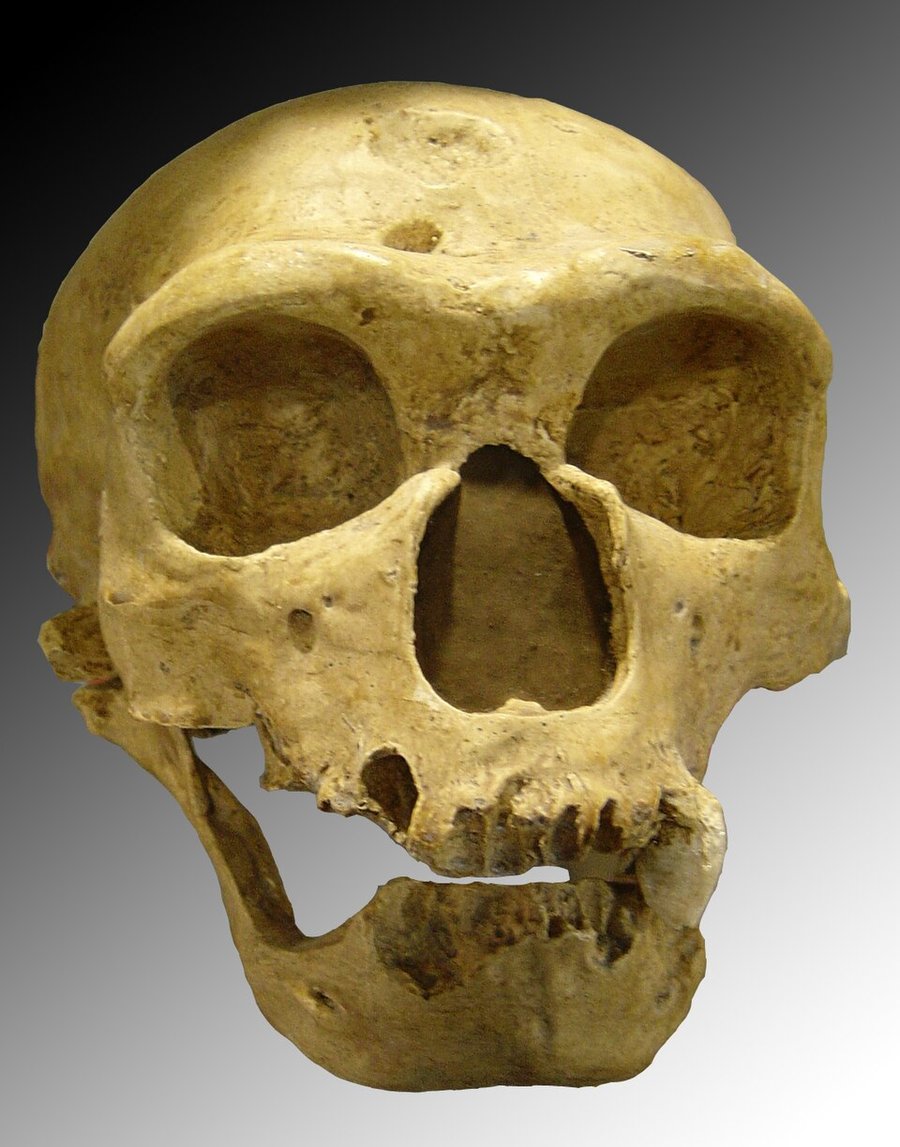
The team from Sarah Tishkoff's laboratory (University of Pennsylvania), led by Alexander Platt and Daniel Harris, compared the genomes of three Neanderthals -- Altai, Chagyrskaya, and Vindija -- against a diverse set of modern African genomes, a control group that never encountered Neanderthals.[1]
The X Chromosome Paradox
Non-African humans carry on average 1 to 4% Neanderthal DNA, distributed throughout the genome -- except on the X chromosome, where these sequences are nearly absent (the "Neanderthal deserts"). The classic hypothesis invoked genetic incompatibility: certain Neanderthal genes would have been "toxic" to hybrids and eliminated by natural selection.

An Excess of Human DNA in Neanderthals
The Penn team's discovery is spectacular: Neanderthals carried a 62% excess of modern human DNA on their X chromosome compared to their other chromosomes. If genetic incompatibility were the cause, modern human DNA should also be absent from Neanderthal X chromosomes. But the opposite is true.
This mirror-like pattern points to a single explanation: a sex bias in interbreeding. Since females carry two X chromosomes and males only one, the direction of mating directly influences DNA distribution. If it was primarily Neanderthal males who mated with modern human females, then few Neanderthal X chromosomes entered the human gene pool -- but many human X chromosomes entered the Neanderthal lineage.
Attraction as a Driver of Evolution
Mathematical models confirm that this sex bias exactly reproduces the observed genetic patterns. "Mating preferences provided the simplest explanation," notes Platt. Rather than survival of the fittest, it was attraction -- social behaviors and mating preferences -- that may have sculpted part of the human genome.
The Penn team now hopes to use this same tool -- the ratio of diversity between X chromosomes and autosomes -- to better understand Neanderthal social organization: did females remain in their birth group while males migrated? Each answer opens new questions about our closest evolutionary cousins.
No comments yet. Be the first.