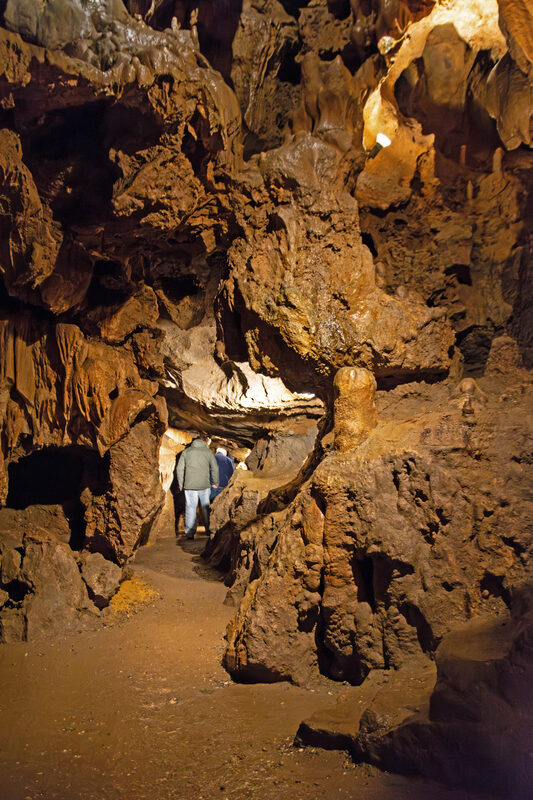
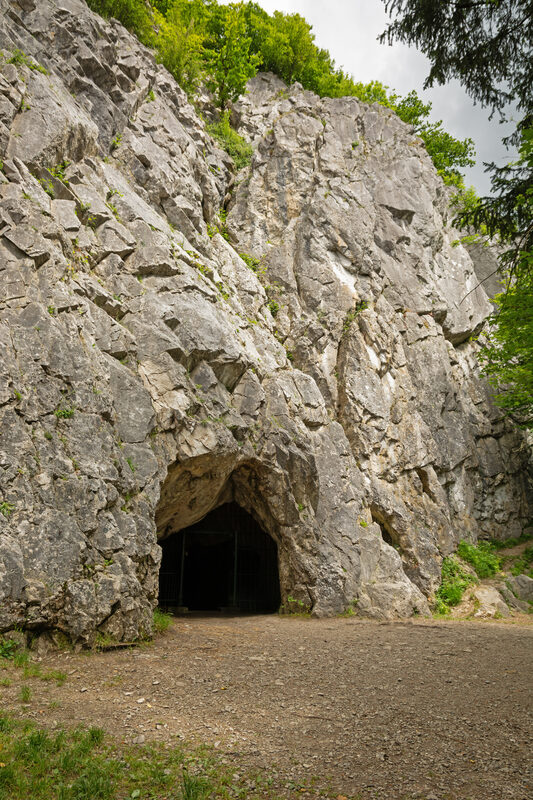
In the Third Cave of Goyet, tucked into the limestone hills of Wallonia some 50 kilometres south-east of Namur, a palaeontological discovery made as far back as 1865 by Édouard Dupont had been waiting patiently for answers. Among hundreds of animal bone fragments, human bones bearing strange cut marks had been unearthed , and filed away in the reserves of the Royal Belgian Institute of Natural Sciences in Brussels. A hundred and sixty years later, an international team has finally unlocked their secret.
Published on 19 November 2025 in the journal Scientific Reports, the study led by Quentin Cosnefroy (PACEA laboratory, University of Bordeaux) and his colleagues drew on ten years of analyses: virtual reassembly of fragments, radiocarbon dating, nuclear DNADNAThe molecule carrying genetic information, used to reconstruct kinship between species.→ analysis, sulphur and nitrogen isotopic measurements, and morphometric comparisons. The results are striking.
Six victims, all from elsewhere
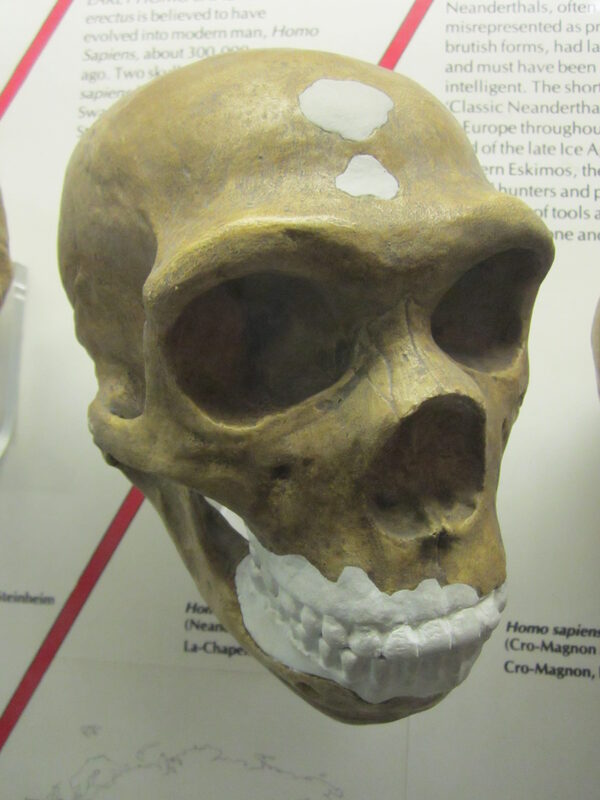
The 101 bone fragments held in Brussels correspond to at least six Neanderthal individuals, whose genetics reveal:
- Four adult or adolescent females, none related to one another
- Two young males (an infant and a child)
A crucial detail: sulphur isotope analysis of the bones reveals that all of these victims originated from a different geographical region than the cave. They share a similar diet, suggesting they may have belonged to the same group or neighbouring groups , but in any case foreign to the Goyet area. Their skeletons also show a more gracile morphology than the local Neanderthal average, another sign of a distinct population.
The marks of deliberate exo-cannibalism
The bones carry cut marks similar to those found on hunted animal carcasses: disarticulation of limbs, defleshing, marrow extraction by percussion. None of the funerary gestures typically associated with ritual cannibalism in Homo sapiensHomo sapiensThe present-day human species, which emerged in Africa around 300,000 years ago, the only surviving human lineage after the extinction of Neanderthals and Denisovans.→ are visible. Everything points to nutritional consumption.
But what sets Goyet apart from all other known Neanderthal cannibalism sites , notably in France and Croatia, where intra-group survival cannibalism was likely , is the composition of the victim group. Cosnefroy and his team stress that the statistical probability of obtaining such a ratio , four adult women and two young boys, with no adult males whatsoever , by pure chance is virtually zero.
This is therefore a case of exo-cannibalism , the consumption of members of an outside group by a rival group. The deliberate selection of reproductively aged females suggests a strategy going beyond mere subsistence: "At a minimum, it suggests that weaker members of one or multiple groups from a single neighbouring region were deliberately targeted, and that the cannibalising group might have sought to undermine the reproductive potential of a competing clan," write the authors.
Bones repurposed as tools: the Neanderthal signature
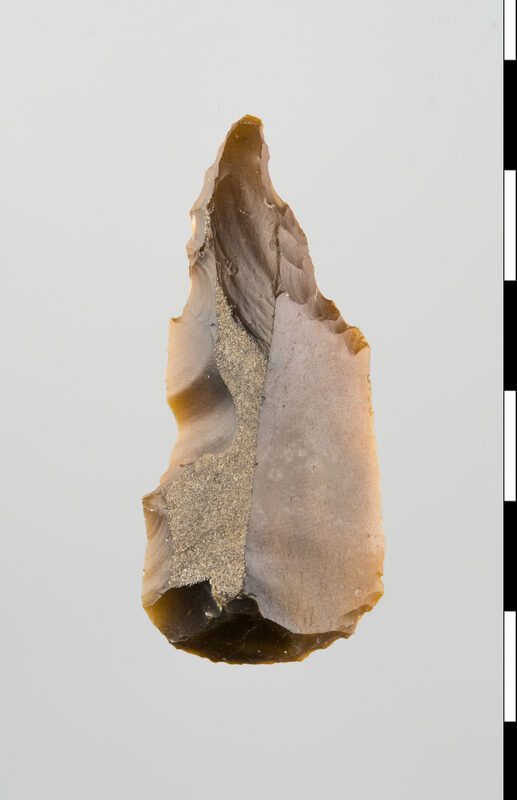
Another decisive clue concerns the identity of the perpetrators. Several of the human bones from Goyet were repurposed as retouchers , bone flakes used to sharpen the cutting edges of flintFlintA hard, brittle siliceous rock, knapped by prehistoric people to produce blades, points and sharp tools.→ tools. This bone retouching technique belongs almost exclusively to the Neanderthal technical repertoire. It largely rules out the involvement of Homo sapiens, whose cannibalism is primarily documented in a funerary context.
The end of the Neanderthals: unprecedented violence in a world under pressure
The Goyet victims lived at a pivotal moment: 45,000 years ago, Neanderthals still occupied northern Europe, but Homo sapiens had just crossed the eastern Mediterranean and was beginning to push westward. Neanderthal groups, already weakened by the cooling climateClimateThe long-term average atmospheric conditions of a region; its variations (glaciations, aridifications) shaped migrations, agriculture and the collapse of prehistoric societies.→ of the last glacial maximumLast Glacial MaximumThe peak of the last glaciation (c. 26,000 to 19,000 years ago), with ice sheets at their greatest extent; it pushed populations towards southern refuges.→ and the contraction of their hunting territories, faced dual pressure: environmental and interspecies.
In this context of dwindling resources, the encounter between two previously isolated Neanderthal groups may have triggered lethal inter-group violence , particularly if one perceived the other as a territorial or competitive threat. The Third Cave of Goyet thus delivers "the most compelling evidence to date for inter-group competition among Late PleistocenePleistoceneThe geological epoch of the great ice ages (c. 2.6 Ma–11,700 BP), spanning most of human prehistory.→ Neanderthal populations," according to the researchers.
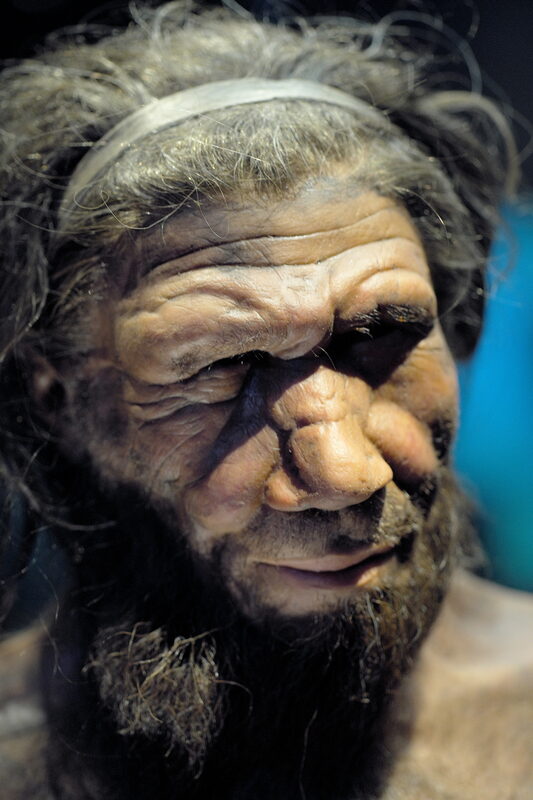
Whether these individuals were transported alive to the cave before being killed there, or whether their bones were brought after death, remains an open question. Cosnefroy notes, however, that leg bones are over-represented among the remains , which could suggest the victims were brought alive, killed near Goyet, and only certain body parts subsequently deposited inside the chamber.
Ten years of research, unprecedented multi-method analyses, and a conclusion that redefines our understanding of prehistoric violence: Goyet is not simply an exceptional archaeological site. It is a witness to an episode of organised brutality, inscribed in stone for 45 millennia.
Sources: Cosnefroy Q. et al., "Biological profiling of cannibalized Neanderthal remains from Goyet (Belgium) reveals targeted exocannibalism", Scientific Reports, 19 November 2025 ; Kristina Killgrove, Live Science, 24 November 2025.
J'apprécie que vous distinguiez les hypothèses des faits établis. C'est trop rare dans la vulgarisation.
Je galère à relier toutes les périodes en cours. Cet article m'aide vraiment à y voir plus clair.
Je note la source pour un prochain article. Le niveau de détail est exactement ce qu'il me faut.
L'ADN extrait des restes de Goyet pourrait permettre de determiner les liens de parenté entre les individus consommés et ceux qui les ont consommés. C'est une question clé pour comprendre si ce cannibalisme était inter-groupe ou intra-groupe. Les avancées des techniques de paléogénomique des dix dernières années ouvrent des perspectives fascinantes sur ce type de questions.
L'étude de Cosnefroy et al. sur les restes de Goyet confirme ce que les analyses de sites comme Krapina en Croatie laissaient déjà supposer : le cannibalisme néandertalien était bien réel, qu'il soit rituel ou alimentaire. Ce qui me frappe, c'est la précision des traces de découpe sur les os, identiques à celles laissées sur les animaux consommés. Cela suggère un comportement pragmatique plutôt que symbolique.