Deep in the mountain valleys and on the isolated shores of Near Oceania, something extraordinary has been preserved for millennia. A study published on June 11, 2026, in the journal Science reveals that the populations inhabiting Papua New Guinea, the Bismarck Archipelago, and the Solomon Islands carry in their genomes the deepest and most complete trace of known human evolutionary history. These peoples inherited, from their ancestors who arrived in the region some 42,000 years ago, an exceptional quantity of DNADNAThe molecule carrying genetic information, used to reconstruct kinship between species.→ from archaicArchaicRefers to an ancient, now-extinct human population or form (Neanderthals, Denisovans, ghost lineages), as opposed to anatomically modern humans.→ hominins now long extinct: the Denisovans.1
An Unprecedented Study of Oceanian Genomes
The international team led by Serena Tucci, assistant professor of anthropology at Yale University, sequenced the complete genomes of 177 individuals from 12 distinct Near Oceanian populations, then compared them with a database of 1,284 genomes from around the world. The scale of the differences observed is not marginal: it is categorical.2
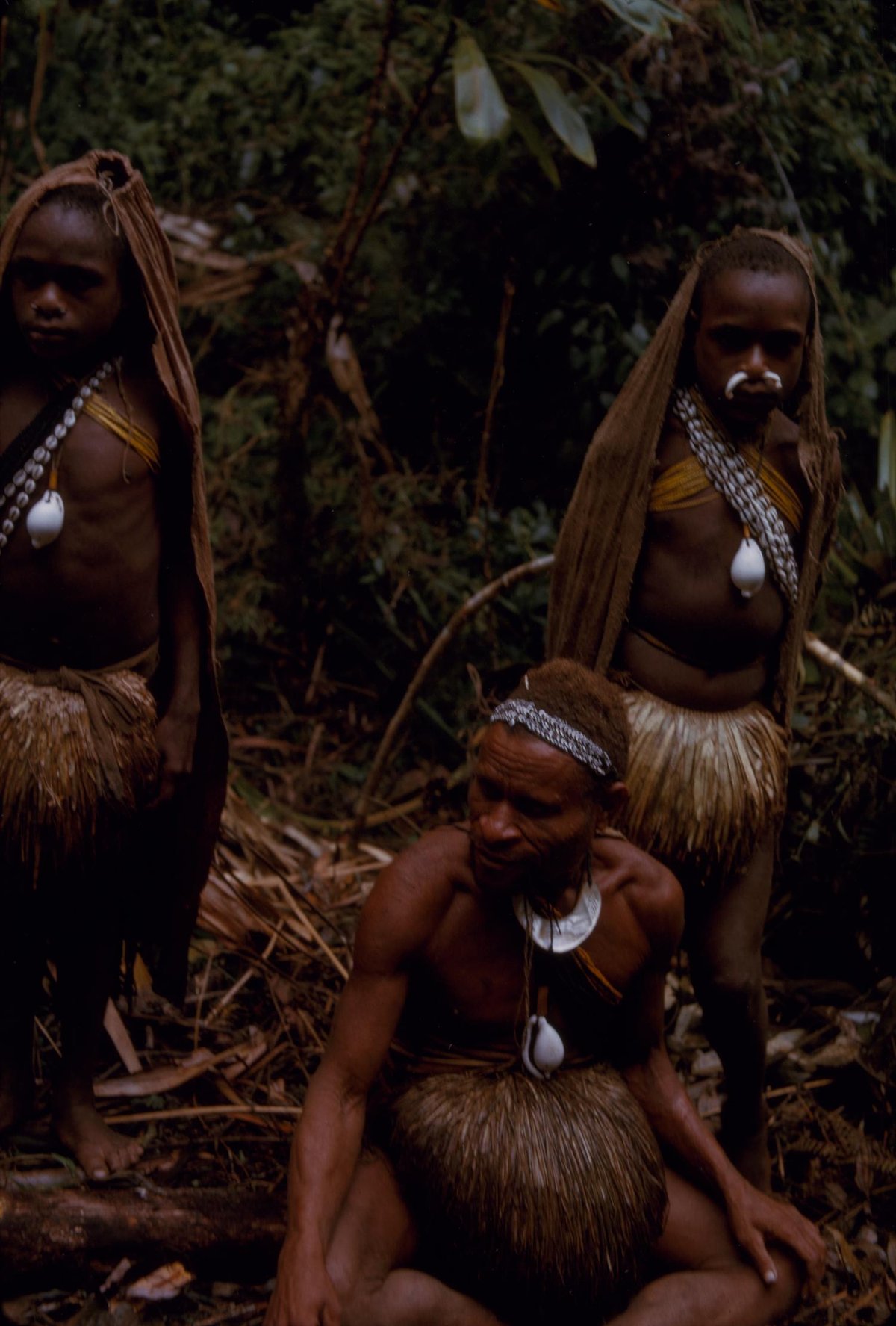
Oceanian genomes contain on average 2.5 times more archaic DNADNAThe molecule carrying genetic information, used to reconstruct kinship between species.→ per individual than European genomes. For Denisovan DNADNAThe molecule carrying genetic information, used to reconstruct kinship between species.→ specifically, inhabitants of Near Oceania carry 14 times more than individuals from East Asia. In certain groups, such as the Sepik of Papua New Guinea, this ratio reaches 25 times more than in East Asians. No other living population comes close to such figures. In total, the researchers reconstructed nearly 1.9 billion units of archaic genetic code, of which 831.9 million units came solely from Denisovan lineages. More than 505 million units had never been documented before.
These figures are largely explained by the particular history of these peoples. The first settlers of Near Oceania arrived in the region at least 45,000 years ago, according to archaeological records. Established at the far edge of the inhabited world, they lived in profound isolation for tens of thousands of years, definitively separating their genetic trajectory from that of populations that continued to mix elsewhere on the globe.
Three Distinct Denisovan Groups: Encounters Across Time
Perhaps the most surprising discovery of this study lies in the complexity of these ancient admixtures. Genetic analyses indicate that the ancestors of Oceanian populations did not cross paths with a single group of Denisovans: they had contacts with at least three distinct Denisovan-like groups, at different times and in different geographical contexts.
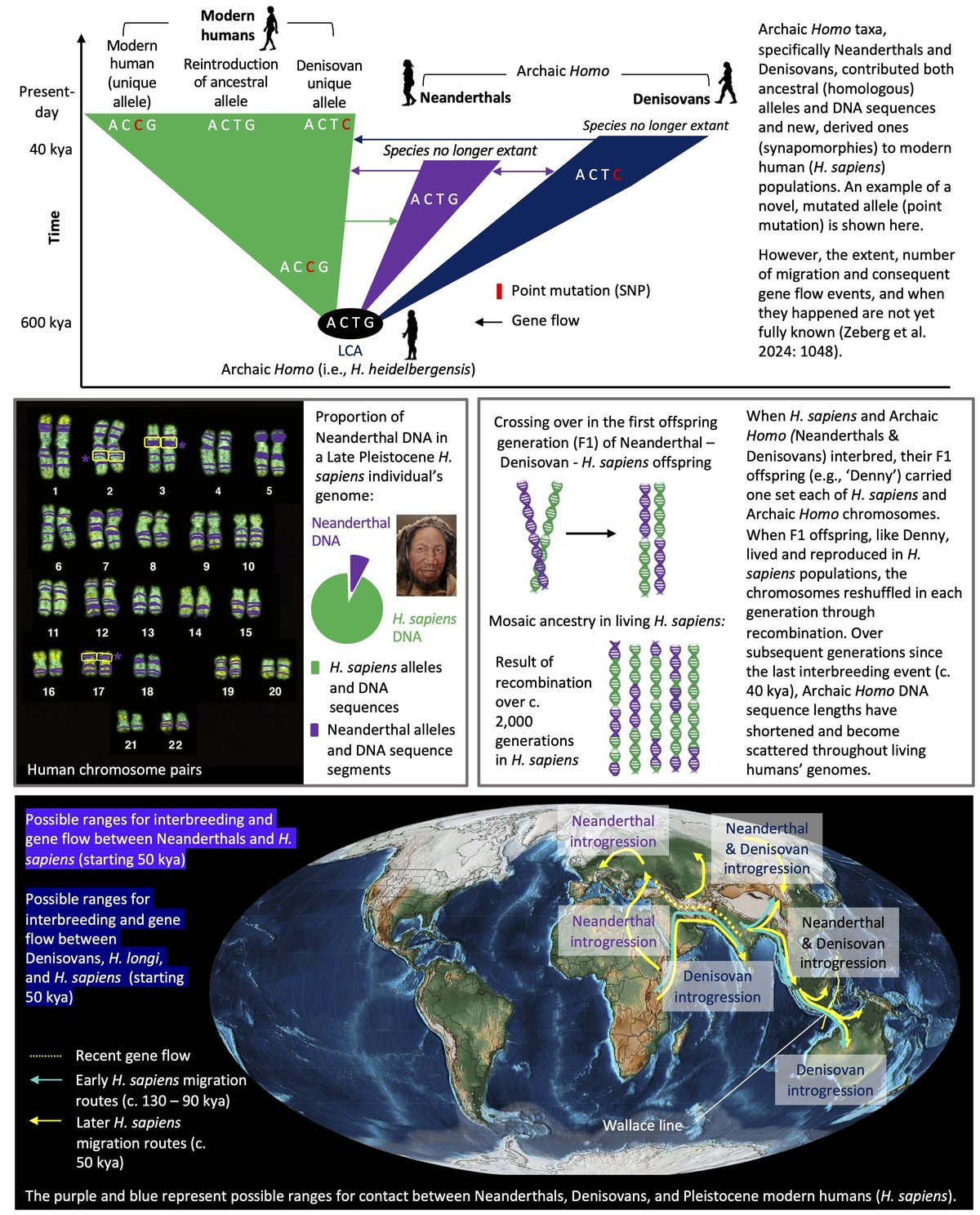
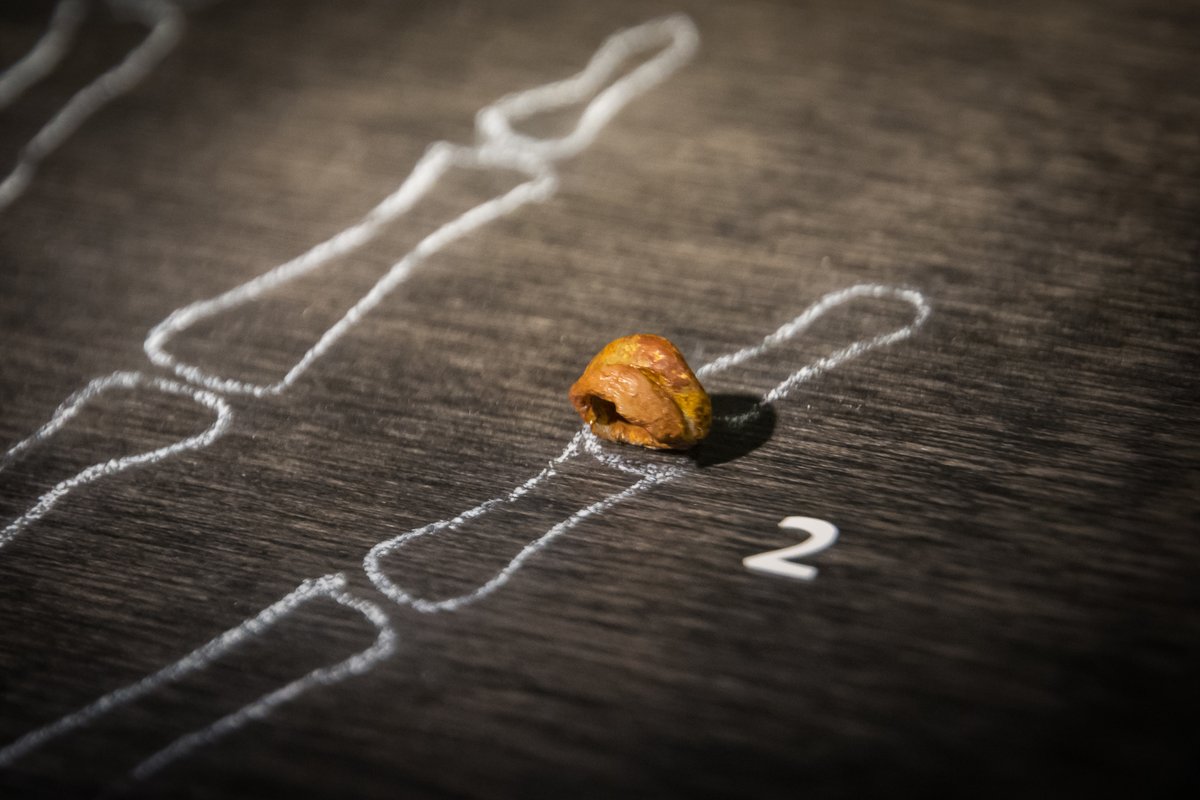
This distinction is fundamental. The term "Denisovans" may in reality designate several related but distinct groups, which coexisted in very different environments across Asia and Oceania. Denisovans are known only from a few bone fragments found in Denisova Cave in Siberia and on the Tibetan plateau. They constitute, in many respects, a species defined more by its DNADNAThe molecule carrying genetic information, used to reconstruct kinship between species.→ than by its bones. The genetic traces they left in Oceanian populations therefore represent an archive of inestimable value about their diversity and geographical distribution.
The precise dates and exact geography of each of these admixture events remain to be established, but the genetic signatures of these three encounters are measurable and real. This multiplicity of introgression episodes profoundly reframes our understanding of human dispersal in the Pacific: it was not a linear migration, but a complex process of repeated contacts with local archaic populations, spread over millennia.
Long Isolation and Its Deep Genetic Consequences
Spending tens of thousands of years at the edge of the inhabited world leaves lasting imprints on a population's DNADNAThe molecule carrying genetic information, used to reconstruct kinship between species.→. Genetic drift, the process by which chance alone reshapes the genetic composition of an isolated group over generations, has led certain communities of Near Oceania to diverge radically from all other human populations.
Several populations studied, notably the Baining groups of New Britain and communities in the Solomon Islands, show signs of severe demographic bottlenecks: at certain moments in their history, their numbers dropped dramatically. Demographic simulation models point to a first bottleneckBottleneckA sharp, temporary reduction in a population's size that lastingly impoverishes its genetic diversity.→ between 10,000 and 20,000 years before the present in certain groups, and a signal of slowed growth around 30,000 years ago in others.
These episodes of demographic contraction amplified genetic differences between these populations and the rest of humanity. By reducing the internal diversity of a group, they also increased the relative frequency of certain variants inherited from archaic ancestors, including Denisovan variants that might have remained marginal in a larger, more connected population.
An Archaic Legacy Still Active in Immune Systems
One of the most remarkable aspects of this study is its demonstration that inherited archaic DNADNAThe molecule carrying genetic information, used to reconstruct kinship between species.→ is not merely a historical curiosity. A significant portion of these Denisovan variants appears to actively influence the biology of Oceanian populations today, particularly in the domain of immunity.3
To test this hypothesis, the researchers employed a cutting-edge genomic technique called a "massively parallel reporter assay." They inserted more than 22,000 archaic variants into human immune cells in the laboratory and measured their effect on gene expression. The result: 3,127 variants genuinely alter gene activity, and many are concentrated in immune pathways involved in responses to infectious agents.
Among the most notable genes are JAK1, GBP2, and OAS1, all involved in antiviral and antimicrobial responses. A Neanderthal-derived version of the OAS1 gene has already been studied for its possible link to COVID-19 clinical outcomes in Europeans and East Asians. This study reveals the existence of a distinct, Denisovan-derived version of the same OAS1 gene, unique to Oceanic populations, with its own set of variants capable of influencing gene expression. The impact of this version on specific diseases remains to be investigated, but its presence and functionality are established.
The most striking signal concerns the TRPS1 gene, involved in bone development, craniofacial structure, and hair. The Denisovan variant of this gene reaches frequencies of nearly 75% in certain groups in Oceania and Island Southeast Asia. The same gene is subject to strong positive selection in hunter-gatherersHunter-gatherersA way of life based on hunting, fishing and gathering wild resources, without farming or herding; it dominated almost the whole of human history.→ of the central African rainforest and in highland populations in Ecuador. This parallelism suggests that very distant populations, facing similar environmental pressures linked to equatorial living, evolved in the same way on the same gene. This is what biologists call recurrent local adaptation.
Toward More Inclusive Genomic Medicine
Beyond its implications for human prehistoryPrehistoryThe span of human history before the invention of writing, from the Palaeolithic to the Metal Ages, known mainly through material remains.→, this study raises urgent questions for contemporary medicine. The major global genetic biobanks, used to study diseases and develop new treatments, massively underrepresent Oceanian populations. Denisovan-specific variants in these populations are absent or poorly catalogued in existing clinical datasets.
This gap is not trivial. It means that potentially relevant factors for disease susceptibility, immune responses, or the efficacy of certain medications could be missed by researchers. The study calls for an urgent expansion of Oceanian peoples' representation in genomic research, not only to understand their evolution, but to ensure that advances in genomic medicine benefit them equitably.
"The drastic underrepresentation of Oceanians limits our understanding of human evolution and could exacerbate health inequalities as genomic research is used to develop novel medical treatments," said Serena Tucci. "While Denisovans vanished from the Earth thousands of years ago, this research proves that our histories remain deeply intertwined."
This study is part of a broader reassessment of human evolutionary history. The ancient models describing a linear progression of Homo sapiensHomo sapiensThe present-day human species, which emerged in AfricaAfricaThe cradle of humankind: the continent where the first hominins appeared, then Homo sapiens around 300,000 years ago, before the expansion to the rest of the world.→ around 300,000 years ago, the only surviving human lineage after the extinction of Neanderthals and Denisovans.→ replacing archaic species are increasingly supplanted by a vision of multiple contacts, repeated admixtures, and shared genetic legacies. Near Oceania, long neglected by genetic research, is proving to be one of the most important places on Earth for understanding what it means to be human.
Ce site est une mine pour les joueurs de Paleo, 7 Wonders ou Tigris & Euphrates. Merci !